
How to Choose and Use a Sober October App
The quick version
A useful Sober October app records alcohol-free days, cravings, triggers, actual drink sizes, and money saved. Choose one you can update in under a minute. Use it to plan for dinners, weekends, and stressful evenings, then review the month before setting November goals. A tracker supports behavior change, but it cannot manage alcohol withdrawal or replace treatment.
The hardest Sober October check-in may not happen when you wake up motivated on October 1. It may come at 6 p.m. on a Friday, when a familiar drink is nearby and your plans have changed. A tracker earns its place on your phone by helping at that exact moment.
The best choice depends on the job you need done. Some apps count alcohol-free days. Others add drink planning, journaling, coaching, or community support. Before downloading one, decide what you want to record and how you will respond when a craving or slip occurs.
Why a 31-day alcohol break needs more than a counter
A Sober October app gives structure to a 31-day alcohol break, especially when the challenge starts feeling less like a slogan and more like 6 p.m. Friday with a familiar drink in reach. Many adults are not looking for a label. They want a private plan, a streak counter, and a small next step when the usual cue shows up.
In 2022, 29% of U.S. adults said they had tried to reduce their alcohol consumption in the previous year, according to Pew Research pewresearch alcohol data. Among U.S. adults who drink, the CDC reports that 21.5% binge drink at least once in a month CDC alcohol data. That gap explains the search intent: people want help before a pattern hardens.
Sober October began as a UK “Go Sober for October” fundraiser linked to Macmillan Cancer Support. It has since become a global personal health reset. Social and moderate drinkers join too, often to test sleep, mood, spending, and weekend habits without making a forever decision.
The features a Sober October tracker should include
A sober october tracker turns “I’m not drinking this month” into daily records you can see. The core tools are simple, but they matter when a half-poured wine glass is sitting on the counter.
- Sober day counter: It shows your current streak, total alcohol-free days, and the next health milestone.
- Drink log or skip log: It records whether you drank, skipped, or had a craving without drinking.
- Money and calorie savings calculator: It estimates what you did not spend and what you avoided consuming.
- Reminders and motivational notifications: It nudges you before high-risk times, such as dinner, sports, or a work event.
- Progress reports and milestone badges: It turns daily check-ins into weekly patterns you can review.
For people trying a longer reset, a 30 days no alcohol app can use the same structure outside October. The method is the same: count days, name triggers, adjust the plan.
Log standard drinks, not just glasses
A drink entry is useful only when it reflects the amount and strength you consumed. The National Institute on Alcohol Abuse and Alcoholism standard drink guidance defines one U.S. standard drink as 14 grams of pure alcohol. That is about 12 ounces of regular beer, 5 ounces of wine, or 1.5 ounces of distilled spirits.
- Record the container size and alcohol by volume when possible.
- Count a large wine pour or strong tall beer as more than one drink when appropriate.
- Log the time as well as the total, especially when reviewing heavy-drinking occasions.
- Do not use a generic one-drink button if it hides meaningful differences in serving size.
The CDC alcohol-use guidance defines binge drinking as four or more drinks for women or five or more drinks for men on an occasion. Accurate entries make an October review more useful and give a clinician better information if you ask for help.
Set up your alcohol-free October in five steps
Use a Sober October app for Alcohol-Free October by setting a clear 31-day goal, logging the moments that test it, and reviewing the data before November begins. The point is not to win a badge and forget the lesson.
- Set your Sober October start date: Choose October 1 and set a 31-day alcohol-free goal.
- Log your baseline drinking pattern: Enter your usual drinks, spending, and drinking days so savings are realistic.
- Record daily triggers and cravings: Log the time, place, feeling, urge strength, and response while the details are still clear.
- Review weekly progress reports: Check your streak, money saved, and health milestones every seven days.
- Plan your November approach: Switch to mindful drinking mode or extend sobriety if the break helped.
A no alcohol October app works best when it is used during the craving window, not only afterward for cleanup. That quick phone reminder during a smoke break can catch the linked urge to drink before it turns into a full evening pattern.
Why logging the moment before a drink can help
A sober challenge app works by combining streak-based motivation, trigger self-monitoring, and feedback loops. The useful data comes from the few minutes before drinking would normally feel automatic.
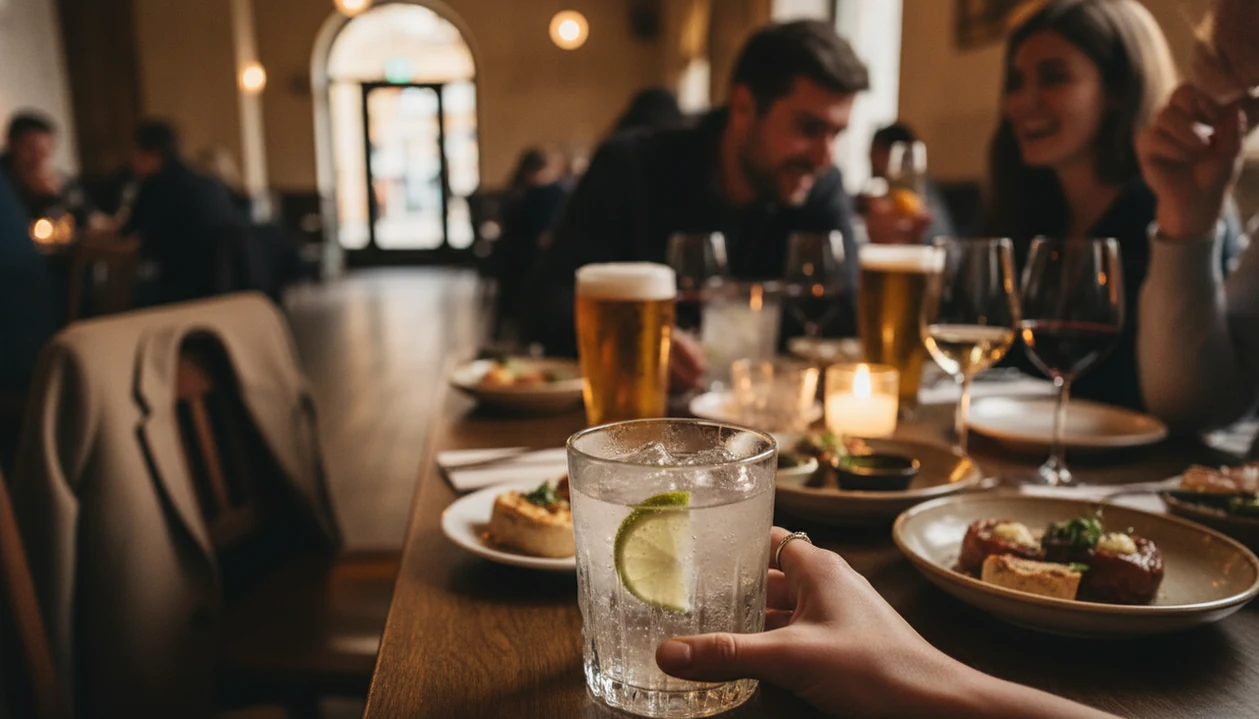
Streaks use loss aversion and commitment devices. People often work harder to protect visible progress than to chase a vague future goal. Trigger logging borrows from cognitive-behavioral self-monitoring: you record the cue, feeling, setting, and choice. A lime wedge sinking in club soda may look small, but logging that replacement drink teaches the brain, “This is what I did instead.”
The loop is daily check-in, data visualization, reinforced commitment. Check in. See the line grow. Repeat.
Tracking alcohol and nicotine cravings together can reveal situations, such as parties or after-dinner breaks, where the habits reinforce each other. That matters when alcohol, cigarettes, and mint vape habits travel together. Some apps store more data locally for privacy; others sync to the cloud for backup and multi-device access. Neither model is automatically safer. The privacy policy decides the real risk.
What research can and cannot say about alcohol apps
Alcohol apps are best treated as low-intensity tools for self-monitoring, planning, and accountability. A 2025 review of 10 randomized trials involving 11,269 adults found that mobile health interventions reduced alcohol quantity and frequency overall, but results varied across programs and populations. That finding supports the category, not every commercial tracker.
In a 2024 randomized trial of the Drink Less app, increasing-risk and higher-risk drinkers in the United Kingdom had an additional reduction of 2.00 UK alcohol units per week at six months compared with people given an NHS alcohol-advice webpage. A UK unit contains 8 grams of pure alcohol, so it is not the same as a U.S. standard drink.
A growing streak shows what you recorded. It does not diagnose or treat alcohol-use disorder, prove that withdrawal will be safe, or guarantee lasting change.
Changes to watch during a month without alcohol
Month-long alcohol breaks can produce measurable benefits, and a no alcohol October app helps you notice them while motivation is fresh. In a UK Dry January evaluation, 58% of participants reported weight loss, 54% slept better, and 49% saved money after one month without alcohol, according to BMJ Open bmj.
Dry January is not identical to Sober October, but the behavior pattern is close: one planned month without alcohol. The same study found participants were drinking about one fewer day per week six months later. A change that continues into later months matters more than a perfect October badge.
Globally, alcohol use is attributable to 5.3% of all deaths, according to the World Health Organization. Population-level risk does not describe every person's drinking pattern, but it gives a strong reason to examine frequency, quantity, and heavy-drinking occasions. It means even temporary reduction has public-health relevance. Record sleep, mood, spending, and alcohol-free days consistently so you can compare the first and final weeks without treating every change as proof that the break caused it.
If you have shaking, sweating, nausea, severe anxiety, or a need for a morning drink when alcohol wears off, get medical advice before stopping. Alcohol withdrawal can be dangerous for heavy daily drinkers, and the NHS guidance on drinking less advises people with physical withdrawal symptoms not to stop suddenly without medical help.
Streak counter vs planning, coaching, and community tools
Apps differ most in the behavior they support: simple abstinence tracking, planned moderation, coaching, journaling, or peer accountability. That matters for anyone whose cigarette, vape, or drink cravings tend to arrive in the same situation.
| App type | What it tracks | Where it helps | Main tradeoff |
|---|---|---|---|
| MeQuit Drink Lens & Quit Alcohol | Drinking (in App Store review) | Not released yet; this table will be updated at launch | Cannot be downloaded yet |
| I Am Sober | Sobriety streaks and pledges | Clear abstinence tracking and community-style motivation | Less focused on nicotine and alcohol trigger overlap |
| Sunnyside | Alcohol moderation and mindful drinking | Drink planning and reduction goals | Not built as a smoking or vaping tracker |
| Basic counter apps | Sober days only | Fast, simple counting | Little insight after a slip or trigger |
Apps such as I Am Sober and Sunnyside are useful alternatives for alcohol-focused goals. For people also trying to stop smoking after drinking, a multi-habit dashboard can show patterns a single-purpose counter misses.
Decide your November plan before October ends
The hardest part of Sober October often starts on November 1. The calendar turns, the challenge energy drops, and “just one” can quietly become the old routine.
A post-October plan should use the data you already collected. Which nights created the strongest cravings? Which people, places, or moods made skipping easier? If the after-dinner chair facing the open window was usually tied to a cigarette and a drink, that pattern deserves a specific November rule.
Before October ends, write down the dry days, drink limits, or continued abstinence goal you plan to follow in November. October can become a baseline for drink limits, dry days, and high-risk weekends. If strict abstinence is not your goal before or after October, a sober curious app focused on planned limits and dry days may be a better match than a streak-only counter.
One-month alcohol challenges usually work best when they end with a written next plan, while “back to normal” fits people who only wanted a short personal test.
Sober October tracker questions
What should a Sober October app track?
At minimum, track alcohol-free days, cravings, triggers, slips, and the situations in which you usually drink. Money saved and brief notes about sleep or mood can add context. If you drink during the month, record the actual amount and strength rather than entering a vague one-drink total.
How does a sober day counter work?
A sober day counter adds one day to your streak after each alcohol-free day. Better counters also show total dry days, since one slip does not erase the rest of the month. Check in at the same time daily, but open the tracker earlier when a craving or familiar drinking cue appears.
Is Sober October safe for a heavy daily drinker?
Stopping suddenly may be dangerous if you drink heavily every day or develop shaking, sweating, nausea, anxiety, or other symptoms when alcohol wears off. Speak with a clinician before starting the challenge. An app cannot assess withdrawal risk, provide detoxification care, or respond to a medical emergency.
What should I do if I drink during Sober October?
Record what happened without deleting the rest of your data. Note the time, amount, trigger, setting, and what you could change next time. Restart at the next safe opportunity rather than waiting for another month. If slips are frequent or hard to control, consider professional support instead of relying on a streak.
Can I track smoking or vaping during Sober October?
Yes. Alcohol can share cues with cigarettes or vaping, including parties, meals, stress, and seeing someone else use nicotine. Record both urges if they overlap. Avoid taking on more change than you can manage safely, and prepare separate alternatives for alcohol cravings and nicotine cravings.
Should I choose an abstinence app or a moderation app?
Choose an abstinence tracker if your October goal is zero alcohol and a visible streak helps. A moderation app may fit better after October if you want planned dry days and drink limits. People who cannot reliably control the amount they drink should seek clinical guidance rather than depending on moderation settings.
Does one alcohol-free month lead to lasting change?
It can provide useful information about triggers, routines, spending, and social pressure, but lasting change is not automatic. Review your records during the final week and write a specific November plan. That might mean continued abstinence, several dry days each week, defined limits, or an appointment for added support.
How can I check an alcohol app's privacy?
Read the current privacy label and policy before entering sensitive information. Check if an account is required, what data leaves your phone, if information is used for advertising, and how deletion works. Store listings and policies can change, so review them again after major updates rather than relying on old screenshots.