
How to Stop Drinking After Work Without Losing Your Wind-Down Time
The practical answer
To stop drinking after work, keep a clear end-of-work signal but replace the drink that follows it. Close your laptop, eat or hydrate, move for 5 to 20 minutes, pour an alcohol-free drink, and delay any drinking decision. Prepare the routine before the usual craving time. If you drink heavily most days, get medical advice before stopping suddenly.
The first drink after work often does several jobs at once. It marks the end of responsibility, changes your physical state, fills the space while cooking, and promises quick relief. That is why simply removing it can leave the evening feeling unfinished.
A replacement works better when it protects the reward you were seeking. The aim is not to make relaxation harder. It is to build a reliable transition that begins before you pass the store, open the cabinet, sit on the couch, or reach the time when the craving usually appears.
Build a 30-Minute Alcohol-Free Transition
The fastest replacement for an after-work drink is a repeatable 20- to 30-minute transition routine. Use the same time slot, but change what happens inside it: shutdown, move, pour something alcohol-free, decompress, and track the craving.
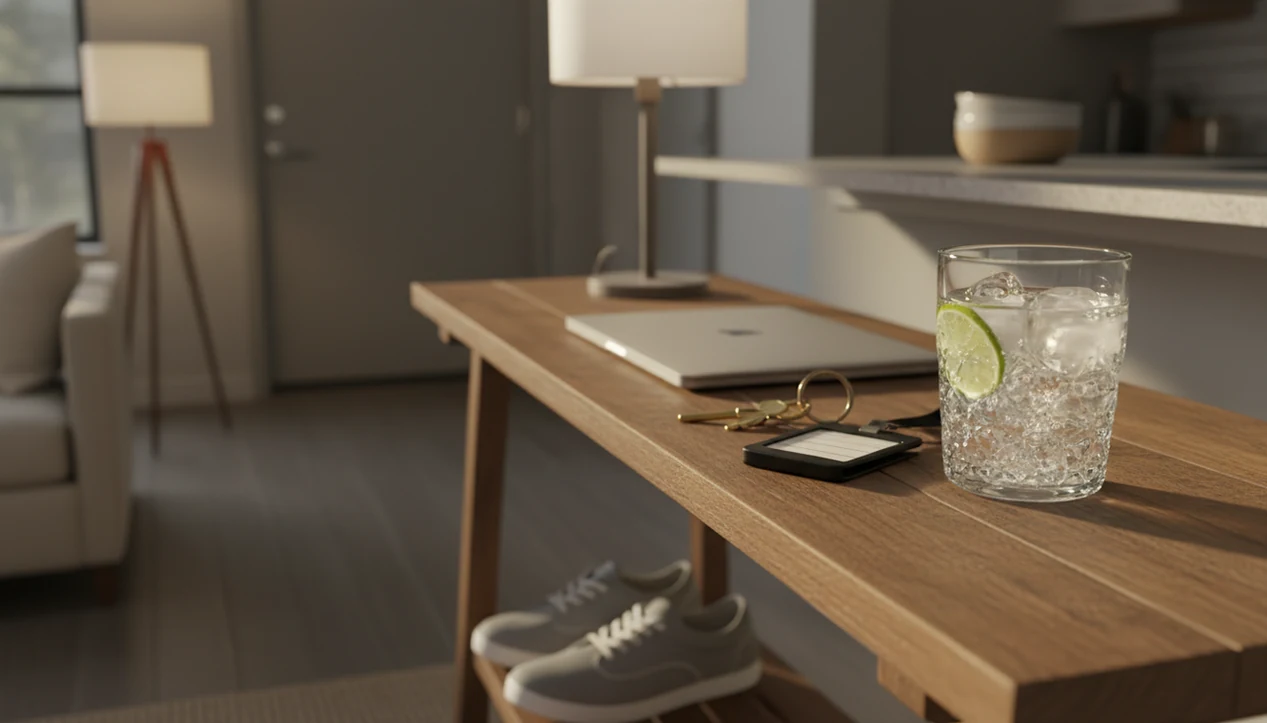
A simple version looks like this: close the laptop, write tomorrow’s first task, walk for ten minutes, pour seltzer with lime in a heavy glass, then rate the urge from 1 to 10. The reward still has to be real. Your brain is looking for relief, separation, and permission to rest.
The first week may feel flat. That doesn’t mean it isn’t working. Alcohol delivers a faster chemical reward than a walk, shower, or sparkling drink, so the new routine needs repetition before it starts to feel like “home mode.”
When a Drink Becomes the Signal That Work Is Over
An after-work alcohol ritual is an automatic drink after work that tells your brain, “the day is over now.” It might be wine while cooking, a beer on the couch, a cocktail after the commute, or a pour right after closing the laptop.
The important part is not whether the drink looks normal from the outside. The important part is whether the routine has become the only reliable switch from work brain to rest. That shift can sneak up quietly, especially when the glass appears before you’ve asked, “Do I actually want this?”
To replace evening drinking routine patterns, keep the transition and change the response. You are not trying to become a person who never needs comfort after work. You are building a new cue for comfort that doesn’t depend on alcohol.
For a wider set of strategies, the alcohol reduction guides cover cravings, limits, and habit loops in more detail.
How Common Are After-Work Drinking Patterns?
- Alcohol use is common among working-age adults. The 2022 National Survey on Drug Use and Health reported that 51.7% of adults 26 and older used alcohol in the past month, according to SAMHSA’s annual report SAMHSA.
- Binge drinking is also common. Per the CDC, 21.7% of U.S. adults reported binge drinking in 2022 CDC alcohol data.
- Work does not protect people from alcohol problems. Among employed U.S. adults, 8.3% met criteria for alcohol use disorder in the past year, according to NIAAA NIAAA alcohol data.
- Daily “just a few” drinks can add up fast. Two to four drinks after work can become 14 to 25 drinks per week, a range linked with higher health risks in a large Lancet cohort study thelancet.
- Alcohol and nicotine rituals often cluster. The U.S. Surgeon General reports that nearly 1 in 3 adults who smoke cigarettes also binge drink CDC smoking data.
After-work cravings usually follow a recognizable chain of time, place, mood, and expectation. The drinking decision often appears at the same point in that chain each evening.
Count the Alcohol in the Glass, Not Just the Glasses
Track what you pour for several days before judging how much you drink. In the United States, one standard drink is about 12 ounces of 5% beer, 5 ounces of 12% wine, or 1.5 ounces of 40% spirits. Strong beer, a large wine pour, or a mixed drink can contain more than one standard drink. The CDC guide to drink amounts can help you compare serving size and alcohol strength.
Write down the container size, alcohol percentage, and number of pours. Switching from spirits to wine or beer does not automatically reduce the total alcohol.
Check for Withdrawal Risk Before Cutting Back
Before changing your after-work drinking routine, make sure self-guided reduction is safe for you. If your body may be physically dependent on alcohol, cutting down or stopping suddenly can be dangerous and should be planned with medical support.
Withdrawal can show up as shaking, sweating, nausea, racing heart, panic, insomnia, or feeling unable to function without a drink. More serious warning signs include seizures, confusion, hallucinations, severe shaking, chest pain, or fainting. Those are not habit-loop problems; they need urgent help.
- Pause before making a big reduction if you drink heavily most days, drink in the morning, or have had withdrawal symptoms before.
- Ask a clinician, detox service, or local health line to help you make a safer reduction plan.
- Do not stop suddenly if withdrawal might be possible unless a medical professional has told you how to do it safely.
- Call your local emergency number right away for seizures, confusion, severe shaking, or any symptom that feels dangerous.
- Use routine replacement only for lower-risk patterns, like automatic evening pours, not for detox or crisis care.
Talk with a clinician before stopping or sharply reducing if you drink heavily most days, drink in the morning, are pregnant, or have had withdrawal symptoms, seizures, or hallucinations. Call 911 or your local emergency number for a seizure, severe confusion, hallucinations, fainting, chest pain, or repeated vomiting.
Why Alcohol Cravings Hit at 5 PM and How to Break the After-Work Drinking Ritual
A craving that appears at 5 PM every day can be temporal conditioning. Your brain has learned that this time predicts a drink, often along with leaving work, opening the refrigerator, or starting dinner. A clock-linked craving still deserves attention, but it is different from assuming every symptom is only a habit.
| Pattern | Habit-linked craving | Possible withdrawal |
|---|---|---|
| Timing | Appears around the same evening cue | May begin as alcohol levels fall |
| Common signs | Wanting relief, ritual thoughts, restlessness | Shaking, sweating, nausea, anxiety, insomnia, racing heartbeat |
| Response | Food, hydration, delay, cue change, replacement activity | Medical assessment and a supervised plan when needed |
For a cue-linked urge, write down the time and expected reward, have water and food, leave the usual drinking location, and delay the decision for 20 minutes. For possible withdrawal, do not rely on a craving exercise. Heavy daily drinkers and anyone with previous withdrawal symptoms should get medical guidance before sharply reducing or stopping.
The Alcohol Withdrawal Timeline
Alcohol withdrawal can begin 6 to 12 hours after the last drink. Symptoms are often most severe during the first 48 hours and usually improve over 3 to 7 days, although sleep and mood problems may last longer. This timeline is one reason a heavy daily drinker should not suddenly stop based only on an evening habit plan.
Seek urgent medical care for seizures, hallucinations, severe confusion, fainting, chest pain, or repeated vomiting. The NHS alcohol treatment guidance describes supervised withdrawal and other treatment options. Additional alcohol-use disorder guidance covers withdrawal symptoms and practical support.
Why the Craving Arrives Before You Decide to Drink
The after-work alcohol ritual works through a cue-routine-reward loop. The cue is work ending, the routine is drinking, and the reward is relief, separation, or a softer mood.
After enough repetitions, the craving can arrive before the drink. Your body notices the commute, the kitchen light, the couch, the glassware, the partner pouring one, the pan heating for dinner, or the TV turning on. Then it starts asking for the routine it expects.
A flutter in your chest near the usual store is a learned cue that can pass without becoming a purchase.
A stronger strategy keeps the cue and reward but changes the routine. If the cue is “I shut my laptop,” keep that cue. If the reward is “I’m off duty,” protect that reward. Swap the drink for a replacement action that can compete with it. If the choice feels less available over time, or drinking keeps escalating, that can be a warning sign to seek professional support.
Why Alcohol Cravings Hit at Night and How to Manage Them
Night cravings often begin earlier than they seem. Repeated evenings can teach your brain to expect alcohol during the commute, at the kitchen counter, when dinner starts, or when the TV comes on. A craving around 6 PM is not evidence of a built-in drinking clock. It usually means that a specific time and sequence have become reliable cues for relief.
- Choose the first non-drinking action before the workday ends.
- Eat and drink water before the usual urge peaks, especially if hunger makes you shaky or irritable.
- Move glassware, take a different route home, or sit somewhere other than the usual drinking spot.
- Set a 20-minute timer before making another decision.
- Record the time, trigger, intensity from 1 to 10, and what made the urge weaker.
End-of-day mental strain can make the automatic option feel easier. Decision fatigue is a useful practical description, not a medical diagnosis or a complete cause of drinking. Reduce the number of choices by deciding your drink, meal, route, and first activity earlier in the day. If you do drink, record what happened and change the next decision instead of treating the entire evening as lost.
Use This After-Work Routine Tonight
Use this tonight, not someday. For most people, a structured alcohol transition from work to home is easier than “just don’t drink,” because it gives the body another clear signal to follow.
- Set a shutdown cue. Close your laptop, write tomorrow’s first task, or change out of work clothes.
- Move your body for 5 to 20 minutes. Walk, cycle, stretch, or do a short gym block to change state.
- Pour a non-alcoholic signature drink. Use a specific glass so it feels like a ritual, not a downgrade.
- Do one incompatible decompression activity. Shower, walk the dog, prepare dinner, stretch, or call someone.
- Log the craving intensity and what helped. Use a private tracker, notebook, or phone note to record the trigger, urge level, and replacement action.
A phone note works too. The point is to catch the pattern while it’s fresh, before the “I already messed up, so why not keep going?” story gets loud.
Match the Replacement to the Reward You Want
The best replacement for an after-work drink craving is the one that matches the reward alcohol was providing. Stress relief needs a different substitute than loneliness, boredom, or the hand-to-mouth ritual of sipping.
| Replacement | What it replaces | Best for | Caution |
|---|---|---|---|
| Brisk walk or gym session | Stress discharge and body tension | Anger, restlessness, work adrenaline | Don’t make it so hard you skip it |
| Non-alcoholic drink ritual | Taste, glass, sipping, “treat” feeling | Wine, beer, or cocktail routines | Avoid drinks that feel like deprivation |
| Breathwork or meditation | Nervous-system downshift | Anxiety, racing thoughts, tight chest | May feel weak at first |
| Cooking, shower, or hobby block | Hands-busy interruption | Automatic pouring in the kitchen | Prep supplies before the craving hits |
| Social check-in | Reward, connection, being seen | Lonely evenings or bar habits | Choose someone who supports the goal |
Avoid making nicotine, vaping, or cannabis the default transition. That may change the substance, but it keeps chemical reliance in the same after-work slot.
If your cravings spike at the same time each day, the pattern may overlap with 5 pm alcohol cravings.
How to Stop Alcohol Cravings at Night and Break the After-Work Drinking Ritual
Use a five-minute pause when the urge is already active. Move away from the alcohol first. Standing beside the refrigerator, liquor cabinet, or store display keeps the cue directly in front of you.
- Minute 1: Breathe slowly and identify the feeling as a craving.
- Minute 2: Name the strongest body signal, such as a tight chest, dry mouth, or restless legs.
- Minute 3: Drink water, tea, or an alcohol-free drink.
- Minute 4: Change rooms, step outside, or walk to the end of the block.
- Minute 5: Write one sentence about the trigger or contact someone who knows your plan.
If the urge remains strong, extend the pause by another five minutes. Match common triggers with prepared swaps: eat a snack before cooking, change clothes immediately after arriving home, hold a warm mug while watching TV, or take a route that does not pass the usual store. For social pressure, prepare a short response such as, “Not tonight, soda water for me,” and have an exit plan ready. The pause is not withdrawal treatment and should not delay medical care for shaking, sweating, confusion, hallucinations, seizures, or other concerning symptoms.
Six Mistakes That Keep the Evening Habit Going
Removing the drink while leaving the same time, place, and expected reward untouched makes the old routine easy to restart. The fix is to make the new ritual easier to start than the old one.
Be careful not to slide the craving into nicotine, vaping, cannabis, or an extra round of caffeine. That can keep the “I need a substance to switch off” loop alive, and caffeine may make the evening feel more wired instead of calmer. Vague intentions also break down fast in the high-risk window after work, when hunger, stress, and decision fatigue are already loud.
- Choose the exact first action before work ends, such as changing shoes, starting dinner, or walking around the block.
- Prepare the props early: chill the alcohol-free drink, leave walking shoes by the door, or set out dinner supplies.
- Move alcohol out of sight, because visible bottles, cans, or favorite glasses can restart the old cue loop before you think.
- Adjust after a slip instead of quitting the experiment; shorten the walk, change the drink, or move the routine earlier.
- Repeat the revised version the next evening so one hard night does not become the whole story.
Alcohol and Nicotine: Replace the Whole Evening Cluster
Evening alcohol often lowers resistance to smoking or vaping. A drink plus a cigarette, a vape while drinking, a patio beer, or a post-commute smoke can become one stacked ritual instead of two separate habits.
The U.S. Surgeon General reports that nearly 1 in 3 adults who smoke cigarettes also binge drink, showing how closely these cues can travel together CDC smoking data. If you only remove the alcohol but keep the nicotine ritual untouched, the old loop may keep pulling you back toward the drink.
Replace the full cluster. Put gum or a phone timer where the cigarette pack used to sit. Change the patio routine. Step away from the late-night kebab shop smoking crowd if that scene usually restarts both habits.
A Seven-Day Test for Alcohol-Free Evenings
Treat this as a one-week experiment, not a lifetime promise. Seven days is long enough to notice patterns, but short enough that your brain does not panic about forever.
- Day 1: Move the easiest cue. Relocate the bottle, change the glassware, or avoid the store where you usually buy alcohol.
- Day 2: Choose the signature drink. Pick one alcohol-free option that feels adult, cold, bitter, spicy, or calming.
- Day 3: Add ten minutes of movement. Do it before sitting down, because the couch can become a strong cue.
- Day 4: Plan the high-risk window. If 6:15 is the danger zone, decide the if-then plan by lunch.
- Day 5: Replace the reward. Text someone, cook something good, or save the drink money toward a visible goal.
- Day 6: Review craving patterns. Notice time, place, mood, and who was nearby.
- Day 7: Decide what to keep. Repeat, adjust, or extend the test.
For a longer reset, 31 days without alcohol can give the experiment more structure.
After-Work Drinking Questions
Why do I always want a drink after work?
Work ending may have become a learned cue for alcohol, especially if drinking reliably brings quick relief or marks the move into personal time. Hunger, stress, loneliness, fatigue, commuting routes, cooking, and seeing the usual glassware can strengthen the urge. Tracking what happens during the 30 minutes before the craving can reveal the specific chain.
How do I stop weekday drinking?
Decide your first after-work action before the day ends. Change your route if it passes a usual store, eat or hydrate promptly, move for 5 to 20 minutes, and prepare an alcohol-free drink. Delay the drinking decision rather than debating it beside the bottle. If you drink heavily or have withdrawal symptoms, seek medical advice before reducing.
What can I drink instead of wine after work?
Try a replacement that preserves the sensory part of the ritual, such as chilled seltzer with citrus, tea, or another alcohol-free drink you genuinely enjoy. Use a specific glass and have it ready before the craving starts. Alcohol-free beer or wine can help some people, but it can trigger stronger cravings for others.
How long do alcohol cravings last after work?
There is no fixed duration. An urge may rise and soften within minutes, return in waves, or remain active while familiar cues stay present. A five-minute pause can create distance, and a 20-minute delay gives you time to eat, move, change location, and reassess. Persistent cravings or repeated loss of control deserve professional support.
Is drinking every night after work a problem?
Nightly drinking is worth examining even if it does not disrupt work. Measure the actual amount, including large pours and strong drinks, and notice if the amount is increasing, skipping a night feels difficult, or alcohol is affecting sleep, mood, relationships, or health. Regular heavy drinking can also create physical dependence and withdrawal risk.
Can exercise replace an after-work drink?
Exercise can help when the drink is serving as stress release or a way to change physical state. A 10-minute walk, short ride, or light gym session may be enough to interrupt the routine. It may not address loneliness, hunger, or social pressure, so pair it with food, an alcohol-free drink, or contact with someone supportive.
Should I remove alcohol from my home?
Moving alcohol out of sight or out of the home can reduce an immediate cue and add time between craving and action. It is not enough by itself, so prepare food, a replacement drink, and an activity for the usual drinking period. If you may be physically dependent, do not suddenly remove access and stop without medical guidance.
Are evening alcohol cravings a sign of withdrawal?
A craving at the same time each evening may be a learned habit cue, but timing alone cannot rule out withdrawal. Shaking, sweating, nausea, anxiety, insomnia, racing heartbeat, confusion, hallucinations, or seizures are more concerning. Heavy daily drinkers and people with previous withdrawal should ask a clinician for a safe plan before cutting down.