
A Practical Plan for Your First Weekend Without Alcohol
Friday evening can feel unusually exposed when it has always meant opening a bottle, meeting friends for drinks, or switching off after work. Saturday brings long stretches of free time, while Sunday may carry anxiety about the week ahead. A vague promise to avoid alcohol leaves each of those hours open for negotiation.
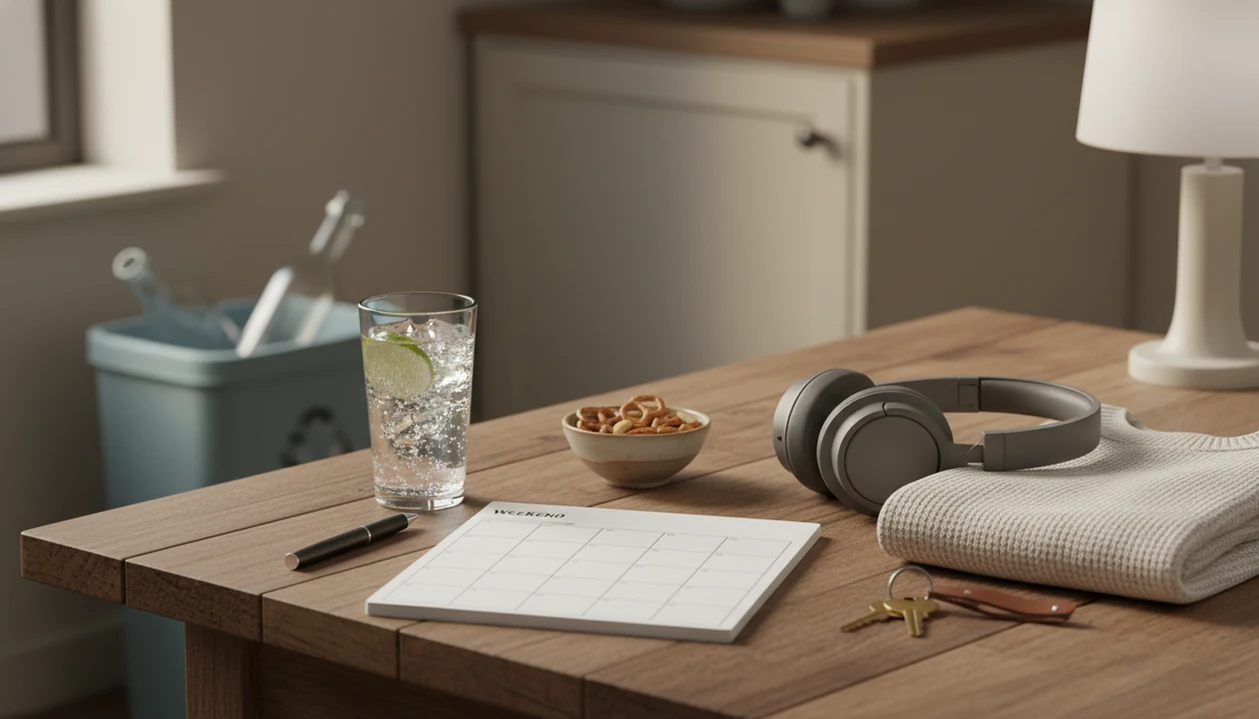
Give the weekend edges instead. Decide when it begins and ends, put meals and activities on the calendar, and tell one trusted person what you are doing. This is one weekend, not a demand to solve the rest of your life by Monday.
The quick version
If you drink heavily every day, need alcohol to stop shaking, or have had withdrawal seizures or hallucinations, get medical advice before stopping suddenly. Otherwise, plan Friday night through Sunday morning before the weekend starts. Remove alcohol cues, book specific activities, prepare one refusal line, and choose a 20 to 30 minute response for cravings.
Why Friday Feels Harder Than an Ordinary Weeknight
- Weekend drinking cravings are common because weekends carry stronger habit loops: free time, sports, meals out, dating, and evening routines often point toward alcohol.
- Friday can feel harder than Tuesday because the reward expectation starts before the first drink. The beer fridge hum during dinner prep can be enough.
- Boredom, anxiety, irritability, and broken sleep can show up during an alcohol free weekend; those feelings are signals, not proof you made the wrong choice.
- Per the CDC, 25.8% of U.S. adults who drank in the past month reported binge drinking in 2022, so weekend alcohol cues are not rare or personal (CDC alcohol data).
- One difficult weekend does not prove you cannot quit or cut back; it only shows which trigger pattern needs a better plan.
Check Withdrawal Risk Before You Stop
Weekend planning can help with habits and cravings, but it cannot make medically risky withdrawal safe. After prolonged heavy drinking, suddenly stopping can cause dangerous complications. NIAAA guidance on alcohol treatment recommends medical help when withdrawal may be possible.
Talk with a clinician or addiction service before stopping suddenly if you drink heavily every day, need a drink to stop shaking, or have previously experienced withdrawal seizures, hallucinations, or severe confusion. Serious medical or psychiatric conditions also call for professional assessment. Prescribed medication and monitoring may be needed.
The first 48 hours need special attention
When withdrawal occurs, symptoms are commonly worst during the first 48 hours and generally improve over 3 to 7 days, according to NHS alcohol withdrawal guidance. Sleep may remain disrupted for up to a month, so one poor night does not mean that stopping has failed.
Call emergency services for a seizure, hallucinations, severe confusion, extreme agitation, fainting, chest pain, severe vomiting, or symptoms that are getting worse quickly. Do not try to sleep these symptoms off.
Change the Cues Before the Craving Window Opens
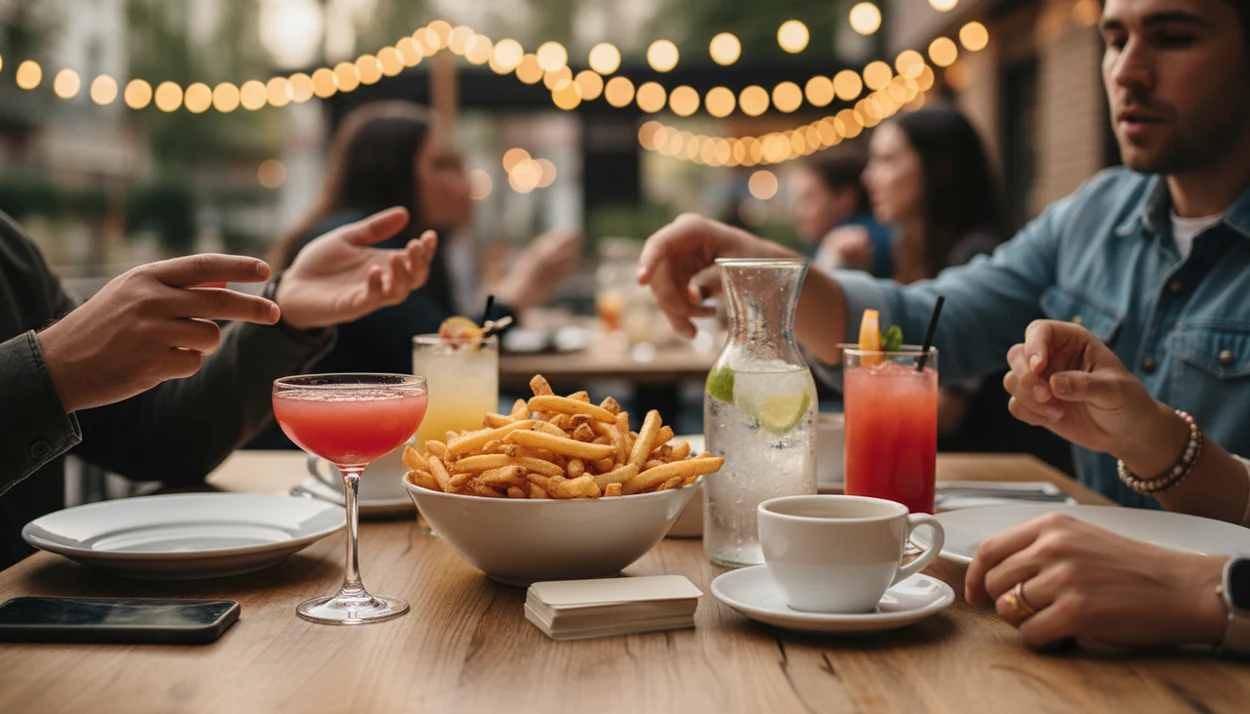
A sober weekend plan works by changing the cues, rewards, and friction around drinking before the craving window opens. The goal is to interrupt the automatic path to a drink while putting food, company, movement, or another useful option within easy reach.
Cue-routine-reward loops are the backbone here. Friday clock-out, a restaurant menu, friends texting, loneliness after dinner, or stress from the week can cue the routine of drinking. The replacement reward has to be real: sleep, food, movement, novelty, connection, entertainment, or visible progress.
Friction matters too. Remove alcohol at home, avoid bars, pre-book a class or movie, and decide your exit plan before someone offers a round.
Build Your Friday-to-Sunday Sober Weekend Plan
Use this five-step sober weekend plan before Friday evening, not after the first craving starts. For most people, the plan feels less dramatic when it is written down as time blocks.
- Set the weekend boundary: Write the exact goal, such as “No alcohol from Friday 5 p.m. through Monday morning.”
- Clear alcohol cues: Remove alcohol at home, then stock seltzer, tea, nonalcoholic drinks, snacks, and easy meals.
- Schedule high-risk blocks: Put plans on the calendar for Friday night, Saturday afternoon, Saturday night, and Sunday morning.
- Text support people: Tell one or two people your plan and prepare a refusal script before social pressure starts.
- Review the weekend: Note cravings, wins, money saved, sleep, mood, and one change for next weekend.
For a longer private experiment, some readers use a sober curious app to compare weekends without making a public announcement.
Get Through Friday Night Without Testing Your Willpower
How do you get through Friday night without drinking? Treat it as the highest-anticipation window, because the brain often expects the biggest reward right after the workweek ends.
Eat early, even if it is basic. Change clothes, take a walk, shower, attend a meeting or class, watch a movie, or go to bed earlier than usual. A full stomach and a different room can interrupt the “I always drink now” script. The Friday 6 p.m. drink can make a cigarette feel automatic too, so plan nicotine triggers if they are part of the pattern.
Do not make the first weekend a willpower contest. Avoid bars, pre-drinks, and heavy-drinking friends until you have more practice.
Friday refusal scripts
Use short lines you can repeat without explaining your whole life: “I’m taking the weekend off drinking,” “I’m driving tonight,” or “I’m heading home early, but I’m glad I came.”
Get medical advice before stopping suddenly if you drink heavily every day, need alcohol to relieve shaking, or have had a difficult withdrawal before. Call emergency services for seizures, hallucinations, severe confusion, fainting, chest pain, severe vomiting, extreme agitation, or rapidly worsening symptoms.
Saturday Activities for the Long, Unstructured Hours
Saturday needs structure because it is often the longest and loosest part of a first sober weekend. Boredom is a trigger, not proof that sober life is boring.
- Low-energy: coffee shop, bookstore, movie, long breakfast, library, or a slow home reset.
- Social: game night, lunch with a non-drinking friend, volunteer shift, museum visit, or a class.
- Active: gym, hike, swim, bike ride, climbing gym, or a long walk in a different neighborhood.
- Practical: grocery run, laundry, meal prep, budget check, car cleanout, or room reset.
- Novelty-based: cooking project, pottery class, matinee, local market, live talk, or a new trail.
Morning plans help more than people expect. A breakfast reservation or early gym slot gives Friday night a reason to stay alcohol-free. If weekend binges are the main pattern, a focused plan to stop weekend binge drinking may fit better than vague moderation rules.
Alcohol Cravings, Smoking, and Vaping Triggers
- Urge surfing means a craving rises, peaks, and passes when you delay action and change state. A craving can feel urgent, but its intensity often changes when you delay the decision and change what you are doing.
- A 10-minute craving protocol works better than arguing with yourself for an hour: hydrate, eat, move, breathe, text, and log the urge.
- Stopping alcohol for the weekend may increase urges to smoke, vape, snack, scroll, or isolate. The lighter offered across bar stools can become its own cue.
- If drinking usually comes with smoking or vaping, write down both urges so one does not quietly pull you back toward the other.
Good digital recovery tools can offer private tracking and next-step prompts, but they should not be treated as a diagnosis, detox plan, or emergency service.
Ten-minute craving reset
Drink water, eat something with protein or salt, move to a different room, breathe slowly for one minute, text a support person, then log the craving. The craving timer glowing in bed is not glamorous, but it can keep the night intact.
Use Sunday to Make Next Weekend Easier
What should you do on Sunday after a sober weekend? Use Sunday as a reset day, not just a finish line.
Ask five questions: What time was hardest? What helped? Who supported me? What nearly derailed me? What will I change next weekend? Write the answers before the memory gets fuzzy. Small details matter, like the restaurant table, the group chat, or the empty hour after dinner.
Track sleep, mood, money saved, cravings, and confidence. Some measurable health changes often build over weeks, not one weekend; studies and clinical guidance commonly associate alcohol reduction with improvements in sleep, blood pressure, liver markers, and mood over multi-week periods, though results vary by drinking level and health history (https://www.niaaa.nih.gov/publications/cycle-alcohol-addiction; https://www.bmj.com/content/362/bmj.k3768). If you want a longer next step, a 30 days no alcohol app can turn one weekend into a clearer month-long experiment.
A first sober weekend usually works best when Sunday produces one specific change for the next weekend, not a vague promise to “try harder.”
First sober weekend questions
What counts as a first sober weekend?
It is your first Saturday and Sunday, or your usual days off, without alcohol after deciding to quit, pause, or cut back. Give it a clear boundary, such as Friday at 5 p.m. through Monday morning, so you are not repeatedly renegotiating the goal.
Why are weekends harder when I stop drinking?
Weekends often contain strong drinking cues: finishing work, watching sports, eating out, seeing friends, dating, or being alone after dinner. The expectation can begin hours before your usual first drink. That learned pattern can make Friday feel harder than an ordinary weeknight.
What should I do when an alcohol craving hits?
Delay the decision for 20 to 30 minutes. Drink something nonalcoholic, eat, leave the triggering room or event, move your body, and contact someone who knows your plan. Reassess after the delay instead of debating with yourself for the rest of the evening.
Should I skip parties during my first sober weekend?
Skipping a bar, pre-drinks, or a party centered on heavy drinking is a sensible early choice. If you attend, bring or order a nonalcoholic drink, use a short refusal line, arrange your own transportation, and decide in advance when you will leave.
What can I drink instead of alcohol?
Choose something you genuinely like and can keep within reach, such as seltzer, tea, soda, flavored water, or a nonalcoholic drink. Be cautious with products that closely copy alcohol if their taste or packaging makes you want the alcoholic version more.
What if I drink during the weekend?
Stop and look at the specific sequence rather than declaring the whole weekend ruined. Note the time, setting, people, feeling, and first decision that led to drinking. Leave an unsafe setting, contact support, and use what happened to revise the next high-risk time block.
Can my sleep get worse when I stop drinking?
Yes. Sleep can be broken or restless during early abstinence, and sleep patterns may take up to a month to normalize. Keep the weekend low demand and avoid using alcohol as a sleep aid. Severe or worsening symptoms, especially confusion or hallucinations, require urgent medical care.
When is a sober weekend unsafe to try alone?
Do not attempt an unassisted stop if you drink heavily every day, need alcohol to stop shaking, or have had withdrawal seizures, hallucinations, or severe confusion. Serious medical or psychiatric conditions also raise concern. Contact a clinician or addiction service before changing your intake suddenly.