How to Drink Less at Restaurants and Dinners
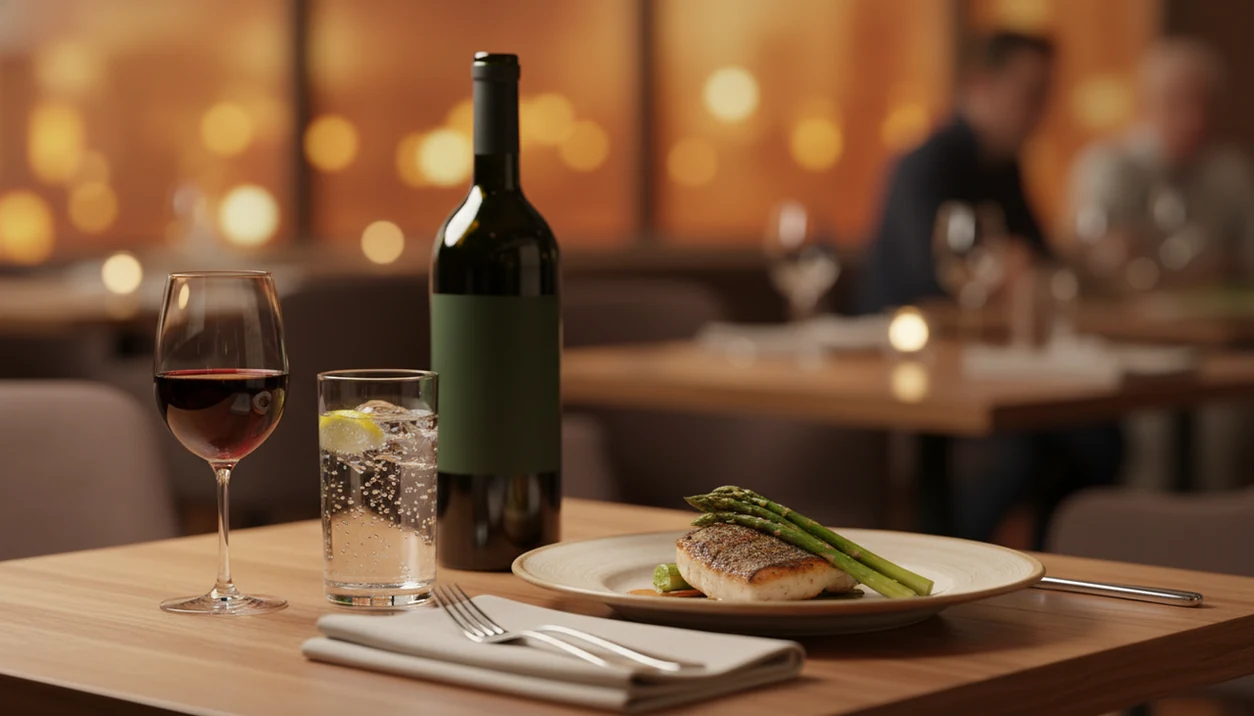
To drink less at restaurants, decide your drink limit before you arrive, order food or a non-alcoholic drink first, pace alcohol with water, and review what worked after dinner. A specific restaurant plan works better than relying on willpower once menus, companions, celebrations, and server prompts are already in front of you.
Scope: This guide offers practical restaurant-planning ideas for adults who want to drink less at dinner; it is not medical advice, diagnosis, detox guidance, or emergency care.
TL;DR
- Pick a restaurant alcohol limit before you arrive, such as zero, one, or two drinks.
- Use pacing rules: food first, water between drinks, and no automatic refills.
- If you repeatedly cannot stick to limits, moderation tactics may not be enough and confidential help is available.
Restaurant alcohol limits that work before dinner starts
Quick answer: A practical way to drink less at restaurants is to choose a clear limit before you sit down, slow the pace of ordering, and decide how you will respond to refills or rounds. For many people, the goal is not perfect control; it is making the next drink less automatic.
Key takeaways
- Set a maximum number of drinks before the first order.
- Eat early; drinking on an empty stomach can make limits harder to keep.
- Use a default pause before ordering another alcoholic drink.
- Ask for water or a non-alcoholic option in your hand between drinks.
- Decide in advance how you will handle shared bottles, rounds, or refills.
- If cutting down causes shaking, sweating, confusion, seizures, or severe anxiety, seek medical advice promptly.
Choose the exact number of drinks before you arrive. The clearest way to drink less at restaurants is to make the decision before the host stand, the wine list, and the first “Should we get a bottle?” moment.
A zero-drink plan works well when you’re driving, tired, training early, or testing a sober-curious night. A one-drink plan fits many dinners where you want the taste or ritual without letting the meal stretch into refills. A two-drink plan needs tighter pacing, especially during long dinners.
Decide the first order too: sparkling water, a mocktail, beer, wine, or no alcohol. Restaurant alcohol limits are easier when tied to the event type, such as date night, a business dinner, a birthday, or a family meal.
The sticky menu matters.
For broader planning outside restaurants, a weekly alcohol limit plan can help you avoid using every dinner as a separate negotiation.
Five dinner drinking facts to know before ordering wine
- A specific plan beats vague willpower because restaurant cues arrive fast: menus, specials, companions, and refills.
- Alcohol effects can build across a meal even when you feel steady during the appetizer.
- Wine with dinner moderation still depends on total amount, glass size, and how quickly each pour disappears.
- Non-alcoholic drinks reduce social pressure because your hand is already occupied and the table doesn’t need a speech.
- Repeatedly missing limits may signal the need for stronger support, not a character flaw.
One glass can become hard to count when a server tops it off before the entrée. That is why “I’ll just see how I feel” often breaks down in restaurants. A simple mindful drinking plan gives the meal a starting rule, not a moral test.
How dinner drinking plans work in restaurants
A dinner drinking plan works by using precommitment to reduce decisions during a cue-heavy meal. Precommitment means choosing the rule before the craving window opens, so the table doesn’t decide for you.
Restaurants are built around prompts: cocktail menus, happy-hour specials, companions ordering rounds, celebrations, waiting time, and refill offers. These cues feed habit loops, which are repeated patterns of trigger, action, and reward. In plain terms, the setting can make another drink feel automatic.
Pacing interrupts that loop. Food first, water between drinks, and no automatic top-offs create pauses before the next order. That pause is often enough to choose again.
Private tracking can help adults notice patterns across meals, cravings, streaks, and health milestones. Tracking is most useful for spotting trigger patterns and planning the next small step, not for replacing medical care or making a restaurant plan foolproof.
How to use a social drinking plan at a restaurant
Use a social drinking plan before the first order, not after the second drink. The goal is to make each choice small enough to follow while the table keeps moving.
- Set the drink limit before arrival: zero, one, or two. Say it once in your notes app if that helps.
- Order food or a non-alcoholic drink first with a simple script: “I’ll start with sparkling water.”
- Pace each alcoholic drink by finishing a full glass of water before deciding on another. Some people use a drink pacing app for this.
- Decline refills clearly before the server pours: “No second round for me.”
- Log the result afterward: limit, actual drinks, trigger, and one change for next time.
A private tracking app can help you log cravings, limits, streaks, and dinner patterns after the meal. A good support tool should offer practical tracking and reset features, not diagnosis, detox instructions, or a guarantee.
Restaurant ordering scripts for drinking less goals
Scripts work best when decided before social pressure begins. Short phrases keep the dinner moving and avoid turning your drink choice into a group discussion.
Scripts for servers
Server scripts: “I’ll start with sparkling water.” “Just one glass tonight.” “No second round for me.” “Could you leave the bottle off the table?” These work because they give a clear instruction without apology.
Scripts for friends and coworkers
Friend scripts: “I’m pacing tonight.” “I’m good with this one.” “I have an early morning.” For business dinners, keep it even shorter: “Sparkling water for me, thanks,” or “I’m staying sharp tonight.”
No shame language needed. You don’t have to announce a life story to protect one dinner plan.
Wine with dinner moderation and lower-alcohol swaps
Wine with dinner moderation depends on serving size, number of glasses, and speed. Wine is not automatically moderate just because it comes with food or feels more formal than shots.
Choosing by the glass can be easier than sharing a bottle, especially when the table has different goals. Automatic top-offs erase the count, so ask the server not to refill without checking. The half-poured wine glass on the counter at home has a restaurant version: a glass that never quite looks empty.
| Common order | Moderation risk | Better restaurant move |
|---|---|---|
| Bottle for the table | Hard to count personal pours | Order by the glass |
| Large wine pour | More alcohol than expected | Ask for a standard pour |
| Second cocktail | Faster effect before food | Switch to sparkling water with citrus |
| “Just one more” round | Social momentum takes over | Choose coffee, tea, dessert, or an alcohol-free beer |
| Mocktail with bitters | May still contain alcohol | Ask for a bitters-free spritz |
For one simple pacing rule, many people start by learning to alternate alcohol and water.
Celebration, business, and date-night dinner drinking plans
Does the dinner type change the alcohol plan? Yes, because different events create different pressure points.
Celebratory dinners often involve rounds and toasts. Use the rule “toast with the first drink only,” then switch to sparkling water or a mocktail. At a birthday table, holding a glass can matter more socially than what is in it.
Business meals can mix professional image with pressure to match the group. Use the rule “order first and keep it brief,” such as sparkling water or one drink with food.
Date nights can make matching the other person’s order feel expected. Use the rule “name your pace early,” such as “I’m doing one tonight.”
Family dinners can bring comments. Use the rule “repeat one calm line,” then change the subject. Heavy shoulders at happy hour are one signal that the plan should start before the restaurant door.
After-dinner reflection for restaurant alcohol limits
A two-minute reflection turns dinner into useful data instead of self-criticism. Do it in the car before driving away, on the train home, or the next morning when the receipt is still in your pocket.
Answer five questions: What was my plan? What did I order? What triggered extra drinking? What helped? What will I change next time?
Patterns show up quickly. You may notice high-risk restaurants, certain companions, late reservation times, stress after work, or the Friday 6 p.m. drink that makes another choice feel automatic.
Use a private note or tracking app to log drink goals, cravings, streaks, and milestones. If restaurant dinners are only one part of the pattern, it may help to compare them with nights when you drink less at home.
Restaurant moderation and alcohol support resources
Struggling to stick to restaurant limits can be a signal to seek more support. It is not a failure of discipline, and restaurant tactics do not treat alcohol use disorder by themselves.
The National Institute on Alcohol Abuse and Alcoholism says treatment options for alcohol problems can include behavioral treatments, medications, and mutual-support groups NIAAA alcohol data. Clinicians typically recommend matching the support level to the person’s symptoms, safety risks, medical history, and ability to control drinking.
SAMHSA’s National Helpline is free, confidential, and available 24/7, 365 days a year SAMHSA. USAGov lists the helpline number as 1-800-662-HELP (4357), and FindTreatment.gov can help people search for inpatient, outpatient, telehealth, and medication-assisted treatment options.
For people who repeatedly miss restaurant limits, confidential support is often safer than trying a stricter script alone.
Limitations
Restaurant drinking strategies can help, but they have real limits.
- Repeated loss of control may require professional support.
- These tactics are not medical treatment, diagnosis, detox guidance, or emergency care.
- If withdrawal symptoms, pregnancy, medication concerns, or urgent mental health needs are present, speak with a qualified professional.
Reset the plan.
FAQ
How do I drink less at dinner?
Set a drink limit before you arrive, order food or a non-alcoholic drink first, pace alcohol with water, and stop automatic refills. Review the meal afterward so the next plan is more specific.
What is a good restaurant drink limit?
A good restaurant drink limit may be zero, one, or two drinks, depending on your goals, safety, schedule, and past control. If two often becomes more, choose a lower limit or seek support.
Is wine with dinner moderation?
Wine with dinner can fit moderation only if the serving size, number of glasses, and pace stay within the plan. A bottle for the table can make accurate counting harder.
How do I refuse another round?
Use a short script such as “No second round for me,” “I’m pacing tonight,” or “I’m good with this one.” You do not need to explain beyond that.
What should I order first if I do not want to drink much?
Order food, water, sparkling water, a mocktail, tea, coffee, or another non-alcoholic drink first. Starting with a drink in hand reduces pressure to order alcohol immediately.
Why do I overdrink at restaurants?
Common triggers include social pressure, long meals, celebrations, stress, waiting time, and automatic refills. Alcohol effects can also build slowly across dinner.
When should I get alcohol help?
Seek confidential support if you repeatedly miss limits, feel strong cravings, hide drinking, or cannot stop once you start. Restaurant moderation tips are not a substitute for alcohol treatment when control is repeatedly lost.