Drink Less for Anxiety, Mood, and Mental Clarity
Drinking less can improve anxiety, mood, sleep, and mental clarity because alcohol can calm you briefly, then trigger rebound stress, low mood, and poor sleep later. If your goal is to drink less for mental health, track how much you drink alongside next-day anxiety, mood, sleep, and cravings so you can spot patterns instead of guessing.
This guide is educational and is not a diagnosis, detox plan, or substitute for care from a licensed clinician. If you drink heavily, have withdrawal symptoms, or feel unsafe, get medical advice before cutting down.
- Alcohol can feel relaxing at first, but it often worsens anxiety, irritability, sleep quality, and low mood later.
- Hangxiety is a rebound effect: alcohol suppresses stress signals temporarily, then the nervous system can overcorrect the next day.
- Tracking drinking, anxiety, mood, and triggers on your phone helps you see whether specific amounts, times, or situations affect your mental wellbeing.
Alcohol and anxiety: the short answer for mental health
Quick answer: Drinking less may help anxiety and mood for many people because alcohol can temporarily relax you, then worsen sleep, stress sensitivity, and next-day emotional regulation. Tracking drinks with next-day anxiety, mood, sleep, and cravings can make patterns visible and help you choose lower-risk changes.
Key takeaways
- Alcohol can feel calming at first but may increase next-day nervousness or low mood.
- Sleep quality is often the first clue that drinking is affecting mental wellbeing.
- Track the day after drinking, not just the night you drink.
- Note amount, timing, setting, mood before drinking, and mood the next morning.
- If you drink daily or heavily, ask a clinician before stopping suddenly.
- Medication, trauma, depression, or panic symptoms can change what support is safest.
Alcohol and anxiety have a push-pull relationship: drinking may quiet worry for a short time, but it can worsen anxiety later through rebound stress, poor sleep, and repeated coping loops. Drinking less helps you separate your baseline anxiety from alcohol-related rebound feelings.
That distinction matters. If Sunday morning feels like dread, racing thoughts, and a tight chest after a heavy Saturday, the problem may not be “who you are.” It may be what your nervous system is doing after alcohol wears off.
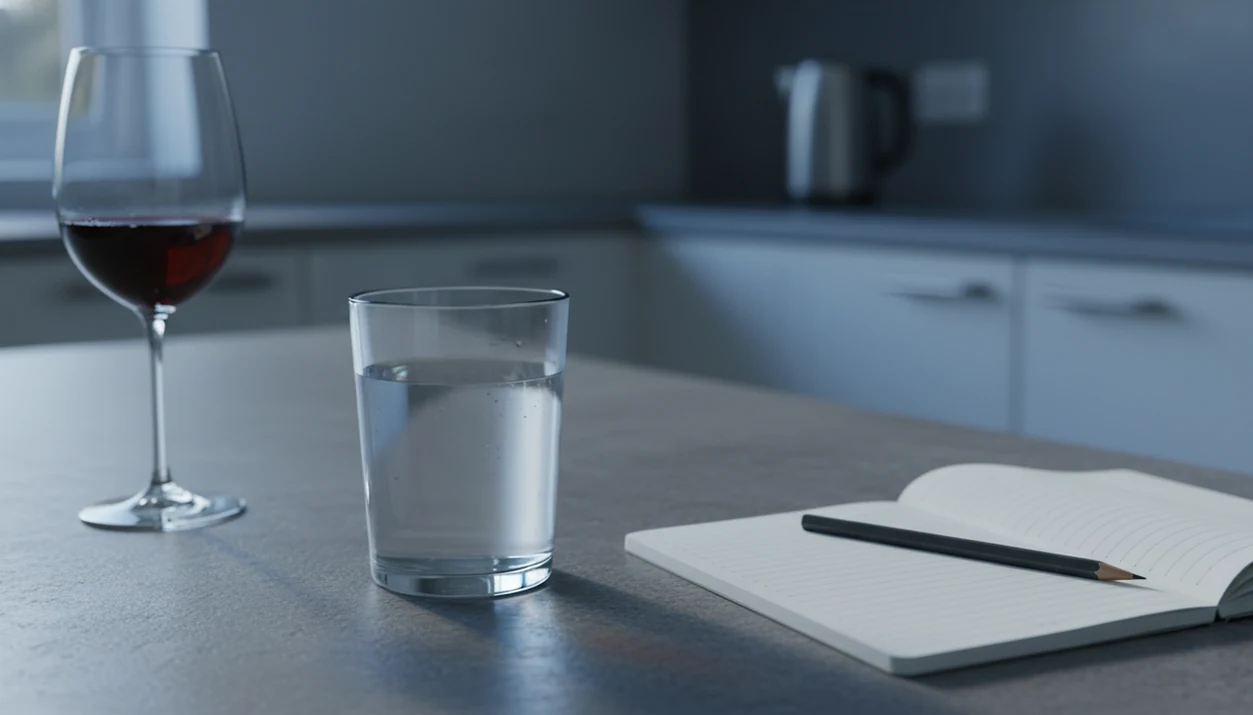
The half-poured wine glass on the counter can tell you more than memory does.
Heavy or dependent drinkers should not stop suddenly without medical advice. Alcohol withdrawal can be dangerous, especially if you have shakes, seizures, confusion, hallucinations, or a history of severe withdrawal.
Five alcohol and mood facts most people miss
- Alcohol is a central nervous system depressant that affects brain systems involved in mood, sleep, reward, and stress.
- Hangxiety can feel like shakiness, dread, irritability, racing thoughts, low mood, or a sense that something is wrong.
- Using alcohol to self-medicate anxiety can reinforce a loop: stress, drink, relief, rebound anxiety, then another drink.
- Mental health benefits from cutting back often show up over days to weeks, not always the next morning.
- Tracking drinking and anxiety together is usually more useful than tracking drinks alone because it connects amount, timing, sleep, and mood.
In 2022, SAMHSA estimated that about 29.5 million people in the United States had alcohol use disorder SAMHSA. A large U.S. survey found lifetime alcohol use disorder in 20% of people with an anxiety disorder and 24% of people with a mood disorder the NIH.
How alcohol affects the brain chemically after drinking
Alcohol is a central nervous system depressant, not a true anxiety treatment. It can slow nervous system activity for a while, which is why the first drink may feel like relief after a tense day.
After alcohol wears off, the brain may rebound in the other direction. Stress systems become more active, sleep becomes lighter, and the body may be dealing with dehydration, blood sugar swings, guilt, or patchy memory. That mix can make next-day anxiety feel louder than usual.
Dopamine and reward learning also matter. If your brain learns that a drink brings fast relief, it may start asking for that same shortcut during stress. Clinicians typically recommend treating repeated alcohol-related anxiety as a pattern to review, not as proof that alcohol is helping.
The pocket check is real.
Hangxiety symptoms and next-day alcohol mood swings
What is hangxiety after drinking? Hangxiety means hangover anxiety or alcohol rebound anxiety, usually felt the next day after drinking.
Common symptoms include dread, racing thoughts, panic-like sensations, irritability, low mood, shame, poor concentration, and a jumpy body. Some people describe waking at 4 a.m. with a dry mouth and a sudden need to replay every sentence from the night before.
Symptoms can be worse after binge drinking, poor sleep, social conflict, or drinking to cope with stress. A Friday 6 p.m. drink that turns into several more can also make a cigarette or vape feel automatic, which adds another layer of regret the next day.
Hangxiety can happen even if you do not drink daily. It also does not diagnose an anxiety disorder or alcohol use disorder by itself. It is a signal worth tracking.
How to track drinking and anxiety on your phone
The most practical way to track drinking and anxiety is to log drinks, mood, sleep, triggers, and next-day symptoms in the same place. The goal is pattern recognition, not self-punishment.
- Set a baseline by recording one normal week without changing anything yet.
- Log drinks with amount, time, drink type, and whether you drank faster than planned.
- Rate anxiety and mood that night and the next morning on a simple 0 to 10 scale.
- Add context such as stress, conflict, social pressure, cravings, sleep, food, or medication changes.
- Review weekly patterns to find links between drinking time, quantity, hangxiety, mood, and mental clarity.
- Reset the next goal with one smaller target, such as two alcohol-free days or an earlier stop time.
A private phone diary can work if it lets you log drinks, cravings, triggers, sleep, mood scores, streaks, dry days, and resets in the same place. A broader drink less for health app can also help if you want one place to track physical and mental changes.
Drink less for mental health: what changes first
When people drink less for mental health, the earliest changes are often sleep quality, steadier mornings, less next-day anxiety, and clearer energy. Some notice this within a few weeks, especially after cutting late-night drinking or weekend binges.
Not every first week feels better. Anxiety, restlessness, low mood, or poor sleep can temporarily increase as the brain and body readjust. That discomfort does not prove alcohol was helping. It may mean your nervous system is learning to settle without the usual shortcut.
A weeknight pour after laptop shutdown can become a strong cue. Changing that cue may feel awkward before it feels freeing.
Improvement depends on baseline drinking level, dependence, mental health history, trauma, medications, sleep, and support. For people reducing alcohol mainly to improve sleep, the related Drink Less for Better Sleep guide goes deeper into night waking and rebound insomnia.
Alcohol self-medication and anxiety disorder overlap
The self-medication loop is simple and sticky: stress rises, alcohol brings relief, rebound anxiety arrives later, and the next drink starts to look like the answer. Over time, the loop can make both drinking and anxiety harder to manage.
Anxiety disorders, mood disorders, and alcohol use disorder commonly overlap. The 2004 U.S. survey found that 20% of people with an anxiety disorder and 24% of people with a mood disorder also had a lifetime alcohol use disorder the NIH. Research reviews have reported lifetime anxiety and alcohol co-occurrence estimates up to about 50% in treatment-seeking samples.
In England, the Mental Health Foundation has estimated that 83% of people dependent on alcohol have experienced a co-occurring mental health problem. If anxiety, depression, trauma symptoms, or drinking feel hard to control, professional support is a small next step, not a personal defeat.
When to Seek Medical Help for Alcohol, Anxiety, or Mood Symptoms
Seek medical help when alcohol, anxiety, or mood symptoms feel unsafe, hard to control, or necessary to get through the day. Heavy or dependent drinkers should get medical guidance before stopping suddenly, because withdrawal can become dangerous.
Watch for urgent withdrawal signs such as seizures, confusion, hallucinations, severe shaking, fever, or feeling unable to stay oriented. Also treat suicidal thoughts, self-harm risk, severe depression, panic that feels unmanageable, or behavior that could put you or someone else in danger as reasons to get immediate support.
- Call emergency services or go to urgent care if there are seizures, hallucinations, confusion, fever, unsafe behavior, or risk of self-harm.
- Contact a clinician before cutting down sharply if you drink heavily, drink daily, or have had withdrawal symptoms before.
- Tell your primary care doctor what you drink, what you feel afterward, and whether alcohol feels required for sleep, work, socializing, or calming down.
- Ask about therapy or addiction medicine if anxiety, trauma, depression, cravings, or repeated resets are part of the pattern.
- Use crisis services if you feel at risk now and cannot wait for a routine appointment.
Low-risk drinking goals for anxiety and mood tracking
Low-risk drinking guidelines can help set a starting line, but they do not guarantee mental health safety for every person. UK guidance advises adults not to regularly drink more than 14 units per week, spread over several days ac alcohol data.
Compare your own anxiety, sleep, and mood against your weekly drinking pattern. Your data may show that two drinks are fine on Saturday with food, but one late drink on a work night leads to poor sleep and a flat morning.
| Goal type | Example | What to track |
|---|---|---|
| Alcohol-free days | 3 dry days each week | Next-day anxiety, sleep, cravings |
| Fewer drinks per occasion | Stop at 2 instead of 4 | Mood, irritability, urges |
| Earlier stop time | Last drink by 8 p.m. | Night waking, morning clarity |
| Lower-strength swaps | Beer to low-alcohol beer | Total units, satisfaction |
For some readers, goals around drink less for heart health overlap with mood goals because sleep, energy, and stress often move together.
Smoking, vaping, drinking, and mental clarity patterns
Alcohol, smoking, and vaping often cluster around the same triggers: stress, social cues, boredom, reward, and routine. A porch smoke after two cocktails is not three separate habits in real life. It is one linked pattern.
Alcohol can weaken intentions around cigarettes or vaping for some people. The plan made at noon can feel distant by the time an ashtray and pint are on the patio table. Then the next morning brings nicotine cravings, alcohol rebound, poor sleep, and foggy thinking at once.
Tracking all three can reveal combined patterns in anxiety, cravings, sleep, and mental clarity. Me Quit can be a private option for adults who want day-by-day logs for drinks, nicotine cues, triggers, streaks, dry days, and resets, but it does not provide diagnosis, detox, emergency care, or medical supervision.
If you are comparing private tools, alcohol app alternatives can help you see which options focus on drinking alone and which include nicotine loops too.
Limitations
Drinking less can help many people feel steadier, but it is not a cure-all for anxiety, PTSD, depression, bipolar disorder, trauma, or severe stress. Mental health deserves direct care when symptoms are persistent or unsafe.
- People who are heavily dependent on alcohol may need medical supervision because sudden withdrawal can be dangerous.
- Tracking apps do not replace therapy, medication, peer support, crisis care, or alcohol use disorder treatment.
- If drinking feels necessary to function each day, professional support is safer than trying to manage it alone.
Private progress tracking can be useful. It is not medical supervision.
Medical Scope and Source Standards
This guide is educational, not individualized medical advice. It can help you prepare better questions and notice patterns, but it cannot diagnose anxiety, depression, alcohol use disorder, withdrawal risk, or any other condition.
The page is written from public health guidance, clinical education materials, and peer-reviewed research where appropriate, with preference for sources that explain alcohol, mental health, withdrawal, and population-level risk clearly. Because mental health symptoms and alcohol patterns overlap in complicated ways, a clinician may need to assess drinking history, medications, sleep, trauma, medical conditions, and safety risk before recommending a plan.
Use tracking as a reflection tool, not a medical test:
- Record drinks, timing, sleep, anxiety, mood, cravings, and triggers as honestly as you can.
- Look for repeated patterns, such as late drinking followed by poor sleep or morning dread.
- Share your notes with a clinician if symptoms are severe, persistent, confusing, or escalating.
- Avoid using app scores to self-diagnose, rule out withdrawal, or replace therapy, medication, detox care, or crisis support.
FAQ
Does alcohol make anxiety worse?
Alcohol can briefly reduce anxiety, but it often worsens anxiety later through rebound stress, poor sleep, and repeated coping loops. If this happens often, tracking alcohol and anxiety together can show whether drinking is part of the pattern.
What is hangxiety?
Hangxiety is next-day anxiety after drinking. It is often linked to nervous system rebound after alcohol’s calming effects wear off.
How long does hangxiety last?
Many people feel better within a day or two, but symptoms vary by drinking amount, sleep, health, medications, and dependence. Severe or prolonged symptoms should be discussed with a clinician.
Can alcohol cause depression?
Alcohol can worsen low mood and depressive symptoms, especially with frequent or heavy use. Depression usually has multiple causes, so alcohol should not be treated as the only possible explanation.
Will quitting alcohol improve mood?
Mood often improves after cutting back or stopping, especially when sleep and energy recover. Underlying anxiety, depression, trauma, or bipolar symptoms may still need treatment.
Why am I anxious after quitting?
Anxiety after quitting can come from brain readjustment, poor sleep, withdrawal, or the return of emotions alcohol was masking. Heavy drinkers or anyone with severe symptoms should seek medical support.
Can moderate drinking affect anxiety?
Yes, even non-daily or moderate drinking can affect sleep, irritability, and anxiety in some people. Individual response varies, so personal tracking matters.
How do I track hangxiety?
Log drinks, timing, sleep, anxiety score, mood score, triggers, cravings, and next-day symptoms in a phone diary or app. Me Quit can be used for private tracking when alcohol, nicotine, and cravings overlap.
When should I get help?
Get help if you cannot cut down, have withdrawal symptoms, severe depression, panic, suicidal thoughts, or drink to manage daily functioning. Urgent symptoms such as seizures, confusion, hallucinations, or unsafe behavior need immediate medical care.