
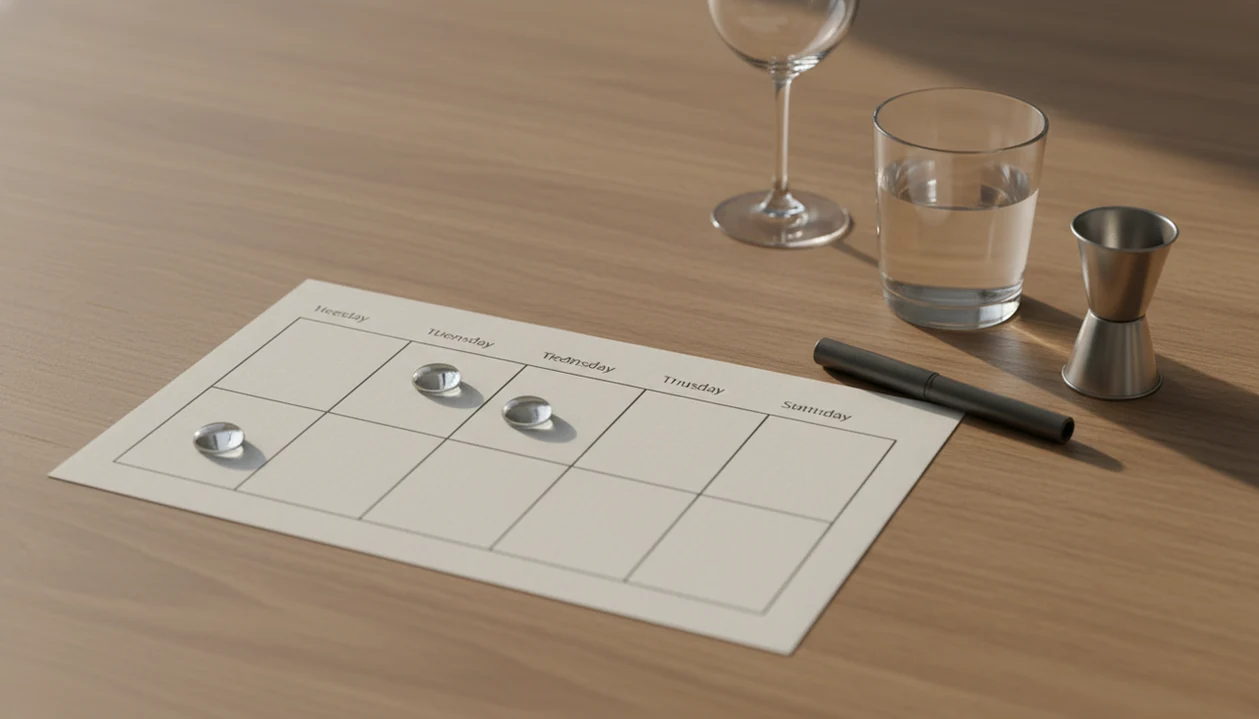
> Definition: A weekly alcohol limit plan is a pre-set, trackable cap on total drinks per week, broken into daily allowances and alcohol-free days, used to reduce health risks and build mindful drinking habits.
Weekly Alcohol Limit Plan Definition and Core Parts
Quick answer: A weekly alcohol limit plan helps you decide your drink ceiling before the week starts, so choices are less reactive in the moment. For many people, it works best when the limit is paired with dry days, event-specific budgets, and honest tracking without shame.
Key takeaways
- Pick a weekly number you can realistically follow, then lower it gradually if needed.
- Decide in advance which days are alcohol-free and which events allow drinks.
- Log drinks as they happen; memory-based tracking often becomes inaccurate.
- Use standard drink sizes, not glass count, to avoid underestimating intake.
- Review patterns weekly, especially stress, social pressure, sleep, and cravings.
- If stopping or cutting back causes shaking, seizures, confusion, or severe symptoms, seek medical care before continuing.
A weekly alcohol limit plan is a written or app-based drink cap that sets weekly totals, daily rules, dry days, and real-time logging before drinking starts. It is harm reduction, not an abstinence-only program.
The usual guideline anchors are no more than 7 drinks per week for women and 14 for men, with daily caps still in place. That means a Friday 6 p.m. drink cannot become permission to spend the whole weekly budget in one night. The plan needs four parts: a weekly cap, a daily maximum, alcohol-free days, and a way to record each drink as it happens.
Harm reduction works by making the next choice smaller. Instead of asking, “Am I quitting forever?” you ask, “Does this drink fit today’s plan?” For people comparing reduction approaches, a mindful drinking plan can sit beside weekly caps without requiring a public label or group identity.
Small rules help.
7-Drink and 14-Drink Weekly Limits by Guideline
Weekly drink limits only work when they respect daily limits too. The NIAAA states that lower-risk drinking guidance is 1 drink or less per day for women and 2 drinks or less per day for men, not averaged across several days NIAAA alcohol data.
Standard Adult Limits
- Daily cap: 1 drink per day for women and 2 drinks per day for men.
- Weekly cap: 7 drinks per week for women and 14 for men are common planning ceilings.
- Heavy use threshold: NIAAA defines heavy alcohol use as 8+ drinks per week for women and 15+ for men.
- Binge threshold: Binge drinking is 4+ drinks for women or 5+ for men in about 2 hours.
- Key rule: These numbers apply to single days and occasions, not just weekly averages.
Adjusted Limits for Adults 65 and Older
The VA recommends adults 65 and older stay at no more than 1 drink per day and 7 per week (va alcohol data). Clinicians typically recommend lower limits, or no alcohol, when age, medications, falls risk, sleep problems, or liver concerns change the risk picture.
Weekly Drink Limit Plan Mechanics
A weekly drink limit plan works through pre-commitment, habit loops, and feedback. In plain terms, you decide before the craving window opens, then use your log to compare the plan with what actually happened.
Pre-commitment reduces decision fatigue at the bar, restaurant, or couch. A dual-cap system also matters. The weekly budget prevents slow creep, and the daily maximum prevents binge clustering. For many people, the risky moment is not the first drink. It is the third pour when the plan has become fuzzy.
Dry days create natural breaks. They can lower total intake, interrupt the “every evening” habit loop, and show which triggers are alcohol-specific. Real-time logging closes the gap between memory and intake. A lime wedge sinking in club soda is easier to count when you log before the next round arrives.
For most people cutting back, a weekly cap works better than vague moderation because it turns intention into a visible number.
5-Step Weekly Alcohol Limit Plan Setup
Use this setup once per week, ideally before the first planned drinking day. It takes about five minutes, which is the point.
- Choose your weekly cap based on guidelines, medical advice, or a personal goal lower than the guideline number.
- Assign daily limits and pick 2-3 dry days before social plans start filling the calendar.
- Identify high-risk events and pre-budget drinks for them, such as 2 drinks max at dinner.
- Log every drink in real time using Me Quit or another drink budget app, including pour size.
- Review totals at week’s end and adjust the next week’s plan from data, not guilt.
A phone reminder during a smoke break can be useful if drinking and nicotine show up together. Tools like Me Quit can help here, but the rule is still yours: write the limit before the first drink, not after the second.
Reset, not restart from zero.
Ready to start your quit?
A weekly alcohol limit plan sets a specific number of drinks you allow yourself each week, distributes them across designated days, and uses an alcohol limit tracker to log every…
2-3 Dry Days and Event Budgets in Your Drink Budget
Dry days are fixed anchors in a weekly drink budget, not spare credits for later. If Tuesday is alcohol-free, you do not borrow those drinks for Saturday; the daily cap still applies.
A simple pattern is Monday through Wednesday dry, then limited drinking on selected later days. Another option is alternating dry days, which can fit shift work or shared custody schedules. Known events should get a drink budget before you arrive. For example, set 2 drinks max at a birthday dinner, then switch to water, food, or a nonalcoholic option.
The porch smoke after two cocktails is a real trigger pattern for many people. If alcohol pulls cigarettes or vapes into the night, budget both behaviors honestly. Me Quit lets you tag event days versus dry days, so the weekly review shows whether restaurants, home drinking, or social pressure need a different plan. For pacing support, a drink pacing app can help slow the interval between drinks.
MeQuit Alcohol Limit Tracker Features That Help You Adjust
An effective alcohol limit tracker should show what remains, not just what already happened. Me Quit fits this use case by combining drink limits, dry-day tracking, craving logs, and cross-habit notes for smoking or vaping.
For comparison, apps such as Sunnyside and Reframe also focus on drink tracking and mindful reduction; the useful distinction is whether the tool supports weekly caps, dry days, and cross-habit triggers in one place.
- Real-time drink logging: Record standard drink sizes as you go, before memory gets generous.
- Weekly budget dashboard: Compare drinks logged with drinks remaining for the week.
- Dry-day streaks: Mark alcohol-free days and milestones without turning one slip into a lost month.
- Cap alerts: Get a warning when you are close to a daily or weekly limit.
- Cross-habit tracking: Note when alcohol cravings line up with cigarettes, vapes, or stress cues.
Good recovery tools deliver private progress tracking and reset plans, not detox instructions, withdrawal guidance, or a diagnosis. The pocket check is real when a mint vape lives in a hoodie and drinks make it easier to reach.
5 Common Mistakes When Setting Drinking Limits
A weekly alcohol limit plan fails most often when the numbers look tidy but the week is not. Watch for these five errors.
- Averaging across days: Seven weekly drinks does not mean seven drinks on Saturday.
- Treating the limit as safe: The CDC reports that even low levels of alcohol use can increase certain cancer risks compared with not drinking CDC alcohol data.
- Under-counting pour sizes: A large wine glass or strong home cocktail may be more than one standard drink.
- Skipping dry days under pressure: Dry days work because they are pre-decided, not negotiated at the table.
- Assuming plans are only for alcohol use disorder: Many people use limits simply to sleep better, spend less, or avoid the stale alcohol-and-smoke feeling on a winter coat.
A weekly plan usually works best when it protects both daily caps and dry days, while looser “drink less” goals fit people who already pour and pace accurately. If home is the main trigger, start with ways to drink less at home.
Who Should Use a Weekly Alcohol Limit Plan
A weekly alcohol limit plan is best for people who want to cut back and do not have withdrawal symptoms when they drink less. It is also useful for social drinkers who need a clear cap before dinners, games, weddings, or work events.
It is not enough when drinking has become unsafe. Blackouts, injuries, driving after drinking, withdrawal shakes, morning drinking, or repeated failed attempts to stop are signs to consider abstinence, counseling, or medical care instead of a self-guided drink budget.
- Use a weekly cap if your main problem is drift: one drink becoming three, or weekend plans quietly expanding.
- Choose abstinence if one drink reliably turns into a binge, or if pregnancy, medication, age, or health advice makes alcohol a poor fit.
- Ask for counseling when alcohol is tied to grief, anxiety, trauma, loneliness, or relationship pressure.
- Seek medical support if stopping causes shaking, sweating, confusion, seizures, severe anxiety, or other withdrawal symptoms.
- Add a drink budget app when memory, pour size, event pressure, or alcohol-plus-nicotine triggers make paper plans easy to ignore.
The app adds value when it catches the moment before the next round, not when it becomes a scoreboard after the fact.
Limitations
A weekly alcohol limit plan can reduce risk, but it cannot make alcohol risk-free. It is a planning tool, not medical care.
- Any alcohol use carries higher health risk than abstinence for some outcomes, per CDC summaries.
- People who are pregnant, under 21, taking certain medications, or advised not to drink should use a zero-alcohol plan.
- People with alcohol use disorder or withdrawal symptoms may need medical support, not self-guided reduction.
If cutting back feels unstable, or stopping causes shaking, sweating, confusion, or severe anxiety, contact a clinician or local emergency service.