
How Alcohol Affects Your Gut and Nutrient Absorption
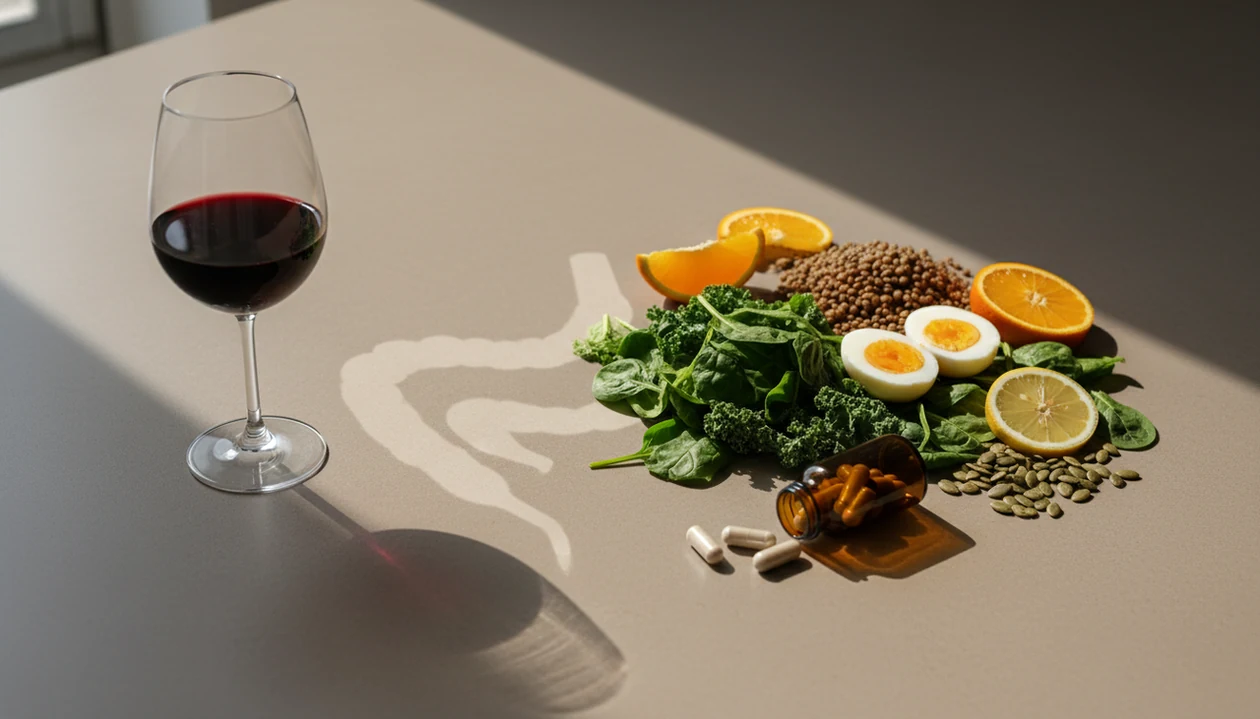
Alcohol gut nutrient absorption issues happen because drinking can irritate the stomach and small intestine, disrupt digestive enzymes and bile, alter the gut microbiome, and make it harder to absorb or use nutrients such as thiamine, B12, folate, and zinc. The effects are usually stronger with heavy or frequent drinking, but bloating, fatigue, mood swings, and brain fog can be early signs that alcohol is affecting digestion and nutrient status.
This guide is educational and is not a diagnosis of malabsorption, vitamin deficiency, alcohol use disorder, or a digestive disease. If symptoms persist, worsen, or include numbness, confusion, blood in stool, severe pain, or unintentional weight loss, seek medical care rather than self-treating with supplements.
> Definition: Alcohol gut nutrient absorption describes how drinking affects the digestive tract’s ability to break down food, maintain a healthy gut lining, balance microbes, and absorb or use vitamins, minerals, and other nutrients.
TL;DR
- Alcohol can irritate the gut lining and interfere with nutrient absorption in the stomach and small intestine.
- B vitamins, especially thiamine, vitamin B12, and folate, are among the nutrients most often discussed in alcohol-related depletion.
- Bloating, fatigue, mood changes, and brain fog after drinking may reflect gut irritation, microbiome shifts, poor sleep, dehydration, or nutrient disruption.
Alcohol Gut Nutrient Absorption: The 5 Facts That Matter Most
Quick answer: Alcohol may interfere with gut health and nutrient status by irritating digestive tissues, changing the microbiome, and making it harder for the body to absorb or use certain vitamins and minerals. For many people, reducing drinking and tracking symptoms can clarify whether bloating, fatigue, mood changes, or brain fog improve when alcohol intake goes down.
Key takeaways
- Frequent or heavy drinking is more likely to affect digestion than occasional light drinking.
- Thiamine, folate, B12, and zinc are common nutrients to discuss with a clinician if symptoms persist.
- Bloating or loose stools after drinking can reflect irritation, altered motility, or food and alcohol combinations.
- Brain fog and low energy may have multiple causes, including sleep disruption, dehydration, and nutrient issues.
- Do not stop heavy daily drinking suddenly without medical advice; withdrawal can be dangerous.
- A simple log of drinks, meals, sleep, and symptoms can reveal patterns faster than memory alone.
- Alcohol can affect digestion, absorption, storage, utilization, and excretion of nutrients, not just one step.
- The stomach and small intestine matter because much nutrient absorption happens through their lining.
- B vitamins, especially thiamine, B12, and folate, are often discussed with alcohol-related nutrient disruption.
- Zinc may also be affected, and low intake can stack with poorer absorption.
- Fatigue, bloating, mood changes, and brain fog can appear before a clear deficiency is diagnosed.
Risk usually rises with heavy or frequent drinking, but bodies do not respond identically. A person who pours wine after laptop shutdown every night may notice sour stomach and poor sleep long before lab work changes.
Small signals count.
For most adults, reducing drinking frequency is often a more direct gut-support step than adding supplements first, because it removes the recurring irritant.
How Alcohol Gut Nutrient Absorption Works
Alcohol gut nutrient absorption works through a chain of irritation, weaker food breakdown, and less reliable nutrient handling before nutrients fully reach the bloodstream. In plain language, alcohol can make the stomach feel raw, then stress the small-intestine lining where much absorption is supposed to happen.
Before vitamins and minerals can be used, food has to be broken down by digestive enzymes and mixed with bile, the fluid that helps handle fats. Alcohol can disrupt that process, so nutrients may not be separated, transported, or used as smoothly. It can also shift the microbiome, the gut’s community of microbes, and weaken the barrier that helps keep irritation contained. That barrier stress can feed inflammation, bloating, and unpredictable stool patterns. Thiamine, B12, folate, and zinc come up often because they support energy, nerves, blood cells, tissue repair, and immune function, and alcohol can interfere with their absorption or use. One drink does not guarantee a deficiency, but repeated or heavy drinking raises the odds that small digestive problems become a pattern.
Alcohol Gut Microbiome Effects on Inflammation and Digestion
The gut microbiome is the community of bacteria and other microbes that helps regulate digestion, gut barrier function, immune signaling, and inflammation. Alcohol can shift that microbial balance and irritate the gut barrier, which may influence bloating, stool changes, and how well digestion feels day to day.
MD Anderson explains that alcohol can change the balance of bacteria in the gut microbiome, which can affect gut function and inflammation mdanderson alcohol data. That does not mean every symptom after drinking is “caused by the microbiome.” Poor sleep, dehydration, carbonation, food choices, and stress can all pile on.
The patio table with an ashtray and pint is a real trigger map, not just a social scene. Gut symptoms often show up after the full loop: drink, snack differently, sleep badly, wake up foggy.
The deeper microbiome pathway is covered in our guide to alcohol gut dysbiosis.
Alcohol and B Vitamins: Thiamine, B12, Folate, and Zinc
Alcohol and B vitamins are linked because alcohol may inhibit both absorption and use, not simply reduce how much someone eats. A University of California San Diego nutrition resource states that alcohol use inhibits absorption and usage of thiamin, vitamin B12, folic acid, and zinc ucsd alcohol data.
- Thiamine: Thiamine supports energy metabolism and nervous system function, and heavy drinking is strongly associated with concern here. Thiamine concern is especially important in heavy or chronic drinking because severe deficiency can affect the brain and nervous system; confusion, poor coordination, eye-movement changes, or new numbness are medical red flags. - Vitamin B12: B12 supports nerve health and red blood cell formation, and absorption depends on a healthy digestive process. - Folate: Folate helps with cell growth and mood-related pathways, and alcohol can interfere with its status. - Zinc: Zinc supports immune function, tissue repair, and appetite regulation.
Food quality matters too. After two drinks, the “meal” may become chips, takeout, or nothing. Not always, but often enough to notice.
For adults trying to connect mood, cravings, and digestion, alcohol gut serotonin mood adds the gut-brain angle.
Alcohol, Digestive Enzymes, Bile, and Gut Lining Damage
Alcohol can make nutrient absorption less efficient through a chain: less effective food breakdown, irritated gut lining, weaker transport, and poorer nutrient use. Digestive enzymes and bile help break food into absorbable parts; alcohol can interfere with that process before nutrients ever reach the bloodstream.
A NIH-indexed review reports that alcohol can affect nutrient digestion, absorption, storage, utilization, and excretion the NIH. That matters because “malabsorption” is not only one doorway being blocked. It can be the whole hallway getting messy.
How alcohol gut nutrient absorption works: alcohol can irritate the stomach and small intestine, alter intestinal homeostasis, and disrupt the systems that move nutrients from food into circulation. In plain English, the gut may still receive food, but it may not process and use that food as cleanly.
A person can feel digestive friction before a doctor finds a formal deficiency. The belt feels tight. Lunch sits heavy. The evening snack does not land right.
Drinking Brain Fog, Bloating, and Low Energy Symptoms
Can drinking cause brain fog, bloating, and low energy? Yes, drinking can contribute to those symptoms, but they are nonspecific and can also come from other digestive, sleep, hormonal, or medical causes.
Bloating after alcohol may come from gut irritation, slowed digestion, carbonation, microbiome changes, inflammation, or the salty food that came with the drinks. Fatigue and brain fog may involve poor sleep, dehydration, blood sugar swings, and disrupted B vitamin status. Mood changes can happen too, especially when sleep is short and the body feels unsettled.
The morning after a last drink marked on a phone can be useful data. Was there bloating? Restless legs? The “I need something” feeling by noon? Write it down without turning it into a verdict.
For people comparing symptoms across cravings, meals, and drink timing, alcohol and gut microbiome gives more background on digestion patterns.
How Long Alcohol Affects Nutrient Absorption
How long does alcohol affect nutrient absorption? There is no universal number of hours or days, because the answer depends on drinking pattern, gut health, meals, sleep, hydration, and baseline nutrient status.
Short term, alcohol may leave behind irritation, dehydration, disrupted digestion, and poor sleep after a drinking episode. Repeated heavy drinking can create longer-lasting effects on the gut lining, microbiome balance, and nutrient status. Someone who drinks once may notice temporary bloating. Someone who drinks most nights may see a pattern of low energy, looser meals, and slower recovery.
Track the boring details. Drinks, dinner, bedtime, water, symptoms.
For self-guided change, an if-then plan helps: “If I notice brain fog after two drinks, then I choose one drink-free night and a real breakfast the next morning.” The alcohol habit loop explains why that small decision point matters.
Gut Health Support After Alcohol: Food, Hydration, Sleep, and Tracking
Reducing the frequency or amount of alcohol is the most direct lever for supporting gut health after drinking. Food, hydration, sleep, and supplements may help, but they work better when the irritant shows up less often.
How to use gut health support after alcohol:
- Reduce drinking exposure by setting drink-limit goals, dry days, or an earlier stop time.
- Build balanced meals with protein, fiber-rich carbohydrates, healthy fats, and B-vitamin-rich foods such as eggs, legumes, leafy greens, fish, and fortified grains.
- Hydrate before bed with water or an electrolyte drink if you have been sweating, traveling, or drinking more than planned.
- Protect sleep by moving the final drink earlier and keeping the phone out of the scroll-in-bed loop.
- Track symptoms against drinks, meals, sleep, and cravings for two weeks.
- Ask for testing if fatigue, numbness, weight loss, or digestive symptoms persist.
Probiotics, fermented foods, detox drinks, and supplements are not proven fixes for alcohol-related malabsorption. They may help some people, but they do not cancel out repeated gut irritation.
If you use supplements, treat them as targeted support after diet review or lab testing, not as a way to offset ongoing heavy alcohol exposure.
Tools like Me Quit can help adults privately track drinking patterns, cravings, streaks, and milestones. A good Me Quit mequit addiction recovery hub for quit smoking, stop vaping, quit drinking, and mindful alcohol reduction delivers pattern tracking and restart support, not diagnosis, detox care, or a guaranteed nutrient fix.
Alcohol Gut Nutrient Absorption Myths
Alcohol gut nutrient absorption myths can make people miss early body signals. The goal is not to panic over one drink; it is to stop brushing off repeat patterns that keep showing up.
| Myth | More accurate view |
|---|---|
| Alcohol only affects the liver. | Alcohol can also affect the stomach, small intestine, microbiome, enzymes, bile, and nutrient handling. |
| A multivitamin cancels out drinking. | Supplements may correct specific gaps, but they do not reliably repair gut irritation or restore absorption alone. |
| Bloating after drinking is always normal. | Bloating can reflect carbonation, food, slowed digestion, gut irritation, microbiome shifts, or inflammation. |
| Only people with severe alcohol problems have nutrient disruption. | Risk is higher with heavy or frequent drinking, but nutrient effects can vary by diet, health, and pattern. |
| Every drinker becomes deficient. | Not every person who drinks develops a measurable deficiency. Individual context matters. |
The most useful question is simple: “What happens when I change the pattern for two weeks?” That experiment gives better feedback than guessing.
When to Seek Medical Help for Gut Symptoms After Drinking
Seek medical help promptly if gut symptoms after drinking come with confusion, new numbness, severe abdominal pain, blood in stool or vomit, fainting, or signs of dehydration. Those are not “normal hangover” symptoms to troubleshoot with a supplement drawer.
For less dramatic symptoms, pattern and persistence matter. Ongoing bloating, diarrhea, reflux, fatigue, poor appetite, or unintentional weight loss deserves evaluation, especially if symptoms continue after reducing alcohol or improving meals and sleep. A clinician may check for anemia, B vitamin problems such as thiamine, B12, or folate issues, liver markers, inflammation, infection, celiac disease, inflammatory bowel disease, or other gut conditions.
A practical next step looks like this:
- Record drinks, meals, sleep, stool changes, weight changes, and symptoms for one to two weeks.
- Reduce alcohol exposure while you are tracking, so the pattern is easier to read.
- Call a clinician if symptoms persist, worsen, or include fatigue, weight loss, numbness, or bleeding.
- Ask whether labs or gut testing make sense based on your history.
- Avoid diagnosing malabsorption from symptoms alone, and do not use supplements as a substitute for medical assessment.
Limitations
Alcohol-related gut and nutrient research is strongest for heavy or chronic drinking. Evidence is less clear for one-off drinking, very low intake, or people with otherwise strong diet quality and stable health.
Key limits to keep in mind:
- Probiotics, fermented foods, and detox-style fixes are often overhyped.
- Self-tracking can show patterns, but it cannot diagnose malabsorption, anemia, celiac disease, inflammatory bowel disease, or neurologic problems.
- Seek medical advice for persistent symptoms, unintentional weight loss, blood in stool, severe pain, numbness, confusion, or suspected deficiency.
Clinicians typically recommend medical evaluation when digestive symptoms persist, worsen, or come with neurologic signs such as numbness or confusion. Don’t wait those out.
FAQ
How does alcohol affect nutrient absorption?
Alcohol can impair food breakdown, irritate the gut lining, alter intestinal transport, and interfere with how nutrients are stored or used. The stomach and small intestine are especially important because much absorption happens there.
What nutrients does alcohol deplete?
Alcohol is most often associated with problems involving thiamine, vitamin B12, folate, and zinc. Other nutrients may also be affected, depending on diet quality, drinking pattern, and health status.
Does alcohol deplete B vitamins?
Yes, alcohol can interfere with B vitamins, especially thiamine, B12, and folate. Concern is stronger with frequent or heavy drinking.
Can alcohol cause bloating?
Alcohol can contribute to bloating through gut irritation, slowed digestion, carbonation, microbiome changes, and inflammation. Bloating can also have non-alcohol causes, so persistent symptoms need medical attention.
Can drinking cause brain fog?
Drinking can contribute to brain fog through poor sleep, dehydration, blood sugar swings, inflammation, and nutrient disruption. Brain fog is nonspecific and should not be assumed to come only from alcohol.
How long does alcohol-related malabsorption last?
There is no universal timeline for alcohol-related malabsorption. Duration depends on drinking pattern, gut health, diet, hydration, sleep, and whether a deficiency or gut condition is present.
Can probiotics fix alcohol-related gut damage?
Probiotics may help some people with certain digestive symptoms, but they are not proven to reverse alcohol-related malabsorption by themselves. Reducing alcohol exposure is usually the more direct lever.
Is any alcohol good for digestion?
Alcohol is not a reliable digestive aid. For many people, it can worsen gut irritation, bloating, reflux, sleep quality, or next-day digestive symptoms.