
How to Break an Automatic Drinking Habit
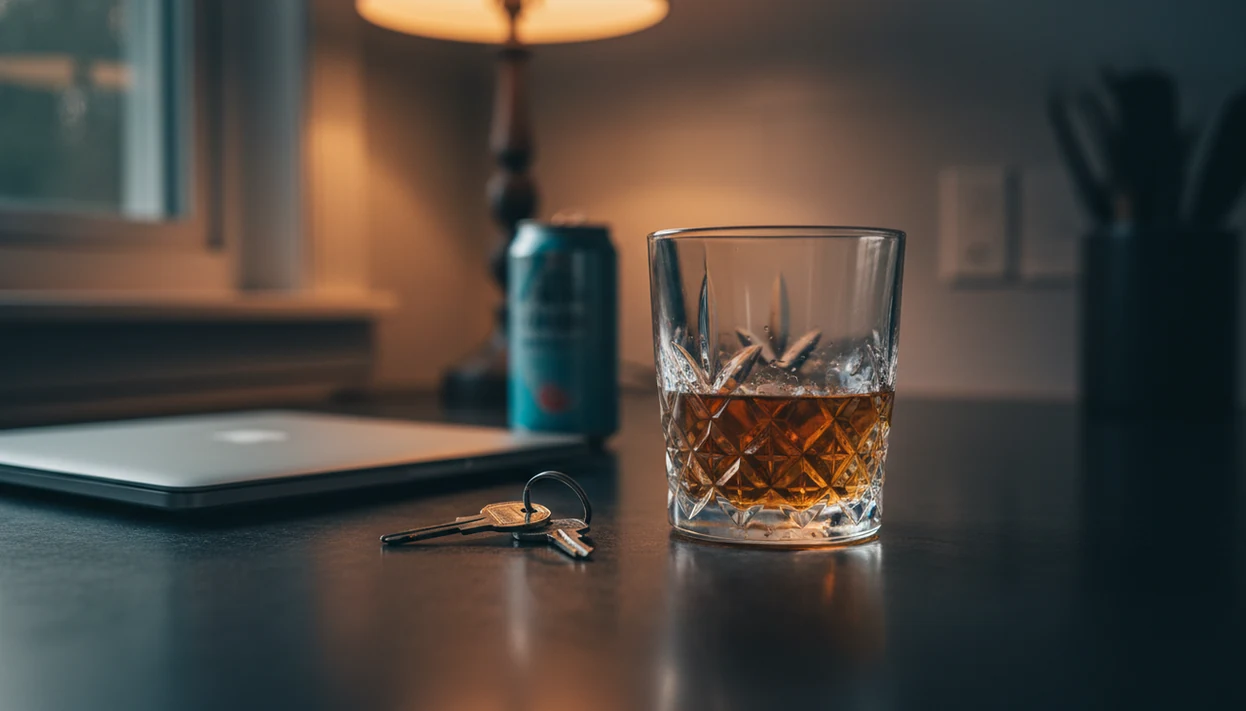
A drink can become attached to a specific moment: closing the laptop, cooking dinner, entering a crowded room, or sitting alone after everyone goes to bed. Eventually, the situation itself can create an urge before you have made a conscious decision.
Changing that pattern takes more than refusing the drink. You need to find the cue, understand the relief or reward alcohol provides, and build another response that is realistic on a stressful day. The first attempts may feel less satisfying, but consistent practice gives the brain a new option.
The quick version
To break the habit of drinking alcohol, identify the cue, name the payoff you expect, and practice a repeatable alternative that meets the same need. Change your surroundings before the usual drinking time and treat slips as information. If you drink heavily every day or have had withdrawal symptoms, get medical advice before stopping suddenly.
The four parts of an alcohol habit loop
An alcohol habit loop is a learned automatic pattern, not a sign of weak character or poor discipline. The brain links a cue to a craving, then to drinking, then to a reward that feels useful in the moment.
A cue might be 6 p.m., a stressful text, loneliness after dinner, or walking into the same bar. The craving is the pull toward relief. The response is the drink. The reward may be numbing, confidence, sleepiness, social ease, or a clear transition out of work mode.
That weeknight pour after laptop shutdown can start feeling less like a choice and more like the next step in the evening.
A familiar cue can produce an alcohol craving because the brain has learned to expect a drink in that situation. See the alcohol habit loop guide for a closer look at that sequence.
Why the brain starts drinking on autopilot
A basal ganglia alcohol habit forms when the brain compresses repeated drinking into a fast stimulus-response routine. The basal ganglia helps run behaviors you have practiced many times, so the pattern can start before you have fully thought it through.
Dopamine is often described as the pleasure chemical, but that is too narrow. It also teaches the brain what to repeat. If alcohol quickly changes stress, mood, confidence, or sleepiness, dopamine helps mark that sequence as worth doing again.
The automatic response may already be underway by the time the reflective part of the brain says, “not tonight.” The reflective part of the brain may say “not tonight,” while the automatic system has already matched the cue to the old response.
Brain imaging research discussed by Harvard Health found higher risks of hippocampal shrinkage among heavier drinkers, including nearly six times the risk for people consuming the equivalent of four or more drinks per day. (Harvard Health: https://www.health.harvard.edu/blog/this-is-your-brain-on-alcohol-2017071412000). Heavy or repeated drinking can also affect reward, motivation, memory, and stress circuits.
Five reasons drinking habits hold on
- Repetition wires drinking to cues. Time, mood, place, people, and routine can all become signals that alcohol is coming next.
- Not drinking can feel worse at first. When the brain expects relief, skipping the drink may bring irritability, restlessness, low mood, or a hollow feeling.
- Fast relief strengthens the loop. Alcohol can quickly reduce tension or awkwardness, which reinforces cue → craving → response → reward.
- Healthy substitutes may feel flat early. Natural rewards like a walk, food, music, or conversation can seem dull before the brain relearns them.
- Cravings can return months later. Habit circuits can persist, especially when an old cue returns during stress, travel, grief, or social pressure.
Experimental work suggests people with substance use disorders may have reduced ability to “devalue” habits once the reward changes. NIAAA statistics estimate that 29.5 million people in the U.S. had alcohol use disorder in 2022 (NIAAA Alcohol Facts and Statistics: https://www.niaaa.nih.gov/publications/brochures-and-fact-sheets/alcohol-facts-and-statistics), which shows how common these patterns can become.
Why it is so hard to stop drinking on autopilot
Alcohol can reinforce a routine in two directions. Positive reinforcement adds something wanted, such as warmth, confidence, sleepiness, or social ease. Negative reinforcement removes something unpleasant, such as anxiety, irritability, low mood, or physical discomfort. The second pattern can be harder to recognize because the drink may no longer feel celebratory. It may feel necessary just to get through the evening.
| What is happening | Examples | Next step |
|---|---|---|
| A familiar routine is interrupted | Restlessness, boredom, or thinking repeatedly about the usual drink | Change rooms, delay for 10 minutes, and use the planned replacement |
| Alcohol may be relieving withdrawal | Shaking, sweating, racing heart, vomiting, confusion, hallucinations, or seizures | Get medical help rather than trying to manage it through willpower |
Genes, stress, access to alcohol, family patterns, and repeated learning can all affect risk. None of them makes change impossible. They do help explain why one person can alter a routine with environmental changes while another needs medical treatment, counseling, medication, or continuing recovery support.
Check withdrawal risk before changing your drinking
Before changing an alcohol habit, check safety first. Habit tracking can help you notice patterns, but it is not treatment for alcohol dependence, withdrawal risk, or loss of control.
- Talk with a clinician before stopping suddenly if you drink heavily every day, have had withdrawal before, use alcohol to prevent shakes or panic, are pregnant, take sedatives or other risky medications, or have serious medical or mental health concerns.
- Watch for withdrawal warning signs such as shaking, sweating, vomiting, racing heart, high blood pressure, confusion, hallucinations, seizures, severe agitation, or feeling unsafe. Those symptoms need clinical support, not a tougher mindset.
- Remove alcohol from the loudest cue environments before you begin tracking. Clear the desk drawer, fridge shelf, bedside table, car trunk, or after-work route if those places already tell your brain what happens next.
- Choose one cue to work on first, such as the first drink after work, the lonely drink after dinner, or the social drink you do not actually want.
- Use tracking as a map, not a cure. If drinking feels uncontrollable or consequences are building, medical care, counseling, medication, or structured support may be the next safer step.
When alcohol withdrawal symptoms can begin
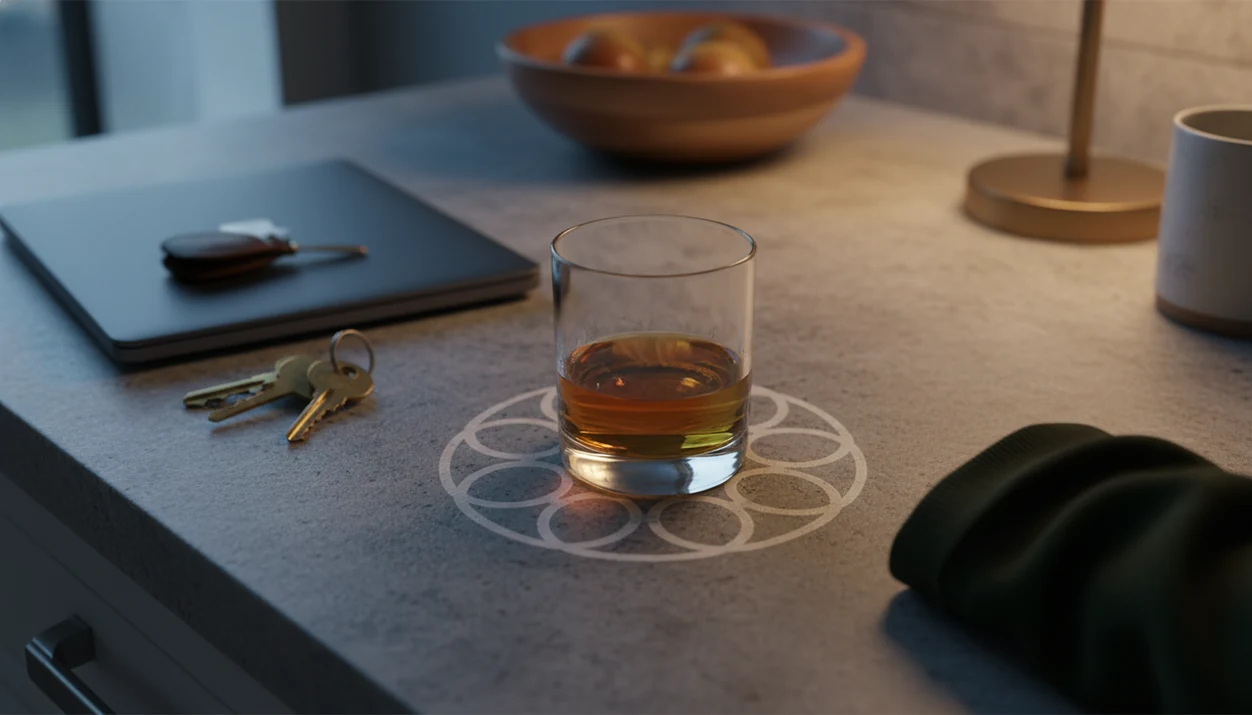
Alcohol withdrawal can start about 6 to 24 hours after the last drink in someone whose nervous system has adapted to heavy, prolonged use. Seizures can occur within roughly 12 to 48 hours, while delirium tremens most often develops 48 to 96 hours after stopping. Timing varies, so feeling well for a few hours does not prove that stopping alone is safe. NIAAA's clinical overview of alcohol use disorder and recovery describes withdrawal assessment and treatment.
Call emergency services for a seizure, hallucinations, confusion, severe agitation, fainting, chest pain, or symptoms that feel dangerous.
Map three real drinking episodes
What is the first step to break an alcohol habit? Map the loop before trying to change it. Track the trigger, craving, drink, reward, and after-effect for several real episodes.
Use simple prompts: What time was it? Who was there? What feeling came before the urge? What did alcohol promise? What happened 30 minutes later? Record the episode without judging it, then look for details that repeat.
A party cooler packed with cans tells a different story than drinking alone because the room feels too quiet. Both matter.
A written record turns a vague urge into a pattern you can plan for. Broader context sits in our alcohol reduction guides.
Talk with a clinician before stopping suddenly if you drink heavily every day, drink to prevent shaking or panic, or have had alcohol withdrawal before. Call emergency services for seizures, hallucinations, confusion, severe agitation, fainting, chest pain, or other dangerous symptoms.
Match the replacement to alcohol's actual payoff
To replace alcohol habit routines, keep the cue and desired payoff visible while changing the response. The old cue may stay the same. The new behavior needs to answer the same need.
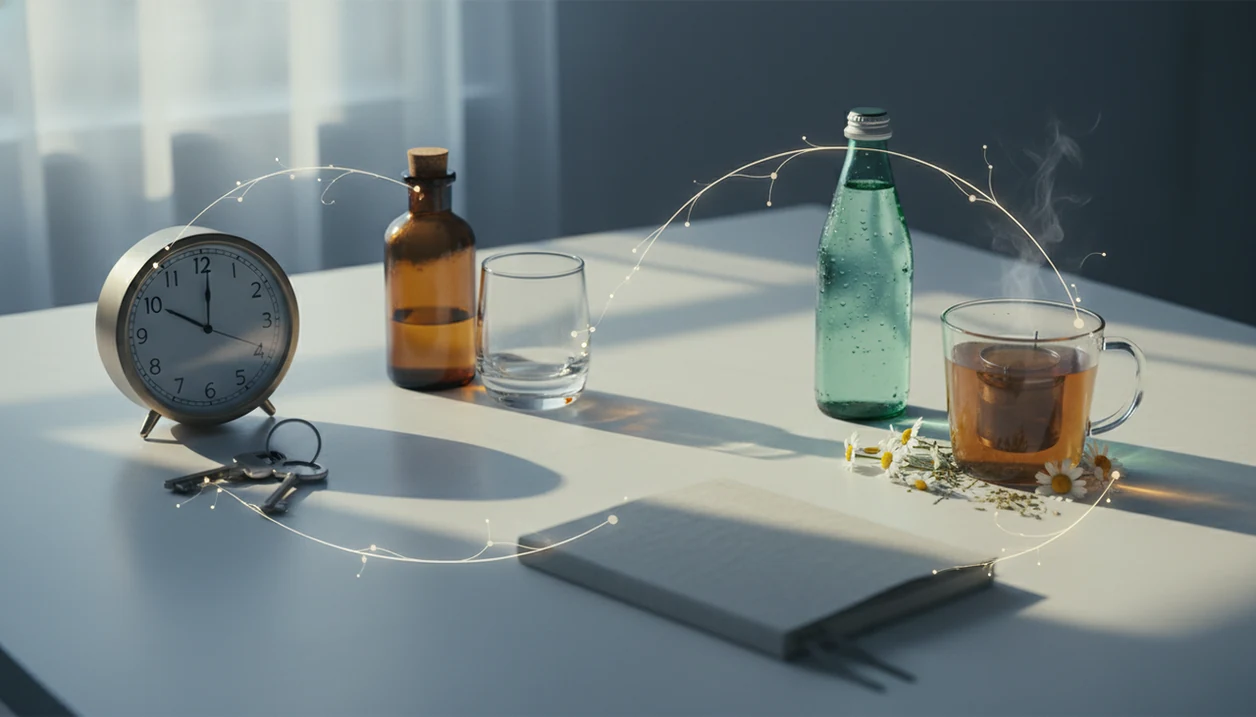
If alcohol marks the end of work, try a sparkling drink ritual in the same glass, with the laptop closed and phone put away. If stress is the cue, use a walk, shower, or paced breathing. If the reward is connection, text someone or go to a meeting. If the goal is sleepiness, try tea, low light, and the same bedtime order each night.
The substitute may feel weaker at first because alcohol gives fast chemical relief. A weaker initial reward can still become useful when the same response is practiced repeatedly. Repetition, not intensity, overwrites the loop.
For most people trying to reduce an automatic drinking routine, matching the replacement to the original reward is more useful than choosing a random “healthy” activity.
Practice the new response during the craving window
Habit substitution works by training a new automatic response during the craving window. The aim is not to win one heroic willpower battle. It is to make the next cue easier to answer.
- Name the cue: time, place, feeling, person, or thought.
- Delay the drink for 10 minutes and move your body to a different room or sidewalk.
- Swap in a matched routine, such as seltzer for transition, a shower for stress, or a text for connection.
- Log the craving level, your response, and what happened afterward while the details are still clear.
- Repeat the same swap for the same cue, so the brain gets a consistent pattern.
- Reset after a slip by recording what happened and choosing the next cue to practice.
How to break the alcohol habit loop with five repeatable steps
- Map the cue. Write down the time, place, emotion, people present, and physical feeling that appeared before the urge.
- Choose a small replacement. Pick something possible during a strong craving, such as eating, walking around the block, showering, or calling someone.
- Add an immediate payoff. Mark a check, have a snack, send a progress text, or record the money not spent immediately after the replacement.
- Practice in the same window. Repeating the alternative near the usual drinking time helps connect the old cue with a different response.
- Review once a week. Look for delayed drinks, shorter urges, alcohol-free days, lower totals, and faster recovery after a slip.
Make the first goal measurable. It might be no alcohol tonight, two alcohol-free weekdays, or delaying the first drink by 30 minutes. The CDC guidance on getting started with drinking less recommends tracking drinks, identifying high-risk situations, and asking supportive people for help.
Use the same replacement for the same cue several times before deciding it does not work. Consistency teaches the pattern.
Why the familiar routine can feel safer
The phrase why bad habits feel comfortable points to a real brain shortcut: familiar routines reduce uncertainty and decision effort. The brain often prefers known discomfort over unknown effort.
Stress, fatigue, and social settings make that pull stronger. A loud table, a long commute, or a tense family call can push the brain toward the routine it already knows. The drink feels like a door you have opened many times.
New replacement habits can feel awkward, fake, or unrewarding at first. The tea tastes too plain. The walk feels pointless. The phone check before bed shows progress, but the body still wants the old signal.
Feeling awkward with a new routine usually means it is unfamiliar, not that the plan has failed.
Discomfort often means the brain has not repeated the new loop enough yet. If mood is a major driver, our guide to alcohol gut serotonin explains another layer of the alcohol and mood connection.
Plans that tend to fail, and how to repair them
- Willpower-only plans: Trying harder without changing cues leaves the old routine fully intact.
- Mismatched substitutes: A salad will not replace alcohol if the real reward was social ease, shutdown, or sleepiness.
- Instant-results expectations: A new routine may need many repetitions before it feels rewarding.
- High availability: Keeping alcohol in the same fridge, shelf, or route makes the cue environment louder.
- All-or-nothing thinking: One slip is information about the loop, not proof that change failed.
The money saved total at checkout can be motivating, but the bigger win is noticing which cue did not control the evening.
Heavier drinkers, or anyone worried about withdrawal, may need clinical help instead of self-guided change.
How to stop drinking without relying on willpower
Willpower is least reliable when you are tired, stressed, hungry, lonely, or already standing beside the alcohol. A behavior plan acts earlier. For one week, record each drink, craving, time, place, mood, and expected payoff. Then identify the situation that repeats most often.
- Add friction before the urge: remove chilled alcohol, avoid the usual store, or take another route home.
- Put the alternative where it will be used: prepare food, chill a nonalcoholic drink, leave walking shoes by the door, or arrange a call.
- Write an if-then response: “If another drink is offered, I will switch to soda and step outside for five minutes.”
- Delay rather than debate: set a fixed 10-minute pause and move to another room or go outside.
- Review a slip for its cue, setting, and payoff, then adjust the next response instead of abandoning the full plan.
If you drink in the morning to steady yourself, need alcohol to stop shaking, or have had withdrawal before, this is not a willpower problem. Ask a clinician how to reduce or stop safely. Medical monitoring, medication, or supervised withdrawal care may be needed.
Medication can support a behavior-change plan
Alcohol habit work is not limited to self-control. Naltrexone, acamprosate, and disulfiram are FDA-approved medications for alcohol use disorder. They work differently and are not right for everyone. Naltrexone can sometimes be started while a person is still drinking, while acamprosate is generally started after withdrawal and abstinence. Disulfiram requires abstinence before starting. Review the NIAAA treatment options with a clinician.
Medication decisions should account for opioid use, liver or kidney conditions, pregnancy, other prescriptions, and the person's drinking goal. A medication trial is usually assessed over months rather than a few days, alongside follow-up and behavioral support.
Signs the old drinking loop is losing strength
Brain recovery after changing alcohol habits is possible, but it is often uneven. Progress may show up as shorter cravings, fewer automatic urges, steadier mornings, improved sleep quality, better attention, or a mood that does not swing as sharply after work.
A Recovery Research Institute summary of longitudinal research found that people with alcohol use disorder showed significant gray matter and white matter recovery during the first year of abstinence, although some differences remained compared with non-drinking controls. (Recovery Research Institute: https://www.recoveryanswers.org/research-post/brain-recovery-alcohol-use-disorder/). That finding is encouraging, but it does not promise a universal timeline.
Repeated replacement routines matter because they give the brain a new answer to the same signal. Ongoing support matters too, especially when cravings return after a stressful month or social event. For people comparing private phone-based options, our best drink less app guide covers what to look for.
Questions about changing drinking habits
Why does drinking become such a strong habit?
Repeated drinking connects alcohol with times, places, emotions, and people. The brain begins predicting relief or reward when those cues appear, so the response can start before deliberate decision-making catches up. Fast effects such as reduced tension, sleepiness, or social ease strengthen that learned connection.
Why do I drink automatically after work?
The end of work may have become a cue for transition or relief. Closing the laptop, commuting, entering the kitchen, or seeing a particular glass can start the sequence. Change the first 30 minutes after work and use a consistent replacement that still marks the shift into personal time.
Can alcohol habits be rewired?
The brain can learn a different response, but the old cue may not disappear immediately. Practice the same alternative during the usual craving window, add an immediate reward, and reduce easy access to alcohol. Progress may appear as a delayed drink, a shorter craving, fewer drinking days, or a quicker reset after a slip.
How long does an alcohol craving last?
There is no single duration. Cravings can rise and fall in waves, return when another cue appears, or persist when stress, hunger, poor sleep, or withdrawal is involved. Try a timed 10-minute delay while changing location and using your replacement. Physical withdrawal symptoms need medical assessment rather than repeated delays.
Why does willpower fail when I try not to drink?
Willpower has to compete with a practiced routine, easy alcohol access, and the expectation of quick relief. It also becomes less reliable during stress or fatigue. A stronger plan changes the environment before the craving, prepares a specific alternative, and gives you an if-then response for predictable pressure.
What can replace a drinking habit at night?
Match the substitute to the reason for drinking. For transition, use a prepared nonalcoholic drink and close down work devices. For stress, try food, a shower, walking, or paced breathing. For connection, call someone or attend a meeting. For bedtime, use low light and a consistent sleep routine.
Do alcohol cravings always mean addiction?
No. A learned cue can trigger a craving without proving alcohol use disorder. Concern rises when drinking is hard to control, continues despite harm, requires increasing amounts, or causes withdrawal symptoms when reduced. A clinician can assess the full pattern rather than relying on craving alone.
Should I quit drinking or cut down?
The safer goal depends on your health and drinking pattern. Abstinence is generally advised during pregnancy, when alcohol interacts with medication, during recovery from alcohol use disorder, or when drinking cannot be controlled. Heavy daily drinkers should get medical advice before making a sudden reduction because withdrawal can be dangerous.