
How Alcohol Disrupts Your Gut Microbiome
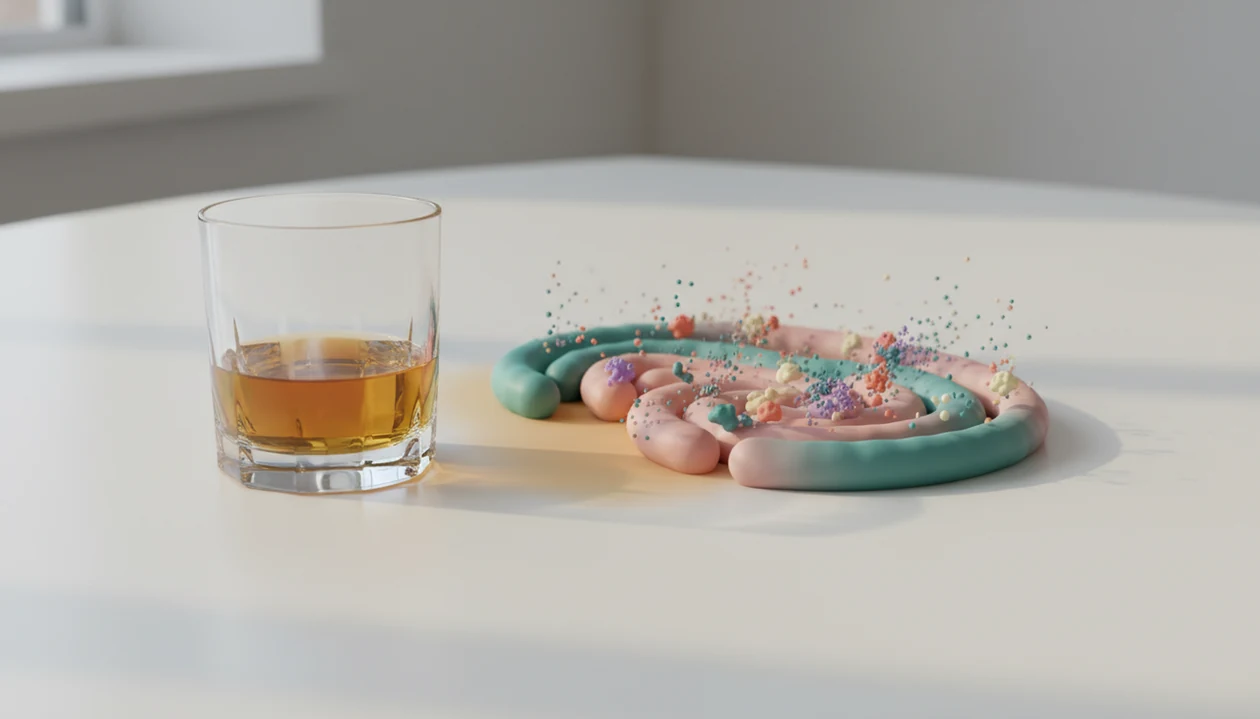
Alcohol and gut microbiome changes are linked because drinking can disrupt gut bacteria, irritate the gut lining, and increase inflammatory signaling. Those gut shifts may contribute to digestion changes, brain fog, mood swings, cravings, and a harder time cutting back.
Definition: The gut microbiome is the community of trillions of bacteria, fungi, and other microorganisms in the digestive tract that helps regulate digestion, immunity, metabolism, and gut-brain communication.
TL;DR
- Alcohol can shift gut bacteria toward dysbiosis, meaning the gut ecosystem becomes less balanced and less resilient.
- Alcohol can weaken the gut barrier, which may allow inflammatory signals to affect the immune system and brain.
- Probiotics and fermented foods may support gut health, but reducing alcohol is the main lever for alcohol-related gut recovery.
Alcohol and Gut Microbiome Basics
Quick answer: Alcohol can often disturb the gut microbiome by shifting bacterial balance, irritating the gut barrier, and increasing inflammatory signaling. For many people, cutting back gradually, improving sleep and nutrition, and tracking cravings can help the gut-brain system stabilize over time, though severe withdrawal risk needs medical guidance.
Key takeaways
- Alcohol may reduce microbial diversity and favor bacteria linked with irritation.
- Gut changes can overlap with bloating, loose stools, reflux, fatigue, and brain fog.
- Cravings are not just willpower; gut-brain reward signals may play a role.
- Hydration, fiber-rich foods, protein, and sleep often support recovery.
- If you drink heavily or daily, ask a clinician before stopping suddenly.
- Tracking drinks, triggers, and symptoms can reveal patterns worth changing.
Alcohol is ethanol, the intoxicating substance in beer, wine, and liquor, and it can change the gut microbiome’s balance. Dysbiosis means the gut ecosystem has become less stable, with fewer helpful microbes, more irritating shifts, or lower resilience after stress.
That matters because alcohol affects more than the liver. It can irritate the intestinal lining, weaken gut barrier function, and increase inflammatory signaling. For some people, that shows up as reflux after two drinks. For others, it feels like a heavy, foggy morning after a normal-looking night out.
The dose matters. So does the pattern.
Alcohol gut bacteria changes vary by drinking frequency, diet, medications, sleep, sex, age, and baseline health. A person drinking daily may have different risks than someone who overdoes it twice a month at brunch with bottomless mimosas.
Five Alcohol Gut Bacteria Facts to Know
- Alcohol can reduce microbial balance and is linked with alcohol gut dysbiosis, which means the gut ecosystem becomes less diverse, less steady, or more inflammation-prone.
- Alcohol can weaken the gut barrier and increase intestinal permeability, allowing inflammatory molecules to interact more easily with the immune system.
- Gut inflammation matters because a large share of immune activity is connected to the gut, including gut-associated immune tissue.
- Gut-brain communication may help explain why drinking brain fog, irritability, low mood, and cravings can follow alcohol use.
- Probiotics, prebiotics, and fermented foods can support gut health, but they are not stand-alone fixes for alcohol-related gut disruption.
A useful rule is simple: support the gut, but reduce the irritant. If alcohol keeps hitting the system every evening, yogurt alone is unlikely to carry the load.
How Alcohol Gut Dysbiosis Works
Alcohol gut dysbiosis works through ethanol, acetaldehyde, microbial shifts, and gut barrier stress. Ethanol is processed into acetaldehyde, a reactive compound that can irritate tissue and may alter which microbes thrive.
In plain terms, the gut neighborhood changes.
Some helpful microbes may become less dominant, while less helpful organisms may expand. Researchers also describe reduced microbial diversity in alcohol-related gut disruption, although the exact pattern can differ between people. For example, reviews of alcohol-related dysbiosis describe changes in microbial diversity, intestinal barrier function, and inflammatory signaling: https://www.ncbi.nlm.nih.gov/pmc/articles/PMC4590619/. The human gut contains trillions of microorganisms, and microbiome composition is associated with immune and metabolic function.
When the gut barrier becomes more permeable, inflammatory molecules can move into circulation more easily. That can activate immune pathways beyond the digestive tract. A commonly cited estimate is that roughly 70% of immune cells are associated with gut lymphoid tissue, which helps explain why alcohol and gut inflammation are not just stomach issues: https://www.ncbi.nlm.nih.gov/pmc/articles/PMC2515351/. For a deeper mechanism view, the alcohol gut dysbiosis guide covers this pathway in more detail.
Alcohol and Gut Inflammation Symptoms
What symptoms suggest alcohol and gut inflammation? Common signs can include bloating, loose stools, reflux, stomach discomfort, irregular appetite, and post-drinking fatigue, but none of these symptoms proves alcohol is the only cause.
Some people notice a sour stomach after wine. Others get loose stools the next morning, or a strange lack of hunger until late afternoon. Gut inflammation can also be present without obvious digestive symptoms, especially when the main complaint is fatigue, brain fog, or low mood after drinking.
Symptoms are messy clues, not a diagnosis. Sleep loss, anxiety, withdrawal, spicy food, low blood sugar, medications, infection, and medical conditions can look similar.
Clinicians typically recommend medical care for severe abdominal pain, blood in the stool, persistent vomiting, jaundice, confusion, or withdrawal concerns. If symptoms keep returning after drinking, write down the timing, amount, meal, sleep, and stress level. Patterns are easier to act on than vague regret.
Drinking Brain Fog and Gut Health Links
Does drinking brain fog come from gut health? It can involve gut-brain communication, but dehydration, poor sleep, low blood sugar, and hangover physiology are also major causes.
The gut-brain axis is a two-way communication system. It includes immune signals, hormones, vagus nerve signaling, and microbial metabolites. In simpler language, the gut and brain send chemical updates back and forth all day. Alcohol can disturb several parts of that conversation at once.
That may help explain why brain fog after drinking often travels with irritability, stress sensitivity, low patience, or a flat mood. Still, gut changes are not the only explanation. A short night of broken sleep can make anyone feel mentally dull.
The after-dinner chair facing the open window can become its own cue: one drink, one cigarette, one more hour awake. The alcohol gut brain axis article explains why that loop can feel physical, not just mental.
Before You Start: Safety Checks Before Cutting Back
Before cutting back, check whether stopping suddenly could be unsafe. If alcohol has been daily, heavy, or hard to control, medical support may be the safest first step.
- Watch for withdrawal red flags such as shaking, sweating, racing heart, high blood pressure, fever, hallucinations, confusion, severe anxiety, vomiting, or any history of seizures or delirium tremens. These are reasons to seek urgent medical guidance before quitting abruptly.
- Talk with a clinician if you drink heavily most days, have tried to stop and felt very ill, are pregnant or trying to become pregnant, or have liver disease, pancreatitis, heart problems, or another serious medical condition.
- Review medications before changing alcohol intake, especially sedatives, sleep medicines, antidepressants, pain medicines, blood thinners, diabetes drugs, or anything labeled as unsafe with alcohol.
- Get care for severe GI symptoms such as blood in stool or vomit, black stools, persistent vomiting, jaundice, severe abdominal pain, dehydration, or unexplained weight loss.
- Use tracking as support, not treatment. Notes about drinks, cravings, reflux, bloating, sleep, and mood can help you spot patterns, but they do not diagnose gut disease or replace detox care.
Alcohol Cravings and Gut-Brain Reward Signaling
Alcohol cravings are not caused by one thing. They come from brain reward pathways, habit loops, stress, sleep, environment, learned routines, and biology interacting together.
Gut microbes may influence reward and stress pathways through inflammation and gut-brain signaling. A 2024 mouse study reported that overgrowth of the gut fungus Candida albicans increased inflammatory signaling and altered alcohol-related reward pathways: https://www.nature.com/articles/s41386-024-01816-5/. That is interesting, but animal research does not prove one microbe causes cravings in humans.
The pocket check is real.
A craving can also be a learned cue: Friday at 6 p.m., a sticky bar table under your fingertips, or the first drink that makes a cigarette feel automatic. Practical tracking helps because it separates “I want alcohol” from “I am tired, hungry, and in the same place as last week.” Tools like Me Quit can help adults track cravings, streaks, triggers, and milestones without turning the data into a medical diagnosis. The broader alcohol habit loop brain pattern is often the missing piece.
How to Restore Gut Health After Alcohol
The most useful way to support gut health after alcohol is to reduce the alcohol exposure while rebuilding daily inputs that the gut can use. Supplements may help some people, but they cannot reliably outwork frequent drinking.
- Reduce or pause alcohol intake rather than trying to out-supplement drinking.
- Add fiber-rich foods such as beans, oats, vegetables, fruit, nuts, and seeds.
- Include fermented foods if tolerated such as yogurt, kefir, kimchi, sauerkraut, or miso.
- Prioritize sleep, hydration, stress management, and regular meals so the gut is not recovering under constant strain.
- Track cravings, triggers, streaks, and digestion changes in an app such as Me Quit, especially after weekends or social events.
Probiotics may support some people, but they are not guaranteed to reverse alcohol-related gut damage. For adults cutting back, Me Quit can be used as a private log for reflux, bloating, sleep, cravings, and alcohol-free streaks. Me Quit mequit addiction recovery hub for quit smoking, stop vaping, quit drinking, and mindful alcohol reduction tools provide progress tracking and reset prompts, not diagnosis, detox care, or a guaranteed cure.
Common Mistakes When Rebuilding Gut Health After Alcohol
The biggest mistake is treating gut repair as something separate from drinking patterns. Probiotics, fiber, and fermented foods can support recovery, but they work best when alcohol exposure is also coming down.
A few common traps can make the process more confusing than it needs to be:
- Avoid relying on probiotics while drinking heavily and often. A capsule or yogurt habit cannot reliably cancel out repeated gut irritation, poor sleep, dehydration, and inflammation signals.
- Change your diet gradually if you are adding more beans, vegetables, whole grains, or fermented foods. A sudden jump in fiber or live-culture foods can increase gas, bloating, and stool changes before the gut adapts.
- Question single-cause explanations for brain fog, mood dips, or cravings. The microbiome may play a role, but sleep debt, stress, withdrawal, low blood sugar, habits, and environment can look almost identical.
- Track patterns across the whole day instead of only logging symptoms. Note alcohol amount, timing, meals, hydration, sleep, stress, cravings, reflux, bloating, and bowel changes. Over a few weeks, those notes are often more useful than guessing after a rough morning.
Alcohol Gut Microbiome Recovery Timeline
Alcohol gut microbiome recovery does not follow a fixed 7-day, 30-day, or 90-day cure. Some symptoms, such as reflux, sleep disruption, and bloating, may improve within days to weeks for some people, while microbiome remodeling can take longer.
A quiet restart after a weekend lapse still counts. You are collecting information, not starting from zero.
| Supportive habit | What it may help with | Realistic expectation |
|---|---|---|
| Reduce alcohol | Less gut irritation and fewer inflammatory triggers | Often the main lever |
| Add fiber | Feeds beneficial bacteria | Works gradually |
| Try fermented foods | Adds live cultures if tolerated | Helpful for some, not all |
| Improve sleep | Supports appetite, stress, and repair | Can change cravings quickly |
| Lower stress | Reduces gut-brain strain | Needs repetition |
| Get medical support | Checks persistent or severe symptoms | Important when red flags appear |
Adults cutting back can use private tracking tools to observe patterns over time. The alcohol reduction guides library can help connect gut symptoms with cravings, sleep, and drinking routines.
Limitations
Microbiome research is useful, but it cannot explain every alcohol-related symptom or every recovery pattern. The gut is one part of the picture, not the whole map.
- Microbiome changes alone do not fully explain alcohol use disorder, cravings, relapse, or recovery.
- Brain fog, mood changes, and cravings are nonspecific and may reflect sleep loss, withdrawal, anxiety, depression, medication effects, or other medical issues.
- People with severe withdrawal symptoms, liver disease signs, GI bleeding, confusion, persistent vomiting, or ongoing symptoms should seek medical care.
For comparing private tracking options, the best drink less app guide can help you decide what kind of support fits your goal.
FAQ
Does alcohol kill gut bacteria?
Alcohol can disrupt microbial balance, but it does not simply sterilize the gut. The concern is dysbiosis, barrier irritation, and inflammatory signaling.
What is alcohol gut dysbiosis?
Alcohol gut dysbiosis means an imbalanced gut microbiome linked with alcohol exposure. It may involve fewer helpful microbes, less diversity, or more inflammation-prone shifts.
Can alcohol cause gut inflammation?
Alcohol may irritate the gut lining, increase intestinal permeability, and promote inflammatory signaling. Symptoms can vary and may not always be digestive.
Can drinking cause brain fog?
Yes, drinking can cause brain fog through sleep disruption, dehydration, hangover effects, inflammation, and gut-brain signaling. Gut health may contribute, but it is not the only factor.
Do probiotics help after drinking?
Probiotics may support gut health for some people after drinking. They cannot cancel out alcohol’s effects or replace reducing alcohol intake.
How long until gut health improves after quitting alcohol?
Some people notice digestion or sleep changes within days to weeks, but gut recovery varies. Drinking pattern, diet, stress, medications, and overall health all matter.
Is any type of alcohol good for gut health?
Wine, beer, and fermented alcoholic drinks may contain plant compounds or fermentation byproducts, but alcohol itself is still a gut irritant. Alcohol is not a gut-health strategy.
Can gut health affect alcohol cravings?
Gut health may influence cravings through inflammation, stress pathways, and gut-brain reward signaling. The evidence is emerging, and cravings still involve habits, sleep, mood, and environment.