Why Alcohol Habits Are Hard to Break
The reason why alcohol habits are hard to break comes down to learned brain loops: cues trigger drinking, alcohol delivers fast relief or reward, and the brain starts treating that pattern as automatic. Over time, habit circuits, reward learning, withdrawal fears, stress, and environment can make changing drinking feel difficult even when your motivation is real.
> Definition: An alcohol habit loop is a repeated cue-routine-reward pattern in which a trigger leads to drinking and the brain learns to expect relief, pleasure, or social ease afterward.
- Alcohol habits feel automatic because the brain learns that drinking quickly changes mood, stress, or discomfort.
- The basal ganglia help store repeated drinking routines as cue-driven habits, while heavy use can weaken planning and impulse-control circuits.
- Neuroplasticity means new patterns can form, but they require repetition, safer coping tools, and realistic support.
Alcohol habit loop basics: why drinking becomes automatic
Quick answer: Alcohol habits are hard to break because the brain learns to connect specific cues—stress, time of day, people, or places—with the expected reward or relief from drinking. For many people, change gets easier when they reduce cue exposure, practice replacement routines, and repeat new responses long enough for them to feel more automatic.
Key takeaways
- A craving is often a learned signal, not a command you have to obey.
- Changing the environment can be easier than relying on willpower alone.
- New routines work best when they answer the same need: relief, reward, connection, or transition.
- Slips are information about cues and stressors, not proof that change is impossible.
- Heavy or daily drinkers should ask a clinician about withdrawal risk before cutting down suddenly.
- Tracking urges, triggers, and outcomes can reveal patterns that memory often misses.
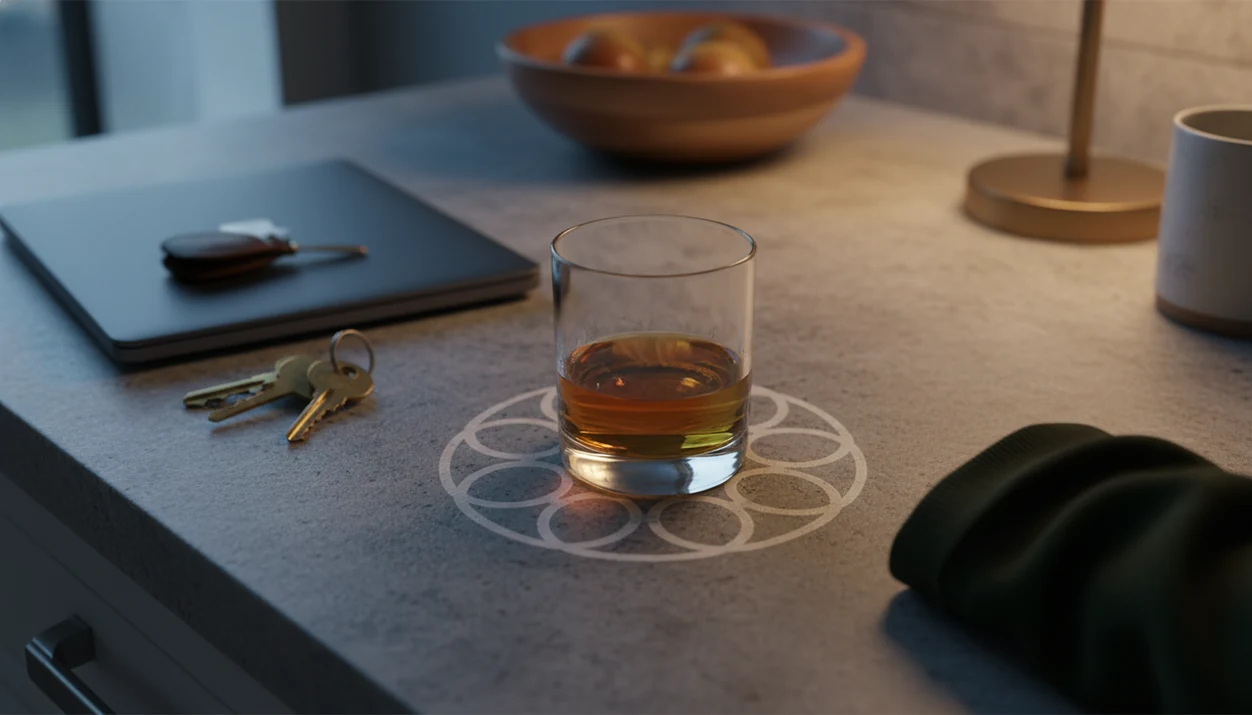
An alcohol habit loop is a cue, a drinking routine, and a reward that the brain learns to repeat with less conscious effort over time. A common loop looks like this: stress after work is the cue, pouring a drink is the routine, and the first wave of relief is the reward.
That quick relief matters. If the brain learns that alcohol reliably softens tension, boredom, loneliness, or social discomfort, it starts preparing the same response when the cue appears again. The empty bottle beside the recycling bin is not proof of weak character. It is evidence that a learned loop ran again.
Automatic drinking is learned behavior, not a moral failure. A deeper explanation of the alcohol habit loop can help separate the pattern from self-blame.
The loop can be changed, but usually not by one strong decision.
Five facts about why changing drinking habits is hard
- Alcohol activates reward pathways and can teach the brain that drinking is a fast way to change how stress, discomfort, or mood feels.
- Repeated drinking strengthens cue-driven loops tied to stress, people, places, weekends, payday, restaurants, and certain times of day.
- Basal ganglia drinking habits can start running before conscious decision-making has fully caught up.
- Heavy drinking is associated with changes in judgment, impulse control, and decision-making, which can make “I’ll just stop” harder to carry out.
- Withdrawal symptoms, or fear of poor sleep, anxiety, shaking, sweating, or low mood, can keep a person drinking to avoid feeling worse.
For many adults, changing drinking habits is harder than changing a preference because the behavior has become tied to relief, routine, and body signals.
That is biology plus learning. Not destiny.
How alcohol habits work in the brain
Alcohol habits work through reward learning, habit circuitry, and planning systems that do not always move at the same speed. Dopamine is involved, but it is not simply a “pleasure chemical.” It helps the brain notice what predicts reward or relief and what may be worth repeating.
The basal ganglia help store repeated routines, including the sequence of cue, action, and expected outcome. In plain language, they help the brain run familiar scripts. The prefrontal cortex, by contrast, supports planning, inhibition, and long-term decisions. Those systems can conflict when a craving appears at 6:15 p.m.
Research on substance use disorders shows stronger habitual cue-driven responding and weaker goal-directed control the NIH. Heavy alcohol use is also associated with structural and functional brain changes in regions involved in decision-making, emotion, and impulse control, including the prefrontal cortex and limbic system NIAAA alcohol data.
The most common medically supported explanation is not “low willpower,” but learned reward plus automatic cue response.
Basal ganglia drinking habits and everyday cue triggers
Why do I crave alcohol when I already decided not to drink? Familiar cues can activate basal ganglia drinking habits before the reflective part of the brain has finished weighing the plan.
Common cues include time of day, the commute home, stress, boredom, certain friends, weekends, restaurants, sports, payday, and loneliness. A weekend-only pattern can still be a habit loop if the same trigger keeps producing the same drinking routine.
Picture the rain-specked windshield after work, the same gas station, and the thought, “Just one six-pack for tonight.” The cue is not just the store. It is the drive, the fatigue, the weather, and the promise of relief at home.
For social drinkers, changing the cue plan before the event often works better than negotiating after the first drink.
Before you start changing alcohol habits
Before changing alcohol habits, check safety first, then choose a goal small enough to measure. A good starting plan protects you from withdrawal risk and gives the brain one clear pattern to practice.
- Check your stopping risk if you drink daily, drink heavily, or have had shaking, sweating, panic, confusion, hallucinations, seizures, or severe insomnia when you cut back. In those cases, do not quit suddenly without medical guidance.
- Choose your first goal as reduction, abstinence, or medical support. The right goal is the one that fits your drinking level, health history, and past attempts, not the one that sounds strongest.
- Track one pattern for the first week, such as first-drink time, number of drinks, craving intensity, or drinks after a specific cue. Keep it simple enough that you will actually record it.
- Change one easy cue before cravings start, such as moving alcohol out of sight, skipping the usual store, or planning food before the evening dip.
- Tell one trusted person if accountability, a ride, check-ins, or safety support would make the plan more realistic.
How to use neuroplasticity to change alcohol habits
Neuroplasticity means the brain can learn new responses through repetition, but it needs practice during real cues. The goal is not to erase every craving. The goal is to make the next response easier to repeat.
- Log the trigger with time, place, intensity, expected reward, and what you did next.
- Change the environment before the craving hits, such as removing chilled alcohol or taking a different route home.
- Replace the routine with one small repeatable action, like a 10-minute walk, food, tea, a shower, or calling someone.
- Delay the first drink by a fixed window, then record whether the craving rose, fell, or changed.
- Review weekly and reset after slips instead of treating one broken limit as proof that nothing works.
Tools like Me Quit can support private tracking of cravings, streaks, and milestones, but they do not replace medical care or therapy. Good alcohol reduction guides deliver structure and feedback, not a diagnosis.
Common mistakes when changing alcohol habit loops
The most common mistake is trying to outthink an automatic loop while leaving the same evening, same store, same stress spike, and same first drink untouched. Habit change works better when the plan is made before the cue, not during the craving.
- Set limits before the first drink instead of bargaining afterward. “Two drinks, then tea” is clearer than “I’ll see how I feel.”
- Change the cue field by moving alcohol, changing the route home, leaving a social event earlier, or planning a nonalcohol drink before you arrive.
- Protect the basics on high-risk nights. Hunger, poor sleep, and unplanned stress can make a craving feel like an emergency.
- Use slips as pattern data rather than a verdict. Record what happened, what cue showed up, and what support was missing.
- Check medical safety if dependence may be possible. Daily heavy drinking, past withdrawal symptoms, or needing alcohol to feel normal are signs to get medical guidance before stopping suddenly.
A useful plan is not harsher self-talk. It is fewer surprises, clearer limits, and safer support.
Reward, withdrawal, and resistance to change in alcohol habits
Alcohol can become reinforcing in two directions. Positive reinforcement means drinking brings a wanted effect, such as ease, warmth, or sociability. Negative reinforcement means drinking removes something unpleasant, such as anxiety, irritability, poor sleep, tremor, or low mood.
That second pattern is easy to miss. A person may not be drinking to “party” anymore. They may be drinking to feel normal enough to get through the evening.
Withdrawal ranges from uncomfortable to medically dangerous. A mild hangover after two extra drinks is different from alcohol withdrawal symptoms that can include shaking, confusion, hallucinations, seizures, or severe blood pressure changes. People who drink heavily or daily should seek medical advice before stopping suddenly.
Ordinary habit discomfort is real, but possible alcohol dependence needs a different level of support.
Genetics, environment, and alcohol habit risk factors
Risk is not distributed evenly. NIAAA summarizes research suggesting that about 50% to 60% of alcohol use disorder risk is attributable to genetic factors, with environment and learning accounting for the rest NIAAA alcohol data.
Genes are risk factors, not destiny. They may influence alcohol sensitivity, reward response, impulsivity, stress reactivity, or family vulnerability. Environment then adds pressure through family norms, trauma exposure, routine availability, work stress, social circles, and repeated drinking settings.
Public-health data also show that alcohol use disorder is common and under-treated. In 2022, about 29.5 million people aged 12 or older in the United States had alcohol use disorder, and only a small minority received specialty alcohol treatment NIAAA alcohol data.
The useful question is not “What label fits me?” It is “Which cues, risks, and supports are shaping the pattern?”
Mindful alcohol reduction patterns that weaken habit loops
Some adults work on mindful reduction. Others need abstinence, medication, therapy, detox support, or a combination of care. The safer path depends on drinking level, withdrawal risk, health history, and what has happened during past attempts.
Four patterns can weaken alcohol habit loops:
- Alcohol-free days: Scheduled dry days reduce automatic daily repetition.
- Pre-set drink limits: Limits work better when chosen before cues appear.
- Delayed first drink: Waiting changes the cue-routine timing and creates space.
- Replacement rituals: A planned nonalcohol routine gives the brain another script.
Tracking cravings, streaks, and milestones creates feedback. Me Quit can help adults privately track cravings, streaks, milestones, and mindful alcohol-reduction patterns alongside quit smoking or stop vaping goals. For readers comparing phone-based tools, a best drink less app guide may help clarify which features support limits rather than public group participation.
Limitations
Understanding habit loops does not automatically change behavior. It gives you a map, not a guarantee.
- Neuroplasticity is slow, and cravings can return for months or longer after a pattern changes.
- Stopping suddenly can be dangerous for people with physical dependence or severe withdrawal risk.
- Apps and trackers can support awareness, but they are not substitutes for medical care, therapy, medication, detox, or emergency help.
If withdrawal symptoms are severe, seek urgent medical help.
FAQ
Why is alcohol so habitual?
Alcohol is habitual because it can quickly change stress, mood, or social discomfort. Repeated cues teach the brain to expect that effect again.
What is an alcohol habit loop?
An alcohol habit loop is a cue, a drinking routine, and a reward. The cue might be stress, the routine is drinking, and the reward is relief or ease.
Why do I drink on autopilot?
Autopilot drinking happens when familiar cues trigger basal ganglia habit circuits. The response can begin before conscious planning fully catches up.
Can alcohol change the brain?
Heavy alcohol use is associated with changes in brain structure and function, including areas involved in judgment, emotion, and impulse control. Some changes may improve with abstinence, but recovery varies.
Do alcohol cravings go away?
Cravings can weaken with time, repetition, and new routines. They may still flare when old cues return.
Is willpower enough to stop drinking?
Willpower alone often fails when cues, withdrawal symptoms, and automatic habits are strong. Planning, support, and medical guidance when needed are more realistic.
Can drinking less rewire habits?
Drinking less can help build new patterns when replacement routines are repeated consistently. Neuroplasticity supports change, but it does not guarantee a quick reset.
When is alcohol withdrawal dangerous?
Alcohol withdrawal can be dangerous when symptoms include confusion, seizures, hallucinations, severe shaking, or heavy daily drinking history. People at risk should seek medical guidance before stopping suddenly.