How the Brain Rewires Alcohol Habit Loops
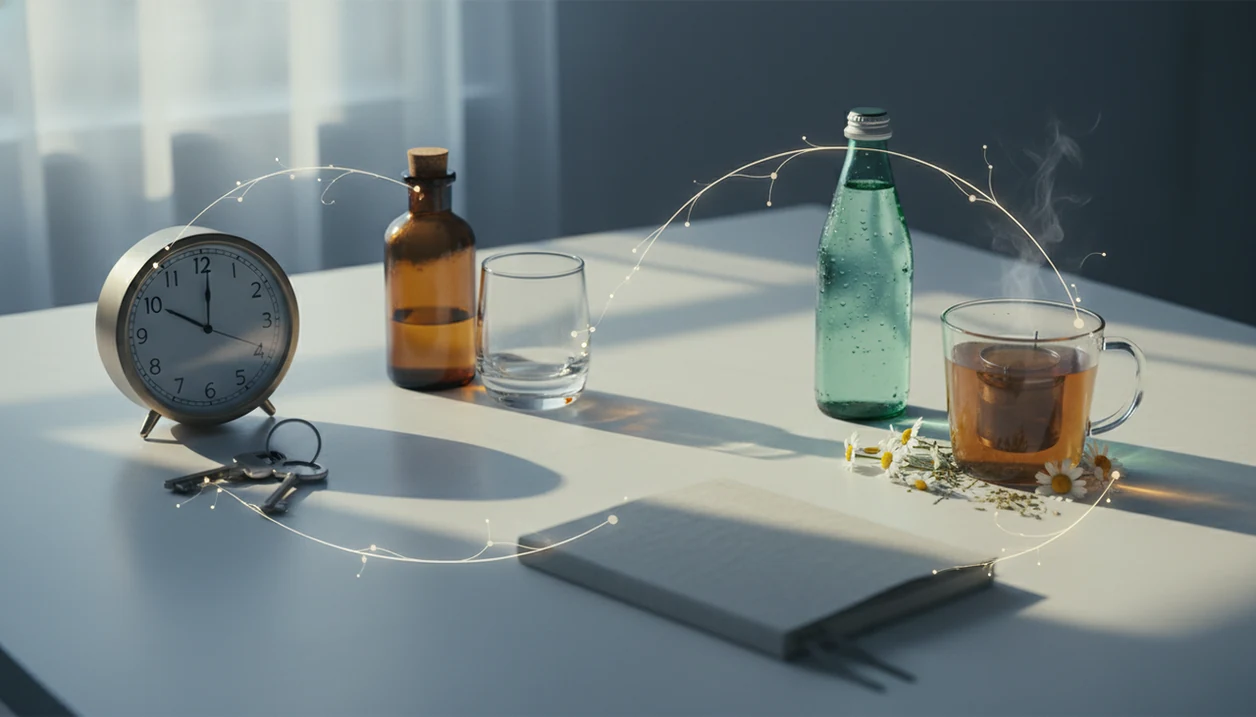
An alcohol habit loop brain pattern forms when repeated cues, routines, and rewards train the brain to expect alcohol automatically. Rewiring it means pairing the same cues with new routines and rewards often enough that neuroplasticity makes the new response easier to repeat.
> Definition: An alcohol habit loop is a learned cue-routine-reward pattern in which the brain links triggers like stress, time of day, or social settings with drinking and the expected relief or reward.
TL;DR
- Alcohol habits become automatic when the basal ganglia learns a repeated cue-routine-reward pattern.
- Dopamine, stress relief, and withdrawal avoidance can all strengthen the loop, not just pleasure.
- Neuroplasticity helps overwrite alcohol habits through repeated replacement routines, better sleep, tracking, and support.
Alcohol Habit Loop Brain at a Glance
Quick answer: Alcohol habit loops change when the brain repeatedly learns a different response to the same trigger. For many people, the goal is not to erase the cue, but to make a safer routine and reward feel more automatic over time.
Key takeaways
- Name the trigger before choosing a replacement behavior.
- Use the same replacement routine consistently for a specific cue.
- Choose rewards that are immediate, simple, and repeatable.
- Expect cravings to rise and fall; urgency is not a command.
- Track patterns over days, not minutes, to see real change.
- Seek medical help before cutting back if withdrawal symptoms may be severe.
- Cue: The cue is the trigger, such as 6 p.m., a hard commute, beer breath at a bar, or a tense text.
- Routine: The routine is the drinking behavior, from opening wine to stopping for a tall can.
- Reward: The reward may be pleasure, numbness, social ease, stress relief, or avoiding withdrawal discomfort.
- Brain system: Automatic drinking is learned brain efficiency, not a moral failure; the basal ganglia stores repeated patterns so the brain can act fast.
- Scale: In 2022, NIAAA reported that 29.5 million people aged 12 or older in the U.S. had alcohol use disorder, and 21.7% reported past-month binge drinking (NIAAA alcohol facts and statistics: https://www.niaaa.nih.gov/alcohols-effects-health/alcohol-topics/alcohol-facts-and-statistics).
Dopamine helps the brain predict what alcohol will do. Stress circuits make relief feel urgent. Neuroplasticity is the reason the pattern can change.
The Friday clock can feel louder than intention.
Before You Start Changing an Alcohol Habit Loop
Before you start changing an alcohol habit loop, decide what kind of change is safe and realistic for your body. For some people that means abstinence, for others it means reduction, and for heavy daily drinkers it may mean clinician-guided detox before habit work begins.
- Choose your goal: Name the first target clearly: no alcohol, fewer drinks, fewer drinking days, or medical support to stop safely. A vague plan is easier for the old loop to override.
- Check withdrawal risk: Do not stop suddenly after heavy daily drinking without medical advice, especially if you have had shakes, seizures, confusion, hallucinations, or severe withdrawal symptoms before.
- Move the easiest cues: Put alcohol out of the house, avoid the usual shop route, or change the first hour after work before the craving window opens.
- Pick one support contact: Choose a safe person, clinician, counselor, or recovery contact you can message before day one, not only after a crisis.
- Plan the body basics: Set up food, water, sleep, and transportation for high-risk hours so hunger, exhaustion, and being stranded do not push the old routine forward.
Basal Ganglia Mechanics in Alcohol Habit Loops
The basal ganglia helps store repeated cue-routine-reward patterns so the brain can run familiar behaviors with less conscious effort. In alcohol habits, that means the brain may begin preparing for a drink before you have fully “decided” to drink. This habit-storage role is consistent with neuroscience reviews describing the basal ganglia as central to action selection, habit learning, and compulsive drug-seeking patterns: https://pmc.ncbi.nlm.nih.gov/articles/PMC3505409/ and https://pmc.ncbi.nlm.nih.gov/articles/PMC4211314/.
A cue can be simple: 5 p.m., boredom, a kitchen counter, a pub door, or the same couch after the kids are asleep. Once the pattern is learned, the basal ganglia nudges the routine forward. The prefrontal cortex, which handles planning and restraint, has to catch up.
Dopamine habit loop alcohol reinforcement is about learning and prediction, not only pleasure. Early drinking may be driven by fun, taste, or social reward. Later, the loop can become relief-driven. The brain learns that alcohol quickly changes stress, restlessness, or low mood, so the urge can feel practical rather than exciting.
For many adults, changing the cue environment is often easier than arguing with a craving because the old routine starts before reflection does.
Day 1 Alcohol Cravings and Brain Stress Signals
Day 1 without alcohol is hard because the old loop fires before the new routine exists. The brain knows the cue, expects the routine, and has not yet practiced a believable replacement.
Early alcohol cravings can bring irritability, restless thinking, poor sleep, headache behind the eyes at dusk, and a strong pull toward the usual drink. Stress systems may feel louder because alcohol has been used to turn them down. If withdrawal is present, discomfort can also reinforce the urge to drink for relief.
Do not white-knuckle medical risk. Heavy, daily, or dependent drinkers should ask a clinician before stopping suddenly, especially if they have tremors, seizures, confusion, hallucinations, severe vomiting, or a history of withdrawal symptoms.
Clinicians typically recommend medical guidance for people at risk of alcohol withdrawal, because sudden stopping can be dangerous for some drinkers. MedlinePlus also warns that alcohol withdrawal can include serious symptoms such as seizures, confusion, and hallucinations: https://medlineplus.gov/ency/article/000764.htm.
5 Neuroplasticity Steps to Overwrite Alcohol Habits
How to use alcohol habit loop work in real life:
- Map the cue: Write the time, place, emotion, people, and body feeling before the urge.
- Choose a replacement routine: Pick one action small enough for a high-craving day, such as a walk around the block.
- Add an immediate reward: Use a checkmark, snack, shower, text, or money-saved note right after the new routine.
- Repeat at the same time: Practice during the same craving window so the brain links the old cue with the new response.
- Review progress: Look for shorter cravings, delayed drinking, dry days, or faster recovery after a lapse.
Tools like Me Quit can help track cravings, streaks, replacement routines, dry days, and health milestones on a phone. Good mequit addiction recovery hub for quit smoking, stop vaping, quit drinking, and mindful alcohol reduction tools deliver private progress tracking and reset prompts, not diagnosis, detox, or emergency care.
The most common practical way to overwrite alcohol habits is to pair the old cue with a repeatable replacement routine and an immediate reward.
Evidence Behind Alcohol Habit Loop Rewiring
The evidence is strongest for the main ingredients: noticing cues, repeating replacement routines, reducing stress load, and planning before high-risk hours. It is weaker for exact timelines or claims that tracking alone rewires the brain.
- Use habit-learning findings: Map the cue and repeat the same substitute response because habit research shows that context and repetition help actions become more automatic.
- Expect prediction errors: Treat cravings as learned predictions, not commands. Addiction neuroscience describes dopamine as a learning signal, while stress systems can make alcohol feel rewarding because it promises relief.
- Plan the evening early: Set food, sleep, and the first replacement routine before the usual drinking window. Sleep and self-regulation research supports the basic idea that tired brains have less flexible control.
- Track patterns, not perfection: Logs can reveal timing, mood, and lapse patterns, and they may increase follow-through. Evidence is more limited on whether app tracking itself changes alcohol outcomes without support or repeated behavior.
- Get medical care when needed: Severe withdrawal symptoms, heavy daily use, seizures, confusion, or hallucinations require clinical help. That is not a habit-practice problem.
Cue Mapping for a Drinking Routine
Vague goals like “drink less” are weaker than cue plans because the brain does not act on slogans. It acts on situations.
- Time: The first drink may cluster around dinner, late evening, payday, or the end of work.
- Place: A sofa, store aisle, pub exit through the smoking area, or kitchen counter can become a cue.
- People: Certain friends, coworkers, or family conflict can make drinking feel automatic.
- Body and mood: Hunger, fatigue, boredom, anger, loneliness, and anxiety often raise craving intensity.
A craving log shows patterns after several days. You may notice the urge spikes before eating, after arguments, or when scrolling alone.
Me Quit is a private habit-tracking tool for adults working on smoking, vaping, drinking less, or mindful alcohol reduction. On this page, its most relevant use is logging alcohol cues, craving intensity, replacement routines, dry days, and milestones without presenting the app as diagnosis, detox, or emergency care.
Sleep, Repetition, and Replacement Rewards for Drinking Neuroplasticity
Neuroplasticity means the brain slowly strengthens pathways that get used often. In plain language, the routine you repeat becomes easier to find next time.
Sleep helps that process. It supports learning, emotional regulation, and next-day impulse control. A bad night does not erase progress, but poor sleep can make cravings sharper and decisions feel more effortful. That is why a small evening plan matters.
Replacement rewards should arrive quickly. Try a hot shower, a short walk, a text to someone safe, tea, a phone game, food, a green calendar mark, or a money-saved milestone. The reward does not need to be dramatic. It needs to be immediate enough for the brain to notice.
No fixed timeline is honest for brain recovery. Some people feel changes within days; others need longer repetition, support, and medical care. Alcohol can also affect digestion and mood pathways, which we cover in alcohol gut serotonin.
Common Mistakes in Rewiring a Dopamine Habit Loop Alcohol Pattern
- Relying only on willpower: Willpower helps, but cue changes reduce how often the old loop gets triggered.
- Removing alcohol without replacing the reward: An empty evening can make the brain search harder for the missing relief.
- Changing every routine at once: Smaller swaps are easier to repeat when shoulders feel heavy at happy hour.
- Treating a lapse as proof: A lapse is data about a trigger pattern, not proof the brain cannot change.
- Ignoring withdrawal risk: Shakes, confusion, seizures, or severe symptoms need medical attention, not another habit tip.
Reset, not restart from zero.
The dopamine habit loop alcohol pattern usually changes better with cue design and replacement rewards than with insight alone. If you want more on why the pull can feel so stubborn, read why alcohol habits are hard to break.
Progress Signals in an Alcohol Habit Loop
Progress often appears before cravings disappear. A craving may drop from sharp to manageable, shorten from 40 minutes to 12, or show up fewer nights per week.
Look for practical signals: noticing cues earlier, delaying the first drink, choosing sparkling water in a rocks glass, leaving the store without buying alcohol, recovering faster after an urge, and sleeping more consistently. These are brain changes in ordinary clothes.
Streaks and milestones can help because they make the new identity visible. A dry day marked green on a calendar gives the brain a clean signal: this response counts too. Apps such as Me Quit can support private progress tracking, but the repeated behavior is what builds automaticity.
For people cutting back rather than quitting, drink-limit tracking often works best when the limit is paired with a planned replacement routine.
Limitations
Understanding the loop does not guarantee behavior change. It gives you a map, but maps do not walk the route for you.
- Alcohol withdrawal can be medically dangerous for some people, especially after heavy daily use.
- Some people need therapy, medication, mutual support, professional treatment, or medical detox.
- A phone tracker can help with patterns, but it cannot monitor blood pressure, seizures, or severe withdrawal.
If alcohol use is affecting sleep, nutrition, or stomach symptoms, related guides on alcohol gut nutrient absorption may help you understand the body side of change.
FAQ
What is an alcohol habit loop?
An alcohol habit loop is a cue-routine-reward pattern where the brain learns to connect a trigger with drinking and an expected effect. The reward may be pleasure, relief, social ease, or reduced withdrawal discomfort.
Why do I drink automatically?
Repeated drinking can train the basal ganglia to start the routine with little conscious thought. A familiar time, place, mood, or person can trigger the pattern before reflection catches up.
Does dopamine cause alcohol cravings?
Dopamine helps the brain learn and predict rewards, so it can strengthen alcohol cues and cravings. It is not the only factor; stress, withdrawal, memory, and environment also matter.
Can alcohol habits be rewired?
Yes, alcohol habits can often be rewired through neuroplasticity. Repeated replacement routines paired with the same cues can gradually weaken old loops and strengthen new ones.
Why is day one without alcohol so hard?
Day one is hard because the old alcohol loop is practiced and the replacement routine is not. Stress activation, craving, irritability, sleep disruption, and withdrawal discomfort can all add pressure.
How long do alcohol cravings last?
Alcohol cravings vary by person and situation, but they often come in waves rather than staying constant. Tracking time, intensity, and triggers can show whether they are shortening or becoming less frequent.
Does sleep help the brain recover after drinking less?
Sleep supports learning, emotional regulation, and impulse control during habit change. Better sleep can make it easier to repeat new routines the next day.
Is willpower enough to quit drinking?
Willpower can help, but it is usually weaker than cue changes, replacement routines, support, and medical care when needed. People with possible withdrawal risk should seek clinical guidance before stopping suddenly.