How to Build Social Confidence Without Drinking
You can reduce social anxiety without alcohol by replacing the “drink first, relax later” loop with gradual exposure, prepared scripts, body-based calming tools, and alcohol-free social plans. Confidence usually returns through repetition, not one dramatic night out.
Definition: Social anxiety without alcohol means learning to enter, stay in, and recover from social situations without using drinking as the main tool for confidence or relief.
TL;DR
- Alcohol may lower inhibitions briefly, but it can reinforce the belief that you cannot socialize without it.
- CBT, gradual exposure, refusal scripts, and sober-friendly plans are the core tools for alcohol free social confidence.
- If anxiety causes avoidance, panic, heavy drinking, or daily impairment, self-help is not enough and professional support matters.
Social anxiety without alcohol: the five facts that matter
Quick answer: Social anxiety without alcohol usually improves by practicing social situations while sober, using calming skills, and reducing avoidance over time. Alcohol may feel helpful short term, but for many people it reinforces the belief that they cannot connect or relax without drinking.
Key takeaways
- Start with low-pressure social plans before attempting high-stakes events.
- Use one or two prepared lines for drink offers so you do not improvise under stress.
- Track anxiety before, during, and after events to see whether fear predictions were accurate.
- Plan a specific exit time; knowing you can leave often lowers anticipatory anxiety.
- If you drink heavily, talk with a clinician before stopping suddenly because withdrawal can be dangerous.
- Medication and therapy may help, but they work best when guided by a qualified professional.
- Social anxiety is more than shyness. It involves fear of judgment, embarrassment, or scrutiny, and it can lead people to avoid parties, dates, work events, or simple conversations.
- It is common. NIMH estimates that 12.1% of U.S. adults experience social anxiety disorder at some point in life (NIMH).
- Alcohol can feel useful fast. A first beer may lower tension, but using alcohol as the main coping tool can train the brain to treat drinking as the safety signal.
- Anxiety and substance risk overlap. NIMH reports that anxiety disorders can co-occur with substance use disorders, and NIDA summarizes the broader overlap between substance use and other mental health conditions (NIMH, NIDA).
- Real confidence is learned. CBT and gradual exposure are evidence-based paths because they test feared predictions in real situations.
A useful craving log is specific: 7:40 p.m., birthday dinner, anxiety 8/10, ordered soda, stayed 35 minutes.
Alcohol confidence crutches and the social anxiety loop
The alcohol-social anxiety loop is a cue-routine-reward pattern: social threat appears, alcohol is used, relief arrives, and the brain stores alcohol as protection. That is negative reinforcement. The drink did not build confidence; it removed discomfort for a while.
The trouble often shows up later. Poorer sleep, rebound anxiety, hangxiety, and memory gaps can make the next event feel more dangerous. A mild hangover after two extra drinks is different from alcohol withdrawal, but both deserve attention if drinking is becoming hard to control. The NIAAA reports that about 28.8 million people aged 12 or older had alcohol use disorder in the past year (NIAAA).
Not everyone who drinks socially has alcohol use disorder. Still, drinking to feel confident is a warning sign when it becomes the default answer. Our benefits of sleeping without alcohol guide explains why the next morning can feel calmer when alcohol is not part of the night.
Alcohol free social confidence in the brain and body
Alcohol free social confidence works through exposure learning, cognitive restructuring, and repeated skills practice. In plain terms, the nervous system learns, “I felt awkward, and I survived.”
Exposure learning means returning to manageable social situations without using alcohol as the escape hatch. Cognitive restructuring means testing thoughts like “everyone will judge me” against what actually happened. Skills repetition matters too. Greetings, pauses, exits, and small talk become less demanding when rehearsed often.
The body needs practice as well. Slow breathing, grounding through the feet, regular sleep, exercise, and a lower stimulant load can reduce the physical surge that makes a room feel unsafe. Confidence is not zero anxiety; it is the ability to act while anxiety is present.
The pocket check is real.
For many people, the first sober gathering feels unusually loud because alcohol is no longer muting body signals.
Six steps to socialize without drinking
Use this process before, during, and after an event. It keeps the goal small enough to practice.
- Set one small goal. Stay 45 minutes, greet two people, or ask one follow-up question.
- Choose the setting carefully. Pick coffee walks, daytime meals, games, volunteering, or fitness classes when possible.
- Prepare one refusal script. Say, “No thanks, I’m good,” before pressure appears.
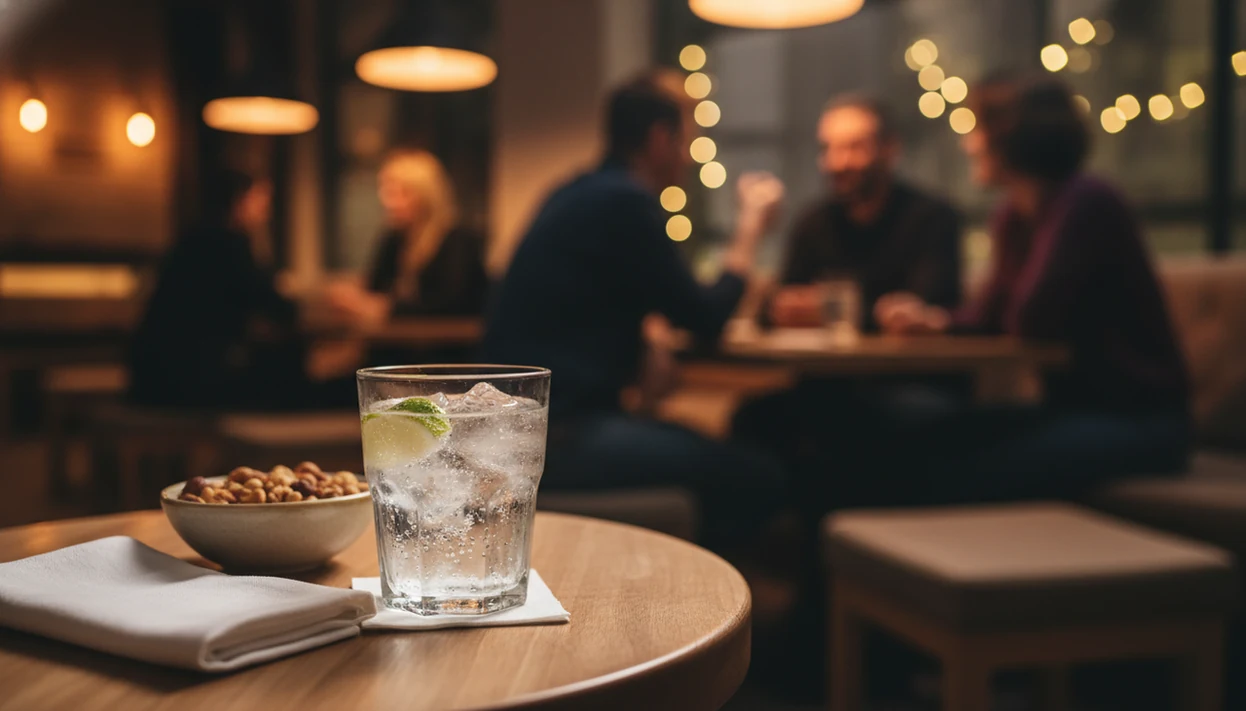
- Hold a replacement drink. Sparkling water in a rocks glass can reduce repeated questions.
- Use a body reset. Try slow breathing, name five objects, or step outside for two minutes.
- Review without punishment. Write what triggered anxiety, what you did, and what you will adjust next time.
For early practice, a structured plan for how to socialize without alcohol can be easier than improvising at a crowded bar.
Alcohol-free scripts for pressure to drink
You do not owe a detailed explanation for not drinking. Short scripts usually work better because they give the other person less to debate.
- Direct scripts: “No thanks, I’m good.” “I’m not drinking tonight.” “I’m taking a break.”
- Date script: “I’m skipping alcohol tonight, but I’d still like to stay for another round of snacks.”
- Work event script: “I’m good with this for now,” then ask about the project, speaker, or venue.
- Family script: “I’m taking a break from drinking. I’m not making it a big discussion tonight.”
- Party script: “I’m pacing myself,” then order a soda, tonic, or alcohol-free beer.
If pressure repeats, use the broken-record technique. Repeat the same line calmly, without adding new reasons. A measuring shot glass near the sink may feel like proof you need precision, but social boundaries often need fewer words, not more.
Sober social plans for parties, dates, and work events
A sober social plan works best when it includes a purpose, a drink choice, and an exit option before you arrive. The aim is not isolation; it is building a sober-supportive circle one setting at a time.
| Situation | Likely trigger | Sober plan | Exit option |
|---|---|---|---|
| Parties | Being offered shots | Arrive with a friend and hold a non-alcoholic drink | Leave after 60 minutes |
| First dates | Drinking to feel confident | Suggest a coffee walk or daytime meal | Say you have an early morning |
| Networking events | Small-talk pressure | Prepare three work-safe questions | Step out after meeting two people |
| Weddings | Toasts and open bar | Plan your drink before the reception | Book your own ride |
| Dinners | Bottle shared at table | Order sparkling water early | Skip the second location |
| After-work drinks | Group momentum | Eat first and set a one-hour boundary | Decline the next venue |
Activity-based plans reduce decision fatigue. Games, volunteering, fitness classes, and breakfast plans make alcohol less central.
Therapy and medication options for social anxiety without alcohol
Does therapy help social anxiety without alcohol? Yes, CBT is considered an effective first-line treatment for social anxiety disorder in NICE guidance, and it is often paired with gradual exposure.
CBT usually targets two things. First, it helps test feared predictions, such as “I will freeze and everyone will notice.” Second, it builds planned practice in real situations, starting with manageable steps. Clinicians typically recommend evidence-based therapy when social fear causes avoidance, distress, or daily impairment.
Medication can help some people, but choices and side effects should be discussed with a licensed clinician. Self-help may not be enough for moderate or severe symptoms. Seek urgent support if alcohol use feels out of control, withdrawal symptoms appear, blackouts happen, or safety is at risk. For drink urges that cluster late in the day, how to stop evening alcohol cravings covers practical craving timing.
When to seek professional help
Seek professional help when social anxiety is shrinking your life or alcohol is becoming the main way you get through it. Self-help planning is useful, but it is not enough when fear, drinking, or both are hard to interrupt.
Warning signs include panic before or during social situations, repeated avoidance of work, school, dating, family, or basic errands, blackouts, withdrawal symptoms, or feeling unable to stop once you start drinking. Medication and therapy decisions should be made with a licensed clinician, not through trial and error alone.
- Contact a therapist, physician, or other licensed mental health professional if anxiety is causing distress, avoidance, or daily impairment.
- Describe your drinking honestly, including blackouts, morning drinking, withdrawal symptoms, failed limits, or using alcohol to feel normal.
- Ask about evidence-based options such as CBT, exposure work, medication evaluation, or alcohol-use treatment if needed.
- Use emergency or crisis support right away if you might harm yourself, cannot stay safe, or withdrawal feels medically serious.
- Treat app tracking as a pattern tool only; it cannot diagnose social anxiety, provide detox, replace therapy, or manage a crisis.
MeQuit tracking tools for alcohol free social confidence
Me Quit can help adults track cravings, streaks, triggers, and milestones while they stop smoking, stop vaping, drink less, or practice mindful alcohol reduction. For social anxiety, the useful part is pattern visibility: time, trigger, urge level, response, and what happened afterward.
A private log can show that anxiety spikes before the event, not during the whole night. It may also show dual triggers, such as a cigarette urge after the first beer or a vape craving during an awkward pause. Me Quit can support private behavior-change tracking, but it is not therapy, detox, diagnosis, or crisis care.
People cutting back on alcohol while quitting smoking or vaping should expect some uneven days. Nicotine withdrawal or vaping reduction can temporarily increase anxiety for some people, especially during the first 24 to 72 hours.
Limitations
This guide is educational and not the same as medical advice. It can help with planning, but it cannot assess your risk, diagnose social anxiety disorder, or manage alcohol withdrawal.
- Self-help tools can ease symptoms, but they may not be enough for moderate or severe social anxiety disorder.
- Medication decisions require a licensed professional and may involve side effects or delays before benefit.
- Blackouts, loss of control, withdrawal symptoms, or thoughts of self-harm require professional or emergency support.
For motivation between events, tracking sober days motivation can make small wins easier to notice.
FAQ
How do I socialize sober?
Set a small goal, bring or order an alcohol-free drink, and plan an exit time before you arrive. Review the event afterward by noting what worked, not only what felt awkward.
Why do I feel like I need alcohol to socialize?
Alcohol can create a learned relief loop: anxiety appears, drinking reduces it, and the brain links alcohol with safety. That pattern is common, but it can be changed with practice and support.
Does sober social anxiety go away?
Social anxiety often decreases with repeated sober practice, CBT, and better coping skills. It may not disappear completely, and that does not mean progress has failed.
What helps anxiety at parties?
Slow breathing, grounding, planned breaks, refusal scripts, and holding a non-alcoholic drink can help in the moment. A clear exit plan also reduces pressure.
Can CBT help social anxiety?
Yes, CBT is an evidence-based first-line option for social anxiety disorder. It targets feared predictions, avoidance patterns, and gradual exposure to social situations.
Is drinking for confidence risky?
Relying on alcohol for confidence can increase dependence risk and may worsen anxiety cycles through rebound anxiety, poor sleep, and avoidance learning. It is especially concerning if drinking feels hard to limit.
How do I refuse alcohol without making it awkward?
Use short lines such as “No thanks, I’m good,” “I’m not drinking tonight,” or “I’m taking a break.” You do not need to provide a detailed justification.
Can quitting vaping increase anxiety?
Yes, nicotine withdrawal can temporarily heighten anxiety for some people. Apps such as Me Quit can help track triggers and patterns, but persistent or severe symptoms should be discussed with a clinician.