
How to Track Drinking and Alcohol-Free Progress
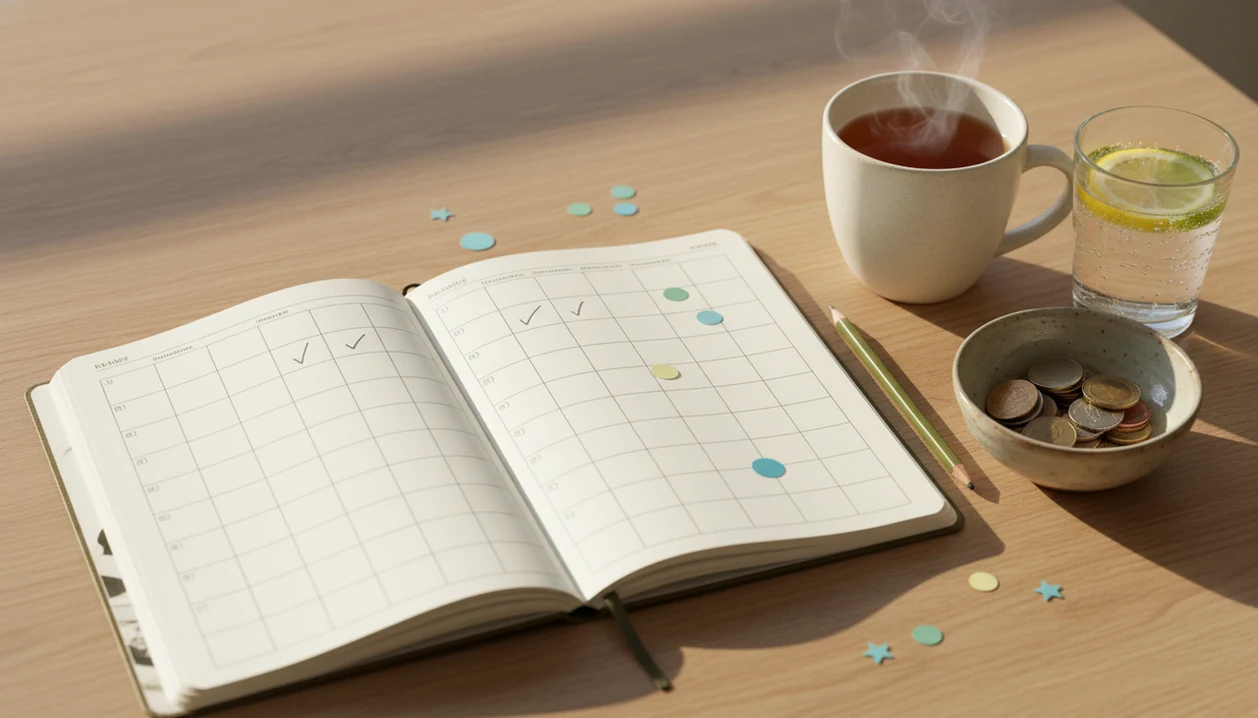
A useful drinking progress tracker does more than count sober days. It shows what happened before the Friday work drinks, how quickly refills added up at a party, and what changed after an alcohol-free evening. The goal is not to produce a perfect calendar. It is to collect enough honest information to make the next decision easier.
Our editorial team reads the alcohol-tracking research with real situations in mind. That means logging close to the moment, tracking lower-drinking days as well as dry days, and reviewing patterns without turning one difficult night into a verdict.
The simple answer
Track drinking by logging each drink when it happens, including the type, amount, time, place and trigger. Mark alcohol-free days too. Compare each day with your plan, then review the week for patterns. If you drink heavily or may be physically dependent, get medical advice before cutting down quickly or starting an alcohol-free streak.
What should you track each day?
At minimum, record the number and size of drinks, the time, and whether the day was alcohol-free. Add the setting, trigger, craving, mood and sleep if you want to understand why your drinking changes.
A drinking diary is recommended in clinical guidance because memory becomes less reliable as an evening unfolds. NHS guidance suggests recording what you consumed, when and where you drank, and the amount involved. Logging each drink immediately is more useful than reconstructing Saturday night on Monday. See the NHS guidance on alcohol treatment and drink diaries.
| Field | What to record | What it may reveal |
|---|---|---|
| Alcohol | Drink type, container or pour size, strength and time | Actual intake and drinking speed |
| Alcohol-free day | Planned or unplanned, completed or not | Frequency of breaks from drinking |
| Trigger | Stress, boredom, celebration, conflict or social pressure | Repeated cues |
| Setting | Home, restaurant, bar, party or work event | Places connected with heavier use |
| Craving | Simple 0 to 10 rating before drinking | Which situations produce stronger urges |
| Result | Mood, sleep, energy and spending | Short-term effects that matter to you |
Do not assume every glass, can or cocktail equals the same amount of alcohol. Record the serving and strength, then use a standard drink calculator when you need a consistent estimate.
How do you start a drinking progress tracker?
Choose one measurable goal, one logging method and one daily check-in time. Make the setup small enough that you can still use it during a busy dinner or after-work craving.
- Choose the goal: quit, reduce total drinks, add alcohol-free days, or change one high-risk situation.
- Pick a format: paper calendar, notes file, spreadsheet, drink tracker app or sobriety counter.
- Write down what you currently mean by one beer, wine, spirit pour or cocktail.
- Set your plan before the usual drinking window begins.
- Log drinks as they happen, including time, amount and context.
- Check the record at the same time each evening.
- Review totals, triggers and alcohol-free days once a week.
A goal such as “drink less” is hard to review. A plan such as “log every drink this week and have Tuesday and Thursday alcohol-free” gives you visible actions. Planning at least two alcohol-free days is one example offered in NHS-linked guidance on reducing alcohol intake, but it is not a universal medical prescription.
Set a phone reminder for the time you usually brush your teeth. A 60-second nightly check is easier to maintain than a long weekend reconstruction.
How do you track alcohol-free days without obsessing over a streak?
Mark each alcohol-free day, but also count total dry days per week or month. This preserves evidence of progress even if one drinking day ends a consecutive streak.
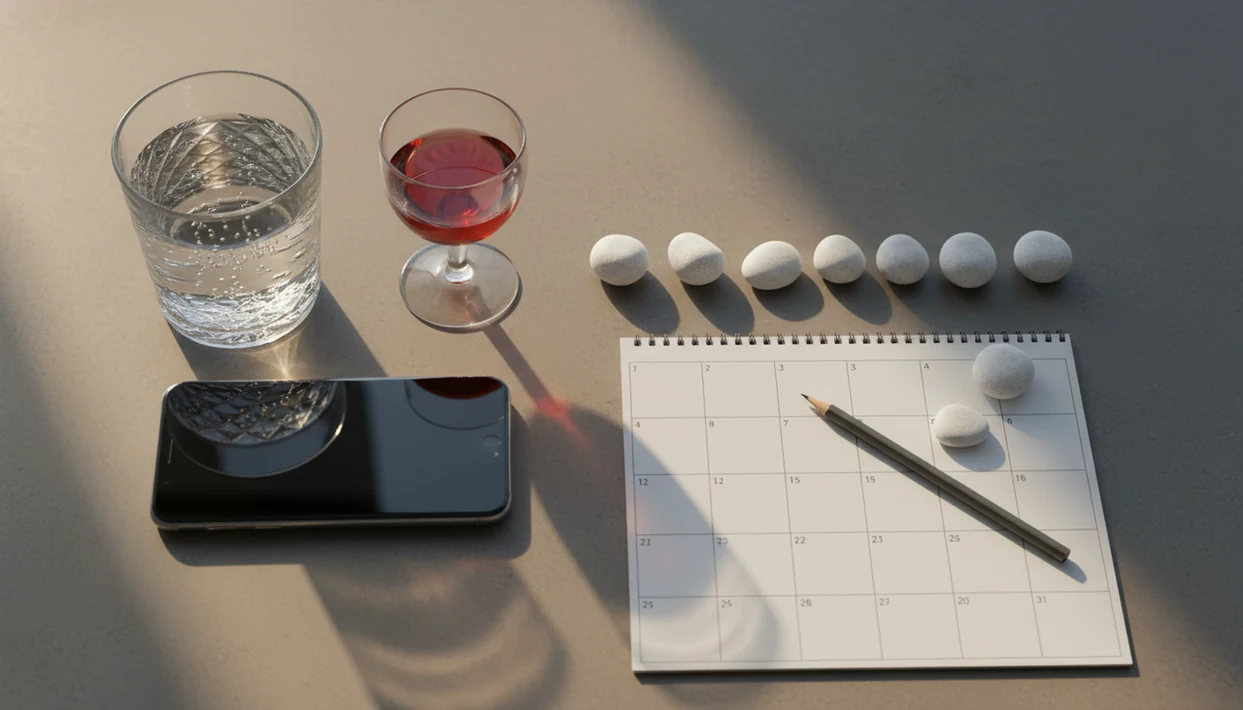
Use two numbers together: your current streak and your total alcohol-free days in the last 7 or 30 days. Someone who completes 12 alcohol-free days in a month has useful progress to examine even if those days were not consecutive. Also note planned dry days, completed dry days and days changed for a specific reason.
For a Dry January or Sober October progress tracker, choose the target before the challenge starts. It could be the full challenge, 21 alcohol-free days, or a set number of dry days each week. Add milestone reviews at 3, 7 and 14 days, then at month-end. Our guide to Dry January, Sober October and 30-day challenges can help you plan the calendar.
- Current consecutive alcohol-free days
- Total alcohol-free days this week and month
- Lower-drinking days
- Planned limits met
- Cravings handled without drinking
- Alcohol-free substitutions that worked
- Money not spent on alcohol
How does tracking reveal drinking patterns and triggers?
A drinking pattern tracker connects the amount you drank with the time, setting, emotion and cue around it. After one or two weeks, repeated situations often become easier to see.
The useful unit is not only the drink. It is the sequence: cue, choice, result and next adjustment. Friday stress may lead to the first drink at 6 p.m., followed by faster refills and poor sleep. A new plan could be: “If I arrive home tense, I will eat and walk for 10 minutes before deciding about a drink.”
Research supports self-monitoring as an active part of digital alcohol interventions. A 2024 mediation analysis found that adherence and self-monitoring partially mediated reductions in consumption, although that does not mean tracking alone works for everyone. Read the peer-reviewed analysis of self-monitoring in an alcohol app.
Patterns worth checking every Sunday
- Weekends compared with weekdays
- Home drinking compared with social drinking
- The time of the first drink
- How quickly later drinks follow
- Stress, boredom, loneliness or celebration before drinking
- Drinking linked with smoking or vaping
- Sleep and mood the following morning
If the after-work window repeatedly stands out, focus the next plan there rather than changing everything at once. Try the practical ideas in replacing the after-work alcohol ritual.
How can you track weekend drinking and parties?
Set the limit and logging plan before the first drink. During the event, record each drink immediately and check the running total before accepting or pouring another.
Using an alcohol tracker app to set weekend drink limits, log drinks and review drinking patterns can reduce guesswork. A useful weekend drinking tracker or drink limit app should open quickly. A party drinking tracker is less useful if logging requires several screens while rounds are moving fast.
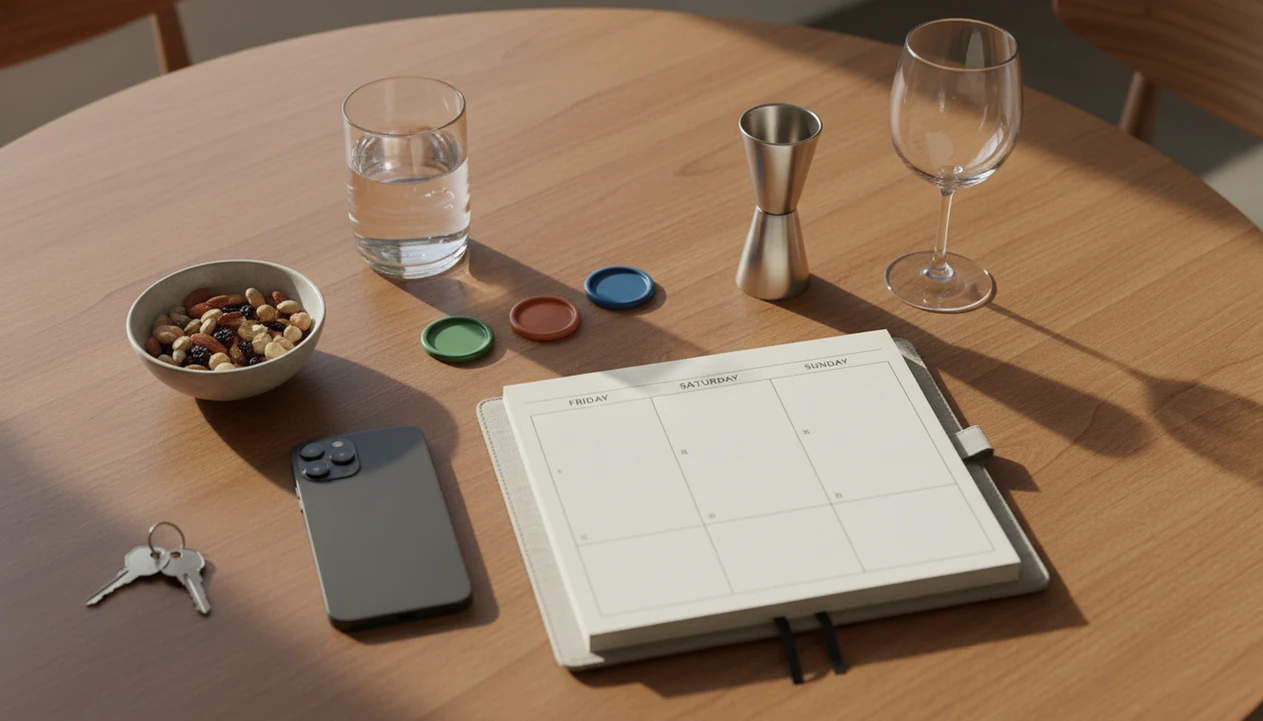
- Before Friday evening, set separate plans for Friday, Saturday and Sunday.
- Before a party, decide how you will get home and what you will drink first.
- Track drinks at parties by type, size and time, not only by the number of glasses.
- Mark shared pitchers, top-ups and strong cocktails instead of treating them as unknowns.
- When you reach your plan, switch to a chosen alcohol-free drink or leave.
- Review the event the next morning, including what made the plan easier or harder.
If alcohol also cues cigarettes or the vape kept in the car, note that cross-trigger. A drink log that ignores nicotine may miss a major part of the Friday pattern.
Get medical advice before reducing quickly or stopping if you drink heavily every day, have had withdrawal symptoms, or think you may be alcohol-dependent. Seek urgent medical care if severe symptoms develop after cutting down or stopping.
Should you track nonalcoholic substitutions?
Yes. Track nonalcoholic drinks and alcohol-free substitutions when they replace a usual alcoholic drink, especially during a predictable trigger such as dinner, a bar visit or the first hour after work.
A non alcoholic drink tracker, mocktail tracker, NA beer tracker or drink substitution app can be as simple as one extra field in your normal log. Record the substitute, time, setting, trigger and whether it reduced the urge. The point is to learn which swaps actually change your behavior.
| Usual cue | Possible substitute | What to review |
|---|---|---|
| Beer after work | NA beer or flavored seltzer | Did it delay or replace the first alcoholic drink? |
| Wine with dinner | Sparkling water in the usual glass | Did the meal still feel complete? |
| Cocktail at a party | Mocktail or club soda with citrus | Did it reduce questions or social pressure? |
| Nightcap | Tea or another caffeine-free drink | How did sleep compare? |
Review substitutions after seven days. Keep the ones that fit the ritual and remove the ones that leave you feeling deprived or increase the urge to drink.
Do alcohol tracking apps help?
Alcohol tracking apps can support self-monitoring, goals and feedback, but results vary and the evidence does not show that every app or every user will benefit. An app cannot assess dependence or supervise withdrawal.
A 2025 systematic review found that adults using mobile-health alcohol interventions generally consumed less alcohol than control or minimal-intervention groups, but effects differed across interventions and populations. See the systematic review of mobile alcohol interventions.
If you want to find and use an alcohol tracker app to log drinks, monitor consumption, set limits and track alcohol-free progress, look for fast entry, editable serving sizes, dry-day totals, trigger notes and weekly charts. A drink counter app or alcohol unit tracker should make the record clearer, not bury it behind motivational screens.
Less on the US App Store focuses on drink entries, drink-free streaks and graphs. Other tools emphasize coaching, lessons or sober-day counters. Compare those approaches in our guide to sobriety apps.
To find an app to track drinking habits and identify patterns, triggers, risks and progress over time, check what it records before downloading. A drinking pattern tracker needs context. A basic alcohol tracking app or drink log app may count drinks well but lack the notes needed to work as an alcohol trigger tracker.
When is self-tracking not enough?
Self-tracking is not enough when you may be physically dependent, have withdrawal symptoms, cannot stay within planned limits, or drinking is causing immediate danger. Get clinical advice rather than treating an app streak as a detox plan.
Alcohol withdrawal can be severe or life-threatening. Symptoms may begin 6 to 12 hours after the last drink, are often worst during the first 48 hours, and commonly improve over 3 to 7 days. People who may be dependent should not suddenly stop without medical advice. The NHS overview of alcohol use disorder explains dependence and withdrawal risk.
A tracking log can still help a clinician understand timing, amounts and symptoms, but it does not provide diagnosis, medication or supervised withdrawal care. If cutting down feels unsafe, read our guide on how to stop drinking safely and contact a healthcare professional before changing your intake.
Safety comes before a dry-day goal. Do not use a challenge, streak or app notification as a reason to stop suddenly if you drink heavily every day or have had withdrawal symptoms.
Tracking Drinking FAQ
What is the easiest way to track drinking?
Use a notes file, calendar or app that you can open in seconds. Record each drink when it happens, including type, size and time. Mark alcohol-free days and add a short trigger note. Review the full week at one set time rather than relying on memory.
Should I count drinks or alcohol-free days?
Track both. Drink totals show how much alcohol you consumed, while alcohol-free days show how often you took a break. If reduction is your goal, also record lower-drinking days and planned limits met. These measures provide a fuller picture than a consecutive streak alone.
What happens to my tracker if I drink on a planned dry day?
Log what happened and keep tracking. Record the amount, time, trigger and what you will change next time. You can reset a consecutive streak while keeping the day in your monthly record. One drinking day does not erase earlier alcohol-free days or useful information.
How often should I review my drinking log?
Review briefly each evening for missing entries, then do a fuller review every seven days. Compare planned and actual drinking, weekends and weekdays, triggers, first-drink times and dry days. A monthly review can show broader movement, but waiting a month to make adjustments is usually too slow.
Can an app tell me if I have alcohol dependence?
No. An app can organize self-reported drinks, triggers and symptoms, but it cannot diagnose dependence or determine if stopping is medically safe. If you drink heavily every day, experience withdrawal symptoms, or worry about losing control, discuss the record with a healthcare professional.
Is an alcohol-free streak safe for everyone?
No. Abruptly stopping can cause dangerous withdrawal in someone who is physically dependent on alcohol. If you drink heavily every day, have previously experienced withdrawal, or are uncertain about your risk, get medical advice before beginning a dry streak or sober challenge.
How long should I track drinking before looking for patterns?
Useful clues may appear after seven days, especially around weekends, but two to four weeks gives a better comparison across workdays, social events and quieter evenings. Continue logging close to real time. Missing heavier nights can make the pattern look safer than it is.
References
- NHS: Alcohol misuse treatment
- North Tees and Hartlepool NHS Foundation Trust: Reducing your alcohol intake
- npj Digital Medicine: Mediation analysis of adherence and self-monitoring
- PubMed: Mobile health interventions for reducing alcohol consumption
- Apple App Store: Less Alcohol Tracker
- NHS: Alcohol use disorder