
Smoked a Cigarette After Quitting? Stop the Slip Here
The next move
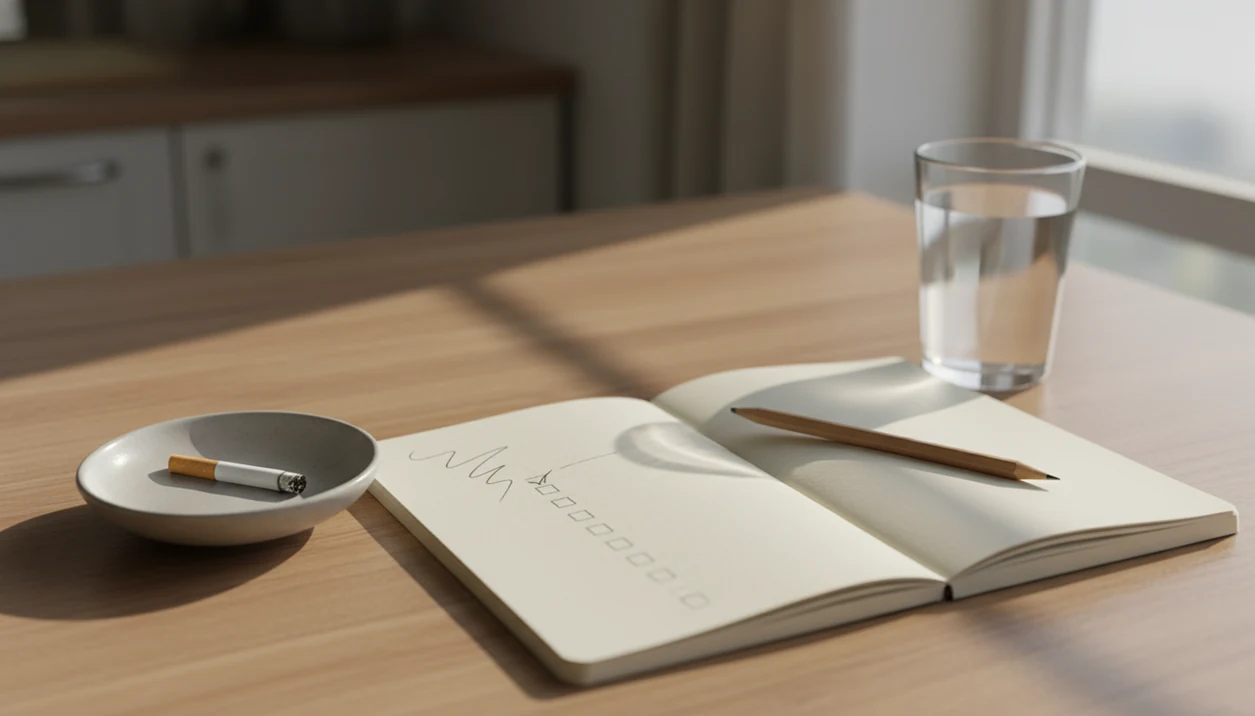
If you smoked a cigarette after quitting, put it out and resume not smoking now. One cigarette is a slip, not automatically a return to regular smoking. Remove the remaining cigarettes, record what led up to the slip, and plan a different response for the next craving. You do not need to wait for another quit date.
A cigarette after days, months, or even years without smoking can bring a fast wave of regret. The more useful question is what happened in the minutes before you smoked: a drink, an argument, a familiar break area, a cigarette within reach, or a craving you did not expect.
Your progress still counts. Focus on preventing the second cigarette, then make the next high-risk situation less automatic. That may mean changing your route, contacting support, reviewing cessation medication, or deciding how you want to record the slip.
One cigarette is a slip, not automatically a relapse
A smoking slip is one cigarette, a few puffs, or brief vaping after you had already stopped. A relapse means returning to regular smoking, often close to your old daily pattern.
If you smoked one cigarette after quitting, name it accurately. It was a slip. That matters because the next move is different: you interrupt the chain, not “start over as a smoker.”
A slip is common and recoverable. Smoking once says nothing about your character or how seriously you meant to quit. The smell of stale smoke on a winter coat can feel discouraging fast, but that feeling can become a cue to protect the rest of the day.
Five facts to remember before you smoke another
- A slip is a short setback; relapse is a return to regular smoking.
- Per the CDC, about 55% of U.S. adult cigarette smokers made a quit attempt in the past year: https://www.cdc.gov/mmwr/volumes/73/wr/mm7329a1.htm
- Research on successful quitters suggests many people need multiple serious quit attempts over years: https://bmjopen.bmj.com/content/6/6/e011045
- Restarting quickly reduces the chance that one cigarette becomes the first cigarette of a pack.
- Support such as counseling, medication, nicotine replacement therapy, quitlines, and apps can improve quit odds.
Acting now gives the slip less time to become a second cigarette or a new pack.
Most people do not quit by having one flawless streak forever. They quit by learning the pattern faster each time. If your first morning cigarette before coffee was always the hardest one, plan tomorrow morning before you go to sleep tonight.
Remove easy access before the next craving
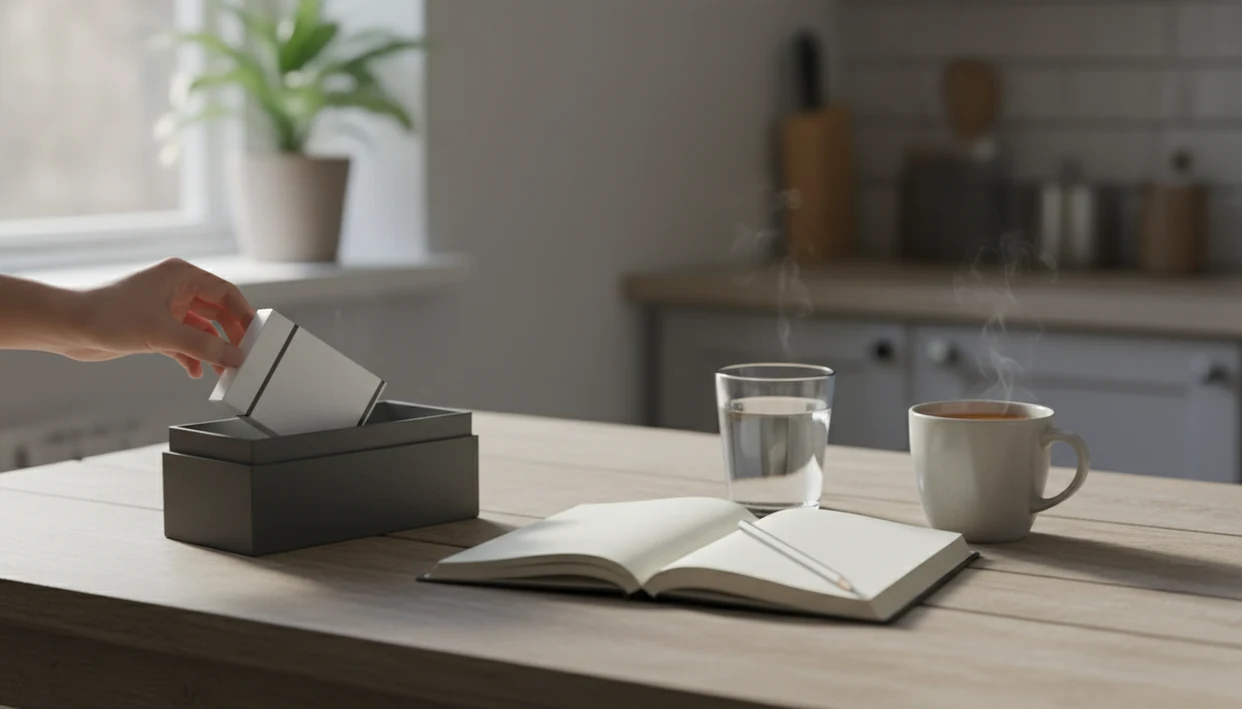
Before you restart after a smoking slip, make the next cigarette harder to reach and the next craving easier to answer. Do this before the usual craving window arrives, not after you are already bargaining with yourself.
- Clear the easy access by removing cigarettes, loose tobacco, lighters, ashtrays, vapes, chargers, and anything that makes “just one more” convenient. If buying is automatic, delete delivery apps, avoid the corner store route, or leave cards at home for the short errand.
- Choose one support contact now. Text a friend, partner, quitline, counselor, or app check-in with a simple message: “I slipped, I’m restarting today, and I may need a reply later.”
- Name today’s extra risk honestly. Alcohol, stress, poor sleep, conflict, or withdrawal can all need a specific plan for the next few hours.
- Keep medication steady unless a clinician or pharmacist confirms a change fits your situation. Do not double, stop, or mix nicotine replacement or prescription quit medication on impulse after a slip.
This setup turns restart into a practical scene change, not a promise made under pressure.
Why an old smoking cue can return suddenly
Nicotine cues can reactivate learned routines even after days, months, or years smoke-free. The brain remembers “stress plus doorway plus cigarette” as a habit loop: cue, craving, response, reward.
Common triggers include stress, alcohol, social smoking, boredom, conflict, driving, and reward moments. A Friday 6 p.m. drink can make a cigarette feel automatic, especially if those habits used to arrive together. If alcohol is a repeat trigger, the question why do I smoke more when I drink is worth answering before the next weekend.
Cravings often peak early after quitting and commonly weaken over 2 to 4 weeks, according to the American Cancer Society's withdrawal timeline: https://www.cancer.org/cancer/risk-prevention/tobacco/guide-quitting-smoking/what-to-expect.html. They can still spike later when a strong cue appears.
A slip is a cue-response loop that fired. Planning interrupts the loop before it becomes a routine again.
Contact a clinician if slips keep happening, withdrawal feels unmanageable, or you have questions about nicotine replacement or prescription medication. Seek urgent help for chest pain, severe breathing trouble, or thoughts of self-harm.
A six-step smoking slip recovery plan
Use this smoking slip recovery plan today, not after another pack. The first hour is about stopping access; the first day is about finding the trigger; the first week is about strengthening support.
- Stop smoking now and remove remaining cigarettes, lighters, ashtrays, or vaping supplies.
- Log the slip with time, place, trigger, emotion, and craving intensity from 1 to 10.
- Tell one supportive person or use a quitline, counselor, or app check-in.
- Replace the next likely cigarette with a specific action, such as a walk, gum, breathing drill, or text.
- Review NRT, medication, or counseling if cravings feel strong or repeat.
- Restart the smoke-free plan today instead of waiting until the pack is gone.
Restarting the same day lets you keep using the smoke-free routines you have already practiced.
What to do after a smoking relapse in the first 24 hours
If one cigarette became repeated smoking, you can still quit again today. Start by separating a brief lapse from an ongoing relapse. The NHS guidance on getting back on track recommends treating one puff or cigarette as a slip and stopping again immediately. If you have returned to regular smoking, use the same immediate actions, then strengthen the plan around the pattern that restarted.
- Remove cigarettes from your pockets, car, desk, porch, bag, and usual smoking area. Do not keep the rest of a pack for later.
- Write down the place, time, people present, emotion, and what happened immediately before you smoked. Include alcohol, vaping, hunger, conflict, and poor sleep.
- Send one direct message to a supportive person: “I smoked, and I am stopping again today.”
- Plan your response before the next usual smoking time. Options include leaving the smoking area, walking for five minutes, calling support, or using an approved cessation aid as directed.
- If a clinician already gave you a medication plan, follow it unless that clinician or a pharmacist advises a change.
| Choice | How to use it |
|---|---|
| Keep the original quit date | Record the relapse separately while preserving the date that marks when you first quit. |
| Set a new quit date | Use today if a fresh counter gives you a clearer target. |
| Track both | Keep the original date and start a separate count for the renewed smoke-free stretch. |
Do not spend the first day trying to fix every trigger. Change the setting most closely tied to smoking again, then arrange extra support for the next 24 to 72 hours.
The first hour: interrupt the chain
“What should I do in the first hour after a smoking slip?” Stop the chain immediately: put out the cigarette, do not buy more, and do not label the whole day ruined.
Change the setting fast. Move rooms, leave the porch, drink water, brush your teeth, shower, or take a short walk around the block. The purpose of changing locations is to put distance between you and the cue. It is distance from the cue.
When your mind starts bargaining, answer it plainly: one cigarette is information, not permission for another.
The next few hours matter because the brain may ask for a second cigarette. That request can sound reasonable: “You already smoked, so why not?” Answer with an action, not a debate. If the slip happened near the apartment door, move the butt bucket or remove it completely.
Reconstruct the minutes before the cigarette
After you smoked one cigarette after quitting, find the trigger before you judge the day. Use a simple log: where, who, feeling, thought, craving level, and access to cigarettes.
Separate external triggers from internal triggers. External triggers are places, people, drinks, car rides, social pressure, celebrations, or cigarettes within reach. Internal triggers are stress, loneliness, boredom, anger, withdrawal, or the thought that you “deserve one.”
Heavy shoulders at happy hour can be a trigger. So can being alone after a conflict, or holding a drink while someone offers a lighter across bar stools.
The point is not blame. It is prediction. If the trigger was alcohol plus a smoking friend, next time you might set a two-drink limit, leave earlier, or use a tool that can plan alcohol limits before you go out.
Keep your quit date or reset the streak?
Different people handle streaks differently after a smoking slip. The useful choice is the one that makes your next smoke-free action more likely.
| Tracking option | How it works | Best fit |
|---|---|---|
| Keep original quit date | Add a slip note without changing the main date | You feel motivated by long-term progress |
| Reset the streak | Start the counter again today | You prefer a clean, simple counter |
| Track both | Keep smoke-free days and slip-free days separately | You want honesty without losing context |
A streak reset can backfire if it triggers shame or all-or-nothing thinking. Private progress tracking should help you act, not punish you.
When cravings call for stronger support
If cravings are intense or slips repeat, add evidence-based support instead of trying to “try harder.” Clinicians typically recommend matching stronger cravings with stronger support, including medication discussions when appropriate.
- Combination NRT: Patch plus gum or lozenge can reduce background withdrawal and sudden cravings. A Cochrane review found that combining nicotine replacement therapies improves long-term quit rates compared with using one form alone: https://www.cochranelibrary.com/cdsr/doi/10.1002/14651858.CD000146.pub5/full
- Counseling: Brief counseling can help you map trigger patterns and practice replacement responses.
- Quitlines: Telephone quitlines offer structured support without needing a local appointment.
- Clinician support: A doctor, pharmacist, or qualified clinician can discuss NRT, prescription options, side effects, and medical fit.
Behavioral counseling plus medication can more than double quit rates compared with unsupported cold turkey attempts, according to U.S. tobacco treatment guidance: https://www.ncbi.nlm.nih.gov/books/NBK63952/. A quit smoking and drinking app can support logging and planning, but it does not replace clinical care when symptoms are complex.
What to do with nicotine replacement after a slip
Do not automatically stop nicotine replacement because you smoked once. CDC instructions for the nicotine patch say to discard the cigarettes, resume the quit attempt, and continue using the patch as directed. Ask a clinician, pharmacist, or quitline about symptoms, product combinations, or uncertainty about your dose. Do not double a dose to compensate for the cigarette.
For people who have already stopped smoking but face repeated relapse, medication plans may deserve a clinical review. A Cochrane evidence update on relapse prevention found moderate-certainty evidence that extended varenicline helped prevent relapse among people who had achieved abstinence. This is a reason to discuss treatment length with a prescriber, not to restart, extend, or change a prescription on your own.
Mistakes that can turn one cigarette into a pack
The biggest mistake is deciding one cigarette means the quit attempt failed. That thought can turn a small slip into a full pack faster than the nicotine itself.
Other common mistakes are waiting for a perfect restart date, hiding the slip, ignoring alcohol or stress triggers, and using shame as motivation. Shame often narrows the plan to “I should be stronger.” Problem-solving asks better questions: Where was I? Who was there? What was I feeling? What will I do in that same moment next time?
If the slip included a vape, name that too. The mint vape in the hoodie pocket is not harmless just because it was not a cigarette.
Four signs your smoke-free restart is working
You are back on track when today has no more cigarettes, the trigger is logged, the next high-risk moment is planned, and at least one support option has been contacted. That is enough evidence for a restart.
Check craving intensity over the next 24 to 72 hours. Cravings may rise temporarily after nicotine exposure, especially if the slip happened during a familiar routine. With repetition, they usually decline again.
A useful restart check looks like this: no cigarettes bought, no vaping supplies nearby, one coping action chosen, and tomorrow’s hardest moment named. If the next risk is the commute, plan the health milestone ping or breathing exercise before you start the car.
Review the plan after one week. Adjust the highest-risk trigger first, not every part of your life at once.
When repeated slips need professional help
Get professional help after a smoking slip when the pattern keeps repeating, symptoms feel unsafe, or medication questions are more than simple craving management. A clinician can help separate normal withdrawal from problems that need a different level of care.
Choose the next level of help based on what is happening:
- Ask a clinician to review your plan if slips continue despite nicotine replacement, counseling, quitline support, or specific changes to your triggers. Repeated slips may mean the dose, timing, medication mix, or behavioral support needs review.
- Seek prompt mental health support if quitting or slipping brings severe anxiety, depression, panic, hopelessness, or thoughts of self-harm. Those symptoms deserve care right away, not another private promise to be tougher.
- Ask about medication fit if you are pregnant, trying to become pregnant, managing heart disease, or taking other prescriptions. Do not adjust NRT or quit medication on guesswork.
- Use emergency services now for chest pain, serious breathing trouble, fainting, severe confusion, or any immediate safety crisis.
A slip is still recoverable. Getting help can be the move that protects the next quit stretch.
Questions after smoking once
Did I fail by smoking one cigarette after quitting?
No. One cigarette or a few puffs is usually described as a lapse or slip, not an automatic return to regular smoking. Put it out, remove access to more cigarettes, and resume not smoking immediately. The key decision is what you do next, not the fact that the slip occurred.
Should I reset my quit date after one cigarette?
You can keep the original date, reset the counter, or track both the original quit date and the new smoke-free stretch. Choose the method that encourages honest action without turning one cigarette into an excuse to continue. Your health progress and the skills you practiced before the slip have not disappeared.
Will one cigarette restart nicotine withdrawal?
One cigarette does not automatically reset withdrawal to the beginning. It can increase cravings, especially when it reconnects nicotine with a familiar routine. Watch your cravings over the next 24 to 72 hours, remove cigarettes from reach, and prepare a response for the setting where the slip happened.
What counts as a smoking relapse?
A slip is one cigarette, a few puffs, or another brief use after quitting. A relapse is an ongoing return to smoking, often approaching your previous pattern. There is no single cigarette count that applies to everyone. The practical distinction is whether you stop again or continue smoking repeatedly.
Why did I smoke after months without cigarettes?
Strong cues can remain long after daily withdrawal has eased. Alcohol, stress, conflict, celebrations, driving, old smoking friends, or returning to a familiar place can reactivate the learned routine. Write down the exact sequence while it is fresh, then change one part of that situation before it happens again.
Can I keep using nicotine replacement after smoking once?
Do not assume you must stop treatment. CDC guidance for nicotine patches says to discard the cigarettes, get back on track, and keep using the patch as directed. Instructions can differ by medicine and personal health history, so ask a pharmacist, clinician, or quitline if you have symptoms or dosing questions.
How do I quit smoking again today?
Put out the cigarette, discard the rest, and remove lighters and ashtrays. Record the trigger, tell one supportive person that you are stopping again, and plan a specific response for the next expected craving. If you already have a clinician-approved medication plan, continue it as directed unless told otherwise.
Should I tell someone that I slipped?
Telling one supportive person can make the restart more concrete and give you someone to contact during the next craving. Keep the message simple: “I smoked, I am stopping again today, and I may need support later.” Choose someone who will help with the plan rather than criticize or monitor you.