
How to Quit Smoking Without Giving Up Alcohol
A drink may be tied to more than taste or company. It can signal the old sequence of ordering another round, stepping outside, accepting a cigarette, and promising to restart tomorrow. That connection can feel especially strong while a smoking quit is new.
You do not necessarily have to give up alcohol permanently. You do need to treat drinking as a predictable relapse risk. A firm plan made before the first drink gives you more protection than trying to make decisions after your judgment and resolve have softened.
The practical answer
You can quit smoking and continue drinking socially, but alcohol can weaken judgment and trigger familiar cigarette routines. If possible, avoid alcohol for the first 30 days. When you drink again, choose a low-trigger setting, set your limit in advance, carry your quit-smoking medication, stay away from smoking areas, and leave if cravings keep building.
Why a drink can bring cigarette cravings back fast
- Alcohol can lower inhibition, so the “one won’t matter” thought gets louder right when your judgment is softer.
- Drinking often happens around the same patios, stools, friends, and lighter clicks that used to cue smoking.
- Social drinking cigarette cravings are learned trigger patterns, not proof that you lack discipline.
- Co-use is common. Among U.S. adults with an alcohol use disorder, 46.2% also used cigarettes, according to NIAAA research NIAAA smoking data.
- A smoke-free night works better when you plan the craving window before the first drink.
The smell of smoke on winter gloves can bring back an old routine fast. So can a friend stepping outside after the second round.
Your job for the night is simply to break the familiar drink, step outside, light up sequence. It is to make the old cigarette sequence harder to start. For broader non-bar triggers, the same logic applies to quit smoking daily life triggers.
Break the drink, cue, cigarette loop
Alcohol smoking triggers work through cue loops: a drink, a social setting, an urge, a cigarette, and short-term relief become linked through repetition.
That loop is part brain chemistry and part routine. Nicotine reinforces relief quickly. Alcohol can weaken planning, so tomorrow’s health milestone feels less urgent than the cigarette being offered across bar stools.
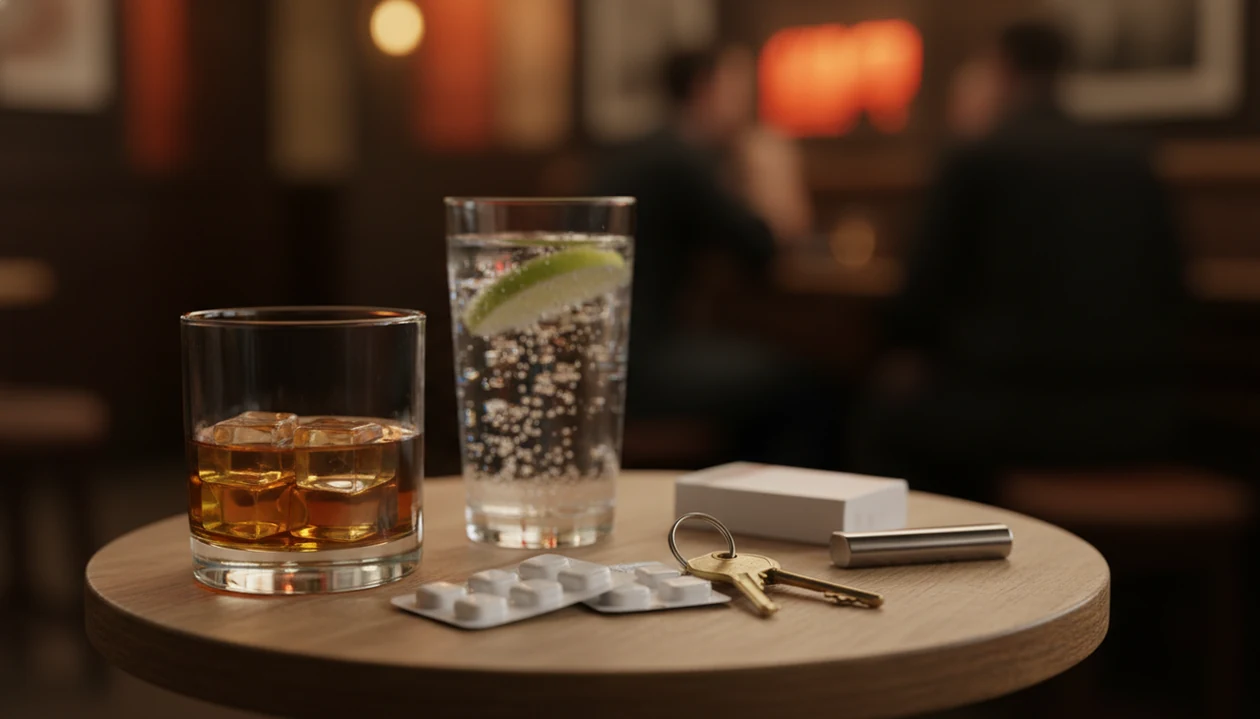
The useful move is to interrupt the loop before the first cigarette. Change the seat. Hold a seltzer between drinks. Text the non-smoking friend before the urge peaks. If you already track your alcohol use, add the cigarette cue, such as the drink, venue, person, or time, to your mindful drinking plan.
For many social drinkers, changing the drinking context is often easier than arguing with a craving after two or three drinks because the cue loop has already started.
Give the first 30 days extra protection
Can you drink during the first few weeks after quitting smoking? You can, but the first few weeks are usually the most fragile time, so alcohol-free nights or very limited drinking are safer choices early on.
A simple rule works well: for the first two to four weeks, avoid the places and drinks most tied to smoking. If Friday 6 p.m. usually means a pint and a cigarette outside, do not test that exact setup first.
Moderate drinking is different from trying to resist cigarettes while binge drinking. One planned drink with dinner is not the same risk as a long night of rounds, shots, and friends leaving for the smoking area. Start proven quit-smoking support before the event, and avoid your strongest drinking cues while smoke-free routines are still new.
Quit attempts are more likely to hold when behavioral support is paired with an approved medication that is safe for you.
If you drink heavily every day, have had shaking, sweating, hallucinations, seizures, or confusion when cutting down, get medical advice before abruptly stopping or sharply reducing alcohol. Call 911 for a seizure, severe confusion, chest pain, trouble breathing, or immediate risk of self-harm.
Your first drink after quitting: make it a low-risk test
The CDC clinical conversation guide recommends avoiding alcohol for at least the first month after quitting because it can trigger the desire to smoke. The CDC's Pathways to Freedom booklet gives a more cautious target of three months. A longer pause may make sense if drinking and smoking have almost always happened together.
If you decide to drink sooner, make the first occasion short and controlled. The following steps apply the CDC's advice to change routines, remove tobacco, and avoid strong triggers.
- Choose dinner, a quiet home gathering, or another setting where smoking is uncommon.
- Set a lower drink limit and a stop time before you leave.
- Do not carry cigarettes, a lighter, or an emergency pack.
- Tell at least one person not to offer you a cigarette.
- Bring any quit-smoking medication you already use, following its directions.
- Leave if you start following smokers outside or repeatedly bargaining over one cigarette.
Plan your ride home so it does not include a stop where you usually buy cigarettes.
These steps are based on CDC smoking-cessation guidance about removing tobacco and changing routines around known triggers.
Build rules for a smoke-free night out
A good alcohol smoking trigger plan turns vague willpower into visible rules. Write the plan before you leave, not after the craving starts.
| Trigger on the night out | Smoke-free replacement |
|---|---|
| Bar patio or smoking area | Choose an indoor table, or sit far from exits and outdoor heaters. |
| Usual smoking drink | Order a different drink, smaller pour, or alcohol-free option. |
| Fast drinking | Set a drink limit, sip slowly, and alternate with water. |
| Friend offers a cigarette | Tell one non-smoking friend your plan and ask for a quick interruption. |
| Craving keeps building | Leave early instead of waiting for the peak. |
If game-night cans sit beside cigarette packs, move seats before the first round starts. Tiny logistics matter.
People quitting with a partner may need shared rules for rides, venues, and exit times; that is covered more fully in quit smoking with partner.
Before you leave: a five-part bar plan
Use a quit-smoking drinking plan as a pre-event checklist. The plan should be short enough to read in the car, on the train, or outside the venue.
- Set a maximum number of drinks before going out, and decide what time you stop ordering.
- Pack fast-acting craving support if appropriate, such as nicotine gum or lozenges you already know how to use.
- Log the context in a notebook, quit-smoking app, or craving tracker, including venue, drink type, mood, and expected smoking trigger.
- Use a delay rule before any cigarette decision, such as 10 minutes, water, fresh air away from smokers, then reassess.
- Review the next morning and adjust the next plan based on what actually happened.
Opening an app during a three-minute craving is often better than negotiating with yourself for an hour.
Medication and support for high-risk evenings
Quit-smoking supports work best when they are stacked before high-risk drinking situations, not saved for after a slip. Evidence-based treatments such as nicotine replacement therapy, bupropion, varenicline, or counseling roughly double quit success compared with quitting without support, according to a 2015 clinical review the NIH.
- Nicotine replacement therapy: A steady patch plus fast-acting gum, lozenge, spray, or inhaler may help during sudden bar cravings.
- Prescription medication: Varenicline or bupropion can help some adults, but you should discuss fit, risks, and timing with a clinician.
- Counseling or text support: A check-in before and after the event adds accountability.
- App-based tracking: Craving logs can show which nights, drinks, and people raise risk.
Nicotine gum in a jacket pocket is not a moral statement. Nicotine gum gives you a planned response when a bar craving arrives.
For people whose cravings spike with anxiety, quit smoking and mental health may also matter.
Quitting smoking does not undermine alcohol recovery
You do not have to postpone smoking treatment because alcohol is also a concern. A Cochrane review of 11 studies involving 2,231 people found that tobacco-cessation interventions did not make participants more likely to return to alcohol or other drug use. Programs that included medication also improved tobacco abstinence among people receiving treatment for, or recovering from, alcohol or other drug dependence.
The practical concern is not that smoking treatment harms alcohol recovery. It is that drinking can expose you to cigarette cues while lowering your ability to follow the plan. Tell a clinician about both patterns so medication, counseling, drinking limits, and withdrawal risks can be considered together.
When your drinking limit needs to come down
When should you lower alcohol limits to protect a smoking quit? Lower the limit when drinking repeatedly leads to cigarette cravings, social smoking, blackouts, broken rules, or next-day regret.
Per the National Institute on Alcohol Abuse and Alcoholism, heavy alcohol use is more than 14 standard drinks per week for men and more than 7 for women NIAAA alcohol data. Heavy or binge drinking can make cigarette refusal much harder because planning drops as the night goes on.
Moderate social drinking is not the same risk level as heavy drinking. Still, no alcohol level is completely risk-free for someone trying to quit smoking.
Some people need to address alcohol and tobacco together, especially after repeated relapses or strong dependence. If every night out ends with cigarettes, the small next step may be lower limits, dry nights, or professional support.
Signs that call for professional or medical help
Get professional help when alcohol or nicotine feels hard to control, withdrawal symptoms show up, or relapse keeps repeating despite a written plan. Routine cravings can be handled with delay rules and support tools; urgent symptoms need real-time care.
Blackouts, shaking, sweating, nausea, panic, confusion, seizures, chest pain, severe depression, or thoughts of self-harm are not “normal craving data.” Loss of control matters too: drinking more than planned, smoking after every attempt to quit, hiding use, or feeling unable to cut down are reasons to talk with a clinician.
- Talk with a clinician about medication, dependence, pregnancy, fertility, or any history of alcohol withdrawal symptoms.
- Describe both patterns at the same appointment: how much you drink, when you smoke or use nicotine, what triggers each, and what happens when you try to stop.
- Ask about safer options for nicotine treatment, alcohol reduction, counseling, and whether detox support is needed.
- Use apps as support for tracking and reflection, not as emergency care, detox instructions, or a substitute for medical advice.
- Seek immediate help for severe withdrawal symptoms, overdose concerns, or any risk of harming yourself or someone else.
Drinking without returning to cigarettes
Can I drink alcohol after quitting smoking?
Yes, but alcohol can make cigarette cravings and old routines harder to resist. CDC guidance recommends avoiding alcohol for at least the first month if possible. When you start again, use a lower drink limit, avoid smoking areas, do not carry cigarettes, and arrange a way to leave early.
Why do I only want cigarettes when I drink?
Your brain may have learned to connect a particular drink, venue, friend group, or trip outside with smoking. Alcohol also weakens planning and inhibition, making an offered cigarette harder to refuse. Repeating the same drinking routine without smoking can gradually weaken that connection, but early attempts need firm limits and an exit plan.
How long should I avoid alcohol after quitting cigarettes?
CDC clinical guidance recommends avoiding alcohol for at least the first month after quitting. Another CDC patient booklet suggests three months. The right pause depends on how closely your drinking and smoking are linked. If nearly every drinking occasion led to cigarettes, a longer break offers more protection.
Is smoking only when drinking still a problem?
Yes. Occasional cigarettes still expose you to smoke and reinforce the connection between alcohol and nicotine. They can also turn a planned smoke-free night into resumed daily smoking. Treat social smoking as a lapse risk, not as a separate harmless category of cigarette use.
Can nicotine gum or lozenges help when I am drinking?
Fast-acting nicotine replacement can provide a planned response to a sudden craving, while a patch can provide steadier coverage. Use these products according to the label and ask a clinician or pharmacist about timing, combination use, health conditions, or side effects. Pack the medication before leaving rather than waiting for a craving.
Can I vape instead of smoking when I drink?
Vaping may keep the alcohol and nicotine cue connected, especially if your goal is to stop using nicotine. It can also become the new automatic response every time you drink. A better plan is to use an approved quit-smoking aid as directed and practice getting through the occasion without smoking or vaping.
What should I do if I smoke one cigarette after drinking?
Stop with that cigarette rather than treating the night as lost. Throw away the remaining cigarettes, move away from the smoking area, tell your support person, and restart the quit that same day. The next morning, record the drink, place, people, and decision point that came before the lapse.
Do I need to quit drinking to quit smoking?
Not necessarily. Some people can return to limited social drinking after the early quit period. Consider a longer pause or help with both substances if every drinking occasion ends in smoking, you cannot keep your planned limit, or alcohol causes blackouts. Heavy daily drinkers should get medical advice before stopping suddenly because withdrawal can be dangerous.