
Why Alcohol Makes You Smoke More, and How to Break the Link
You may feel committed to quitting at 6 p.m., then find yourself accepting a cigarette after two drinks without much thought. Alcohol does not create the pattern by itself. It strengthens a connection your brain may have practiced through nights at bars, patio breaks, parties, dinners, or drinks at home.
The useful target is the sequence leading to the first cigarette. Changing its earliest step, such as the location, first drink, group, or time you leave, is usually more manageable than arguing with every craving later in the night.
Bottom line
Alcohol can make nicotine feel more rewarding, lower your resistance to smoking, and activate routines linked to certain drinks, people, or places. That combination can make lighting a cigarette feel automatic. Planning your drink limit, setting, cigarette substitute, and exit time before the first drink gives you a better chance of staying smoke-free.
Why the first cigarette can feel automatic after a drink
Why do I smoke more when I drink? Because alcohol can raise the urge to smoke, weaken the “not tonight” decision, and wake up cues your brain already knows.
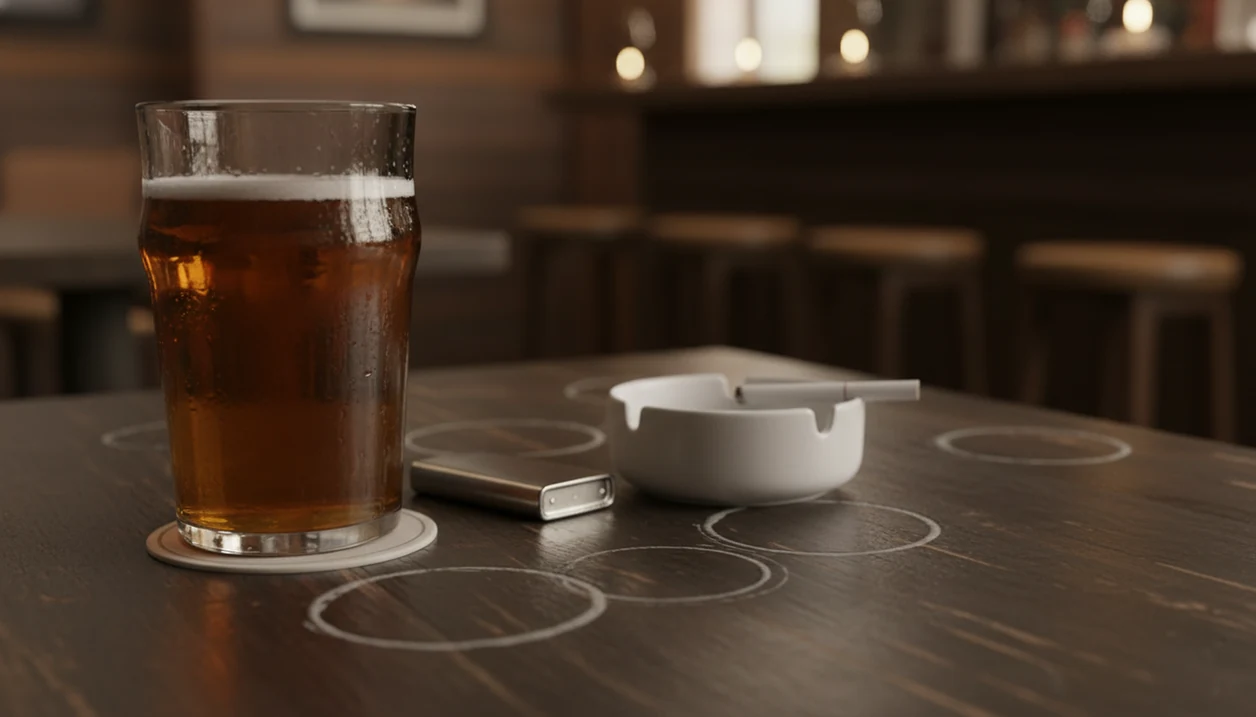
This pattern reflects a rehearsed response to alcohol and smoking cues, not a simple failure of discipline. It means your brain has practiced a routine. A first beer, a certain bar stool, a friend stepping outside, or the feeling of being tipsy can become a cigarette cue. The lighter offered across bar stools can feel like the whole decision has already happened.
Smoking when drinking often feels automatic because it is partly automatic. The useful move is to treat it like a trigger pattern, not a personal weakness. Once you can name the cue, you can plan around it before alcohol lowers your resistance.
What research shows about alcohol-triggered smoking
- In a laboratory study of regular smokers, alcohol led to an average 35% increase in cigarette craving compared with non-alcoholic drinks, according to a Purdue University report on the research purdue alcohol data.
- Population research shows that heavier drinkers tend to be heavier smokers, with a dose-response pattern between drinking amount and cigarettes smoked. One CDC analysis describes strong overlap between adult cigarette smoking and binge drinking patterns CDC report.
- Clinical and epidemiologic research finds that alcohol consumption can precipitate smoking relapse, especially during attempts to stay abstinent from tobacco.
- Nicotine and alcohol share reward and memory pathways, so the brain can store “drink plus smoke” as one linked routine.
- Smoking and drinking together increases health risks, including head and neck cancer risk, and the risk rises with heavier combined use. The National Cancer Institute notes that combined tobacco and alcohol use raises the risk of cancers of the mouth, throat, larynx, and esophagus more than either exposure alone the National Cancer Institute smoking data.
A practical way to reduce alcohol-triggered smoking is to choose the drinking setting, cigarette substitute, and exit point before the first drink.
Protect the first week after your quit date
Alcohol is especially risky early in a quit attempt. A systematic review of alcohol use and smoking cessation found poorer cessation outcomes in 20 of 27 studies. Alcohol use during the first 7 days after quitting was associated with nearly twice the odds of a smoking lapse. In one included study, the probability of a lapse on a heavy-drinking day during the first 12 weeks was 38.5%.
If drinking reliably leads to cigarettes, consider avoiding alcohol for at least the first 7 days and preferably the first several weeks. This is a temporary risk-management step, not a rule that everyone must avoid alcohol permanently.
The drink, craving, cigarette, reward loop
The smoking-drinking trigger loop works through cue, craving, routine, and reward: alcohol cues the urge, the cigarette becomes the routine, and nicotine reinforces the memory.
In habit-loop terms, the first beer may be the cue. The craving is the body leaning toward nicotine. The routine is stepping onto the patio. The reward is the quick nicotine hit and social relief. After enough repetitions, the weekend bar or after-dinner drink can start the loop before you consciously choose anything.
Alcohol also reduces inhibition. After a few drinks, the decision you made while sober can lose some of its force. Nicotine then adds reward reinforcement, which teaches the brain to remember the pairing. A review in Alcohol Research: Current Reviews describes alcohol-tobacco interactions as important during relapse and abstinence attempts the NIH.
If alcohol has contributed to past lapses, identify the exact triggers and include them in your relapse-prevention plan.
Choose your alcohol rules while you are sober
Before you try to drink without smoking, identify the drinking situations most likely to break your quit plan. A Friday 6 p.m. drink after work may carry more risk than one glass with dinner at home.
Choose your starting rule while sober. You might avoid alcohol for a few weeks, reduce the number of drinks, or change the setting entirely. A booth inside a smoke-free restaurant is different from a crowded patio where people keep passing cigarettes around.
Plan the small next step before you need it. Decide what you’ll say, what you’ll hold, and when you’ll leave. Cutting alcohol can reduce triggers for many people, but it may not erase nicotine cravings for everyone. Notice automatic actions too, such as checking a pocket, bag, or car console for cigarettes.
For people with strong alcohol-linked urges, changing the drinking context is often easier than relying on willpower because the cue is weaker.
If you drink heavily every day or have had shaking, sweating, hallucinations, seizures, or severe agitation when cutting down, do not stop alcohol suddenly without medical advice because withdrawal can be dangerous. A clinician can also help you choose smoking medication and address both behaviors at the same time.
Build a plan for one high-risk night
Use a smoke-free drinking plan by testing one risky situation at a time, with the key decisions made before alcohol is involved. Arrange the night so cigarettes are harder to reach, smoking breaks are easier to skip, and friends know not to offer.
- Choose one high-risk scene for your first test, such as after-work drinks, a game night, or a patio meal. Do not try to solve every drinking situation at once.
- Set your drink limit and exit time while sober, then put both somewhere you will actually see them. A clear “two drinks, leave by 9:30” beats a vague promise to behave.
- Pick one hand-to-mouth replacement before you arrive. Gum, a straw, mints, a water glass, or a toothpick can cover the empty-hand moment when the cigarette usually appears.
- Tell one trusted person that you are not smoking tonight and ask them not to offer, joke, or invite you outside with smokers.
- Review the next day like a coach, not a critic. Find the weakest cue, tighten that part, and use the next outing as a smaller, cleaner test.
Map the events leading to your first cigarette
Start by logging what happens, not judging it. Write down the drink type, location, people, mood, craving intensity, and cigarette count. Add the time if you can. “Two beers, back patio, stressed, 8 out of 10, three cigarettes” is more useful than “bad night.”
Look for repeats. Beer, shots, rides home, late-night food, certain friends, or standing near the door can all become alcohol triggers cigarettes attach to. A crumpled pack in the car console may tell you more than a long speech about motivation.
If you want the tracking workflow separated out, an app that tracks smoking and drinking can make patterns easier to spot.
Pattern awareness reduces the surprise factor. That matters at 10:45 p.m.
Set a drink limit and a firm exit time
Use sober pre-decisions, not tipsy negotiations. The rule should be simple enough to follow when the room is loud and your craving window is open.
- Set a drink limit before you go out, and put it in your phone.
- Choose a smoke-free location where stepping outside with smokers is not the default.
- Tell one friend you are not smoking tonight, and ask them not to offer.
- Carry a replacement such as gum, mints, a straw, or a toothpick.
- Leave before the danger window if your usual cigarette happens after the third drink or last call.
If drink limits are the main weak spot, a tool that can plan alcohol limits may help you decide the boundary before the first order. These boundaries can be temporary protections while the new smoke-free routine becomes more familiar. It is to protect the early quit plan.
Replace the smoking break, not just the cigarette
The cigarette ritual needs a substitute cue-routine-reward sequence. If you remove the cigarette but keep the same patio, same smoker cluster, and same empty hand, the old routine has too much room.
Build a drink-safe routine you can repeat. Step outside without smokers. Chew gum after the first drink. Hold a straw or glass of water between drinks. Text an accountability person when the urge hits. One quiet urge note typed under a table can stop the spiral long enough for the craving to pass.
Avoid smoker clusters and smoking patios early on. They are not neutral spaces when you are trying to quit smoking while drinking. Repetition matters here. The first smoke-free night may feel awkward; the fifth gives your brain a different memory to retrieve.
Social smoking myths vs the actual risks
Smoking only when drinking can still be a real nicotine pattern. The fact that it appears in one setting does not make it harmless or easy to switch off.
| Myth | Reality |
|---|---|
| “I only smoke when I drink, so it is not real.” | Alcohol-linked social smoking is still a conditioned nicotine habit and still carries health risk. |
| “I just like the combo, and alcohol is not affecting cravings.” | Experimental research shows alcohol can physically increase cigarette craving, beyond preference. |
| “Willpower is enough after several drinks.” | Alcohol lowers inhibition, so a plan made sober can feel weaker later. |
| “Quitting smoking will not affect how drinking feels.” | Nicotine and alcohol interact, so drinking may feel different when nicotine is removed. |
A quit smoking slip up after drinking is not proof that quitting is impossible. Use the lapse to identify which part of the plan failed: the alcohol limit, setting, cigarette access, social pressure, or replacement routine.
You can get help for smoking and alcohol together
You do not have to finish addressing one habit before getting help for the other. A Cochrane review of tobacco treatment during substance-use treatment or recovery found that smoking interventions increased tobacco abstinence without making people more likely to return to alcohol or other drug use.
Medication can also be considered alongside counseling. A review of 34 randomized trials involving 5,796 people receiving substance-use treatment found that smoking medication improved tobacco abstinence. Medication plus counseling produced better results than counseling alone, with an estimated number needed to treat of 15. Discuss nicotine replacement or prescription options with a clinician, particularly if you have other medical conditions or take regular medication.
Alcohol and smoking questions
Why do cigarettes feel better when I am drunk?
Alcohol can increase the pleasantness and satisfaction associated with nicotine. It also lowers inhibition and activates memories of previous drinking and smoking. The cigarette may therefore feel more rewarding while your reasons for refusing it feel less immediate. That combination can make the pairing seem unusually strong.
Why do I only smoke when I am drunk?
Your nicotine use may be tied to a specific set of cues rather than your whole day. Alcohol, certain friends, patios, music, and late-night routines can form one conditioned pattern. Limited or social smoking still exposes you to tobacco smoke and can keep the learned nicotine connection active.
Should I stop drinking while I quit smoking?
Temporary alcohol avoidance can help if drinking repeatedly leads to smoking. The first 7 days after quitting deserve particular protection, and several alcohol-free weeks may make sense for a strong trigger. If you drink heavily every day or have experienced withdrawal symptoms, get medical advice before reducing or stopping alcohol.
How can I drink without smoking?
Choose a smoke-free location, set a specific drink limit and exit time, avoid smoking patios, and tell friends not to offer cigarettes. Carry gum, mints, or another hand-to-mouth substitute. If the urge rises sharply, leave rather than trying to renegotiate the plan after more alcohol.
Does vaping solve alcohol-triggered cigarette cravings?
Vaping may replace the cigarette in the moment, but it can preserve the alcohol-nicotine connection and maintain nicotine dependence. If your aim is to stop nicotine, treat the vape as part of the same trigger plan. A clinician can help you consider established smoking medications instead of switching products informally.
Can one night of drinking cause a smoking relapse?
It can contribute to a lapse, particularly early after quitting, but one cigarette does not have to become a full return to smoking. Remove the remaining cigarettes, write down what happened before the first one, and revise the next drinking plan. Resume your quit attempt immediately rather than waiting for another date.
Is social smoking while drinking still harmful?
Yes. Smoking only at bars, parties, or dinners still exposes you to toxic tobacco smoke and reinforces the connection between alcohol and nicotine. Infrequent smoking may feel easier to dismiss because it is limited to one setting, but that setting-specific pattern can still trigger repeated use and undermine quit attempts.
Can I quit smoking while getting treatment for alcohol use?
Yes. Research supports offering tobacco treatment during alcohol or other substance-use treatment, and smoking treatment does not generally increase the chance of returning to alcohol or drugs. Timing should still be individualized, especially if alcohol withdrawal is possible or you need medically supervised care.