
Mindful Drinking That Fits a Demanding Workweek
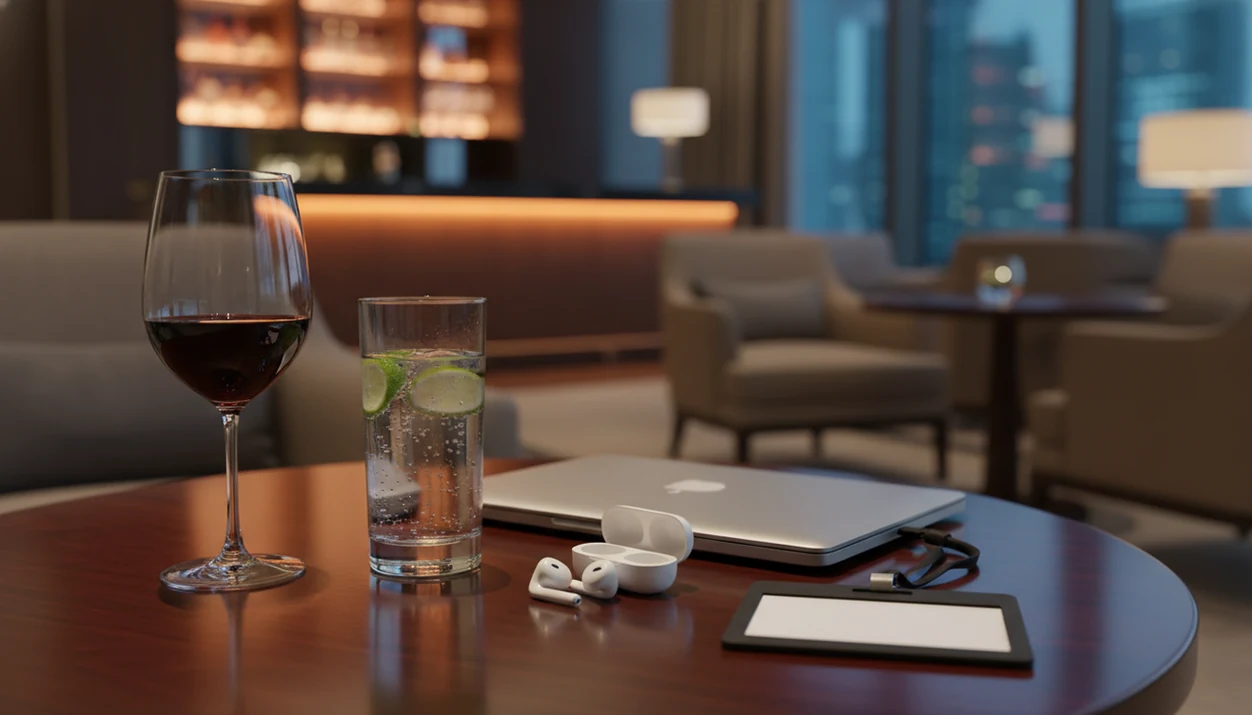
Work can make drinking look less frequent than it is. A client dinner on Tuesday, airport drinks on Wednesday, and team drinks on Friday may feel like separate events, but your body experiences the total. Long hours also make the first drink after work feel automatic.
A useful plan focuses on the moments when decisions become harder: the first restaurant order, an offered refill, the hotel bar, or the 30 minutes after closing your laptop. Small rules set in advance can protect sleep, judgment, and the next morning without requiring an explanation to coworkers.
The practical version
Mindful drinking means deciding your limit before a work event, measuring what you drink, and tracking the result without judgment. Use rules that fit the situation, such as one drink with dinner, no refills, or alcohol-free nights before early meetings. If you drink heavily or daily, get medical advice before cutting back because withdrawal can be dangerous.
Why work makes automatic drinking easy
Busy professionals need mindful drinking strategies because work can make alcohol feel scheduled, rewarded, and socially expected. Client dinners, conferences, airport lounges, and after-work happy hours can turn “just one” into a weekly pattern.
- Work settings normalize frequency. A Tuesday client dinner and a Thursday team round can add up before the weekend starts.
- The workplace cost is large. The CDC estimated excessive alcohol use cost the U.S. $249 billion in 2010, with about 72% tied to lost workplace productivity CDC alcohol data.
- Binge drinking is common. In 2022, 17.2% of U.S. adults reported binge drinking in the past 30 days, per the CDC CDC alcohol data.
- Lower amounts are not risk-free. A large meta-analysis linked light-to-moderate drinking with higher risks for several cardiovascular and cancer outcomes biomedcentral.
- Reduction still matters. For many professionals, mindful drinking is easier than all-or-nothing change because it fits real calendars, client obligations, and travel weeks.
The sticky bar table under your fingertips counts as data. So does the meeting you dreaded the next morning.
Measure the drink, not the glass
A large wine pour or strong craft beer may contain more than one standard drink. In the United States, one standard drink is about 12 ounces of 5% beer, 5 ounces of 12% wine, or 1.5 ounces of 40% spirits. The CDC defines binge drinking as four or more drinks for women or five or more for men on one occasion.
Measure home pours at least once. At a restaurant, avoid automatic top-offs because they make the total difficult to judge.
Turn each drink into a deliberate decision
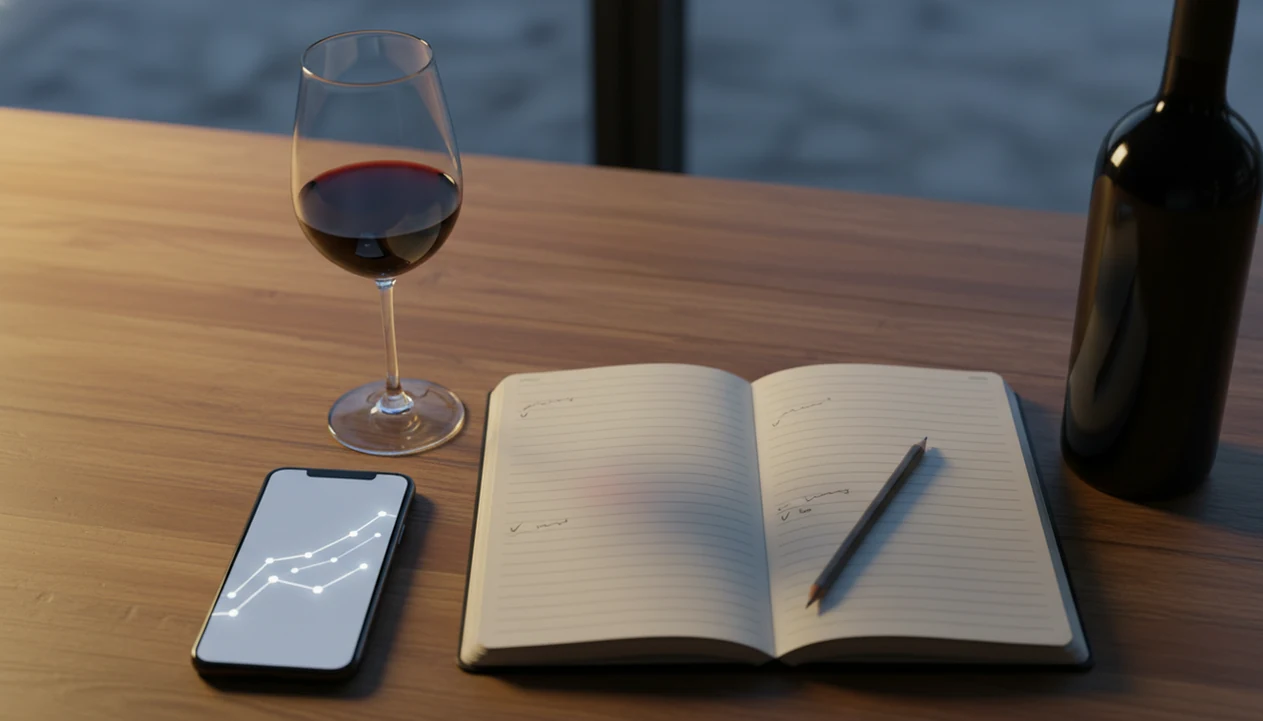
Mindful drinking works by turning alcohol from an automatic habit loop into a logged decision. Behavioral self-monitoring means you record what you drank, where you were, and what happened before the urge showed up.
That record breaks the blur. Stress, networking pressure, travel delays, celebration, and late dinners become visible trigger patterns instead of vague “busy week” excuses. Pre-commitment rules also reduce decision fatigue. Deciding “two drinks at the client dinner” before you arrive is easier than negotiating with yourself after the second toast.
Alcohol can also fragment sleep architecture, which means the night may look long but feel low quality. For professionals, that shows up as slower focus, shorter patience, and weaker decision-making the next morning. For a work-focused plan, pair each drink entry with bedtime, sleep quality, and next-morning energy.
Mindful drinking is a harm-reduction framework, not an abstinence-only model. It usually works best when someone can set limits consistently, while abstinence fits people who cannot reliably stop once they start.
Use a mindful drinking journal to find workday triggers
A mindful drinking journal records more than a total. It connects each drink to the meeting, mood, place, person, or routine that came before it. A notebook, private note, or spreadsheet works. Log close to the event because alcohol, fatigue, and a packed schedule can make later estimates unreliable.
| When | Record |
|---|---|
| Before | Mood, craving from 1 to 10, location, company, and your planned limit |
| During | Drink type, measured amount, start time, food, and any offered refill |
| After | Final total, whether you followed the plan, and what changed your decision |
| Next morning | Sleep quality, energy, anxiety, headache, regret, and ability to focus |
Prompts that reveal more than a drink count
- What happened in the hour before I wanted a drink?
- Was I drinking for taste, social ease, celebration, stress relief, or habit?
- Did anyone else's pace affect mine?
- What could replace the first pour after work?
- Did drinking increase an urge to smoke or vape?
- Which single rule would make this situation easier next time?
Review entries once a week. Look for repeated transition points, such as closing the laptop, arriving at a hotel, waiting for a flight, or returning from a difficult meeting. Adjust one pattern at a time.
Build a plan that survives a busy calendar
A practical drink-less plan works best when it is specific enough to use during a three-minute craving window.
- Write a weekly cap and alcohol-free days on your calendar before meetings and travel fill the week.
- Log every drink in real time, before, during, or right after events, so memory does not edit the count.
- Tag each entry with a trigger, such as client dinner, travel, stress, celebration, or networking pressure.
- Review weekly patterns and identify which situations push you over your limit.
- Adjust event rules, such as two drinks at client dinners and zero drinks at internal happy hours.
- Track sleep and next-day energy to connect reduced drinking with sharper mornings and steadier performance.
For busy professionals, real-time drink logging is often more useful than end-of-week reflection because alcohol decisions happen inside fast social moments.
How to create and use a mindful drinking plan
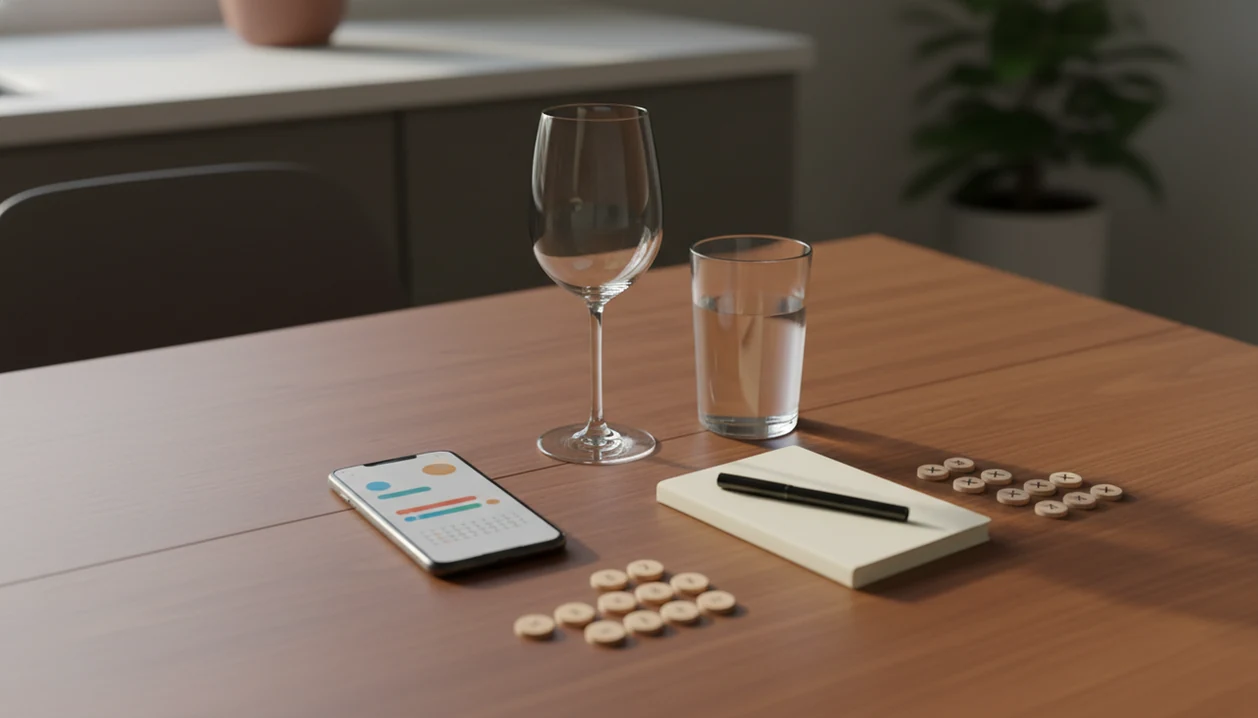
A mindful drinking plan turns a broad intention into rules you can follow when you are tired, rushed, or under social pressure. Start with your current pattern rather than choosing an arbitrary target. The CDC's guidance on moderate alcohol use sets daily limits of no more than two drinks for men or one for women on days alcohol is consumed. These are limits, not health targets or guarantees of safety.
- Record your normal intake for at least seven days, including drink size, time, location, trigger, and next-day effect.
- Choose a specific limit for the coming week and write it down before work events are added.
- Add alcohol-free days if you can do so safely. Heavy daily drinkers should ask a clinician about withdrawal risk first.
- Set event rules, such as one drink with food, no unrequested refills, or no alcohol before a presentation day.
- Alternate alcoholic drinks with water or another nonalcoholic option, and decide your departure time in advance.
- Review the week without erasing slips. Change the rule, timing, or environment that failed.
Make the rule observable. “One measured drink with dinner” is easier to follow and review than “be good tonight.”
Client dinners, conferences, and the after-work pour
Does cutting back mean networking gets awkward? Usually, no. The awkwardness comes from arriving without a plan, not from ordering something without alcohol.
Client Dinners and Matching Rounds
The client dinner pattern is matching drink-for-drink with clients or senior colleagues. Break it with a pre-set rule, such as one drink with food, one sparkling water after, and no top-offs you did not ask for.
Conference Travel and Compounding Nights
The conference pattern is cumulative. One reception, one late dinner, and one “quick nightcap” across three days can become a recovery problem by Thursday. Arrive late to open-bar events, leave before the second round, and keep one non-alcoholic order ready.
Nightly Stress Unwinding at Home
The stress-unwinding pattern is quieter. Long hours end, the laptop shuts, and the drink becomes the transition ritual. Replace the first pour with a fixed decompression routine, then decide again after 20 minutes.
If anxiety is the main driver, a separate plan to drink less for anxiety and mood may help you separate social pressure from emotional relief.
If you drink heavily every day or have previously had shaking, sweating, severe anxiety, hallucinations, confusion, or seizures after cutting down, get medical advice before changing your intake. Call emergency services for a seizure, hallucinations, severe confusion, chest pain, trouble breathing, uncontrollable vomiting, or rapidly worsening symptoms.
Redesign the first hour after work
The 30 to 90 minutes after work may matter more than a general promise to cut back. For one week, plan that window before the day begins. Eat before leaving the office, change the route that passes your usual bar, schedule a walk or call, and keep a nonalcoholic drink ready at home. The goal is to interrupt the cue and routine before the first pour.
If an urge appears, delay the decision for 10 to 20 minutes. Leave the drinking location, eat or hydrate, contact someone supportive, and repeat the delay if needed. The CDC offers a private drinking pattern check that can help put your current intake in context.
Alcohol vs restorative sleep
Alcohol can reduce sleep quality even when it helps you fall asleep faster. It may fragment sleep architecture, and that can affect focus, decision-making, and emotional regulation the next day.
The NHS recommends adults drink no more than 14 units per week, spread across three or more days, while noting there is no completely safe level of drinking the NHS. A large meta-analysis also linked light-to-moderate drinking with increased risks for several health outcomes, so “normal” drinking is not automatically neutral.
For professionals, the short-term benefit of cutting back may be subtle. You may not wake up transformed after one dry night. But a two-week log can show fewer 3 p.m. crashes, steadier calls, and better patience in tense meetings.
If sleep is your main performance lever, a focused plan to drink less to sleep better can make the feedback loop easier to see.
Protect your privacy without overlooking risk
Private tracking can help you see patterns, but it cannot fix every workplace drinking norm. App entries are self-reported, so accuracy depends on honest, consistent logging, especially after long dinners or travel days.
Workplace cultures that reward heavy drinking need organizational change, not just individual willpower. A non-alcoholic beer in your hand may help at one event, but it can also keep the same cue-response routine alive for some people.
Shaking, sweating, severe anxiety, confusion, or repeated loss of control are reasons to seek medical support rather than relying on self-tracking alone. An estimated 29.5 million people age 12 and older in the U.S. had alcohol use disorder in 2021, according to NIAAA data NIAAA alcohol data.
A private tracker cannot provide therapy, diagnosis, medical advice, or emergency care. For broader comparison, alcohol app alternatives can help you evaluate whether a self-guided tracker is enough.
When a personal log is enough, and when it is not
Self-guided tracking fits when you can set a limit, keep it most of the time, and use the data honestly. Coaching, therapy, physician care, or detox is safer when alcohol feels hard to control or your body reacts badly when you cut back.
Apps such as Sunnyside, Reframe, or Monument may add coaching, community, structured lessons, or clinician access. A private tracker is lighter: useful for busy professionals who want discreet logging, weekly caps, and event rules without turning every work dinner into a public recovery conversation.
- Choose self-guided tracking if your goal is moderation, your limits are realistic, and slips are occasional rather than escalating.
- Add coaching or therapy if stress, anxiety, trauma, or repeated broken promises are driving the pattern.
- Call a physician before stopping sharply if you drink heavily or have had shaking, sweating, panic, confusion, seizures, or severe insomnia when reducing.
- Look beyond individual tracking if leadership pressures people to drink, client entertainment rewards heavy rounds, or alcohol-free choices are mocked.
- Choose abstinence-focused support if one drink reliably becomes many, consequences keep mounting, or moderation rules have failed several times.
The point is fit. Private tracking is a tool, not a test of character.
What realistic mindful drinking success stories have in common
Useful mindful drinking success stories are rarely about perfect streaks. They usually involve a measurable rule and a change to the setting where drinking happens. For weeknight wine, that might mean measuring pours, keeping Monday through Thursday alcohol-free, and replacing the after-work pour with a walk or meal. For weekend social drinking, it might mean food first, a two-drink limit, a nonalcoholic drink between rounds, and leaving at a set time.
Progress can mean fewer heavy occasions, fewer unwanted refills, more alcohol-free days, or better next-morning energy. It does not prove moderation is safe or workable for everyone. A lapse should prompt a short review: note what came before it, stop the episode when possible, remove the remaining alcohol, contact support, and revise the rule that failed. Repeatedly exceeding limits, drinking more than intended, or experiencing withdrawal calls for professional assessment rather than a stricter personal promise.
Mindful drinking questions from the workweek
Can I practice mindful drinking without quitting alcohol?
Yes. Mindful drinking can be used to reduce automatic or excessive drinking without choosing total abstinence. The plan still needs firm, measurable limits. Moderation may not be appropriate if you repeatedly lose control, have withdrawal symptoms, drink despite serious consequences, or have been advised not to drink for medical reasons.
How many drinks per week are safe?
No weekly number eliminates health risk. Current CDC guidance defines moderate drinking as no more than two drinks in a day for men and one for women on days alcohol is consumed. These are upper limits, not goals. Your safest personal limit may be lower based on medications, health conditions, prior consequences, or difficulty controlling intake.
Will drinking less make networking awkward?
It may feel noticeable at first, but you do not owe coworkers or clients a detailed explanation. Order a nonalcoholic option promptly and use a short response such as “Early start tomorrow” or “I’m pacing tonight.” Arriving with a standard order and a planned departure time reduces decisions when rounds begin.
Does alcohol after a work dinner affect sleep?
It can. Alcohol may make you feel sleepy at first while still fragmenting sleep later in the night. The next morning may bring lower energy, reduced patience, or difficulty concentrating. Track the final drink time, bedtime, awakenings, and next-day energy for two weeks to see how the pattern affects you.
How can I track drinks discreetly during a client event?
Use a brief phone note, a tally mark, or a message saved as a draft. Record the drink type, time, and estimated standard drinks before ordering another. If using your phone would feel conspicuous, note each bathroom break or course of the meal, then complete the entry before leaving the venue.
What should I do if I break my planned limit?
Stop the drinking episode as soon as you reasonably can, switch to a nonalcoholic drink, arrange safe transportation, and record what happened. The next day, identify the point where the plan failed, such as arriving hungry or accepting refills. Change that specific condition instead of abandoning the entire plan.
When is mindful drinking not enough?
Self-guided moderation may not be enough if you repeatedly drink more than intended, cannot keep limits, have strong cravings, experience work or relationship problems, or develop tolerance or withdrawal. A primary care clinician can assess your pattern and discuss therapy, support groups, outpatient treatment, or medication. Do not abruptly stop heavy daily drinking without medical advice.
Does wine count differently from beer or liquor?
The alcohol amount matters more than the beverage category, price, or quality. About 5 ounces of 12% wine, 12 ounces of 5% beer, or 1.5 ounces of 40% spirits each count as one standard drink. Larger pours and stronger products may contain two or more standard drinks.