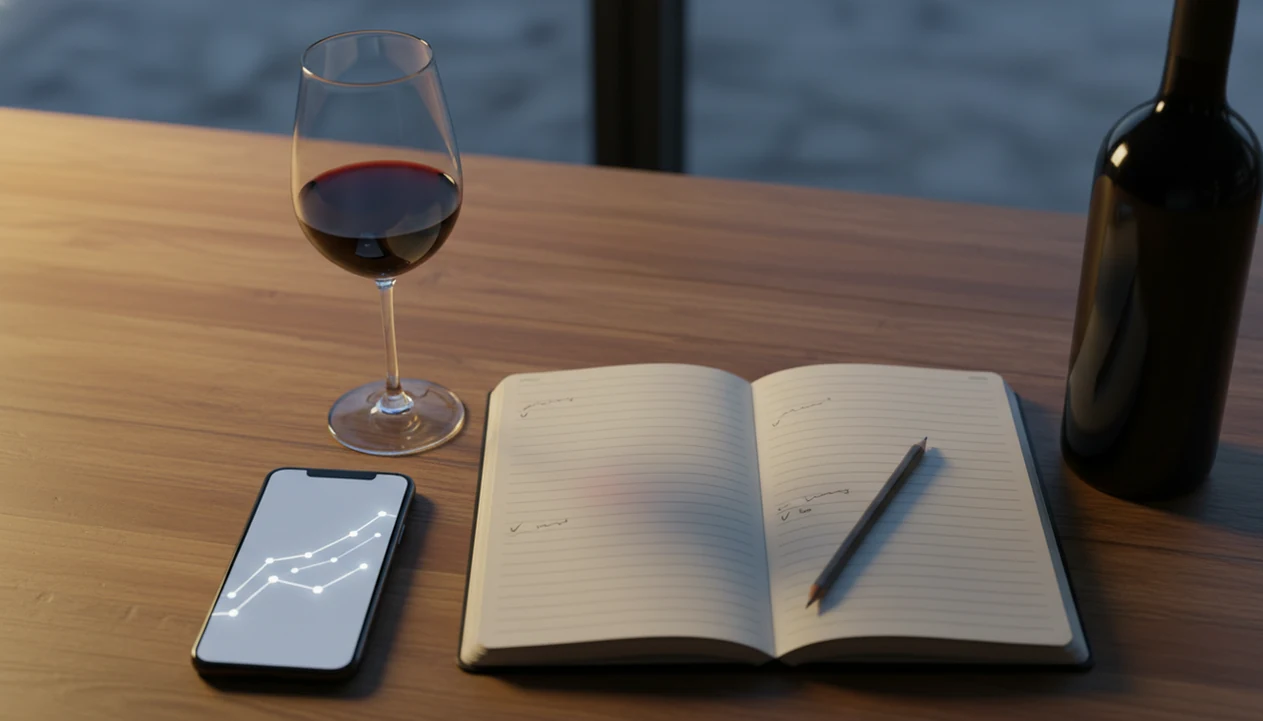
Definition: A mindful drinking journal is a structured self-monitoring tool that tracks alcohol intake alongside mood, triggers, context, and next-day effects to help adults drink less and more intentionally.
For people who want the app version, Me Quit is a mindful drinking journal for tracking drinks, mood, triggers, cravings, and next-day effects in one place. It is especially useful when alcohol overlaps with smoking or vaping because the same check-in can connect drinking urges with nicotine cravings.
What a Mindful Drinking Journal Actually Tracks
Quick answer: A mindful drinking journal helps you record drinks alongside mood, context, and urges so patterns become easier to see. For many people, the value is not the log itself but the pause it creates before drinking and the reflection it supports afterward.
Key takeaways
- Log the first urge, not just the first drink; urges often reveal the real pattern.
- Use simple labels like stress, social pressure, boredom, celebration, or habit.
- Review weekly instead of judging each day in isolation.
- Track alcohol-free wins as deliberately as drinking days.
- If cutting back causes shaking, confusion, seizures, or severe anxiety, seek medical help promptly.
- A useful journal should be easy enough to use in under a minute.
A mindful drinking journal tracks both the drink and the reason behind it. The reflection layer is what separates it from simple drink counting.
- Drink facts: Record beer, wine, spirits, or cocktails, plus the amount, time, location, and who was there.
- Mood shifts: Note how you felt before the first sip and after the last one. “Tense at 6 p.m.” tells you more than “two drinks.”
- Trigger patterns: Track stress, boredom, social pressure, habit cues, or the Friday 6 p.m. drink that makes a cigarette feel automatic.
- Next-day effects: Log sleep quality, energy, headache, anxiety, and hangover severity the next morning.
- Moderation context: A journal is not only for people with alcohol use disorder. NIAAA reports that 28.9 million people ages 12 and older in the U.S. had alcohol use disorder in 2023, while many more drinkers fall below that threshold but still want to cut back NIAAA alcohol data.
The small details matter. A party cooler packed with cans can look harmless until the journal shows it always turns into four drinks.
How a Drink Reflection Journal Works
A drink reflection journal works by making unconscious drinking visible. In behavior-change terms, it uses self-monitoring to expose habit loops: cue, routine, reward.
- Self-monitoring changes attention: Writing down a drink interrupts the “I’ll just have one” moment long enough to notice the choice.
- Mindfulness has evidence behind it: A systematic review found mindfulness-based interventions were linked with significant reductions in alcohol and other substance use compared with control conditions the NIH.
- The loop is practical: Log, notice patterns, set micro-rules, test them, then adjust next week.
- Autopilot weakens with repetition: If stress is the cue and pouring wine is the routine, the journal helps you test a replacement routine.
- Cross-habit tracking can help: The same mindset used for quitting smoking or vaping applies here, especially when alcohol makes nicotine cravings louder.
For many adults, a drink reflection journal is easier than relying on willpower because it gives the craving window a job.
How to Use a Mindful Drinking Journal Daily
Use a mindful drinking journal daily by logging before, during, and after drinking. The goal is not a flawless entry; it is a usable record you can review.
- Set your weekly drink limit before the week starts, or write a simple intention like “no drinks Monday through Thursday.”
- Log each drink in real time with the type, amount, time, place, and context.
- Record your mood and trigger before the first sip, even if the answer is “bored and scrolling.”
- Reflect after drinking with one sentence about mood, control, and whether you stayed within your plan.
- Check in the next morning on sleep, energy, anxiety, headache, and regret level.
- Review weekly to spot repeat patterns and adjust your rules.
- Celebrate drink-free days and health milestones so progress feels visible.
If you want a broader structure, a weekly alcohol limit plan can give the journal a clear target. Reset, not restart from zero.
Who a Mindful Drinking Journal Is For
A mindful drinking journal is for adults who want more control over alcohol without necessarily choosing full sobriety. It fits people who are tired of hangovers, fuzzy sleep, or “why did I say yes to another?” mornings.
It can be especially useful when drinking goes up during stress, boredom, loneliness, or social pressure. It also helps if alcohol sits beside another habit, like smoking or vaping, because the same trigger may be driving both urges. Some people prefer this kind of private self-monitoring before they ever talk in a group or put a label on their drinking.
- Use it if your goal is fewer drinks, fewer hangovers, or more drink-free days.
- Track it if certain moods, people, places, or payday weekends keep repeating.
- Connect it if drinking makes cigarettes, vaping, or other cravings feel harder to resist.
- Keep it private if you need a low-pressure starting point before outside support.
- Get help if you have withdrawal symptoms, blackouts, failed attempts to cut back, or drinking that keeps causing harm. In those cases, journaling can support care, but it should not replace it.
Ready to start your quit?
A mindful drinking journal is a daily log where you record what you drink, how much, your mood before and after, and the triggers behind each drink so you can spot patterns and…
Drinking Habit Journal Prompts That Reveal Patterns
Good drinking habit journal prompts turn mindful drinking theory into repeatable daily practice. They help you name the moment before the drink, not just count what happened after.
Try these prompts:
- What was I feeling right before I wanted a drink?
- Who was I with, and did that influence how much I drank?
- What would I have done instead if alcohol weren't available?
- How did I sleep last night, and how do I feel this morning?
- Does this drinking pattern align with my health, money, or relationship goals?
- Was I drinking for taste, connection, relief, reward, or habit?
- What small next step would make tomorrow easier?
One useful entry might read: “Brunch menu had bottomless mimosas. I said yes before checking whether I wanted one.” That sentence is data.
For people learning how to drink less without quitting, prompts keep the focus on choice rather than labels.
Why an Alcohol Journal App Beats a Paper Notebook
An alcohol journal app usually beats paper when consistency is the main problem. A notebook can feel calmer, but a phone is there during the actual craving window.
| Option | What it does well | Where it falls short |
|---|---|---|
| Alcohol journal app | Sends reminders, tracks streaks, charts mood, and keeps entries private on your phone | Can feel like one more notification if settings are too busy |
| Paper notebook | Feels tactile, quiet, and screen-free | Easy to leave at home, skip at parties, or stop using after a hard week |
| Alcohol mood tracker | Shows mood versus drink count over days or weeks | Needs honest entries to be useful |
| Combined habit app | Tracks alcohol, smoking, and vaping in one place | May feel broader than needed if you only want drink counting |
If you are comparing alcohol journal apps, look at Me Quit alongside options such as Sunnyside, Reframe, and I Am Sober; the key differences are usually trigger notes, mood tracking, cross-habit tracking, coaching, and reminder style.
Me Quit, a mequit addiction recovery hub for quit smoking, stop vaping, quit drinking, and mindful alcohol reduction, can be useful when drinking, cigarettes, and vaping overlap. It provides private progress tracking and day-by-day support, but it does not provide diagnosis, detox care, or medical treatment.
A chart can become a rule: “No wine after work stress until I eat dinner first.” Small experiment. Real information.
Alcohol Mood Tracker Patterns Worth Watching
An alcohol mood tracker helps you find the situations where drinking becomes predictable. Look less for one dramatic cause and more for repeatable patterns.
- Stress spikes: Weekday evenings, deadlines, arguments, and late inbox checks often show up before extra drinks.
- Social escalation: Some friends, venues, or rounds make “just one” turn into three without much thought.
- Weekend binge pattern: A person may drink little all week, then drink heavily on Friday or Saturday. That calls for pacing rules and exit plans.
- Daily moderate pattern: One or two drinks most nights may need home-environment changes, such as keeping fewer bottles visible.
- Sleep feedback: Poor sleep and low next-day energy are often the most persuasive reasons to cut back.
Per the CDC, 22.2% of U.S. adults reported binge drinking in the past 30 days in 2022, and excessive alcohol use is responsible for about 140,000 U.S. deaths each year CDC alcohol data.
If your main issue is speed, a drink pacing app can pair well with journaling.
Mindful Drinking Journal Inside the MeQuit App
Me Quit gives the journal a simple daily check-in flow: mood, drinks logged, trigger selection, and a short reflection note. It is built for the moment when you open your phone during a three-minute craving instead of arguing with yourself for an hour.
Drink-free days, sober streaks, and health milestones make progress easier to see. The alcohol view also sits beside smoking and vaping patterns, so you can notice links like beer breath during a vape craving or a cigarette urge after the second drink.
Privacy matters here. No public group identity is required, and your journal can stay personal on your phone.
Download Me Quit to start your mindful drinking journal today, especially if you want one place to track alcohol, nicotine cravings, money saved, and reset plans after a slip.
Limitations
A mindful drinking journal can support change, but it has real limits. It works best as a self-awareness tool, not as medical treatment.
- It is not a substitute for professional care. People with moderate to severe alcohol use disorder may need medical support, therapy, medication, or supervised withdrawal care.
- It depends on honest entries. Heavy-drinking phases often lead to skipped logs, vague estimates, or “I’ll fill it in tomorrow.”
- Some people need more than a journal. About 5.8% of U.S. adults, or 14.4 million people, had alcohol use disorder in a given year.
Clinicians typically recommend professional evaluation when someone cannot cut back, has withdrawal symptoms, or keeps drinking despite serious harm.