
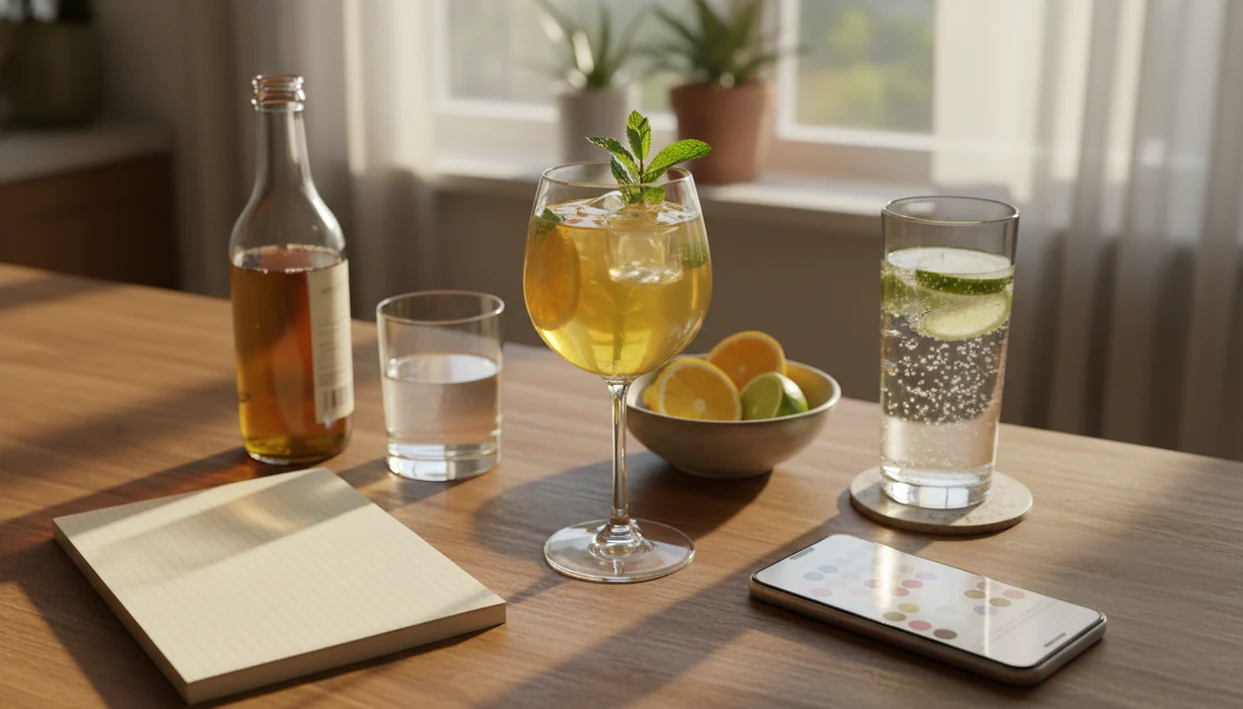
> Definition: A non-alcoholic drink tracker is a digital tool that logs alcohol-free substitutions, including mocktails, NA beers, and other zero-proof drinks, to help users monitor moderation progress, identify trigger patterns, and build lasting drink-swap habits.
Why Tracking Alcohol-Free Drink Swaps Matters
Quick answer: A non-alcoholic drink tracker helps you notice which alcohol-free swaps reduce cravings, fit your routines, and support lower drinking over time. It is most useful when you log the situation, urge level, drink choice, and outcome rather than only counting whether you drank alcohol.
Key takeaways
- Track the context: time, place, mood, people, and craving level before the swap.
- Log whether the substitute actually helped, felt neutral, or increased the urge to drink.
- Compare options by trigger, not popularity; an NA beer may help one setting and backfire in another.
- Use streaks and milestones as feedback, not proof that you can never slip.
- If you drink heavily or have withdrawal symptoms, talk with a clinician before cutting down suddenly.
- Review patterns weekly so you can adjust your plan instead of relying on memory.
Tracking alcohol-free drink swaps matters because it records the new behavior, not only the alcohol you avoided. Self-monitoring and goal setting are core parts of evidence-based treatment approaches for alcohol problems, according to the National Institute on Alcohol Abuse and Alcoholism NIAAA alcohol data.
In 2022, about 28.8 million U.S. adults had alcohol use disorder, according to NIAAA survey data NIAAA alcohol data. Many more were not seeking formal treatment, but still wanted private, app-based help to drink less. A tracker can support moderation, cutting back, sober-curious experiments, and full sobriety.
The useful detail is the substitution. Friday 6 p.m. beer becomes NA beer. A second pour of wine becomes sparkling water in a rocks glass. Over time, those logs show which swaps hold up when the craving window opens.
For people reducing alcohol, tracking specific drink swaps is often easier than tracking only sober days because it rewards the replacement habit you actually practiced.
How a Non-Alcoholic Drink Tracker Works
A non-alcoholic drink tracker works by logging each alcohol-free substitution with context: drink type, time, location, mood, and trigger. The app then turns those entries into patterns, such as weekend spikes, stress-driven swaps, or social situations where alcohol feels automatic.
The behavioral model is simple habit-loop reinforcement. A cue appears, you choose a new routine, and the tracker gives a small reward through streaks, milestones, or a visible progress graph. In plain language, you are teaching your brain a different “next step” when the usual drink cue shows up.
The lime wedge sinking in club soda counts.
A standard alcohol tracker mainly asks, “How much did you drink?” A mocktail tracker also asks, “What did you choose instead?” When the data syncs with a broader dashboard, including cravings, smoking trackers, and vaping trackers, it can show cross-habit patterns. That matters when a drink craving turns into a mint vape from the car cup holder.
How to Use a Mocktail Tracker
Use a mocktail tracker by setting a clear swap goal, logging in the moment, and reviewing patterns after one week. Tools like MeQuit can make this practical because the drink log sits beside craving notes and other habit trackers.
- Set your weekly alcohol-reduction or swap goal. Choose a target such as three NA swaps, two dry weekdays, or fewer drinks on Saturday.
- Log each NA drink swap with type, time, and trigger. Add “NA beer after work” or “mocktail at dinner” before the details blur.
- Review your pattern dashboard after 7 days. Look for high-risk times, not character flaws.
- Adjust goals based on the data. If pub exits are risky, plan the NA drink before you walk through the smoking area.
- Share tracker insights if desired. A counselor, coach, or accountability partner can use the log to spot patterns faster.
If you are testing a temporary reset, a Dry January app can pair well with swap tracking.
Best Alcohol-Free Drink Swaps to Track
The best alcohol-free drink swaps to track are the ones that replace a specific drinking ritual. Log the drink, the setting, and whether it actually reduced the urge.
- NA beer for beer. This is the closest sensory match for many beer drinkers, especially at barbecues, pubs, and game nights.
- Mocktails for cocktails. Mixing, garnishing, and holding the glass can satisfy the ritual without adding alcohol.
- Sparkling water or kombucha for wine. Effervescence gives some of the mouthfeel people miss, though kombucha may contain trace alcohol.
- Herbal tea or warm drinks for a nightcap. Warmth can signal wind-down when the old cue was “one drink before bed.”
- Low-sugar zero-proof options. Some NA beers and mocktails are high in sugar or calories, so logging helps you notice that too.
For health-focused reduction, pairing swaps with a drink less for health app keeps the goal concrete.
Ready to start your quit?
A non alcoholic drink tracker logs every mocktail, NA beer, or zero-proof swap you choose instead of alcohol, so you can see which substitutions help you cut back. Rather than…
NA Beer Tracker vs Standard Alcohol Tracking Apps
An NA beer tracker focuses on positive substitutions, while standard alcohol tracking apps usually focus on units consumed. Seeing both alcohol and alcohol-free choices side by side gives the clearest progress picture.
| Tracker type | Main focus | What you learn | Common gap |
|---|---|---|---|
| DrinkControl | Alcohol units and spending | How much alcohol you consumed | Less focus on replacement drinks |
| AlcoDroid | Drink logs and blood alcohol estimates | Drinking quantity over time | Limited swap behavior detail |
| Drinkaware | Units, calories, and guidance | Whether drinking exceeds guidelines | Less cross-habit visibility |
| NA beer tracker | What you chose instead | Which swaps work in real situations | Needs consistent logging |
| Connected habit hub | Swaps, cravings, smoking, vaping, and alcohol | How habits trigger each other | Not a substitute for clinical care |
A standard tracker may show that Saturday was lower alcohol. An NA tracker shows why: two NA beers during the match and one club soda before leaving. Good connected habit tools deliver linked smoking, vaping, alcohol, and craving data, not a diagnosis or medical detox plan.
Drink Substitution App Features That Build Lasting Habits
A drink substitution app builds lasting habits when it makes the replacement behavior easy to repeat. The strongest features support the moment before a drink, not only the summary afterward.
- Streak counters and milestone badges reinforce consistent swapping, especially during the first few weeks.
- Daily reminders and craving check-ins work best when timed to high-risk windows, such as after work or late evening.
- Mood and trigger tagging connects emotional states with drink choices, including boredom, stress, loneliness, or celebration.
- Cross-habit tracking in Me Quit can show when alcohol reduction affects smoking or vaping urges.
- Privacy-first design matters for adults who want support without posting in a public group.
A drink substitution app usually works best when it captures the trigger and the replacement together, while a basic counter fits people who only need a tally.
Common Misconceptions About Non-Alcoholic Drink Tracking
Non-alcoholic drink tracking is useful, but it is not magic and it should not hide alcohol use. The point is to make choices visible enough to learn from them.
Myth: Tracking mocktails means you don't need to track alcohol at all. For many people, logging both alcohol and alcohol-free choices gives a more honest progress picture.
Myth: NA drink trackers are only for fully sober people. They also fit moderation, cutting back, sober-curious tests, and a weekday no drinking challenge.
Myth: All alcohol-free drinks are automatically healthy. Some mocktails are basically dessert in a glass. Fine sometimes, but worth logging.
Myth: A drink substitution app replaces therapy or medical treatment. Heavy alcohol use is linked to more than 200 diseases and injury conditions worldwide, according to the World Health Organization the World Health Organization. Clinicians typically recommend evidence-based care, medication options, counseling, or supervised treatment when alcohol use is severe or withdrawal may be risky.
Limitations
A non-alcoholic drink tracker can clarify patterns, but it has real limits. It should complement support, not replace evidence-based treatment.
- Tracker accuracy depends entirely on consistent user logging. Missed entries mean weaker patterns.
- For severe alcohol use disorder, focusing on mocktail details can distract from urgent medical assessment.
- Tracker data should support conversations with counselors, clinicians, or recovery groups when extra care is needed.
Reset, not restart from zero.
If weekend escalation is the main issue, focused weekend binge drinking app support may be more useful than swap tracking alone.