
How to Use Nicotine Patches for a Smoking Quit Plan
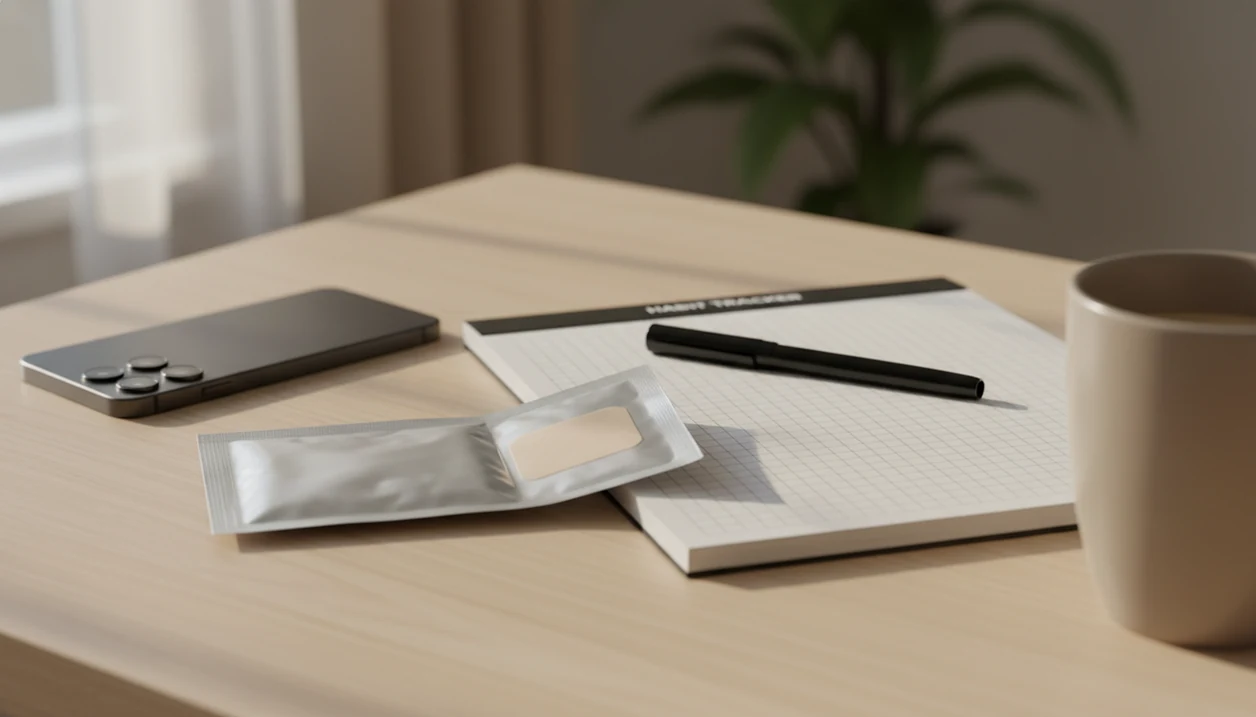
The practical answer
Use one nicotine patch each day, starting on your quit date and following the product label or a clinician’s instructions for strength and step-down timing. Apply it to clean, dry, hair-free skin, rotate sites, and track cravings and side effects. For sudden urges, a pharmacist or clinician may recommend adding gum or lozenges rather than changing the patch yourself.
A patch can make a quit attempt more manageable by supplying nicotine slowly, without cigarette smoke or the rapid nicotine spike from smoking. It handles background withdrawal, but it cannot rewrite the routines linked to coffee, driving, work breaks, stress or alcohol.
A useful plan connects the daily patch to a firm quit date, preparation for predictable cravings and a simple record of side effects or slips. The goal is not perfect tracking. It is noticing patterns early enough to change the next high-risk moment.
What a nicotine patch does, and what it cannot do
Nicotine patches work by delivering nicotine slowly through the skin, which reduces withdrawal without recreating the fast nicotine spike from a cigarette. That slower delivery matters because smoking trains both the body and the routine.
Cigarettes deliver nicotine rapidly, while patches release it slowly through the skin.
The CDC lists nicotine patches among FDA-approved quit-smoking medications for adults who smoke, alongside other nicotine replacement products and prescription options CDC smoking data. Patches can lower background irritability, restlessness, and “I need one now” feelings, but they don't erase the habit loop. The first morning cigarette before coffee can still feel automatic, even when nicotine levels are steadier.
Patches also avoid smoke exposure, tar, carbon monoxide, and combustion toxins. They still contain nicotine, so the goal is structured replacement, then step-down, not swapping one unmanaged pattern for another. For a wider view of medication and non-medication options, compare trackable nicotine quit methods.
Five patch facts to check before quit day
Nicotine patch tracking is useful because it connects medication use with the exact times, places, and feelings that still pull you toward cigarettes. Evidence-based reviews find that nicotine replacement therapy increases quit rates by about 50% to 60% compared with placebo or no NRT, and patches are one FDA-approved NRT option cochrane smoking data.
- FDA-approved NRT: Nicotine patches are an FDA-approved nicotine replacement therapy for adults who smoke, per the CDC.
- Steady delivery: Patches give a slow nicotine dose through the skin, not the sharp rise that comes from inhaling smoke.
- Typical duration: Clinical guidance often recommends at least 4 weeks of NRT, with best results commonly seen around 8 to 12 weeks.
- Effectiveness evidence: A meta-analysis of 17 randomized trials found 27% abstinence at end of treatment versus 13% with placebo, and 22% at 6 months versus 9% with placebo the NIH.
- Tracking value: A patch and craving log can show whether a step-down feels too early, whether commute cravings are predictable, or whether breakthrough cravings deserve a clinician conversation.
Follow the product directions or a clinician’s plan, and get individual advice if heavy smoking, persistent symptoms or another health condition makes the standard instructions unclear.
Build a nicotine patch quit plan on your phone
A phone-based nicotine patch quit plan works best when it keeps the routine simple: patch on, craving logged, pattern reviewed. A practical patch plan combines daily nicotine replacement with a firm quit date, changes to smoking routines and follow-up support.
- Set your quit date, patch start date, and the product or clinician instructions you plan to follow.
- Choose the patch strength based on your smoking level and guidance, without guessing or self-prescribing a dose.
- Apply the patch at your daily time, rotate placement, and use reminders so missed patches don't turn into rough afternoons.
- Log cravings, triggers, mood, slips, side effects, and breakthrough cravings when they happen.
- Review weekly patterns before step-down decisions, and ask a clinician if cravings, symptoms, or slips keep repeating.
During a three-minute craving, opening the log can be easier than arguing with yourself for an hour. Tiny pause. Real data.
How to put on a nicotine patch correctly
- Remove yesterday’s patch before applying a new one.
- Choose clean, dry, relatively hair-free skin on the upper arm, chest, back or hip. Do not apply the patch over irritated or broken skin.
- Press the patch firmly in place for about 10 to 20 seconds, especially around the edges.
- Wash your hands after handling it. Avoid touching your eyes or nose before washing.
- Use a different site the next day. Avoid returning to the same area for at least one week.
- Follow the package directions for wear time. Some patches are intended for 16 hours and others for 24 hours.
Apply one patch unless the label or a clinician specifically directs otherwise. If it causes vivid dreams or disrupted sleep, ask a pharmacist or clinician if nighttime removal is suitable for that product. Removing a 24-hour patch before bed may reduce sleep problems, but it can leave morning withdrawal less controlled. These steps follow an NHS-affiliated nicotine replacement protocol.
Set out the next patch before bed and pair morning application with a fixed routine, such as brushing your teeth.
When patch questions need a clinician or pharmacist
The package label cannot account for every pregnancy, heart condition, medication or unusual symptom, so some patch decisions need a clinician or pharmacist. This page is educational support for quitting, not personal medical advice or a substitute for care.
Patch strength, length of use, step-down timing, and any combination NRT should follow the product label, CDC guidance, or a healthcare professional’s plan. That matters most if you are pregnant, recently had serious heart problems, or take medications that make nicotine use or withdrawal more complicated.
- Read the package directions before starting, including dose, placement, wear time, and side effect instructions.
- Check with a clinician first if you are pregnant, had a recent heart attack, serious rhythm problem, chest pain, or hospital-level heart event.
- Ask a pharmacist or prescriber if you use complex medications, have unstable symptoms, or are unsure whether gum, lozenges, or patches can be combined.
- Get prompt guidance for severe skin reactions, persistent dizziness, nausea, vomiting, fast or irregular heartbeat, chest pain, fainting, confusion, or symptoms after smoking with a patch on.
- Bring your craving and side effect log to the conversation so the advice is based on what actually happened.
Talk with a clinician or pharmacist before using patches during pregnancy or after a recent heart attack, serious rhythm problem or hospital-level heart event. Seek prompt medical care for chest pain or severe, persistent palpitations, and ask for dosing advice if nausea, dizziness, sweating or vomiting continues.
Track the details that can change your plan
A useful nicotine patch log captures the few details that change decisions later. Busywork is the enemy here, so the fields should answer one question: what happened before the cigarette urge?
- Patch details: Record patch time, patch location, dose step, and whether the patch stayed on as expected.
- Craving score: Rate intensity from 1 to 10, then note whether it faded, stayed, or led to smoking.
- Trigger pattern: Log the situation, such as morning coffee, driving, a work break, stress, alcohol, or bedtime.
- Coping action: Note the small next step you tried, such as walking, texting support, breathing, gum, or leaving the smoking area.
- Slip reset: If you smoke, log the number of cigarettes, context, whether the patch was used correctly, and the next adjustment to discuss or try within guidance.
It should not be used to change medication dose outside product or clinician guidance.
A patch-day routine for mornings, cravings and slips
How do you use a stop smoking patches app during a real quit day? Start with the moments most likely to wobble: morning, sudden cravings, and the evening review.
In the morning, apply or check the patch, rotate the site, confirm the reminder, and note sleep and mood. If the lighter click in a jacket pocket used to start the day, replace that cue with the same boring check-in every morning.
During a craving, pause, log intensity, name the trigger, choose a coping action, and track the result. A private quit-smoking app can help you capture cravings, slips, streaks, and milestones without turning the medication plan into a diagnosis or dosing tool.
At night, look for patterns, mark a smoke-free day or partial progress, and plan tomorrow's risk window. Good tracking tools provide private progress tracking and reset support, not diagnosis, detox care, or medication dosing. If the day included a slip, reset, not restart from zero.
Responding to cravings, poor sleep and other side effects
Tracking can make nicotine patch adjustments safer by showing what happened, when it happened, and what dose step you were using. It does not replace product directions or clinician advice.
Common side effects include skin irritation, vivid dreams, insomnia, nausea, dizziness, or palpitations. Some people may need to adjust timing, placement, brand, or sleep use according to the label or a clinician. A note like “vivid dreams after wearing patch overnight” is more useful than “patch felt bad.”
Breakthrough cravings can still happen. Some guidance supports combining a patch with short-acting NRT, such as gum or lozenges, when appropriate and directed CDC smoking data. If you are comparing options, the routines for quit smoking with nicotine gum and quit smoking with nicotine lozenges are different because they target sudden urges.
Heavier smokers, people with recent serious heart problems, pregnant people, or anyone with complex medication questions should ask a clinician before adjusting dose.
Patch vs gum, lozenges and quitting without medication
Nicotine patches provide steady nicotine, while gum and lozenges act faster and can target sudden cravings. Unassisted quitting can work for some people, but average success is lower than quitting with evidence-based medication support.
| Method | Delivery style | Best use case | Tracking focus | Key caution |
|---|---|---|---|---|
| Nicotine patch | Slow, steady nicotine through skin | Background withdrawal and daily structure | Patch time, site, dose step, cravings, side effects | Still requires trigger and routine changes |
| Gum or lozenge | Short-acting nicotine through mouth | Sudden cravings, work breaks, commute urges | Craving time, number used, trigger, outcome | Must follow product directions for timing and use |
| Combined NRT | Patch plus short-acting NRT | Breakthrough cravings despite patch use | Patch routine plus rescue-use patterns | Should follow product or clinician guidance |
| Unassisted quitting | No medication | People who prefer no NRT or cannot use it | Triggers, cravings, slips, support used | Lower average success than medication-supported quitting |
For people with strong routine-based smoking, patches usually work best when paired with craving tracking, while short-acting NRT fits people who need help during sudden craving spikes. Skills from CBT for quitting smoking can also help with stress cues.
Patch plus gum or lozenges for breakthrough cravings
A patch supplies steady nicotine, but it may not cover a sudden urge after coffee, during a commute or around someone who is smoking. Combination nicotine replacement uses a patch for background withdrawal and gum or a lozenge for those sharper cravings. The CDC’s combination medicine guidance describes this approach, and a 2023 Cochrane review of nicotine replacement found combination NRT made quitting about 17% to 37% more likely than using one form alone.
- Keep the patch on its normal schedule.
- Use the short-acting product according to its own directions when a craving begins.
- Record the time, trigger, product used and result.
- Ask a pharmacist or clinician before changing doses, especially if nausea, dizziness, sweating, headache, vomiting or palpitations continue.
Do not wear two patches unless a clinician or the product instructions specifically tell you to.
Nicotine patch questions during a quit attempt
How effective are nicotine patches for quitting smoking?
Nicotine replacement therapy improves average quit rates compared with placebo or no NRT, but no medication guarantees a smoke-free result. Patches work on withdrawal by supplying nicotine steadily. They tend to be more useful when paired with a quit date, behavioral support and specific plans for routines such as coffee, driving and work breaks.
How long should I stay on nicotine patches?
Many nicotine replacement plans last about 8 to 12 weeks, followed by a gradual reduction once cravings and withdrawal are stable. Products differ in strength, wear time and step-down schedule, so use the instructions for your patch. A pharmacist or clinician can help if cravings return during a lower-dose step.
What strength nicotine patch should I start with?
Starting strength commonly depends on cigarettes smoked per day, how soon you smoke after waking, the specific product and your medical history. A 21 mg, 24-hour patch is a common starting option for heavier smoking, but it is not right for everyone. Follow the label or ask a pharmacist instead of estimating the dose.
What should I do if I smoke one cigarette while wearing a patch?
Treat one cigarette as a lapse rather than proof that the quit attempt failed. Remove or discard the remaining cigarettes, note what triggered the lapse and return to the plan. A lapse does not automatically mean you must stop the patch, but seek advice if smoking continues or symptoms such as nausea, dizziness or palpitations appear.
Why am I still craving cigarettes with a patch on?
Patches lower background withdrawal but do not erase conditioned cues or every sudden urge. Record when the craving happened, its intensity and the trigger. If strong cravings keep breaking through, ask a pharmacist or clinician about your patch use and whether properly directed gum or lozenges could help with short, predictable craving windows.
Can I remove a nicotine patch at night if it causes vivid dreams?
Check which product you have first. Some patches are made for 16-hour use and are removed at bedtime. With a 24-hour patch, ask a pharmacist or clinician if nighttime removal is appropriate. It may improve sleep, but it can also reduce nicotine coverage and make the first morning craving stronger.
Where should I place a nicotine patch, and how often should I rotate sites?
Apply it to clean, dry, relatively hair-free skin on the upper arm, chest, back or hip. Avoid broken or irritated skin. Use a different location each day and avoid the same site for at least one week. Remove the old patch before putting on the next one, unless specifically directed otherwise.
Can I use nicotine gum or lozenges while wearing a patch?
Yes, combination nicotine replacement is an established approach for some adults. The patch handles steady withdrawal, while gum or lozenges address sudden urges. Follow both products’ directions and ask a pharmacist or clinician if you are uncertain about dosing. Persistent nausea, dizziness, sweating, vomiting or palpitations can signal excessive nicotine.