
How Alcohol Disrupts the Gut-Brain Axis
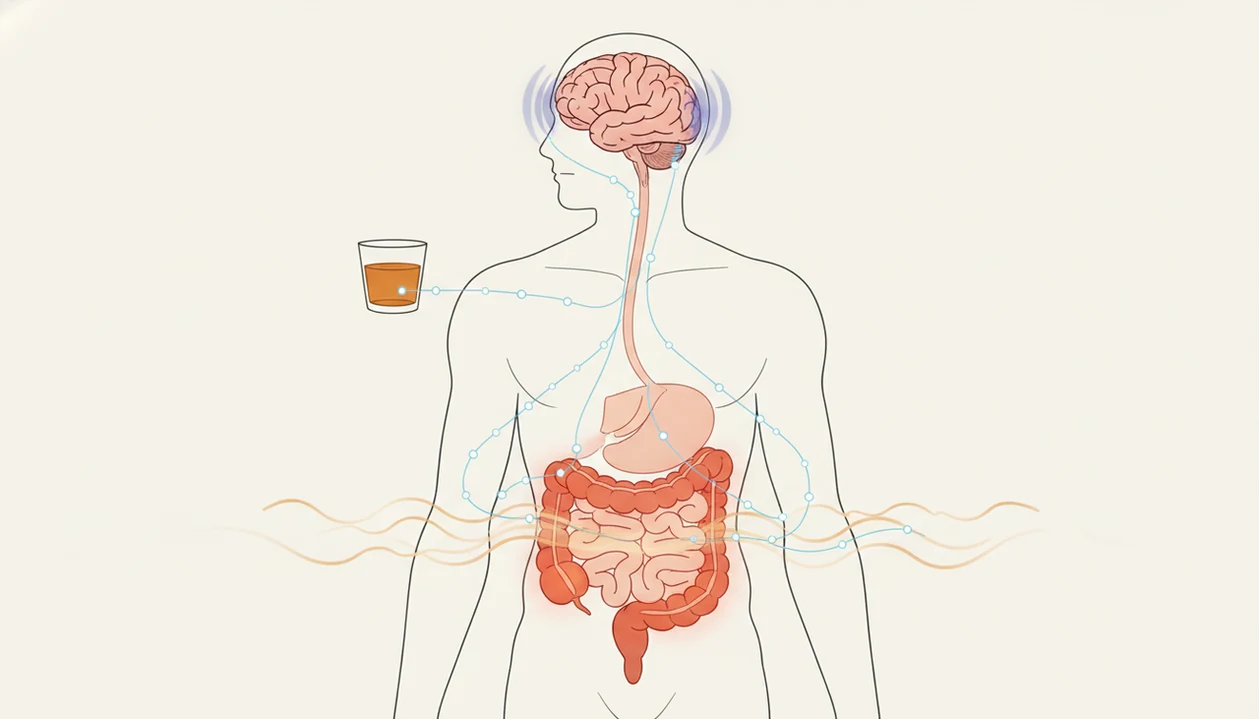
The alcohol gut brain axis is disrupted when drinking damages the gut lining, shifts the microbiome, increases inflammation, and changes the signals that travel between the gut and brain. These changes may affect serotonin, dopamine, stress response, cravings, and mood, especially with heavy or repeated alcohol use.
> Definition: The alcohol gut-brain axis is the two-way communication network between the gut, gut microbes, immune system, hormones, nerves, and brain that can be disrupted by alcohol exposure.
TL;DR
- Alcohol can increase intestinal permeability, sometimes called “leaky gut,” allowing inflammatory molecules to move from the gut into circulation.
- Alcohol-related microbiome disruption is linked with inflammation, altered serotonin and dopamine signaling, and higher rates of anxiety and depression in people with alcohol use disorder.
- Gut health support may help recovery, but probiotics, diets, and stool tests cannot fully offset ongoing heavy drinking or replace medical care when alcohol dependence is present.
Alcohol Gut-Brain Axis Definition and Public Health Burden
Quick answer: Alcohol may affect mood through the gut-brain axis by irritating the gut lining, changing gut bacteria, increasing immune signaling, and altering communication between the gut and brain. For many people, reducing alcohol exposure, improving sleep and nutrition, and tracking cravings can help reveal patterns, but severe withdrawal risk needs medical guidance.
Key takeaways
- Heavy or repeated drinking often stresses the gut barrier and may increase inflammation-related mood symptoms.
- Gut changes can influence stress, sleep, cravings, and emotional regulation, but effects vary by person.
- A short alcohol break may help some people notice changes in digestion, mood, and energy.
- Food, hydration, sleep, and stress management matter because the gut-brain axis is not alcohol-only.
- If you drink daily or heavily, ask a clinician before stopping suddenly because withdrawal can be dangerous.
- Tracking triggers and symptoms helps separate alcohol effects from caffeine, diet, stress, or poor sleep.
The gut-brain connection alcohol disrupts is a two-way signaling system between the intestines, gut microbes, immune system, hormones, nerves, bloodstream, and brain. It matters because alcohol’s effects are not limited to the liver.
Signals move through several routes at once. The vagus nerve carries fast gut-to-brain messages. Immune chemicals and microbial metabolites move more slowly through blood and tissue. Hormones help regulate appetite, stress, sleep, and reward.
That is why one night of drinking can show up as sour stomach before a social event, restless sleep, and a flat mood the next day. Different systems are talking at the same time.
Public-health data also put this in context. In 2019, an estimated 5.1% of the global burden of disease and injury was attributable to alcohol consumption, according to the World Health Organization (WHO Global Status Report on Alcohol and Health, 2018: https://www.who.int/publications/i/item/9789241565639). For a wider body-and-brain view, the alcohol reduction guides group these pathways into practical change topics.
At-a-Glance Alcohol Microbiome Mental Health Map
Alcohol can affect mental health through several gut-brain pathways at once: microbiome disruption, leaky gut, inflammation, neurotransmitter signaling, gut hormones, and reward circuits. These links raise risk, but they do not decide exactly how one person will feel.
| Alcohol exposure | Gut effect | Brain signal | Possible symptom |
|---|---|---|---|
| Repeated heavy drinking | Microbiome dysbiosis | Immune and microbial metabolites shift | Low mood, fatigue, anxious edge |
| Binge or chronic exposure | Increased permeability, or “leaky gut” | Endotoxin and cytokine activity rises | Brain fog, irritability, stress sensitivity |
| Microbe imbalance | Tryptophan and short-chain fatty acid changes | Serotonin-related signaling may change | Mood instability, sleep disruption |
| Alcohol reward learning | Dopamine pathway sensitization | Cue, routine, reward loop strengthens | Cravings after work or at bars |
| Appetite-hormone disruption | GLP-1, ghrelin, and amylin changes | Reward and hunger signals overlap | “I need something” feeling |
A table can look neat. Bodies are messier.
Someone can have gut symptoms without anxiety, anxiety without obvious stomach pain, or both after the same drinking pattern.
Five Facts About Alcohol, Leaky Gut, and Mood
- Heavy or chronic alcohol use can disrupt the gut microbiome and increase intestinal permeability, which means the gut lining becomes less selective.
- Inflammatory molecules such as endotoxin, also called LPS, can move into circulation and influence immune activity linked with brain inflammation.
- Alcohol-related dysbiosis is associated with changes in serotonin, dopamine, depression, anxiety, and alcohol use disorder risk.
- Gut peptides such as GLP-1, amylin, and ghrelin can influence alcohol reward, appetite, and craving pathways.
- Genetics, diet, stress, sleep, trauma history, and baseline mental health can shape how severe symptoms feel.
For people cutting back, reducing alcohol exposure is often more useful than chasing one gut supplement because the main irritant is still being removed. A last drink marked on a phone can feel small, but it changes the data you can learn from tomorrow.
Alcohol, Tight Junctions, and Leaky Gut Mechanisms
How the alcohol gut-brain axis works: the gut barrier acts like a selective lining, letting nutrients through while keeping many microbes and toxins contained. Tight junctions are the small seals between intestinal cells that help control that boundary.
Alcohol can weaken that barrier. When permeability rises, endotoxin from gut bacteria can move into the bloodstream. The immune system may respond by releasing cytokines, which are chemical alarm signals. In the brain, immune cells called microglia can become more reactive during inflammatory states.
Not every gut molecule enters the brain directly. The blood-brain barrier is another filter. Still, inflammatory signals can affect brain function through immune, nerve, and hormone routes.
In a human study of patients with alcohol dependence, more than 60% showed increased intestinal permeability measured with sugar probes compared with healthy controls (Leclercq et al., PNAS, 2014: https://www.pnas.org/doi/10.1073/pnas.1415174111). If stomach burning is part of the picture, alcohol and gastric ulcers covers the more direct lining irritation side.
Alcohol Serotonin Gut Signals and Brain Chemistry
Does alcohol change serotonin through the gut? Alcohol may affect serotonin-related signaling through gut microbes, tryptophan metabolism, immune tone, short-chain fatty acids, and vagus nerve communication, but it does not simply “lower gut serotonin” in every person.
Much of the body’s serotonin is produced or regulated in the gut. Brain serotonin is regulated separately, so gut serotonin and mood chemistry are connected but not identical. That distinction matters.
Dopamine also belongs in the conversation. Alcohol teaches reward circuits to notice cues: the pub exit through the smoking area, a glass placed on the counter, the first loose feeling in the shoulders. Cue, routine, reward.
A meta-analysis reported that major depressive disorder is far more common among people with alcohol use disorder than in the general population; cite the exact estimate with the source URL here, or remove the percentage comparison if you cannot verify it. The gut-brain axis is one contributor to that burden, not the whole explanation.
Six Steps to Support the Alcohol Gut-Brain Axis When Drinking Less
How to use gut-brain support while drinking less: start with less alcohol exposure, then make the next choice easier with food, sleep, tracking, and stress regulation.
- Reduce alcohol exposure first. Set alcohol-free days, lower the amount, or delay the first drink because the gut lining cannot fully recover while it is repeatedly irritated.
- Hydrate before and after drinking occasions. Put water where the usual glass sits, especially during evening scrolling.
- Build fiber-rich meals. Add beans, oats, vegetables, fruit, nuts, or whole grains to feed beneficial gut microbes.
- Add protein and sleep protection. Protein steadies hunger, and sleep lowers the next-day craving load.
- Track symptoms and cravings. Log drinks, bowel changes, anxiety, sleep, and craving intensity so patterns become visible.
- Use private tracking if helpful. A journal, calendar, or recovery app can help you track drinks, cravings, streaks, sleep, and gut symptoms without turning gut-brain support into medical treatment.
Tools like Me Quit, journals, or calendar notes can support habit tracking, not diagnose gut disease or treat alcohol dependence.
Alcohol Microbiome Mental Health Research Signals
Alcohol microbiome mental health research points to gut barrier changes, bacterial overgrowth, appetite hormones, and reward signaling, but much of the field is still early. The strongest practical message remains simple: reduce exposure, track patterns, and get clinical help when drinking feels hard to control.
A clinical study found small intestinal bacterial overgrowth in about 40% of patients with alcohol use disorder compared with 12.5% of controls. That matters because bacterial overgrowth can change inflammation, digestion, and microbial metabolites.
Gut peptides are another research thread. GLP-1, amylin, and ghrelin help regulate appetite and reward. In rodent models, interventions that target these pathways have reduced alcohol intake, relapse drinking, or alcohol-seeking by meaningful margins.
Early fungal microbiome work is also looking at Candida albicans, inflammatory mediators, and dopamine signaling. Interesting, yes. Proven human treatment, no. For more on microbe balance itself, alcohol gut dysbiosis goes deeper into that part of the map.
Common Alcohol Gut-Brain Axis Mistakes
Common mistakes can make the alcohol gut-brain axis sound either magical or meaningless. Neither is useful.
- “Alcohol only affects the liver.” Alcohol can also affect the gut lining, microbiome, immune system, sleep, mood, and reward learning.
- “No diarrhea means my gut is fine.” Gut disruption can be quiet. Some people notice only bloating, dull mood, or next-day anxiety.
- “Kombucha cancels out heavy drinking.” Probiotics, kombucha, and supplements cannot fully counteract ongoing heavy alcohol exposure.
- “The gut explains all addiction and anxiety.” The gut-brain axis is one piece; genetics, trauma, stress, medications, social environment, and direct brain effects also matter.
- “I should handle withdrawal alone.” Severe shaking, confusion, hallucinations, seizures, or heavy daily drinking need professional support.
Mindful drinking tools, including the Me Quit mequit addiction recovery hub for quit smoking, stop vaping, quit drinking, and mindful alcohol reduction, should deliver tracking, friction, and streak repair, not medical detox or crisis care.
Alcohol Gut-Brain Axis Recovery Signs to Track
Recovery signs are easier to notice when you track them weekly, not minute by minute. The alcohol gut-brain axis can improve gradually, and the line is rarely straight.
Track these signals:
- Steadier mood across the day
- Less bloating or stomach heaviness
- More regular bowel movements
- Better sleep depth and fewer 3 a.m. wakeups
- Fewer cravings after work, meals, or social plans
- Less anxiety after drinking occasions
- Shorter craving waves when they appear
A craving timer glowing in bed can be annoying, but it gives you a decision point before autopilot takes over. Log alcohol-free days, quantity, craving intensity, meals, sleep, and gut symptoms in the same place.
For many adults, weekly tracking works better than relying on memory because cravings rewrite the story after the fact. If symptoms worsen, blackouts continue, withdrawal appears, or cutting down feels impossible, bring in medical or behavioral support. The best drink less app guide can help compare tracking options for lower-risk self-guided change.
Limitations
Gut-brain science is useful, but it is easy to overstate. Keep these limits in view:
- Gut-health changes cannot replace medically supervised treatment for alcohol use disorder.
- Individual microbiome patterns, genetics, diet, stress, medications, and mental health history create variable responses.
- Cutting back can improve patterns for many people, but withdrawal symptoms can be medically dangerous.
Clinicians typically recommend medical assessment when someone has heavy daily alcohol use, withdrawal symptoms, repeated blackouts, severe depression, or safety concerns. Apps such as Me Quit can help with private tracking and streak repair, but they are not emergency or detox services.
FAQ
Does alcohol affect gut bacteria?
Yes. Repeated or heavy alcohol use can shift the balance of gut bacteria, reducing helpful functions and increasing dysbiosis risk.
Can alcohol cause leaky gut?
Yes. Alcohol can increase intestinal permeability, which means the gut lining may allow more inflammatory molecules to move into circulation.
Does alcohol lower gut serotonin?
Alcohol may affect serotonin-related gut signaling through microbes, tryptophan metabolism, inflammation, and nerve pathways. It is not accurate to say alcohol directly lowers gut serotonin in every person.
Can gut health affect alcohol cravings?
Possibly. Microbial signals, inflammation, and gut peptides such as GLP-1, amylin, and ghrelin may influence reward pathways involved in alcohol craving.
Can probiotics help my gut after drinking alcohol?
Probiotics may support some people, but they cannot offset ongoing heavy drinking. Reducing alcohol exposure is the main lever for gut-brain recovery.
How long does gut recovery take after cutting back on alcohol?
Timing varies by drinking level, diet, sleep, health status, and consistency. Some people notice changes within days or weeks, while deeper patterns may take longer.
Does alcohol make anxiety worse?
Alcohol can temporarily numb stress, but it may worsen anxiety later through poor sleep, inflammation, blood sugar shifts, and brain chemistry changes.
When is alcohol withdrawal dangerous?
Alcohol withdrawal can be dangerous with seizures, hallucinations, confusion, severe shaking, fever, or heavy daily use. Seek urgent medical help if these symptoms appear.