Why Blood Sugar Dips Trigger Alcohol Cravings
Blood sugar dips can trigger alcohol blood sugar cravings because your brain reads the crash as an urgent need for fast energy and relief. Alcohol, sweets, and refined carbs can all feel like quick fixes, but protein, fiber, and healthy fats are more reliable ways to steady energy and reduce the next craving wave.
> Definition: Alcohol blood sugar cravings are urges to drink that intensify when blood glucose drops, swings, or feels unstable, especially after drinking, skipping meals, or cutting back on alcohol.
TL;DR
- Low blood sugar can feel like an alcohol craving because it causes shakiness, irritability, anxiety, fatigue, and an urgent need for relief.
- Alcohol can disrupt glucose regulation by affecting insulin, liver glucose release, sleep, appetite, and next-day energy.
- Protein snacks for alcohol cravings work best when paired with fiber and healthy fat, such as Greek yogurt with berries, eggs with whole-grain toast, or nuts with fruit.
Alcohol blood sugar cravings at a glance
Quick answer: Alcohol cravings can feel stronger when blood sugar drops because the brain often interprets low energy as a need for quick relief. Eating balanced meals with protein, fiber, and healthy fats may help reduce craving intensity, but anyone with diabetes, alcohol withdrawal symptoms, or glucose-lowering medications should get medical guidance.
Key takeaways
- A craving may be partly physical, not just emotional or behavioral.
- Skipping meals can make alcohol feel more tempting for many people.
- Protein plus fiber is usually steadier than sugar for quick craving relief.
- Hydration and sleep can affect both appetite and alcohol urges.
- Tracking timing, food, mood, and urges can reveal repeat patterns.
- Shaking, confusion, or severe withdrawal symptoms need urgent medical care.
- A crash-to-craving pattern happens when falling energy feels like an urgent need to drink. The body asks for fast fuel, and the brain may suggest the familiar shortcut.
- Low blood sugar can mimic an alcohol urge. Shaky fingers over a phone screen, tight chest, restless legs, and “I need something” can be hunger, craving, or both.
- The first response is simple: eat a balanced snack, drink water, pause ten minutes, and reassess the urge.
- This pattern is common, not a willpower problem. A blood sugar crash can make the next choice feel louder than it really is.
- For crash-driven urges, food plus time is often better than arguing with the craving because it changes the body signal underneath the thought.
One tiny win counts here. Put food between the urge and the decision.
How alcohol blood sugar cravings work
Alcohol blood sugar cravings work when the body’s need for fuel gets mixed with the brain’s learned shortcut for relief. A glucose dip can feel like anxiety, urgency, or irritability, and if alcohol has solved that feeling before, the craving can point toward drinking instead of food.
The sequence often starts earlier than the urge. You skip lunch, stretch too long between meals, or drink without enough food. Blood glucose, meaning usable blood sugar, may fall. The body answers with a stress response, including hormones that can make you shaky, sweaty, tense, or impatient. Alcohol can complicate this because the liver normally releases stored glucose between meals, and alcohol can pull the liver’s attention away from that job. It can also change appetite signals, sleep, and next-day hunger.
- Miss food or drink on an empty stomach.
- Dip into low or unstable energy.
- Feel body alarms like shakiness, anger, fog, or panic.
- Remember that alcohol once brought fast relief.
- Reduce the body-driven part by eating protein, fiber, and healthy fat, then reassessing.
Not every alcohol craving is about blood sugar. Stress, habit, withdrawal, people, places, and emotions can drive urges too.
Low blood sugar, liver glucose release, and alcohol cravings
Alcohol can interfere with the liver’s ability to release glucose, which is one reason drinking on an empty stomach can lead to unstable energy and stronger cravings later. The liver normally helps keep glucose available between meals. Alcohol can compete for that metabolic attention. NIAAA also warns that alcohol can contribute to hypoglycemia, especially when people drink without eating or use diabetes medications NIAAA alcohol data.
When blood sugar drops, the body may release stress hormones. That can feel like irritability, urgency, sweating, or a sudden “fix this now” feeling. If alcohol has previously brought quick mood relief, the brain can tag drinking as a fast answer, even when food is the cleaner match.
An NIH-funded clinical study of alcohol-dependent patients found that baseline blood glucose levels were significantly and positively correlated with heavy drinking days, suggesting a measurable link between glucose regulation and drinking intensity the NIH. It does not prove every craving is caused by glucose, but it supports taking food timing seriously.
For a broader body view, the alcohol body effects guide explains other systems alcohol can disrupt.
Blood sugar crash symptoms that feel like a drinking urge
Can a blood sugar crash feel like a drinking urge? Yes. Hunger, anxiety, fatigue, and alcohol craving can overlap so closely that the first few minutes feel identical.
A blood sugar dip may bring shaky hands, low patience, foggy focus, or a hollow stomach. The emotional layer comes fast. Suddenly the sticky bar table under your fingertips sounds easier than making dinner. That does not mean you lack control. It means the cue, routine, reward loop is firing under pressure.
Alcohol and sugar also touch dopamine and serotonin reward pathways. In plain language, both can promise relief, comfort, or a mood lift. The brain remembers that. However, a craving that feels huge at 6:10 p.m. may shrink after Greek yogurt, water, and a short walk.
Wait it out after fuel. Then decide.
Alcohol, insulin, and next-day blood sugar swings
Stat callout: In a large U.S. survey, 27.2% of adults reported at least one day of binge drinking in the past year, per the CDC CDC alcohol data.
Alcohol may contribute to both glucose spikes and later dips. The pattern depends on drink type, food intake, sleep, medication use, and individual metabolism. A sweet cocktail or hard soda can push blood sugar up first, especially with refined snacks. Later, alcohol’s effect on liver glucose release can make energy feel unstable.
The next day matters too. Poor sleep after drinking can raise stress, increase appetite, and make cravings feel less negotiable. Heavy shoulders at happy hour may have started with last night’s sleep, not tonight’s character.
If heart symptoms or blood pressure are part of your concern, alcohol blood pressure heart disease covers that risk path separately.
Protein snacks for alcohol cravings and steadier energy
Protein snacks for alcohol cravings work because protein slows digestion and helps energy arrive more steadily. Pairing protein with fiber and healthy fat usually works better than sweets alone.
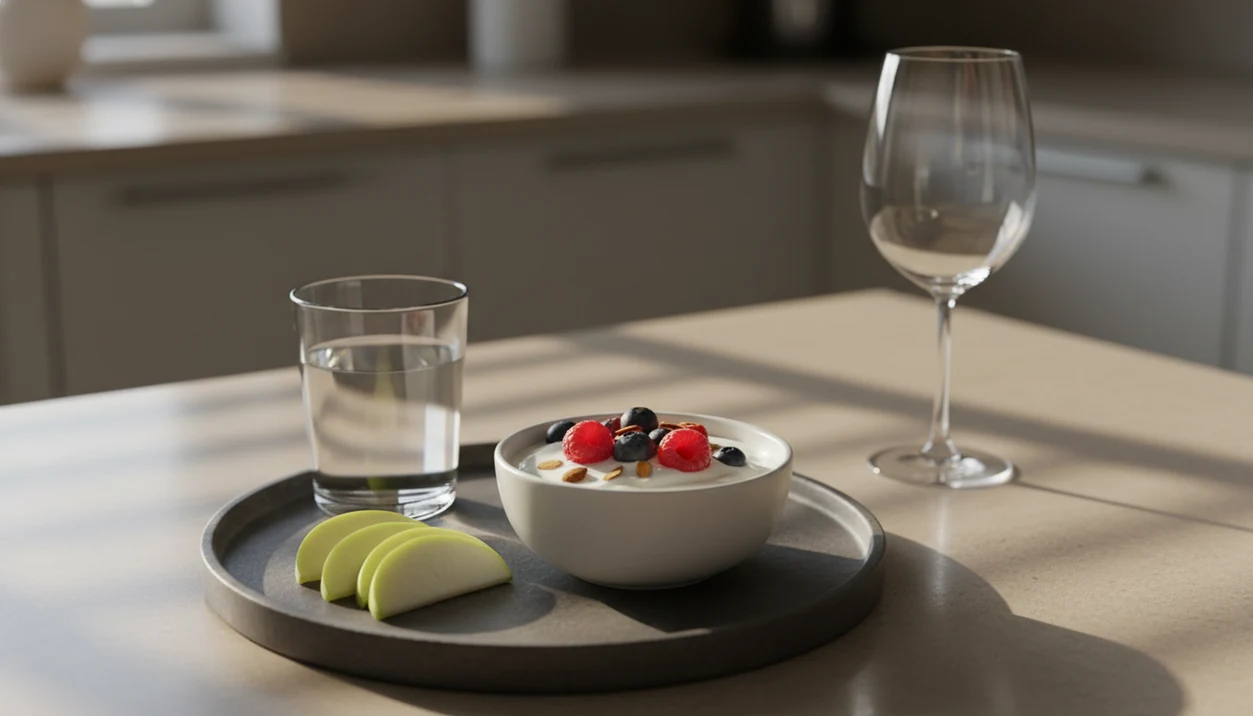
- Greek yogurt and berries: protein plus fiber, useful before the late-afternoon slump.
- Eggs and whole-grain toast: steady fuel when dinner is still an hour away.
- Cheese and apple: salty, sweet, and slower than candy.
- Hummus and vegetables: fiber, fat, and something crunchy for the hand-to-mouth reflex.
- Nuts and fruit: easy to keep in a bag, desk drawer, or car console.
Candy or soda may help for a few minutes, but they can restart the spike-crash cycle. For most crash-driven alcohol urges, a protein-fiber-fat snack is more reliable than sugar alone because it reduces the next energy dip.
Food timing plan for low blood sugar alcohol cravings
Use food timing like an if-then plan. If cravings tend to hit before dinner, then eat before the decision point, not after the urge is already loud.
- Eat every 3 to 4 hours when you are vulnerable to blood sugar crashes, especially during early alcohol reduction.
- Build each meal around protein, fiber, and healthy fat so energy lasts longer than a quick carb snack.
- Plan a protein snack before high-risk drinking times, such as the car commute, a bar patio, or scrolling in bed.
- Log cravings and meals to spot patterns like “skipped lunch, strong 5 p.m. urge.”
- Reassess after ten to twenty minutes before deciding whether the craving is still about alcohol.
A private craving log can help you track meals, urges, streaks, and reset moments without turning the craving into a moral failure. Me Quit supports trigger tracking and behavior change, but it does not provide diagnosis, detox, emergency care, or diabetes management.
Sugar cravings after quitting alcohol versus alcohol cravings
Sugar cravings are common after cutting back or quitting alcohol because the brain may look for another fast reward. Sugar may be less harmful than drinking in the short term, but it is not a complete coping strategy.
| Craving type | What it may feel like | Helpful response |
|---|---|---|
| Sugar craving | “I need something sweet now” | Add protein first, then choose a portion intentionally |
| Alcohol craving | “A drink would fix this” | Pause, name the trigger, use urge surfing |
| Blood sugar crash | Shaky, irritable, tired, urgent | Eat balanced food, hydrate, reassess |
| Habit cue | Same time, place, or people | Change the routine and add friction |
Per the CDC, frequent added sugar above recommended limits is linked with higher risk of weight gain, type 2 diabetes, and cardiovascular disease. CDC. Cravings often lessen over weeks as routines, sleep, and reward chemistry stabilize. More related patterns are covered in our alcohol reduction guides.
Diabetes, medication, and alcohol blood sugar craving risks
Stat callout: Among adults with diagnosed diabetes, about 48% report current alcohol use, according to CDC diabetes statistics CDC statistics.
People with diabetes, a history of hypoglycemia, pregnancy, liver disease, or glucose-lowering medications should get medical guidance before using alcohol or changing drinking patterns. Alcohol can interact with glucose regulation and some medications in ways that need individualized advice.
Clinicians typically recommend that higher-risk patients discuss alcohol, meals, medications, and hypoglycemia symptoms with a qualified healthcare professional. This page cannot tell you how to adjust insulin, tablets, glucose targets, or meal plans.
Seek urgent care for severe confusion, fainting, seizures, chest pain, or inability to keep food or fluids down. That is not a tracking problem.
If fatigue is your main next-day symptom, alcohol blood sugar fatigue explains why energy can stay low after drinking.
Limitations
Blood sugar stabilization can reduce some alcohol cravings, but it does not cure Alcohol Use Disorder. It is one tool, not the whole plan.
- Some cravings are driven more by stress, trauma, habit loops, social cues, withdrawal, or loneliness than food timing.
- People with heavy alcohol use may need medical detox or professional treatment, especially if withdrawal symptoms appear.
- Me Quit supports tracking and behavior change, but it is not emergency care or a substitute for a clinician.
If you are comparing phone-based support for drink limits, our best drink less app guide gives a practical feature breakdown.
FAQ
Can low blood sugar cause alcohol cravings?
Yes. Low blood sugar can create urgent cravings for fast energy, and the brain may interpret that signal as a need for sugar, refined carbs, or alcohol.
Why do I crave alcohol when I’m hungry?
Hunger can cause stress, irritability, low energy, and poor focus. If alcohol has been a past relief cue, the brain may misread hunger as a drinking urge.
Does alcohol lower blood sugar?
Alcohol can contribute to low blood sugar by affecting the liver’s glucose release, especially when drinking with little food. The risk varies by health status, medications, and drinking pattern.
Can alcohol raise blood sugar first and then cause a crash?
Yes. Sugary drinks and mixers can raise blood sugar first, while alcohol may still contribute to later dips through liver and appetite effects.
What protein snacks help stop alcohol cravings?
Helpful options include Greek yogurt with berries, eggs with whole-grain toast, cheese with apple, hummus with vegetables, or nuts with fruit. These combine protein with fiber or healthy fat.
How long do sugar cravings last after quitting alcohol?
Sugar cravings often improve over several weeks, but timing varies. Sleep, stress, drinking history, meal patterns, and support all affect duration.
Can quitting alcohol affect blood sugar?
Yes. Cutting back or quitting can change appetite, sugar intake, sleep quality, and glucose regulation. Me Quit can help track patterns, but medical questions should go to a clinician.
Should people with diabetes drink alcohol?
People with diabetes should ask a clinician about alcohol because it can affect glucose levels and interact with medications. Me Quit is not a diabetes management tool or medical substitute.