What Happens to Your Body During and After Drinking Alcohol
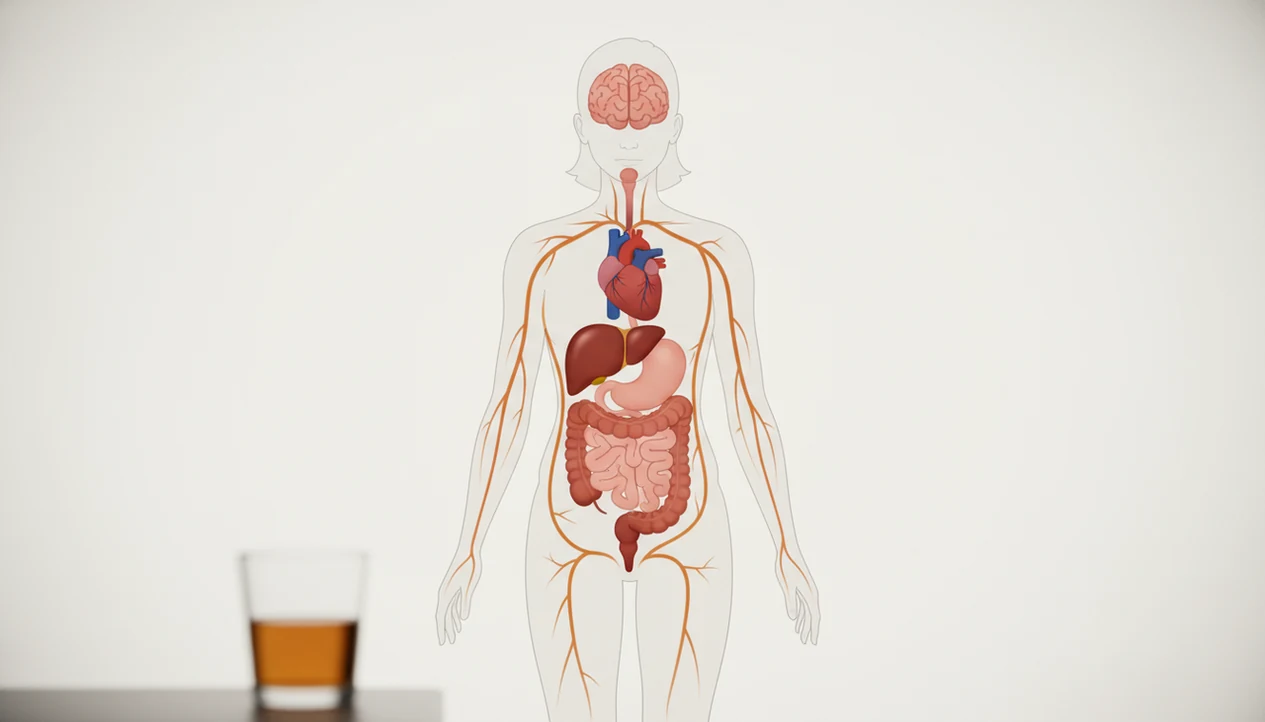
What alcohol does to your body is broader than a buzz: it changes brain signaling, sleep quality, hydration, blood sugar, digestion, stress hormones, inflammation, cravings, and recovery for hours or days after drinking. Heavier or more frequent drinking also raises long-term risks for high blood pressure, liver disease, several cancers, mood problems, and dependence.
This guide is for general education and pattern awareness, not diagnosis, detox planning, or medical treatment. If you drink heavily, use sedatives or opioids, are pregnant, have liver disease, or have had withdrawal symptoms before, ask a clinician before making sudden alcohol changes.
Definition: Alcohol is a whole-body psychoactive drug that enters the bloodstream quickly and affects the brain, liver, heart, gut, immune system, hormones, and sleep architecture.
TL;DR
- Alcohol affects nearly every organ system, not just the liver.
- The next-day effects often come from disrupted sleep, dehydration, blood sugar swings, gut irritation, and rebound stress hormones.
- Cutting back usually improves sleep, energy, blood pressure, digestion, and cravings over weeks to months, but recovery timelines vary.
Alcohol body effects at a glance
Quick answer: Alcohol affects far more than coordination or mood. For many people, it can disrupt sleep, hydration, blood sugar, digestion, stress response, and cravings for hours or even days, while heavier or frequent drinking may increase longer-term health risks.
Key takeaways
- Alcohol may reduce sleep quality even if it makes you feel sleepy at first.
- Cravings the next day can come from stress, poor sleep, low energy, or blood sugar swings.
- Eating before drinking and alternating with water may reduce some short-term effects.
- Cutting back often works better when you track patterns, triggers, and after-effects.
- People who drink heavily should not quit suddenly without medical guidance.
- Medication, therapy, or support groups may help when alcohol feels hard to control.
- Alcohol travels through blood. After absorption, it reaches the brain, liver, heart, gut, kidneys, immune system, and hormone systems.
- Short-term effects are not just “feeling drunk.” Lower inhibition, slower reaction time, dehydration, poorer sleep, gut irritation, and next-day fatigue can all follow.
- Long-term effects involve multiple systems. Regular or heavy drinking is associated with liver disease, heart problems, several cancers, inflammation, anxiety, and stronger cravings.
- Dose and pattern matter. A patio table with an ashtray and pint may look ordinary, but repeated pairings can train the brain to expect both.
- Less exposure gives more recovery time. Drinking less and less often generally gives sleep, blood pressure, digestion, and craving patterns more room to stabilize.
Alcohol absorption and metabolism after your first drink
Alcohol absorption starts in the stomach and continues mainly in the small intestine, where alcohol enters the bloodstream and circulates through the body. The liver then prioritizes alcohol metabolism because the body cannot store alcohol safely.
That priority shift matters. While the liver is processing alcohol, other metabolic tasks can be delayed or altered. Clinicians typically recommend medical guidance for people who drink heavily before they stop suddenly, because withdrawal can become dangerous.
Alcohol also changes neurotransmitters involved in inhibition, reward, stress, and sleep. In plain terms, it can make a person feel looser at first, then more unsettled later. The exact alcohol effects after drinking depend on dose, speed of drinking, food intake, body size, sex, medications, tolerance, and health status.
The party cooler packed with cans is not just a social detail. It changes how fast repeated drinks become the default.
Alcohol effects on the brain, mood, and cravings
Does alcohol affect your brain after the buzz fades? Yes. Alcohol can temporarily increase relaxation and reward signals while slowing judgment, coordination, memory, and reaction time.
After alcohol wears off, rebound stress chemistry may contribute to anxiety, irritability, poor focus, and low mood. Some people notice it the next morning as a sour stomach before a social event. Others notice the thought: “I’ll feel normal after one drink.” That is a craving signal, not a character flaw.
Repeated drinking can strengthen habit loops. The brain learns the cue, the expected relief, and the reward. For adults trying to change that loop, a craving log with time, trigger, intensity, and response is often more useful than a vague mood note. MeQuit is a quit smoking app that helps adults stop smoking, stop vaping, drink less, and track cravings, streaks, and milestones.
Alcohol effects after drinking: sleep, energy, and hydration
Why do you feel tired, foggy, or thirsty after drinking? Alcohol may make falling asleep easier, but it commonly disrupts deep sleep and REM sleep later in the night.
NIAAA notes that alcohol can disrupt sleep quality and contribute to hangover symptoms through dehydration, inflammation, gastrointestinal irritation, and poor sleep NIAAA statistics.
That is one reason “I slept eight hours” can still feel like poor recovery. Alcohol can also increase fluid loss, which may contribute to headache, dry mouth, lightheadedness, and fatigue. Add blood sugar swings, late-night food, and rebound stress hormones, and the next day can feel heavier than simple tiredness.
This is the practical answer to how alcohol affects energy: it reduces sleep quality, strains hydration, and can make the body work harder to regain balance. If fatigue follows drinking even without a severe hangover, the pattern may be worth tracking. The physiology behind that overlap is covered further in alcohol blood sugar fatigue.
Alcohol inflammation and cravings in the gut, liver, and blood sugar system
Alcohol can irritate the stomach and gut, and it may worsen reflux, nausea, diarrhea, bloating, or appetite changes. The gut notices quickly. Sometimes before the person does.
The liver also shifts metabolic attention toward processing alcohol. That can affect glucose regulation and fat metabolism, especially when drinking is paired with skipped meals, late snacks, or poor sleep. Inflammation, sleep disruption, and blood sugar changes can intensify cravings for alcohol, sugar, salty foods, or ultra-processed foods.
Weekend binge patterns can still stress the gut and liver, even when there is no daily drinking. A sticky bar table under your fingertips on Saturday can become a Monday craving pattern if the brain links alcohol, salt, sugar, and social relief. For a closer look at that loop, the alcohol blood sugar cravings guide explains why dips can feel like urges.
Long-term alcohol body risks for the liver, heart, and cancer
- Alcohol is linked to preventable death. Per the CDC, excessive alcohol use causes about 140,000 deaths each year in the United States and shortens those lives by an average of 26 years CDC alcohol data.
- The liver carries major risk. According to NIAAA, alcohol-associated liver disease accounts for about 50% of liver disease deaths in the United States NIAAA alcohol data.
- Cancer risk is not limited to heavy drinking. The National Cancer Institute reports that even one drink per day is associated with about a 5 to 9% higher breast cancer risk in women compared with not drinking the National Cancer Institute alcohol data.
- Global cancer burden is measurable. WHO has linked chronic excessive alcohol use to about 5% of all cancers and cancer deaths worldwide the World Health Organization alcohol data.
- Red wine is not automatically protective. Current public-health guidance does not treat moderate drinking as a health strategy.
Alcohol can also affect blood pressure and circulation; related mechanisms are discussed in alcohol blood vessels.
Alcohol body recovery timeline after cutting back or quitting
The alcohol body recovery timeline usually begins within hours, but the pace varies by drinking level, health status, nutrition, sleep, and withdrawal risk. For heavier drinkers, stopping suddenly can be medically risky.
| Time period | What may change | What to watch |
|---|---|---|
| 24 to 72 hours | Hydration, blood sugar, sleep rebound, mood shifts | Tremors, confusion, seizures, severe agitation, or withdrawal concerns |
| 1 to 4 weeks | Better sleep depth, digestion, energy, and less morning fog for many people | Cravings, stress triggers, social pressure |
| Months later | Possible improvements in blood pressure, liver inflammation markers, skin appearance, weight patterns, and cravings | Ongoing medical issues or return-to-drinking cycles |
First 24 to 72 hours
Hydration and blood sugar may start to normalize, but sleep can be uneven. Heavy use can bring withdrawal symptoms, not just a bad hangover.
First 1 to 4 weeks
Many people report deeper sleep, steadier mornings, and fewer digestive complaints. Not everyone improves at the same speed.
Months after drinking less
For many adults, longer stretches with fewer drinks give blood pressure, liver markers, and cravings more time to improve. The most common risk-reduction approach is sustained lower intake combined with trigger planning, not a single “reset” month.
Practical steps to reduce alcohol effects after drinking
How do you use alcohol-body knowledge to reduce next-day effects? Use it to plan before the first drink, not to repair everything afterward.
- Eat before drinking. Choose a meal with protein, fat, and fiber so alcohol is not landing on an empty stomach.
- Pace each drink. Set a drink limit and slow the speed of refills.
- Alternate with water. This may reduce dehydration symptoms, although it does not cancel alcohol’s effects.
- Avoid drinking to sleep. Alcohol sedation is not the same as restorative sleep.
- Plan alcohol-free days. Mark dry days, sleep quality, cravings, and energy so patterns are visible.
- Reset after a slip. Note the trigger, amount, time, and next response.
Me Quit can provide private tracking for drinks, cravings, sleep, milestones, and dry days. It can support pattern awareness and reset planning, but it is not detox care, medical treatment, or a guarantee of safety. For app comparisons, the best drink less app guide can help frame options.
These steps reduce risk. They do not make heavy drinking safe.
When to seek medical help for alcohol symptoms
Seek medical help right away for severe or unusual alcohol-related symptoms, especially seizures, confusion, chest pain, fainting, trouble breathing, severe agitation, or signs that someone cannot stay awake or be roused. If the situation feels urgent, treat it as urgent rather than waiting for a craving or hangover to pass.
People who drink heavily should not stop suddenly without medical guidance because alcohol withdrawal can escalate from tremors and anxiety to dangerous changes in blood pressure, delirium, or seizures. Risk is higher during pregnancy, with liver disease, with certain medications, with sedatives or opioids, or after any previous withdrawal symptoms.
A safer next step is practical and direct:
- Call emergency services if severe symptoms appear or safety is uncertain.
- Contact a clinician before making abrupt changes if heavy drinking has been regular.
- Tell the truth about amounts, timing, medications, and past withdrawal, even if it feels uncomfortable.
- Use tracking as support, not treatment. Apps and self-logs can show patterns, but they cannot replace detox, monitoring, prescriptions, or clinical care.
Limitations
Alcohol research is useful, but it cannot predict one person’s exact outcome. Risk depends on dose, genetics, age, sex, health history, medications, nutrition, sleep, mental health, and years of exposure.
Key caveats:
- Cirrhosis, severe neuropathy, and alcohol-related cognitive damage may not fully reverse.
- A mild hangover after two extra drinks is different from alcohol withdrawal symptoms.
- People who drink heavily may need medical guidance before stopping because withdrawal can be dangerous.
For broader topic pathways, the alcohol reduction guides library organizes related body, brain, craving, and habit-change explainers.
FAQ
What does alcohol do first?
Alcohol first enters the bloodstream through the stomach and small intestine, then reaches the brain. Early effects often include lower inhibition, slower coordination, and slower reaction time.
Why am I tired after drinking?
Alcohol can reduce sleep quality, increase fluid loss, disrupt blood sugar, and trigger rebound stress hormones. The result can feel like fatigue, brain fog, or low motivation the next day.
Does alcohol affect REM sleep?
Yes. Alcohol commonly disrupts REM sleep, especially in the second half of the night.
What does alcohol do to your liver?
The liver prioritizes alcohol metabolism because alcohol cannot be stored safely. Repeated heavy drinking can contribute to fatty liver, inflammation, scarring, and alcohol-associated liver disease.
Does alcohol cause inflammation?
Alcohol can promote inflammation through liver stress, gut irritation, immune effects, and repeated heavy use. The pattern and amount of drinking influence risk.
Can alcohol increase cravings?
Yes. Alcohol affects reward pathways, stress chemistry, sleep, and blood sugar in ways that can increase cravings for alcohol or highly processed foods.
How long does alcohol recovery take?
Some changes can begin within 24 to 72 hours, while sleep, digestion, blood pressure, liver markers, and cravings may improve over weeks to months. Recovery varies by drinking level and health status.
Is any alcohol safe daily?
Lower intake is generally safer than higher intake, but no daily amount is risk-free for everyone. People with liver disease, pregnancy, certain medications, or past alcohol dependence may be advised to avoid alcohol.