
How Alcohol Affects Blood Cells and the Spleen
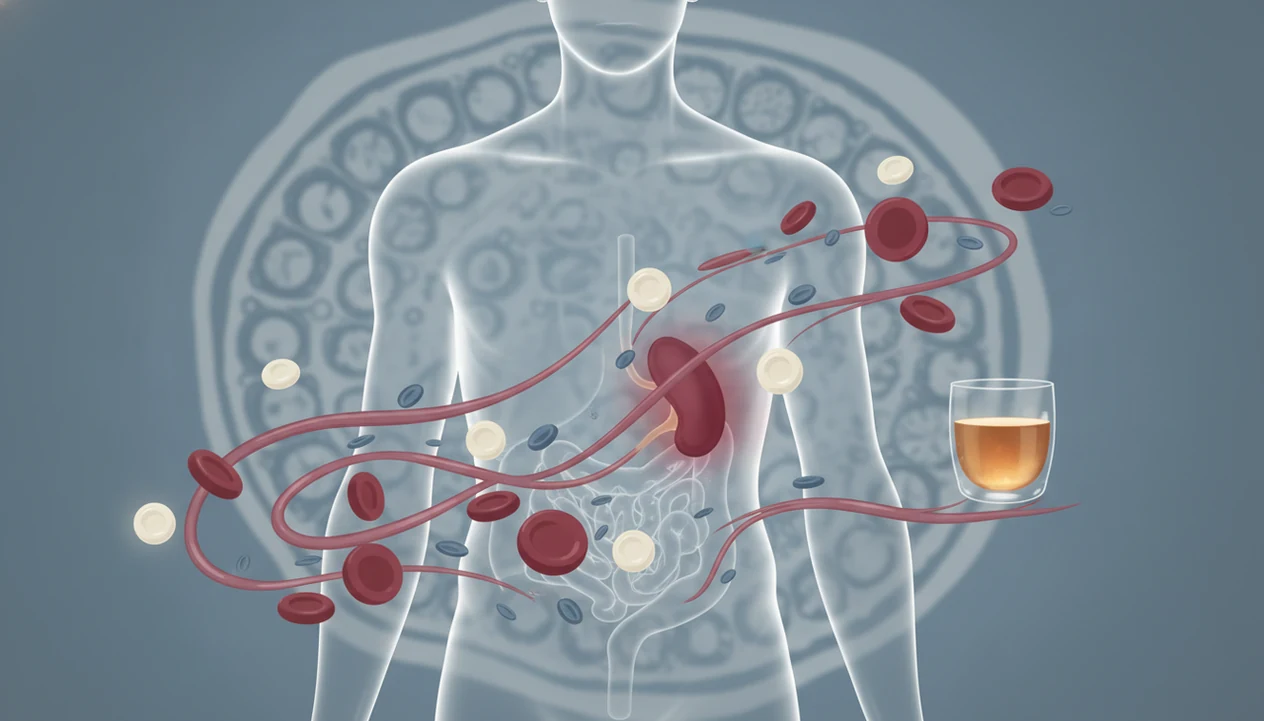
Alcohol can contribute to alcohol blood disorders spleen problems by suppressing bone marrow, changing red blood cells, lowering platelets, weakening white blood cell defenses, and affecting how the spleen filters blood. Many changes improve after cutting back or quitting, but anemia, low platelets, infection risk, or spleen enlargement should be checked by a clinician.
Definition: Alcohol-related blood and spleen effects are changes in blood cell production, immune function, clotting, and spleen filtering that can occur with heavy, repeated, or binge drinking.
TL;DR
- Heavy alcohol use can cause anemia, low white blood cells, and low platelets by directly suppressing bone marrow and worsening nutrition.
- Alcohol can weaken immune defenses and may affect spleen tissue, including cell survival and immune-cell growth.
- Reducing or stopping alcohol often helps blood counts recover, but persistent anemia, bruising, infections, or spleen pain needs medical evaluation.
Alcohol Blood Disorders and Spleen Health at a Glance
Quick answer: Alcohol may contribute to blood problems by interfering with blood cell production, changing red blood cell size and function, lowering platelets, and weakening immune defenses. For many people, reducing or stopping alcohol can help blood counts improve over time, but bruising, bleeding, fever, severe fatigue, or a swollen abdomen should be medically evaluated.
Key takeaways
- Heavy or frequent drinking can affect red cells, white cells, and platelets at the same time.
- Easy bruising, nosebleeds, black stools, fever, or severe weakness are not symptoms to ignore.
- Blood count changes may improve after cutting back, but recovery depends on nutrition, liver health, infections, and other conditions.
- Do not stop heavy daily drinking suddenly without medical advice; withdrawal can be dangerous.
- A complete blood count and clinician review can help separate alcohol effects from other causes.
- Tracking drinks, cravings, and triggers can make reduction more concrete and easier to discuss with a clinician.
Alcohol can affect blood disorders and spleen health because it touches two linked systems: blood cell production in bone marrow and blood filtering in the spleen. Red blood cells carry oxygen, white blood cells help fight infection, and platelets help bleeding stop.
The spleen filters older or damaged blood cells and stores immune cells. Heavy or chronic drinking raises the risk of abnormal blood counts, but binge drinking can also weaken immune responses for a short period. A person may notice fatigue, bruising, infections, or left upper abdominal discomfort, but those symptoms overlap with many conditions.
That overlap matters.
A complete blood count, medical history, and clinician review are needed before assuming alcohol is the only cause. If alcohol also affects blood pressure, heart rhythm, or circulation, the related risks are covered in our guide to alcohol blood pressure heart disease.
How to Use This Alcohol Blood Disorders and Spleen Guide Safely
Use this guide as a way to organize questions and patterns, not as a way to rule out serious illness. Blood count changes, bleeding, infections, and spleen pain can have urgent causes, so triage comes before lifestyle experiments.
- Check for red flags first: severe bleeding, black stools, vomiting blood, fainting, confusion, fever, shortness of breath, sudden severe headache, or intense left upper abdominal pain should prompt urgent medical care.
- Book a clinician visit if fatigue, easy bruising, frequent infections, nosebleeds, bleeding gums, or left-sided rib or spleen discomfort persists or keeps returning.
- Ask whether a CBC, folate, B12, iron studies, liver tests, clotting tests, infection markers, or imaging makes sense for your symptoms and history.
- Track alcohol intake, cravings, meals, medications, supplements, symptoms, bruises, infections, and any bleeding episodes so the visit is based on specifics, not memory.
- Avoid stopping heavy daily drinking abruptly without medical guidance about withdrawal risk, especially if you have shaking, prior seizures, hallucinations, or morning drinking.
Five Facts About Alcohol, Anemia, Low Platelets, and Spleen Risk
- Chronic heavy alcohol use can suppress bone marrow, which may lower red blood cells, white blood cells, and platelets at the same time.
- Alcohol and anemia can involve macrocytosis, folate deficiency, direct marrow toxicity, gastrointestinal bleeding, and liver-related blood changes.
- Alcohol low platelets is common in heavy drinkers; reported thrombocytopenia ranges are about 3–43% in otherwise healthy heavy drinkers and 14–81% in hospitalized alcohol-dependent patients, according to a hematology review the NIH.
- Binge drinking about 5–6 drinks in one session can suppress key immune responses for up to 24 hours, according to the Alcohol and Drug Foundation.
- Excessive alcohol exposure may damage spleen immune function by increasing apoptosis, meaning programmed cell death, and reducing splenocyte proliferation, according to a 2024 network meta-analysis the NIH.
A real-world note: the beer fridge hum during dinner prep can be a stronger trigger than people expect. Logging that moment helps separate habit cues from medical symptoms.
How Alcohol Blood Disorders Work in Bone Marrow
Alcohol-related blood disorders begin when alcohol disrupts bone marrow, the tissue that produces red blood cells, white blood cells, and platelets. The mechanism is both direct toxicity and indirect stress from poor nutrition, inflammation, bleeding, or liver disease.
Bone marrow uses nutrients such as folate, vitamin B12, and iron to make healthy blood cells. Heavy alcohol exposure can injure developing cells and is associated with macrocytic anemia, where red blood cells become larger than normal. In plain terms, the blood may carry oxygen less efficiently.
Stomach irritation, ulcers, or liver disease can add blood loss or clotting problems. That is why clinicians typically recommend a CBC with interpretation rather than guessing from symptoms. The most common medically supported way to evaluate suspected alcohol-related blood changes is a complete blood count combined with targeted follow-up labs.
A craving log is not a lab test. Still, an entry like “7:40 p.m., dinner stress, intensity 8, skipped meal, drank” can help explain patterns to a clinician.
Alcohol and Anemia Symptoms, Causes, and Recovery
Can alcohol cause anemia? Alcohol can contribute to anemia, especially with heavy or long-term use. In people with chronic alcohol use, anemia and macrocytosis are commonly reported, and alcohol can affect red blood cell production through marrow toxicity, folate deficiency, bleeding, and liver disease the NIH.
Symptoms can include fatigue, weakness, shortness of breath, dizziness, pale skin, and a fast heartbeat. Some people first notice it walking upstairs or carrying groceries. Others only find it on routine blood work.
Several pathways can overlap: poor nutrition, folate deficiency, marrow suppression, gastrointestinal bleeding, and liver disease. Alcohol can also worsen blood sugar swings and fatigue, which may blur the picture; the related pattern is discussed in alcohol blood sugar fatigue.
Recovery may take weeks to months after reducing or stopping alcohol. Timing depends on the cause, severity, nutrition, liver health, and whether bleeding or infection is also present.
Alcohol Low Platelets, Bruising, and Bleeding Risk
Can alcohol lower platelets? Yes, heavy alcohol use can reduce platelet counts, and platelets are blood cells that help clots form after injury. Alcohol may lower platelet production in bone marrow and can worsen bleeding risk when liver-related clotting changes are present.
Reported thrombocytopenia ranges are broad: about 3–43% of otherwise healthy heavy drinkers and 14–81% of hospitalized alcohol-dependent patients. Those numbers vary because studies include very different populations.
Warning signs include easy bruising, nosebleeds, bleeding gums, pinpoint red spots on the skin, black stools, or bleeding that lasts longer than expected. A small cut that will not stop oozing deserves attention. So do new bruises after no clear injury.
Seek urgent medical care for severe bleeding, black stools, vomiting blood, fainting, new confusion, weakness on one side, or a sudden severe headache. Those symptoms should not be managed with an app or home monitoring.
Alcohol Enlarged Spleen, Spleen Atrophy, and Immune Function
The spleen filters old blood cells, stores immune cells, and helps the body fight certain infections. Alcohol can be linked to spleen problems directly through immune-cell damage and indirectly through liver disease, portal hypertension, and blood disorders.
Alcohol enlarged spleen concerns often arise when cirrhosis or portal hypertension causes blood to back up into the spleen. An enlarged spleen can trap platelets and blood cells, which may worsen low counts. Separately, laboratory and animal evidence suggests excessive alcohol exposure can increase spleen cell death and reduce splenocyte proliferation. That pattern is linked to spleen atrophy and weaker immune function.
Symptoms that warrant care include left upper abdominal pain, early fullness after eating, pain spreading to the left shoulder, fever, frequent infections, or unexplained bruising. Not every ache under the ribs is spleen disease, but persistent symptoms need medical review.
For broader organ-risk context, alcohol’s relationship with vessels is covered in alcohol blood vessel damage.
Alcohol, White Blood Cells, and Infection Risk
Does alcohol weaken white blood cells? Alcohol can reduce both the number and function of white blood cells, which are central to infection defense. The effect can be short term after binge drinking and longer term with heavy repeated exposure.
Binge drinking about 5–6 drinks can suppress immune responses for up to 24 hours, according to the Alcohol and Drug Foundation org alcohol data. Heavy alcohol use is also associated with higher risk and worse outcomes from respiratory infections, including pneumonia the NIH.
This matters more when poor nutrition, liver disease, anemia, or low platelets are also present. Recovery from infections may be slower, and symptoms may become severe sooner. Fever, shortness of breath, chest pain, confusion, blue lips, or worsening weakness need medical attention.
The practical takeaway is simple: for people with repeated infections or abnormal blood counts, reducing binge episodes is often a safer first target than only counting weekly drinks.
Blood Tests for Alcohol-Related Anemia, Platelets, and Spleen Clues
Medical evaluation usually starts with named tests, not assumptions. Common options include:
- Complete blood count: A CBC checks hemoglobin, hematocrit, MCV, white blood cells, and platelets.
- Nutrient labs: Folate, B12, and iron studies can help separate alcohol-related macrocytosis from other anemia causes.
- Production markers: A reticulocyte count can show whether the bone marrow is responding appropriately.
- Liver and inflammation tests: Liver enzymes, bilirubin, clotting tests, and infection markers may be added when clinically appropriate.
- Imaging: Ultrasound or other imaging may be used if an enlarged spleen, liver disease, or portal hypertension is suspected.
Normal liver tests do not always rule out alcohol-related blood changes. Be honest about alcohol use, medications, supplements, and recent bleeding. Clinicians need that context to avoid missing cancer, autoimmune disease, inherited conditions, or nutritional deficiencies unrelated to alcohol.
Cutting Back on Alcohol for Blood Cell and Spleen Recovery
Reducing or stopping alcohol can allow bone marrow function and platelet production to improve in many people. Recovery timing varies by nutrition, liver health, infection status, bleeding, and the duration of alcohol exposure.
Practical steps are modest but useful: reduce alcohol intake, avoid binge episodes, improve nutrition, follow lab monitoring, and ask about withdrawal risk before stopping suddenly if drinking has been heavy or daily. A mild hangover after two extra drinks is not the same as alcohol withdrawal. Shaking, confusion, seizures, or hallucinations need urgent medical support.
Me Quit can support private behavior change by helping adults track cravings, streaks, milestones, and drinking-reduction patterns. It does not diagnose anemia, thrombocytopenia, spleen enlargement, immune deficiency, alcohol withdrawal risk, or any other medical condition.
For structured behavior ideas, the alcohol reduction guides can help frame safer next steps.
Limitations
This article is an evidence summary, not a diagnosis. Several limits matter:
- Not everyone who drinks heavily develops obvious anemia, low platelets, immune weakness, or spleen problems.
- Recovery after quitting varies and may be incomplete when liver disease, severe nutritional deficiency, or long-standing damage is present.
- This article cannot diagnose spleen enlargement, anemia, thrombocytopenia, immune deficiency, or alcohol withdrawal risk.
If alcohol cravings and health worries are colliding, a private tracker may help record patterns. Apps such as Me Quit can support habit review, but abnormal labs or spleen symptoms belong with a clinician.
FAQ
Can alcohol cause anemia?
Yes. Alcohol can contribute to anemia through bone marrow suppression, folate deficiency, poor nutrition, bleeding, and liver-related problems.
Can alcohol lower platelets?
Yes. Heavy alcohol use can reduce platelet counts and may increase bruising or bleeding risk, especially when liver-related clotting problems are also present.
Can alcohol enlarge the spleen?
Alcohol may be linked to an enlarged spleen indirectly through liver disease, portal hypertension, and blood disorders. Imaging and clinician review are needed to confirm spleen enlargement.
Does alcohol weaken immunity?
Yes. Alcohol can impair white blood cell function, and binge drinking can temporarily suppress immune responses for up to 24 hours.
What is alcohol-related macrocytosis?
Macrocytosis means enlarged red blood cells. Alcohol toxicity, folate deficiency, liver disease, and other causes can contribute, so blood tests need clinical interpretation.
Can alcohol-related anemia be reversed?
Some alcohol-related anemia improves after reducing alcohol and correcting deficiencies. Recovery depends on the cause, severity, bleeding risk, and liver health.
How long does it take platelets to recover after stopping alcohol?
Platelet recovery may occur over days to weeks in some people after stopping alcohol. Follow-up blood testing is needed to confirm recovery.
When is spleen pain urgent?
Severe left upper abdominal pain, left shoulder pain, fainting, fever, vomiting blood, black stools, or signs of internal bleeding need urgent medical care. Do not use Me Quit or any app as a substitute for emergency evaluation.