

How to Stop Weekend Drinking Before the First Friday Craving

The weekend drinking cycle often looks controlled from Monday through Thursday, followed by more alcohol than planned, Sunday regret, and another promise to change next week. The problem is not the calendar. It is the repeated loss of control, risk, or harm packed into a few nights.
Pay attention to the first decision, not just the final drink count. Friday bargaining, a familiar invitation, an empty kitchen, or the usual trip past the liquor store may be the point where the weekend is decided.
Start here
Stopping weekend drinking gets easier when you decide before Friday what you will do, which limits or alcohol-free days apply, and how you will respond to pressure. Write the plan down, protect the first 60 to 90 minutes of your usual drinking window, and review what happened on Monday without treating a slip as permission to give up.
Signs the weekend cycle has already started
The weekend drinking cycle often starts before the first drink. Watch for the quiet planning, bargaining, and “this weekend doesn’t count” thinking that shows up on Thursday or Friday.
- Controlled weekdays do not erase weekend harm. If Friday or Saturday brings regret, conflict, unsafe choices, or broken limits, the pattern matters even without daily drinking.
- Binge drinking is common enough to feel normal, but it is still risky. NIAAA reported that about 25.8% of U.S. adults binged in the past month in 2022 (NIAAA alcohol data).
- Recurring binge drinking is not rare. The CDC notes that about one in four adults who binge drink do so at least weekly (CDC alcohol data).
- Warning signs include pre-planning drinks, negotiating with yourself, drinking more than intended, Sunday alcohol cravings, and hangxiety.
- The key signal is loss of control. If the bartender reaching for the usual bottle feels like the decision was already made, Friday needs a plan.
Record next-day anxiety along with the time, place, and amount you drank.
For more on the anxiety side of the loop, the science behind why alcohol causes hangxiety can help you name what Sunday is really feeling like.
Why Friday starts to feel automatic
The weekend drinking cycle works through habit loops: a cue predicts relief, the routine delivers alcohol, and the reward teaches your brain to repeat the pattern. After enough repeated weekends, Friday cues can trigger the expectation of alcohol before you consciously decide to drink.
A common loop looks like this: weekday restraint, stress buildup, reward expectation, social cue, drinking, regret, then a Monday reset promise. Payday, sports, certain friends, bars, loneliness, and Sunday work dread can all become cues. The cue does not force the drink, but it makes the drink feel familiar.
The weeknight pour after laptop shutdown can become a weekend starter, not just a drink. Over time, the loop may creep into Thursday, Sunday afternoon, or Monday “recovery” drinks. That creep is worth noticing early.
Write down your triggers while they are fresh, because the invitation, feeling, or location that started an urge can be difficult to reconstruct later. The broader skill is covered in our alcohol reduction guides.
Stop letting Monday excuse this weekend
“Why do I keep saying I’ll start Monday drinking less?” The fresh start effect is the belief that a future date, like Monday, next month, or after a birthday, will make change easier.
That belief can reduce guilt right now. It can also hand you permission to overdrink this weekend. The thought sounds responsible, but it delays the decision point until after the damage is done.
A vague Monday promise says, “Later me will handle this.” A specific pre-weekend commitment says, “Friday counts.” That difference matters.
- “I start with the next choice.”
- “Friday is part of the plan.”
- “I do not need a last weekend.”
- “I can leave before the second round.”
- “A craving is a signal, not an instruction.”
For weekend drinkers, a pre-commitment is often easier than a Monday reset because it removes the loophole before the reward cue appears.
Talk with a clinician before cutting down or stopping if alcohol wearing off causes shaking, sweating, nausea, racing heart, severe anxiety, hallucinations, confusion, or seizures. Call emergency services for a seizure, severe confusion, inability to stay awake, thoughts of self-harm, or immediate danger.
Scripts for cravings, invitations, and drink pressure
Pre-made responses reduce decision fatigue when cravings get loud. The script should be short enough to repeat while your brain is arguing for “just one.”
Internal pre-made responses to alcohol cravings
- Friday invitation: “I already chose tonight’s plan.”
- Just one drink: “One usually turns into negotiation.”
- Sunday alcohol cravings: “I need food, rest, and a reset, not alcohol.”
- Boredom: “I can be bored for ten minutes.”
- Stress: “Relief first, alcohol later is the trap.”
- I deserve it: “I deserve Monday without cleanup.”
Internal scripts work best when paired with a replacement action. Eat something. Start a timer. Put on shoes and walk around the block. If cravings come in waves, urge surfing alcohol cravings gives you a simple way to ride the peak without making a deal.
Social responses for drinking pressure
- “I’m not drinking tonight.”
- “I’m good with this.”
- “Early morning tomorrow.”
- “I’m taking a weekend off.”
- “Not tonight, but I’m staying for food.”
Short. Boring.
Why weekend alcohol cravings happen and how to interrupt the weekend drinking cycle
Friday alcohol cravings often come from several cues arriving together: the end of work, hunger, stress, payday, a group chat, a familiar route home, or the expectation of relief. Sunday urges may be tied to loneliness, anxiety, poor sleep, unfinished tasks, or dread about Monday. Track the first cue instead of recording only the final drink total.
| Track | Examples |
|---|---|
| Time and place | Friday at 6 p.m., the kitchen, a bar patio, the couch |
| People and feelings | A drinking friend, social pressure, boredom, anxiety, loneliness |
| Body state | Hunger, fatigue, poor sleep, restlessness |
| Paired habits | Smoking, vaping, sports, gaming, cooking, late-night food |
For the usual craving window, make an if-then plan: “If I finish work and want a drink, then I will eat, open an alcohol-free drink, and stay away from the shop or bar for 30 minutes.” Add a refusal line such as, “I’m not drinking tonight,” plus an exit time and transportation plan.
Recurring cravings deserve attention when they lead to binge drinking, blackouts, unsafe behavior, conflict, or repeated broken limits. The CDC alcohol data and definitions use 4 or more drinks for women or 5 or more for men on one occasion as the binge-drinking threshold. These are risk thresholds, not recommended targets.
Build your Friday-to-Sunday plan in six steps
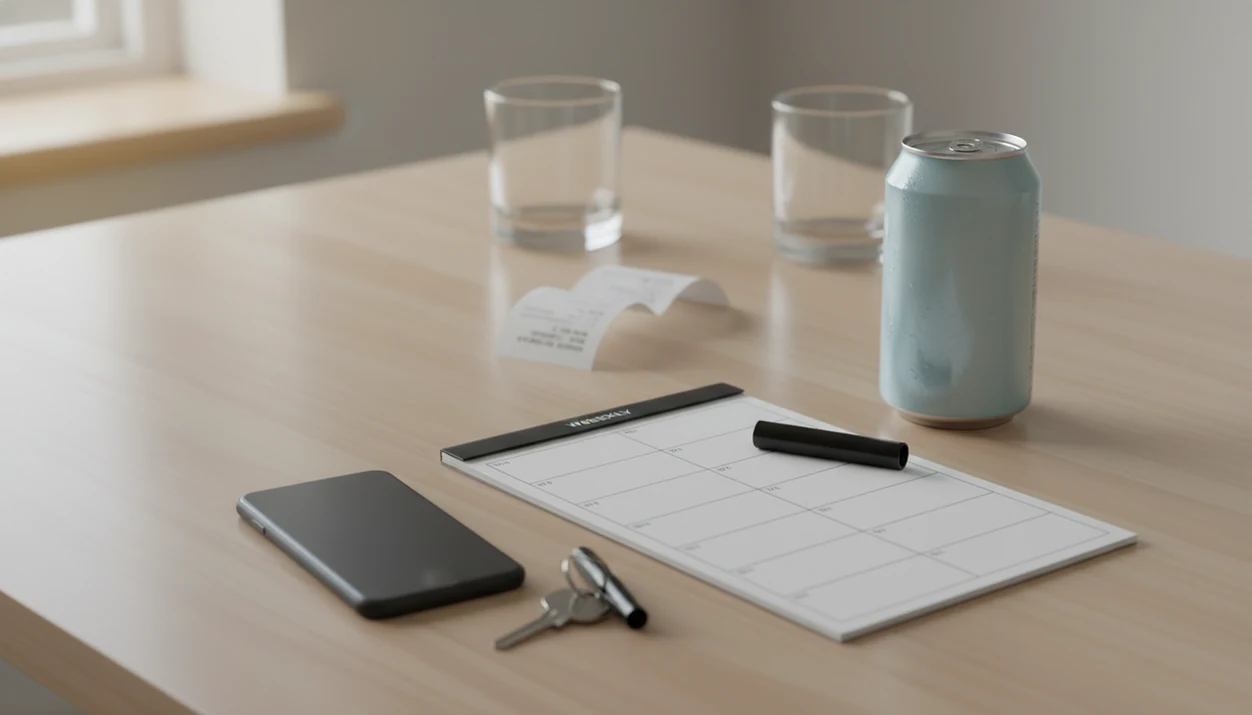
Use this plan before Friday afternoon, not during the first craving. A written weekend plan makes the next choice easier because it turns a vague hope into visible instructions.
- Set the weekend goal. Choose alcohol-free days, a drink limit, or a leave-by time before plans begin.
- Map trigger windows. Name the risky hours, people, places, and feelings, including Sunday evening.
- Schedule alcohol-free alternatives. Book dinner, a gym class, a movie, errands, or a morning plan that alcohol would disrupt.
- Prepare scripts. Write two internal responses and two social responses in your notes app.
- Remove friction. Do not stock alcohol at home, plan a ride home, and carry an alcohol-free drink at events.
- Review on Monday without shame. Mark what worked, what broke, and what you will change next weekend.
Write a plan that still works when you are tired, invited out, and tempted to change the rules.
How to stop binge drinking on weekends with a two-week log
Use the next two weekends to replace rough memories with a clear record. Start by reconstructing the last three weekends as accurately as you can. Then record each new drink when you get it, before noise, distraction, or intoxication makes counting harder.
- Write down Friday, Saturday, and Sunday drinks from the previous three weekends, even if some totals are estimates.
- Before the next event, choose an alcohol-free plan or set a per-event cap, daily cap, stop time, and leave time.
- Record each drink in real time. Include the time, location, company, mood, urge intensity, and what happened before the first drink.
- Protect Sunday with a planned meal, activity, errand, or morning commitment that does not include alcohol.
- Review the record on Monday. Find the first point where the plan held or changed.
- Adjust one detail for the following weekend, such as eating earlier, skipping shots, changing the venue, or leaving before another round.
Do not treat the binge threshold as an allowance. Risk can occur below it, and some people should not drink at all because of pregnancy, medication interactions, medical conditions, previous alcohol problems, or clinical advice. CDC surveillance also shows that repeated binge drinking is common, including weekly episodes and high drink counts among some adults who binge. See the CDC summary of binge-drinking patterns.
Count the first drink trigger, not only the final total. That is often the point you can change most directly next weekend.
Why Sunday cravings feel different
“Why do Sunday alcohol cravings hit when the weekend is almost over?” Sunday can bring hangover anxiety, loneliness, unfinished tasks, work dread, or the wish to stretch the weekend a few more hours.
The body may also be asking for ordinary repair. Food. Sleep. Water. A shower. A quiet walk. The craving says “drink,” but the need may be steadier blood sugar, less shame, or one clean plan for Monday morning.
Do not use Sunday drinking as the emotional reset for Monday. That usually borrows relief from tomorrow.
Try a Sunday evening ritual that has a clear start and end: meal, hydration, shower, clean clothes, ten-minute planning, then bed prep. If weekend urges feel strongest on Sundays, our guide to weekend alcohol cravings breaks down those trigger windows in more detail.
For Sunday-heavy drinkers, recovery often starts by treating Sunday night as a protected transition, not the final round of the weekend.
Alcohol vs nicotine cues on nights out
Alcohol can lower boundaries around smoking, vaping, and other cue-linked habits. One drink may bring back the porch smoke after two cocktails, even if nicotine felt handled all week.
A single trigger plan can cover alcohol, cigarettes, vaping, and late-night scrolling because the cue, routine, reward pattern is similar. Name the shared decision points: bar patio, car commute, game night, after-party, or the walk home.
Practical moves help here. Avoid the smoking patio. Carry an alcohol-free drink. Plan a ride home before midnight. Track multiple cravings when they stack, such as “drink plus vape” or “beer plus cigarette.” If the lighter click in a jacket pocket is part of your weekend script, remove the lighter before leaving home.
When weekend drinking needs professional care
Get medical or professional help if cutting down feels unsafe, keeps failing, or your drinking has already caused serious consequences. A weekend pattern still deserves care when withdrawal, danger, or repeated loss of control is part of the loop.
Before you reduce or stop drinking, get medical guidance if you have shaking, sweating, nausea, racing heart, severe anxiety, hallucinations, confusion, or any history of seizures when alcohol wears off. Withdrawal can be more than uncomfortable; for some people it is dangerous.
- Call emergency services immediately for a seizure, severe confusion, chest pain, inability to stay awake, thoughts of self-harm, or immediate danger to anyone.
- Talk with a clinician before reducing or stopping alcohol if you might be physically dependent or have previously had shaking, sweating, nausea, hallucinations, confusion, or seizures when alcohol wore off.
- Tell a professional the full pattern, including blackouts, injuries, unsafe driving, fights, or times you could not stop once you started.
- Ask about treatment options, such as primary care support, therapy, addiction medicine, medication, detox programs, or support groups.
- Use apps and scripts as support, not as replacements for detox, therapy, medication, or medical advice.
Alcohol withdrawal timing and emergency signs
Alcohol withdrawal can begin 6 to 12 hours after the last drink. Symptoms are often worst during the first 48 hours and generally improve over 3 to 7 days, although sleep problems, anxiety, and cravings can last longer. The NHS alcohol treatment guidance recommends medical assessment when dependence or previous withdrawal is possible.
- Get medical advice before stopping if you drink heavily most days, need alcohol to stop shaking or feel normal, or have had withdrawal before.
- Do not create your own alcohol or sedative taper at home.
- Call emergency services for hallucinations, severe tremors, seizures, marked confusion, severe agitation, or trouble staying awake.
More information on symptoms and dependence is available in the NHS alcohol-use disorder guidance.
Questions about changing weekend drinking
Is weekend drinking a problem if I do not drink during the week?
It can be. Alcohol-free weekdays do not cancel binge drinking, blackouts, injuries, conflict, unsafe driving, or repeated loss of control on weekends. Look at what happens after the first drink, how often you break your plan, and what the pattern costs you physically, emotionally, socially, or financially.
What counts as weekend binge drinking?
The CDC defines binge drinking as 4 or more drinks for women or 5 or more for men on one occasion. That threshold marks increased risk, not a safe target. Drink strength and serving size matter because a large pour, strong beer, or cocktail may contain more than one standard drink.
Why do I drink every weekend even when I plan not to?
Your plan may arrive after the strongest cues have already started. Friday stress, hunger, familiar friends, certain locations, and easy alcohol access can trigger an established routine. Decide earlier, protect the first 60 to 90 minutes, eat, change location, remove alcohol access, and use a written response to invitations.
Why do I keep saying I will start Monday?
A Monday promise reduces guilt without changing Friday's decision. It can become permission for one more weekend of drinking. Replace it with a decision that starts now: choose Friday's rule, schedule an alternative, arrange transportation, and tell one supportive person before invitations or cravings appear.
How can I stop Friday alcohol cravings before I drink?
Identify the usual time and place, then plan around that window. Eat before it starts, keep alcohol out of the house, avoid the usual shop or bar, prepare an alcohol-free drink, and contact someone supportive. A craving can rise and fall without requiring a decision to drink.
Are Sunday alcohol cravings normal after weekend drinking?
They are common, but they still deserve attention. Sunday cravings may follow poor sleep, anxiety, loneliness, hunger, habit, or a wish to delay Monday. If delaying alcohol causes shaking, sweating, nausea, hallucinations, confusion, or severe agitation, seek medical advice rather than trying to manage withdrawal alone.
Can I drink less on weekends instead of quitting completely?
Some adults can reduce their drinking with exact limits, real-time counting, and alcohol-free days. Others find that the first drink repeatedly leads to lost control. If limits keep failing, harm continues, or withdrawal symptoms appear, discuss a fuller assessment and safer options with a clinician.
How many drinks can I have on a weekend without binge drinking?
There is no single weekend total that guarantees safety. Binge drinking depends on how many drinks are consumed on one occasion, while risk also changes with drink strength, medications, health conditions, pregnancy, driving, and previous alcohol problems. Set event and daily boundaries rather than saving drinks for one night.