Quit Drinking Without Weight Gain
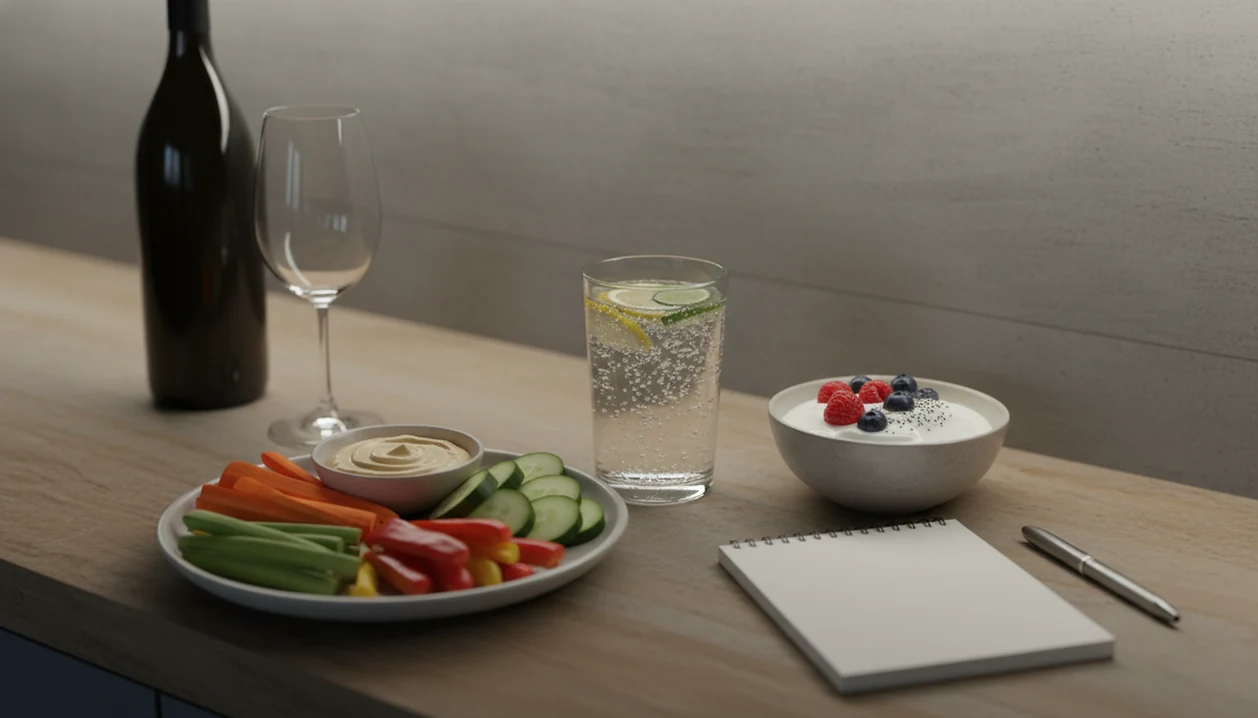
You can quit drinking without weight gain by planning for appetite changes before they hit: replace alcohol calories with structured meals, lower-sugar evening swaps, sleep routines, and craving tracking instead of grazing. The goal is not dieting harder; it is preventing alcohol from being replaced by sweets, snacks, or sugary drinks.
Definition: Quit drinking without weight gain means stopping alcohol while managing calories, hunger, sugar cravings, sleep, and routines so sobriety does not turn into automatic overeating.
TL;DR
- Alcohol can add substantial calories, but weight gain after quitting usually comes from replacement calories: desserts, snacks, soda, takeout, or larger portions.
- Sugar cravings after quitting alcohol are common, especially in the first few weeks, and they are easier to manage with planned swaps than willpower alone.
- A private craving log can help adults spot when alcohol cues are turning into hunger, sweets, or grazing patterns.
At a glance: stop drinking without gaining weight
Quick answer: Quitting drinking without gaining weight is often easier when you plan for hunger, sleep disruption, and evening cravings before they become automatic snacking. Use regular meals, low-sugar drink swaps, and simple craving tracking so alcohol is not replaced with sweets, grazing, or sugary beverages.
Key takeaways
- Do not skip dinner to “save calories”; it often increases late-night cravings.
- Keep protein, fiber, and water available during your usual drinking window.
- Choose nonalcoholic drinks that are satisfying but not loaded with sugar.
- Poor sleep can increase appetite, so protect bedtime during the first weeks.
- Track cravings by time, mood, and trigger to spot repeat patterns.
- If you may have alcohol withdrawal, ask a clinician before quitting abruptly.
Quitting alcohol does not automatically cause weight loss or weight gain. The scale usually reflects what replaces drinking: steady meals, snacks, sugary beverages, sleep loss, water shifts, digestion changes, and appetite coming back online.
The main risk is calorie replacement. A half-poured wine glass on the counter may become a bowl of cereal, then another snack, then soda because the evening still feels unfinished. That is not a character flaw. It is a routine looking for a substitute.
The practical prevention plan is simple: eat normal meals, choose lower-sugar drink swaps, protect sleep, and log cravings before they turn into grazing. For many adults, stable meals are easier than strict dieting because they reduce the “I need something now” feeling that hits during the old drinking window.
Small structure beats panic.
How quitting drinking without weight gain works
Quitting drinking without weight gain works when the calories removed from alcohol are not quietly replaced by snacks, desserts, soda, or larger portions. The plan protects the gap between “I stopped drinking” and “I need a new reward right now.”
Alcohol often sits inside a reward loop: cue, routine, reward. In plain terms, the same couch, glass, clock time, or stress feeling can still ask for comfort after the drink is gone. Appetite rebound can also happen when alcohol no longer blunts hunger or delays dinner. Poor sleep adds pressure because short, broken nights can make hunger louder, cravings sharper, and easy foods more tempting the next day.
The safer sequence is steady, not severe:
- Eat normal meals with protein, fiber, and enough calories.
- Plan one evening drink swap before the craving window starts.
- Move the old drinking cue with a walk, shower, chore, or call.
- Track hunger, mood, sleep, and cravings so patterns become visible.
- Treat withdrawal risk as the priority; medical safety comes before weight control.
Stable meals reduce grazing better than crash dieting because they calm the body before willpower is tested.
Why weight gain after quitting alcohol happens
Weight gain after quitting alcohol usually happens when drink calories are replaced with food or sweet drinks, not because sobriety itself creates fat gain. Alcohol also changes eating patterns, especially at night.
- Alcohol is calorie-dense: Alcohol provides about 7 calories per gram, which is close to fat at 9 calories per gram and higher than protein or carbohydrate at 4 calories per gram, according to a PubMed-indexed review the NIH.
- Alcohol is not filling like food: Beer, wine, and spirits can add calories without the same fullness you get from protein, fiber, and balanced meals.
- Alcohol calories can be easy to underestimate: CDC/NCHS data found that U.S. adults consumed an average of nearly 100 calories per day from alcoholic beverages, with higher intake among men and younger adults CDC.
- The deficit can vanish: Removing drinks helps only if candy, soda, takeout, or bigger portions do not replace them.
- Evening routines are sticky: The bartender reaching for the usual bottle may be gone, but the 7 p.m. cue still asks for a reward.
For people also watching health changes, our quit drinking health benefits app guide explains milestone tracking beyond weight.
Alcohol appetite changes after quitting
Alcohol appetite changes after quitting are common because the body is adjusting to new reward cues, different sleep, and a missing routine. Hunger may feel louder for two to four weeks, especially if alcohol used to delay dinner or replace an evening meal.
Sugar cravings after quitting alcohol can show up fast because sweets offer quick comfort and stimulation. The brain is used to a rapid reward at a certain hour. If the old reward was wine, beer, or cocktails, a dessert can start feeling like the easiest trade.
Poor sleep makes the whole thing harder. Short sleep and stress can raise hunger, lower patience, and make snack foods feel urgent. Sleep restriction has been linked with appetite-regulating hormone changes, including lower leptin and higher ghrelin, in a controlled study the NIH. The dry mouth after skipping drinks can also be mistaken for hunger, especially late at night.
This phase is disruptive, but it is usually a phase. The first craving window may feel physical, not logical. Open the plan before arguing with yourself.
5 steps to avoid weight gain after quitting drinking
Use this plan to avoid weight gain after quitting drinking by reducing calorie replacement before the old drinking window starts. The aim is stabilization first, not aggressive weight loss.
1. Set meal anchors
Set breakfast, lunch, dinner, and one planned snack before changing alcohol habits. Protein and fiber at normal times reduce the “anything sweet will do” feeling later.
2. Choose drink swaps
Choose two lower-sugar substitutes before the evening starts: sparkling water with lime, unsweetened tea, flavored seltzer, or a planned low-sugar mocktail.
3. Move the evening trigger
Move away from the kitchen after dinner. Walk the block, shower, fold laundry, or call someone during the time you used to pour a drink.
4. Log cravings and hunger
Log the craving, hunger level, mood, and time. How to use craving tracking is simple: note the cue, pick one coping action, and check whether the urge changed after ten minutes.
5. Reset without overcorrecting
Reset after slips without using the scale as the only scorecard. Sleep, dry days, fewer cravings, and steadier meals count too.
Sugar cravings after quitting alcohol: safer swaps
Sugar cravings after quitting alcohol are normal, but unlimited sweets can quietly replace alcohol calories. Safer swaps work best when they are chosen before the usual drinking window, not during a loud craving.
| Craving moment | Higher-risk swap | Lower-risk swap |
|---|---|---|
| After dinner | Candy bowl on the counter | Greek yogurt, berries, or a planned square of chocolate |
| Watching TV | Soda refills | Sparkling water, herbal tea, or diet tonic with citrus |
| Stress after work | Dessert as dinner | Real dinner first, then a measured sweet |
| Social night | Sugary mocktails all evening | One planned mocktail, then seltzer or alcohol-free bitters-style drink |
Protein, fiber, and hydration make cravings less sharp. Restriction often backfires because the body hears “nothing” and pushes harder. Planned treats are different. A small bowl, eaten sitting down, behaves better than picking at snacks from the pantry.
For a weight-focused angle, compare this with quit drinking for weight loss, which covers calorie reduction more directly.
2-week routine to stop drinking without gaining weight
The first two weeks are for stabilization, not aggressive weight loss. A repeatable routine lowers decision fatigue when cravings, appetite, and sleep are still uneven.
Morning hydration: Start with water before caffeine. Add breakfast with protein, even if it is small.
Meal anchors: Keep lunch and dinner predictable. A turkey sandwich, soup, eggs, beans, or leftovers beats skipping food and raiding snacks at 9 p.m.
Planned snack: Put one snack where you can see it. Nuts, fruit, yogurt, cheese, or hummus make the choice less dramatic.
Evening ritual: Replace the pour with a repeatable action: tea, shower, walk, puzzle, or a phone note typed under a table during a craving.
Sleep timing: Keep bedtime boring and consistent. If sleep is the main struggle, the routine in quit drinking for better sleep may help.
Tools like Me Quit can be used privately to track cravings, streaks, milestones, and patterns during these first two weeks.
MeQuit tracking for alcohol cravings and appetite patterns
MeQuit is a quit smoking app that helps adults stop smoking, stop vaping, drink less, and track cravings, streaks, and milestones. For weight concerns, the useful part is pattern visibility, not a promise of weight loss.
A craving log can show that hunger spikes after a late lunch, stress peaks at 6 p.m., or dessert cravings follow poor sleep. That information makes the next small step clearer. Streaks and health milestones can also keep motivation visible when the scale is noisy.
Good private recovery tools support progress tracking and trigger awareness; they do not provide detox supervision or guaranteed weight outcomes.
If nicotine is part of the same evening pattern, our best quit smoking app guide covers craving tools for cigarettes and vapes.
Alcohol withdrawal signs and weight concerns
“Can I focus on calories while quitting alcohol?” Not if withdrawal risk is present. Severe alcohol dependence or withdrawal can be medically dangerous, and safety comes before weight control.
Warning signs include shaking, confusion, seizures, hallucinations, severe vomiting, fever, racing heart, or not being able to keep fluids down. Heavy daily drinkers, people with past withdrawal symptoms, and anyone unsure about dependence should talk with a clinician before stopping abruptly.
Alcohol problems are common. In the U.S., 29.5 million people ages 12 and older had alcohol use disorder in 2021, according to an NCBI Bookshelf summary the NIH. SAMHSA has also reported millions of people with past-year alcohol use disorder in recent national survey tables.
Clinicians typically recommend medical guidance for people at risk of withdrawal, especially when symptoms are severe or drinking has been heavy and frequent. Calories can wait.
Limitations
No plan can guarantee zero weight change after quitting alcohol. Bodies respond differently, and early sobriety is not a clean laboratory.
- Detox drinks, appetite suppressants, and crash diets are not sustainable fixes for alcohol-related weight concerns.
- People with possible alcohol dependence should seek medical guidance before stopping abruptly.
- A private app can support tracking, but it cannot diagnose withdrawal risk or replace a clinician.
If anxiety is driving both drinking and eating, quit drinking anxiety and mental health covers that overlap in more detail.
FAQ
Will quitting alcohol cause weight gain?
Quitting alcohol does not directly guarantee weight gain. Weight gain usually happens when alcohol is replaced with sweets, snacks, sugary drinks, takeout, or larger portions.
Why am I hungrier after quitting alcohol?
Hunger can rise because routines shift, sleep changes, and the body seeks quick reward after alcohol stops. Regular meals and planned snacks can make this less intense.
Are sugar cravings after quitting alcohol normal?
Yes, sugar cravings after quitting alcohol are common, especially in the first few weeks. Planned lower-sugar swaps are safer than relying on willpower during the craving window.
How long do alcohol cravings last after quitting?
Individual cravings often last minutes, but the pattern can come and go for weeks or longer. Tracking time, mood, and triggers can help cravings become shorter and less frequent.
What drinks can I use to replace alcohol?
Good options include sparkling water, unsweetened tea, flavored seltzer, alcohol-free bitters-style drinks, and planned lower-sugar mocktails. Choose them before the usual drinking time.
Should I diet while quitting alcohol?
Aggressive dieting is usually a poor fit early on because hunger and cravings are already changing. Focus first on stable meals, protein, fiber, sleep, and relapse prevention.
Can quitting alcohol help with weight loss?
Quitting alcohol can help with weight loss if alcohol calories are not replaced by extra food or sweet drinks. Results vary by baseline intake, activity, sleep, and appetite.
When is alcohol withdrawal dangerous?
Alcohol withdrawal can be dangerous when symptoms include shaking, confusion, seizures, hallucinations, severe vomiting, fever, or rapid heart rate. Heavy or dependent drinkers should seek medical guidance before stopping abruptly.