Standard Drink Tracking For More Accurate Alcohol Logs
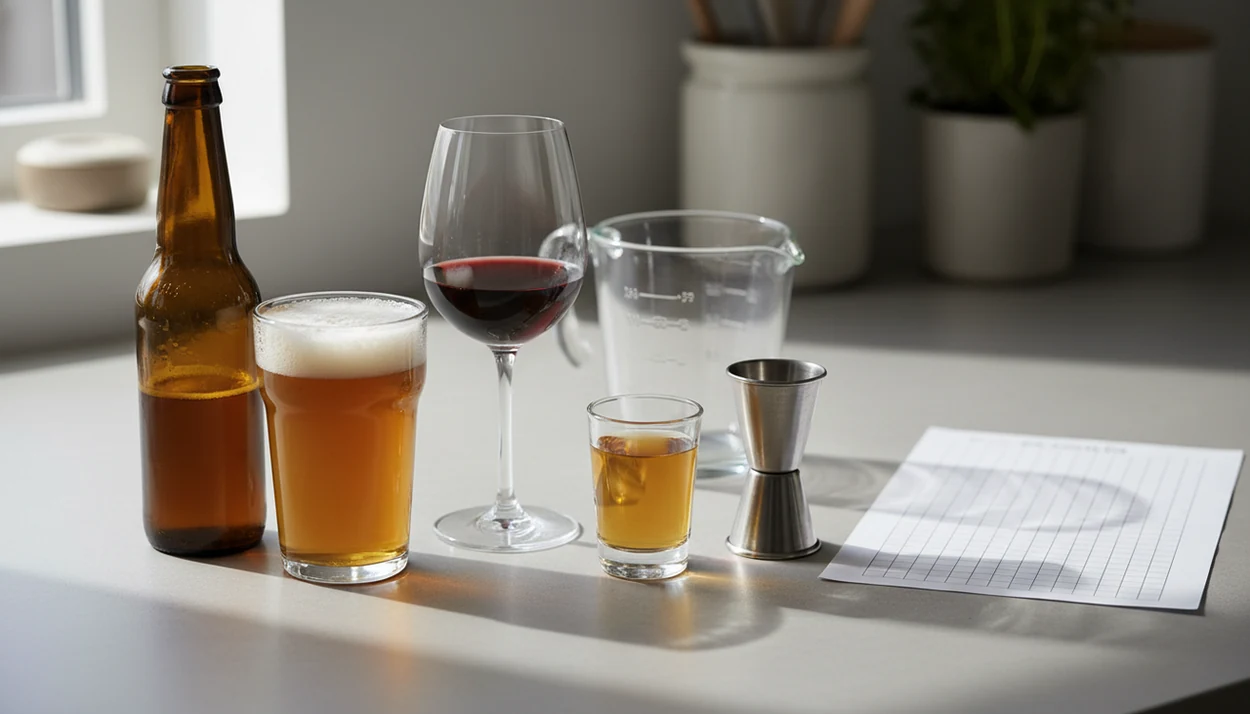
Standard drink tracking makes alcohol logs more accurate by converting each pour into a fixed amount of pure alcohol instead of counting glasses. In the U.S., one standard drink contains 0.6 ounces, or 14 grams, of pure alcohol, so large pours and high-ABV drinks may count as more than one.
> A standard drink is a measurement of pure alcohol that lets beer, wine, liquor, and mixed drinks be compared using the same unit.
- In the U.S., one standard drink equals 12 oz of 5% beer, 5 oz of 12% wine, or 1.5 oz of 40% liquor.
- Tracking standard drinks is more accurate than counting glasses because serving size and alcohol strength vary.
- A useful alcohol log records the date, drink type, volume, ABV, standard drink count, and any triggers or cravings.
What Is A Standard Drink In Alcohol Tracking?
Quick answer: Standard drink tracking estimates alcohol intake by converting beer, wine, liquor, and mixed drinks into the same unit: 0.6 ounces of pure alcohol. This often gives a more accurate picture than counting glasses because pour size and alcohol by volume can vary widely.
Key takeaways
- In the U.S., one standard drink equals 14 grams, or 0.6 fluid ounces, of pure alcohol.
- A large glass, strong beer, double shot, or cocktail may count as more than one standard drink.
- Logging ABV and serving size usually improves accuracy more than guessing by drink type.
- Tracking soon after drinking may reduce memory errors and missed pours.
- Patterns often matter more than a single day, especially triggers, timing, and heavy-use occasions.
- People who drink heavily or daily should ask a clinician before suddenly stopping, because withdrawal can be dangerous.
A standard drink is a fixed amount of pure alcohol, not a promise about what is sitting in your glass. In the U.S., one standard drink contains 0.6 ounces, or 14 grams, of pure alcohol, per the CDC’s standard drink definition CDC alcohol data.
Common U.S. examples are 12 ounces of 5% beer, 5 ounces of 12% wine, or 1.5 ounces of 40% liquor. That sounds simple until the wine glass is filled past the widest point, or a 9% IPA comes in a pint glass.
The glass lies sometimes.
International definitions also vary. The World Health Organization has used a 10-gram standard drink, which is smaller than the U.S. 14-gram measure. Use the definition that matches the guideline you are comparing against.
Standard Drink Tracking At A Glance
Standard drink tracking works best when you log both alcohol serving size and ABV. A label, menu, or measured pour gives a cleaner estimate than memory after the second round.
| Drink type | Example serving | ABV | Approximate standard drinks |
|---|---|---|---|
| Regular beer | 12 oz bottle | 5% | 1 |
| Craft beer pint | 16 oz pint | 7% | about 1.9 |
| Wine | 5 oz pour | 12% | 1 |
| Large wine pour | 8 oz glass | 14% | about 1.9 |
| Liquor | 1.5 oz shot | 40% | 1 |
| Mixed drink | 3 oz total liquor | 40% | about 2 |
A half-poured wine glass on the counter can still be hard to estimate later. If you’re trying to track standard drinks across weekends, an alcohol tracker app for weekends can help keep those small details from disappearing.
Before You Start Tracking Standard Drinks
Before you start, make the log easy to complete while the details are still visible. A few small decisions up front prevent the usual “I’ll remember it later” problem.
- Choose the standard you will compare against, such as the U.S. 14-gram definition or the country guideline that applies to you. This keeps your totals consistent from week to week.
- Keep a measuring option nearby, like a jigger, measuring cup, or marked glass. You do not need to measure forever, but a few real pours can recalibrate your eye.
- Check the ABV before drinking, while the can, bottle, menu, or recipe is still in front of you. Strong beer, generous wine, and cocktails are where the count often jumps.
- Decide when you will log, either during the drink or immediately afterward, before refills blur together.
- Set a private goal, such as more dry days, a weekly drink limit, or noticing which people, places, or moods make drinking feel automatic.
Five Facts About Standard Drink Tracking Accuracy
- One standard drink is not always one glass; it depends on pure alcohol content.
- High-ABV beer, large wine pours, and cocktails often count as more than one standard drink.
- Standard drink definitions vary by country, including the WHO 10-gram standard described in research on alcohol labeling the NIH.
- Tracking standard drinks helps compare intake with health guidelines, instead of relying on vague counts like “a few.”
- Alcohol leaves the body gradually, but there is no reliable personal clock for impairment; NIAAA notes that blood alcohol effects vary with drinking speed, body size, food, medications, and health factors NIAAA alcohol data.
For people cutting back, standard drink counts are often more useful than glass counts because they reveal hidden alcohol in strong pours and mixed drinks.
How Standard Drink Tracking Works
Standard drink tracking combines drink volume with alcohol by volume, usually called ABV. The plain-language rule is simple: more ounces, higher ABV, or both will raise the standard drink count.
For U.S. tracking, the quick formula is: standard drinks = serving ounces × ABV percentage ÷ 60. A 16-ounce beer at 7% ABV is 16 × 7 ÷ 60, or about 1.9 standard drinks.
The method normalizes beer, wine, spirits, and cocktails into one comparable measure. That means a 16-ounce craft beer, a large wine pour, and a strong cocktail can be compared in the same log instead of treated as three unrelated “drinks.”
It also helps with pattern recognition. Maybe the Friday 6 p.m. drink stays moderate at home, but game-night cans beside cigarette packs turn into a higher-count night. The number gives you something concrete to review later, without turning the log into a courtroom.
How To Use Standard Drink Tracking In An Alcohol Log
Use standard drink tracking by recording the serving size, ABV, drink type, count, and context each time you drink. A useful log captures what happened while the details are still fresh.
- Measure or estimate the serving size in ounces, using the label, a jigger, a marked glass, or a careful estimate.
- Check the ABV on the bottle, can, menu, or recipe before calculating the count.
- Convert the drink by noting that larger pours and higher ABV raise the standard drink total.
- Record the date, time, drink type, standard drink count, and context, including cravings, stress, location, or social trigger.
- Review weekly for trigger patterns, dry days, limit breaks, and small next steps.
Tools like Me Quit can support private behavior-change tracking, especially when alcohol logs sit beside craving notes, streaks, and milestones. People who prefer phone-based routines may also want a broader app that helps cut back on drinking.
Alcohol Serving Size Mistakes That Undercount Standard Drinks
Does counting glasses underestimate alcohol intake? Yes, it often does, because glasses and pours are not standardized in real life.
Large wine glasses are the usual trap. A 5-ounce wine serving can look small in a wide bowl glass, so a home pour may be closer to 7 or 8 ounces. Tall cans and craft beer create the same problem when ABV rises above regular beer strength.
Cocktails are even messier. One drink may contain two shots, a liqueur, and a float, but the log still says “one.” That undercounts the night and blurs the next-day review.
A good rule is to check labels, measure occasionally, and log conservative estimates when you are unsure. If the lime wedge is sinking in club soda after you switch drinks, log the earlier alcohol before the count gets fuzzy.
Common Myths About Tracking Standard Drinks
One myth is that one drink always equals one standard drink. It doesn’t. A pint of strong beer and a 12-ounce light beer should not be logged the same way.
Another myth says beer and wine do not need tracking. They do when the pour is large, the ABV is high, or the night includes refills. Not feeling drunk also does not erase the count. Impairment is only one concern; total intake matters for guideline comparison.
Some people avoid tracking because it sounds like treatment paperwork. It does not have to be that heavy. For many adults, the log is just a private progress tool, like writing down money saved or dry days.
Standard drink tracking usually works best when it is specific enough to be honest, while still simple enough that you will use it on a normal Tuesday.
Me Quit Alcohol Logs For Standard Drink Patterns
Me Quit helps adults stop smoking, stop vaping, drink less, and track cravings, streaks, and milestones. In alcohol logs, standard drink counts can sit next to trigger notes, craving windows, dry days, and limit goals.
That matters because drinking and nicotine often overlap. The first cigarette before coffee is one pattern; the Friday drink that makes a cigarette feel automatic is another. Logging both gives you a cleaner view of what is connected.
Good tools in the Me Quit mequit addiction recovery hub for quit smoking, stop vaping, quit drinking, and mindful alcohol reduction deliver private progress tracking and reset prompts, not diagnosis, detox care, or a guaranteed outcome.
If standard drink counts are part of a larger mindful routine, a craving tracker can help connect alcohol urges with cigarette, vape, stress, or social triggers.
Limitations
Standard drink tracking is useful, but it is still an estimate. It should support clearer decisions, not replace medical care when alcohol use feels unsafe or hard to control.
If you have withdrawal symptoms, cannot cut down despite trying, are pregnant, or feel at risk of harming yourself or someone else, use the log as context for a clinician rather than as a self-treatment plan.
- Countries define standard drinks differently, so compare your log with the right national guideline.
- Tracking is not stand-alone treatment for alcohol use disorder.
- Clinicians typically recommend medical support for severe dependence, pregnancy, withdrawal risk, or urgent mental health concerns.
Reset, not restart from zero.
FAQ
What is a standard drink?
A standard drink is a fixed measure of pure alcohol. It is different from a serving because real glasses, cans, and pours vary.
How many ounces are in one standard drink?
In the U.S., one standard drink is 12 oz of 5% beer, 5 oz of 12% wine, or 1.5 oz of 40% liquor. Each contains about 0.6 ounces of pure alcohol.
Is one beer always one standard drink?
No. A 12 oz beer at 5% ABV is one standard drink, but stronger beers or larger cans count as more.
Is one glass of wine a standard drink?
Only if the glass contains 5 oz of 12% wine. A large pour or higher-ABV wine may count as more than one standard drink.
Is a shot of liquor one standard drink?
In the U.S., 1.5 oz of 40% liquor is one standard drink. Larger shots or stronger spirits increase the count.
How do I count standard drinks in cocktails?
Count cocktails by total liquor volume and alcohol strength, not by glass count. A cocktail with two shots usually contains about two standard drinks.
How do I calculate standard drinks from ABV and serving size?
Use the serving size and alcohol percentage together. More ounces or a higher ABV means a higher standard drink count.
Why should I track standard drinks instead of glasses?
Standard drink tracking makes alcohol logs more accurate because it accounts for serving size and strength. It also makes intake easier to compare with guidelines.
Can an app help track standard drinks accurately?
Yes, apps can help log alcohol, triggers, cravings, and patterns. Accuracy still depends on the serving size, ABV, and context you enter.