
How Alcohol Affects Wrinkles, Collagen, and Skin Aging
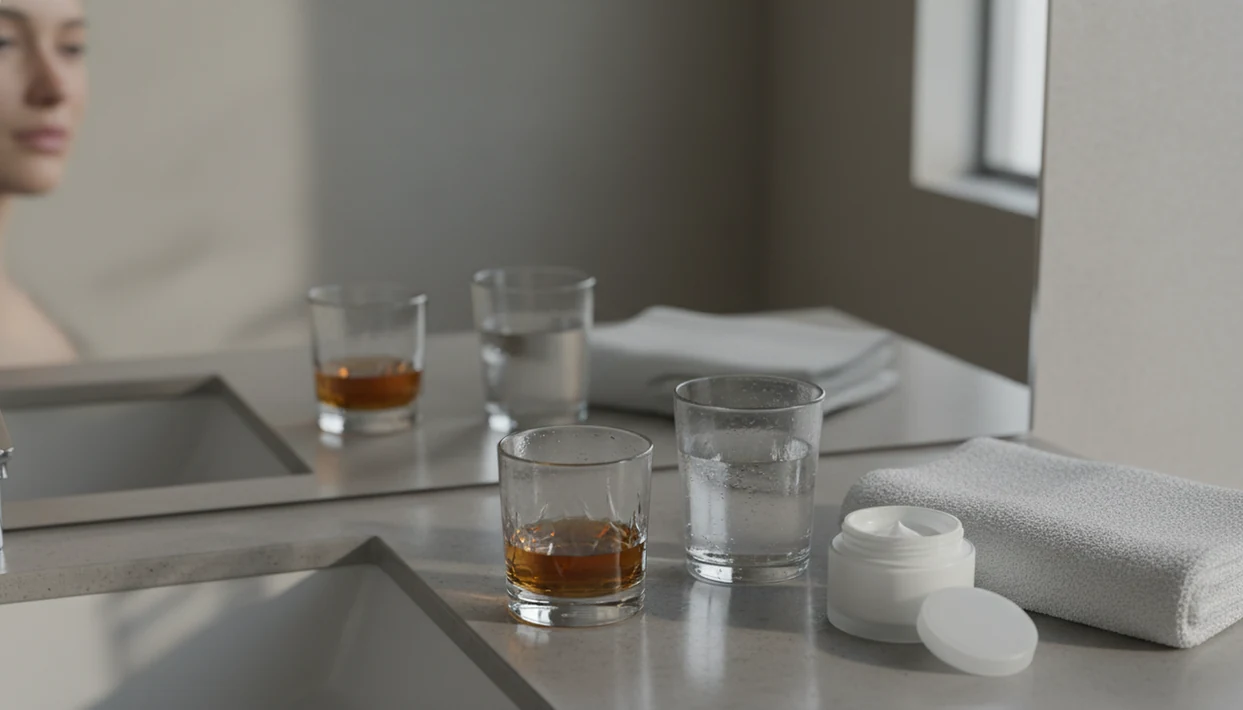
Alcohol can make wrinkles look worse quickly by dehydrating skin, and frequent heavy drinking may weaken collagen over time, leading to dullness, sagging, puffiness, and deeper lines. The link between alcohol wrinkles and collagen is strongest when drinking is combined with smoking, vaping, poor sleep, low nutrition, or sun exposure.
Definition: Alcohol-related skin aging means visible facial changes such as dryness, dullness, fine lines, sagging, redness, puffiness, and reduced elasticity that can be worsened by repeated alcohol use.
TL;DR
- Alcohol is a diuretic, so it can leave skin drier and less plump, making fine lines and wrinkles more visible.
- Regular heavy drinking can contribute to collagen breakdown, inflammation, nutrient depletion, and poor sleep, all of which slow skin repair.
- Cutting back or quitting can improve hydration, brightness, and puffiness, but deep wrinkles and long-term collagen loss may only partially improve.
Alcohol wrinkles and collagen effects at a glance
Quick answer: Alcohol can make wrinkles look more noticeable in the short term by dehydrating skin and disturbing sleep. Over time, frequent heavy drinking may contribute to inflammation, oxidative stress, and poorer collagen maintenance, especially when combined with smoking, vaping, sun exposure, or poor nutrition.
Key takeaways
- Skin often looks better fastest when dehydration, sleep loss, and puffiness improve.
- Collagen changes are slower and depend on age, genetics, sun exposure, nutrition, and substance use.
- Cutting back alcohol may support healthier-looking skin, but it will not erase all wrinkles.
- Smoking and vaping can add oxidative stress that may worsen alcohol-related skin aging.
- Hydration helps appearance, but it does not fully cancel the effects of heavy drinking.
- People who drink heavily every day should ask a clinician before stopping suddenly.
- Alcohol can worsen wrinkles through dehydration, inflammation, sleep disruption, nutrient depletion, and effects on collagen repair.
- The risk is dose- and pattern-related; frequent heavy drinking carries more skin-aging risk than occasional drinking.
- In a 2019 study of 3,267 women, heavy alcohol use was associated with more upper facial lines, under-eye puffiness, midface volume loss, oral commissures, and visible blood vessels. Source: 2019 multinational cross-sectional facial-aging study.
- Skin may look flatter after drinking because the outer barrier, the stratum corneum, holds less water.
- Cutting back may improve puffiness, dullness, and some fine lines, but it is not the same as fully reversing deep structural aging.
A bathroom mirror after a short night can be blunt. The face may look dry, creased, and puffy at the same time.
Does alcohol cause wrinkles on your face?
Does alcohol cause wrinkles? Alcohol does not create every wrinkle by itself, but it can make existing lines more visible and may contribute to faster visible skin aging.
Short term, alcohol pulls fluid out of the body. Less water in the skin means less plumpness, so small creases around the eyes, mouth, and forehead can stand out more. That “older overnight” look is often dehydration plus poor sleep, not permanent collagen collapse from one drink.
Longer term, repeated drinking can add inflammatory stress, oxidative stress, reduced overnight repair, and possible collagen degradation. The real-world pattern matters. Age, genetics, UV exposure, smoking, vaping, diet, hormones, and sleep all shape how strongly alcohol shows up on the face. For broader body effects, our benefits of drinking less alcohol guide covers changes people often notice beyond skin.
Alcohol, collagen, and skin aging mechanisms
Alcohol affects skin aging through water balance, inflammation, oxidative stress, sleep disruption, and nutrient pathways that support collagen repair.
How alcohol and skin aging works: Alcohol has a diuretic effect, meaning it increases fluid loss. In skin, that can reduce water in the stratum corneum, the outer barrier layer. Put plainly, the surface looks less smooth and less reflective when it is dry.
Collagen and elastin are structural proteins. Collagen helps firmness; elastin helps skin bounce back. Repeated inflammation and oxidative stress can interfere with repair signaling, so skin may recover more slowly after UV exposure, irritation, or poor sleep. Alcohol also fragments sleep architecture, so the face may miss some of its usual overnight repair window.
Chronic alcohol use is associated with vitamin C and B-complex deficiencies, according to an NIH Bookshelf nutrition review the NIH. Vitamin C matters because collagen synthesis depends on it. Clinicians typically recommend addressing alcohol use, nutrition, sleep, and sun protection together rather than relying on one cream.
Alcohol dull skin, dehydration, and facial puffiness
Alcohol dull skin dehydration is a common short-term pattern after drinking: skin can look flat, rough, tight, flaky, or less bright by morning. The surface may reflect light unevenly, so fine texture looks sharper than it did the day before.
Puffiness is different from true hydration. It often reflects fluid shifts, inflammation, poor sleep, and salty late-night food. A party cooler packed with cans may be followed by swollen eyelids, dry lips, and a face that feels tight after washing.
Redness and visible blood vessels can also worsen in some people, especially those prone to flushing or rosacea-like sensitivity. Water and moisturizer may help dryness, but they do not cancel repeated inflammation, sleep disruption, or collagen stress from frequent drinking. If drinking also affects appetite or weight goals, alcohol and weight loss may be part of the same pattern.
Heavy alcohol use, facial lines, and collagen loss evidence
- A 2019 study of 3,267 women found that heavy alcohol use, defined as at least 8 drinks per week, was significantly associated with increased upper facial lines, under-eye puffiness, midface volume loss, oral commissures, and visible blood vessels compared with non-drinkers.
- Observational studies can show association, but they cannot perfectly isolate alcohol from smoking, diet, UV exposure, stress, or sleep.
- The World Health Organization reports that alcohol contributes to more than 200 disease and injury conditions and publishes global alcohol-use burden data in its alcohol fact sheet: WHO alcohol fact sheet.
- The Lancet Global Burden of Disease analysis concluded that the overall health-risk-minimizing level was 0 standard drinks per week. Source: Global Burden of Disease alcohol-risk analysis, The Lancet, but that does not mean one drink instantly causes wrinkles.
- Practical takeaway: skin-aging risk rises with frequency, quantity, and clustering with other aging factors.
The face is not a lab setting. Sunscreen habits, shift work, cigarettes, and nutrition all travel with the result.
Smoking, vaping, alcohol, and collagen damage together
Smoking and alcohol together can be especially hard on skin because both are linked with oxidative stress, inflammation, and impaired repair. Smoking has a well-known association with facial aging, including changes in collagen and elastin that contribute to lines and reduced elasticity.
Vaping evidence on long-term skin aging is less mature than smoking evidence. However, vaping may still expose skin and blood vessels to nicotine and irritants. A warm metal mouthpiece on the tongue can belong to the same evening routine as a second or third drink, and the habits can cue each other.
Me Quit is a private tracking tool that helps adults work on quitting smoking, stopping vaping, drinking less, and noticing cravings, streaks, and milestones. It is not a medical diagnosis tool or a treatment for alcohol withdrawal.
Can cutting back alcohol improve wrinkles and collagen?
Can cutting back alcohol improve wrinkles and collagen? It can improve hydration, brightness, puffiness, sleep quality, and the appearance of some fine lines, but deep wrinkles and significant sagging may not fully reverse.
Visible changes often happen in stages. Less puffiness may appear first. Better tone and hydration may follow. Texture changes tend to be slower because collagen remodeling is gradual. For people who drink and smoke, reducing both exposures usually gives skin a clearer repair signal than cutting back alcohol alone.
How to use alcohol reduction for skin goals:
- Set a weekly drink limit that is realistic and specific.
- Log each drink with the time, trigger, and next-morning skin note.
- Add sunscreen, sleep, balanced meals, and hydration to the same plan.
- Replace one high-risk drinking cue with a non-alcohol option.
- Reset after a slip instead of waiting for Monday.
Tools like Me Quit can support private tracking, not diagnose skin disease or treat alcohol withdrawal. For structured planning, the alcohol reduction guides library gives related body and craving context.
How to use alcohol reduction for skin goals
Use alcohol reduction as a skin-support habit, not a one-night test. The goal is to lower repeat exposure while giving skin the basics it needs to look calmer, brighter, and better rested.
- Set a realistic weekly drink limit before the weekend, party, trip, or stressful workday arrives. A clear number is easier to follow than deciding in the moment.
- Track each drink alongside the trigger, bedtime, sleep quality, and what your skin looks like the next morning. Look for patterns in puffiness, redness, dryness, and fine lines.
- Pair the cutback with daily sunscreen, enough protein, steady hydration, and consistent sleep. Alcohol reduction works better when the repair signals are not fighting UV exposure or short nights.
- Replace one predictable cue with a non-alcohol routine, such as a flavored seltzer after work, a walk during the usual craving window, or tea while watching a show.
- Review progress once a week instead of judging one imperfect night. Adjust the limit, notice wins, and restart without turning a slip into a full reset.
Alcohol wrinkles and collagen myths that mislead people
Alcohol wrinkles and collagen myths often sound reassuring, but they can hide the main exposure: ethanol itself. Beverage type can affect sugar, congeners, calories, and next-day symptoms, but ethanol is the key alcohol exposure tied to dehydration and inflammation.
| Myth | More accurate view |
|---|---|
| Alcohol only causes temporary puffiness, not real skin aging. | Puffiness can be temporary, but repeated dehydration, inflammation, and poor repair may contribute to longer-term visible aging. |
| Clear spirits are skin-safe. | Vodka and other clear spirits still contain ethanol, so drink color does not remove dehydration or inflammation risk. |
| Water and moisturizer fully neutralize alcohol. | They may reduce dryness, but they do not fully offset sleep disruption, nutrient issues, or collagen stress. |
| Moderate drinking has no visible effect for anyone. | Some people notice redness, puffiness, or fine-line changes at lower amounts, especially with sun exposure or nicotine. |
The most common practical approach is reducing frequency and quantity while supporting sleep, nutrition, and UV protection.
Limitations
- Not everyone who drinks heavily shows the same visible wrinkles, puffiness, redness, or collagen loss.
- Topical skincare, supplements, and detox routines cannot fully offset ongoing frequent heavy drinking.
- This page is informational and does not diagnose alcohol use disorder, skin disease, rosacea, liver disease, or nutritional deficiency.
A mild hangover after two extra drinks is not the same as alcohol withdrawal. Shaking, confusion, seizures, or severe symptoms need medical care.
When to seek medical help
Seek medical help right away if alcohol symptoms feel severe, unsafe, or out of your control. Skin changes can wait for an appointment in many cases, but withdrawal warning signs should not be watched at home.
- Call emergency services for seizures, confusion, hallucinations, severe shaking, chest pain, fainting, or symptoms that feel dangerous. These can be signs of serious alcohol withdrawal or another urgent problem.
- Talk with a clinician before stopping suddenly if you have been drinking heavily every day, have had withdrawal before, or need alcohol to feel steady in the morning. A safer plan may include medical monitoring.
- Ask a dermatologist about redness that does not settle, swelling, painful bumps, open lesions, new visible vessels, or skin changes that appear quickly.
- Request nutrition testing if drinking has changed your appetite, weight, energy, bruising, wound healing, or hair and skin quality. Deficiencies can overlap with dryness, dullness, and slower repair.
- Use urgent care again if symptoms escalate after you cut back, even if the original goal was only better skin.
FAQ
Does alcohol cause wrinkles?
Alcohol can worsen the appearance of wrinkles by dehydrating skin and may contribute to faster visible aging with frequent heavy use. It is one factor among genetics, UV exposure, smoking, diet, and sleep.
Does alcohol destroy collagen?
Alcohol does not instantly destroy all collagen. Over time, frequent heavy drinking may impair collagen production and repair pathways through inflammation, oxidative stress, nutrient depletion, and poor sleep.
Why does alcohol age your face?
Alcohol may age the face by causing dehydration, inflammation, oxidative stress, sleep disruption, nutrient depletion, and collagen-related repair problems. These effects can show as dullness, puffiness, redness, fine lines, and reduced elasticity.
Can skin recover after quitting alcohol?
Skin can often look more hydrated, brighter, and less puffy after quitting or cutting back. Deep wrinkles, significant sagging, and long-term collagen loss may only partly improve.
How long until skin looks better after cutting back on alcohol?
Some people notice less puffiness and dryness within days or weeks, especially if sleep improves. Texture and collagen-related changes usually take longer and vary by age, sun exposure, smoking, and nutrition.
Does wine age your skin?
Wine still contains ethanol, so it can contribute to dehydration, inflammation, sleep disruption, and skin-aging patterns. Red wine may contain plant compounds, but that does not remove alcohol-related skin stress.
Does vodka cause wrinkles?
Vodka can contribute to wrinkles indirectly because ethanol matters more than clear color. Clear spirits are not skin-safe if they are part of frequent or heavy drinking.
Can drinking water prevent alcohol wrinkles?
Drinking water can reduce dryness and may help the skin look less tight after alcohol. It cannot fully cancel alcohol’s effects on inflammation, sleep quality, nutrient status, or collagen repair.