Why Time Feels Different When You Drink
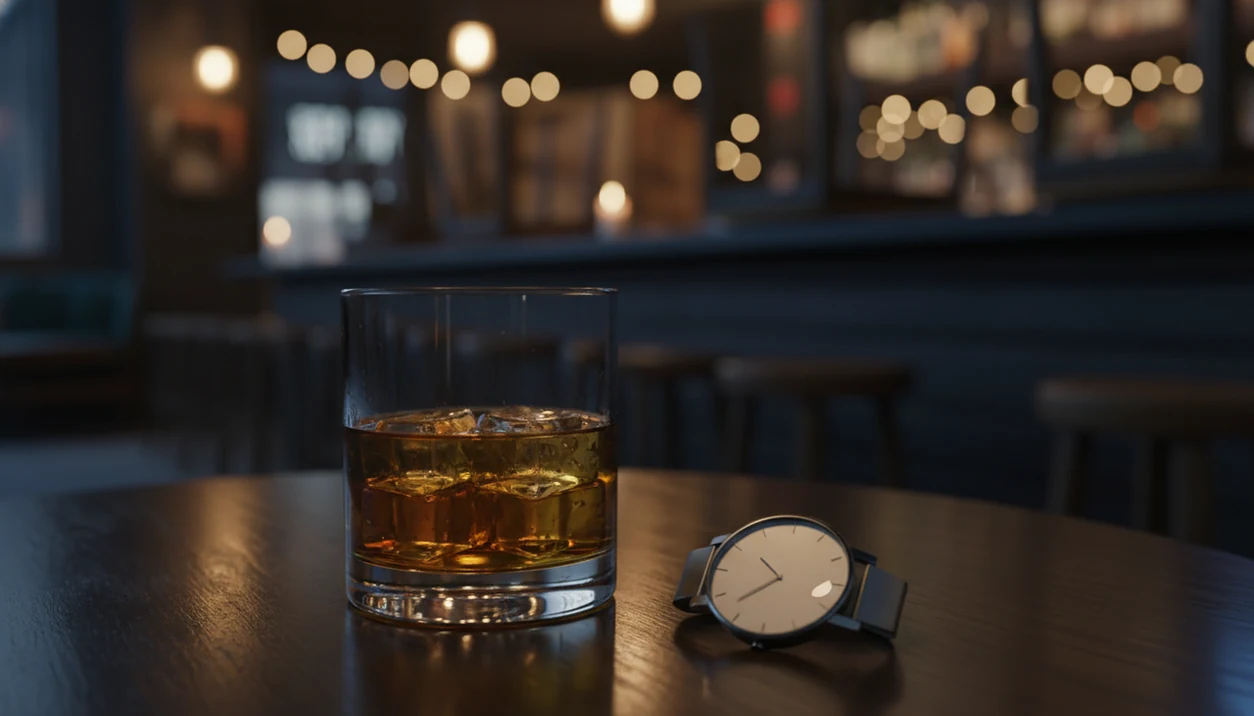
Alcohol time perception changes because drinking disrupts attention, working memory, hippocampal memory formation, and the brain’s internal clock, so hours can feel shorter, longer, blurry, or missing. The effect is not identical for everyone, but it becomes more likely when alcohol, distraction, fatigue, and repeated rounds compete for the same mental resources.
> Definition: Alcohol time perception is the way drinking alters how the brain estimates duration, sequences events, and stores time-stamped memories.
TL;DR
- Alcohol can make time feel like it speeds up, slows down, or disappears by weakening attention and working memory.
- The “lost hours” feeling is often a memory-encoding problem, especially when the hippocampus fails to store events in order.
- Tracking drinks, time, cravings, and limits can reduce the risk of accidentally drinking longer or more than planned.
Alcohol Time Perception at a Glance
Quick answer: Alcohol can change time perception by reducing attention, memory encoding, and self-monitoring, so a night may feel faster, slower, or harder to reconstruct. The risk is often higher when drinking is rapid, mixed with fatigue or distraction, or continues beyond planned limits.
Key takeaways
- Time distortion is a warning sign to slow down, pause drinking, and reassess your plan.
- Eating, pacing drinks, and alternating with water may reduce impairment, but they do not eliminate risk.
- If you cannot remember parts of the night, treat that as a safety signal, not a normal inconvenience.
- Pre-set drink limits work best when tracked before judgment becomes impaired.
- Repeated lost time may point to a pattern worth discussing with a clinician or counselor.
- If you drink heavily every day, ask a medical professional before stopping suddenly because withdrawal can be dangerous.
Alcohol changes time perception by disrupting attention, working memory, executive control, and memory encoding. That means the brain has fewer clean signals for judging how long something has lasted.
Time may feel faster, slower, fragmented, or missing. Dose matters. So do fatigue, setting, drinking history, stress, and whether the night includes constant social switching, music, food, phones, and repeated rounds. A brunch menu with bottomless mimosas can make “one more” feel casual because the clock is no longer the main thing your brain is watching.
Not every drink causes this. The strongest research often comes from short timing tasks, heavy drinking samples, or alcohol use disorder studies, not every casual dinner.
Still, noticing distorted time is useful. For mindful alcohol reduction, it can turn a vague worry into a specific trigger pattern.
5 Research Facts About Alcohol and Missing Time
- Alcohol weakens timing resources. Attention and working memory help the brain track duration, and alcohol can make both less reliable during a drinking episode.
- Some people underestimate time. A 2024 controlled study found that people with alcohol use disorder gave fewer “long” responses across 600–1200 millisecond intervals, suggesting reliable underestimation in that sample the NIH.
- Alcohol does not always make time go faster. A 2021 systematic review of 31 studies the NIH alcohol data found inconsistent effects across intoxication, heavy drinking, alcohol use disorder, and alcohol-related brain conditions.
- Missing time is often a memory problem. The hippocampus helps store events in sequence, so alcohol memory time stamps can become weak, scrambled, or absent.
- Distorted time can change decisions. If two hours feel like forty minutes, drink limits, leaving times, and “last round” promises become easier to miss.
A shaky thumb over a phone screen at midnight is a real decision point.
Alcohol’s Internal Clock Disruption in the Brain
The alcohol internal clock is not one tiny clock that alcohol simply breaks; it is a practical shorthand for timing systems involving attention, working memory, dopamine-related timing, and executive control.
The brain estimates time by monitoring change. It notices effort, movement, conversation shifts, emotional intensity, and memory updates. When those signals are steady, duration feels easier to judge. When alcohol competes for the same mental resources, the estimate gets noisy.
That is why time can feel oddly compressed during a lively night, then painfully slow the next morning. Different systems are being stressed in different ways.
How alcohol time perception works: alcohol reduces the brain’s ability to hold recent moments in mind, compare them with the present, and file them into sequence. In plain language, the night has fewer markers.
Alcohol, Hippocampus Time Stamps, and Blackout Gaps
The hippocampus helps encode new memories and place events into order. When alcohol interferes with that process, a person can be awake, talking, walking, and reacting, but later have missing or scrambled recall.
Blackout gaps are not the same as sleep. They are also not simple tired forgetfulness. The brain may fail to store the memory properly in the first place, especially when drinking rises quickly or continues over time.
People often remember fragments: paying a tab, getting into a rideshare, hearing last call. What disappears is the order, duration, or transition between those scenes. That is the alcohol memory time stamps problem in everyday language.
The NIAAA reports that alcohol-induced blackouts are common among college students who drink, with some surveys finding that roughly half report a blackout at some point NIAAA alcohol data.
Alcohol Time Underestimation During Heavy Drinking and AUD
People with alcohol use disorder may show reduced sensitivity to timing differences in controlled studies. In the 2024 timing study, participants with alcohol use disorder gave fewer “long” responses across 600–1200 millisecond intervals and had higher thresholds for judging duration.
That does not mean every person who loses track of time has AUD. A loud bar, fatigue, a fast pour, and social pressure can distort time for people without dependence symptoms.
Still, the finding matters because alcohol use disorder is common. NIAAA statistics estimate that 29.5 million people aged 12 and older in the United States had alcohol use disorder in 2022, or 10.5% of that age group NIAAA alcohol data.
Clinicians typically recommend professional assessment when drinking causes blackouts, withdrawal symptoms, injuries, loss of control, or repeated failed attempts to cut down. For lighter patterns, a timed quit plan or reduction plan can still help.
Fast or Slow Alcohol Time Perception Effects
Alcohol does not always make time go faster. It can make time feel fast, slow, jumpy, or blank depending on what the brain is tracking during the moment.
| Situation | Time may feel like | Why it happens |
|---|---|---|
| Social stimulation | Faster | Conversation, music, and movement pull attention away from elapsed time. |
| Bored drinking | Slower | Low stimulation leaves more attention available for clock-watching. |
| Anxiety or craving | Slower | Body signals become louder, especially during a craving window. |
| Heavy intoxication | Fragmented | Memory storage and sequencing become less reliable. |
| Next-day recall | Shorter or blurry | Missing transitions make the night hard to reconstruct. |
A headache behind the eyes at dusk can make ten minutes feel long. Later, a busy night can feel like it vanished.
For people reducing alcohol, craving-heavy abstinent periods may feel slow even when drinking nights felt fast. For many people, preset time checks are easier than relying on felt duration because alcohol changes the very signal being judged.
Alcohol Time Perception Risks for Drink Limits
Underestimating time can make rounds feel closer together or make a night feel shorter than it is. That matters because drink limits usually depend on pacing, not just intention.
The CDC reports that about 1 in 3 U.S. adults, 32.2%, report past-month binge drinking. If time is compressed, someone may accept another round before noticing how long they have been drinking. The beer fridge hum during dinner prep can start as one drink, then become a blurred evening without a clear checkpoint.
Use external markers. Set a leaving time. Space drinks with water or food. Check the clock before another round. Log drinks as they happen, not the next morning. The broader science of cutting back is covered in our alcohol reduction guides.
For adults trying to cut back, Me Quit can support private drink tracking, craving notes, streaks, milestones, and reset prompts. It does not provide diagnosis, detox care, emergency support, or medical treatment.
When to Seek Professional Help for Alcohol-Related Lost Time
Seek professional help when lost time after drinking is repeated, risky, or hard to explain. Blackouts can be a sign of higher-risk drinking, not just harmless forgetfulness after a busy night.
A single frightening gap is worth taking seriously if it came with injury, unsafe sex, driving, violence, police involvement, or waking up somewhere without a clear memory of how you got there. Repeated blackouts, failed attempts to cut down, or feeling unable to stop once you start are also reasons to ask for an alcohol-focused assessment.
- Call emergency services if someone is unconscious, hard to wake, breathing slowly, injured, or in immediate danger.
- Contact a clinician before quitting suddenly if you get shaking, sweating, nausea, racing heart, anxiety, insomnia, hallucinations, confusion, or seizures when alcohol wears off.
- Ask for an assessment if limits keep breaking, blackouts return, or drinking is affecting work, relationships, safety, or mental health.
- Use tools as support, not treatment. Apps, timers, and drink logs can help you notice patterns, but they cannot replace medical detox, therapy, medication, or clinical alcohol care when risk is higher.
Limitations
The science on alcohol and time perception is useful, but it has real limits.
- Findings in alcohol use disorder may not apply to light or occasional drinkers.
- Blackouts, injuries, withdrawal symptoms, pregnancy, medication concerns, or unsafe drinking patterns need professional guidance.
- This page is informational only. It is not a diagnosis, detox plan, or medical advice.
Tools like Me Quit can help adults notice patterns, but they should sit alongside medical care when risk is higher. If alcohol also affects sleep, the next-day drag is covered in alcohol tired after sleeping.
FAQ
Why does alcohol make time fly?
Alcohol, stimulation, and distraction reduce attention to elapsed time. When the brain is busy with conversation, music, movement, and drink cues, hours can feel shorter than they are.
Why do I lose time when drinking?
You are not literally losing time. Alcohol can disrupt memory encoding, so parts of the night are not stored clearly or in order.
Does alcohol affect the hippocampus?
Yes. The hippocampus helps form new memories and sequence events, and alcohol can interfere with that process.
Can alcohol cause memory gaps?
Yes. Alcohol can cause partial or complete blackouts while a person is awake and active.
Does alcohol slow your internal clock?
Alcohol can disrupt timing systems, but the effect is not always one direction. Some people underestimate time, while others feel time slowing during anxiety, boredom, craving, or discomfort.
Why do nights feel blurry after drinking?
Blurred nights often come from impaired attention, weaker working memory, and fragmented memory storage. The brain may remember scenes without clean transitions between them.
Can moderate drinking distort time?
Yes. Moderate intoxication can distort time when distraction, fatigue, emotion, or cognitive load is high.
How can I track drinking time?
Use timers, preset leaving times, drink logs, and app-based tracking. Me Quit can support private drink tracking, cravings, streaks, and limit resets for adults who want to cut back.