
How Alcohol Affects Sensory Processing in the Brain
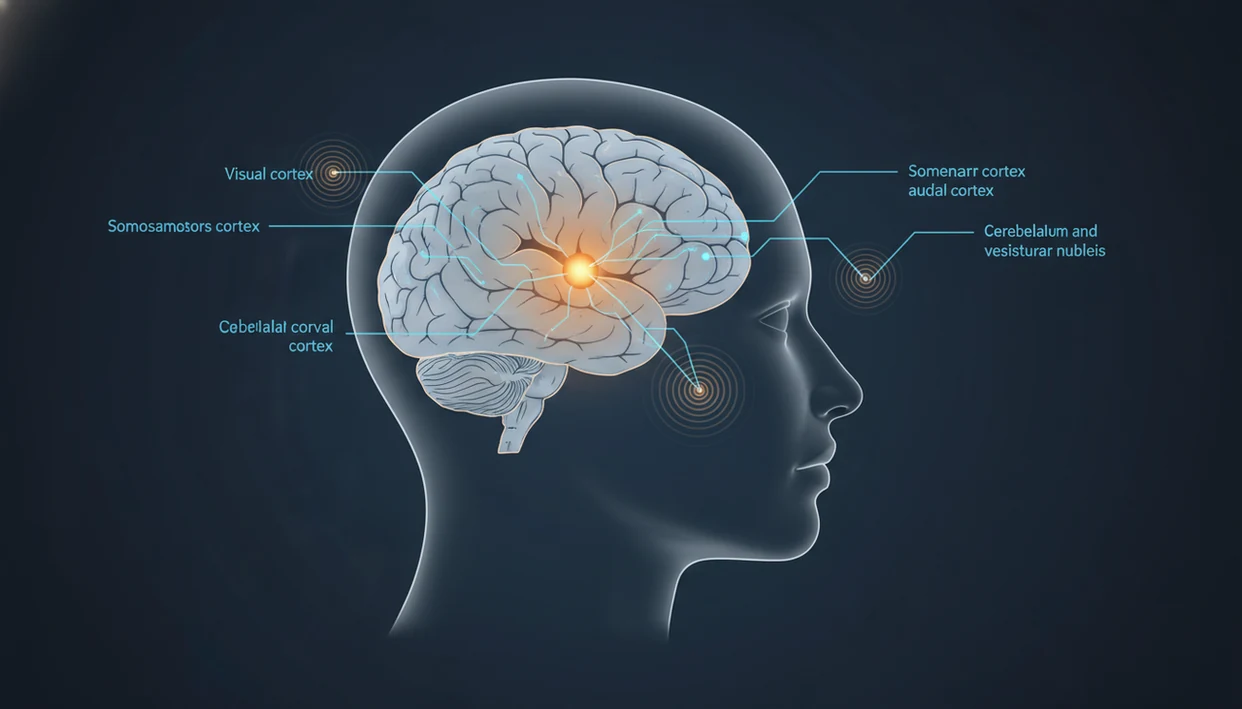
Alcohol affects sensory processing by slowing and disrupting how the brain filters sights, sounds, touch, balance, and body signals. The result can feel like fuzzy senses, poor coordination, slower reactions, and alcohol brain fog, especially as alcohol levels rise.
Definition: Alcohol-related sensory fuzziness is the temporary or persistent dulling of perception caused by alcohol’s effects on sensory relay networks, attention systems, and movement-control regions in the brain.
This article is educational and is not a diagnosis or detox plan. If sensory changes are sudden, severe, persistent, or appear with withdrawal symptoms, seek medical advice promptly.
TL;DR
- Alcohol is a central nervous system depressant, so it slows the brain systems that help you see, hear, balance, react, and focus.
- The thalamus acts like a sensory traffic controller, and research links problem drinking with disrupted thalamic connectivity.
- Many people notice better sensory clarity after quitting alcohol or cutting back, but the timeline varies by drinking history, health, sleep, and age.
5 brain facts about alcohol and sensory processing
Quick answer: Alcohol can make sensory processing feel dull or distorted because it slows brain signaling and weakens filtering between attention, balance, body awareness, and reaction time. For many people, reducing alcohol leads to clearer perception, steadier coordination, and less brain fog over time, though recovery varies.
Key takeaways
- Fuzzy senses after drinking are often a brain-processing issue, not just tiredness.
- Small changes in alcohol intake may still affect sound, vision, balance, and reaction speed.
- Next-day fog can reflect poor sleep, dehydration, inflammation, and lingering nervous-system effects.
- Tracking cravings, triggers, and drinking patterns can make sensory changes easier to notice.
- Sudden confusion, severe imbalance, fainting, or withdrawal symptoms need medical attention.
- People who drink heavily should ask a clinician before stopping abruptly, because withdrawal can be dangerous.
- Alcohol is a central nervous system depressant, so it slows communication between brain regions that handle perception, attention, and movement.
- The thalamus routes most sensory input before it reaches the cortex, and problem drinking is linked with altered thalamic connectivity.
- At common intoxication levels, vision, hearing, reaction time, depth perception, and coordination can all worsen.
- Acute alcohol can reduce the amplitude and slow the latency of P300 brain responses, which are attention-related signals used in stimulus evaluation.
- Reducing or quitting alcohol may improve sensory clarity, but recovery is not identical across people.
A simple craving or drinking log can make the pattern visible: time, trigger, drink count, sensory change, and next-day effect. “11:40 p.m., loud bar, three drinks, lights felt smeared” is more useful than “felt off.”
Specific beats vague.
Brain mechanisms behind alcohol-related sensory processing changes
Sensory processing is the brain’s system for taking in, filtering, routing, and interpreting signals from the body and the outside world. Alcohol can make that system less precise by slowing neural signaling and weakening attention control.
In plain terms, the brain has to decide what matters: the face across the table, the curb edge, the glass in your hand, the music behind you. Alcohol disrupts sensory integration, which is why haziness, clumsiness, poor focus, and delayed reactions often arrive together.
How alcohol-related sensory processing works: alcohol changes the speed and coordination of neural communication, including attention networks and movement-control pathways. The lay version is simpler: the signal still arrives, but the brain sorts it more slowly and less cleanly.
A mild hangover after two extra drinks is not the same as alcohol withdrawal, but both can make people feel mentally dulled. Sleep disruption can add another layer; the related sleep mechanism is covered in alcohol and rem sleep.
Thalamus disruption in alcohol-related sensory relay networks
Does alcohol affect the thalamus? Yes, alcohol and problem drinking are linked with changes in thalamic sensory-relay networks, which may help explain why the world can feel fuzzy after drinking.
The thalamus is often described as a traffic controller for sensory input. That analogy is useful, but incomplete. It does not simply pass messages along; it helps regulate which signals reach conscious attention and how strongly they are coordinated with the cortex.
In a 2018 fMRI study, problem drinkers showed increased thalamic-cortical connectivity and reduced within-thalamus connectivity compared with non-problem drinkers, suggesting measurable disruption in relay networks the NIH. That pattern could contribute to sensory gating problems, brain fog, and difficulty focusing.
The party cooler packed with cans can feel ordinary at 8 p.m. By midnight, the room may look louder than it sounds. That mismatch is the point.
BAC 0.08–0.25 sensory symptoms during alcohol intoxication
At BAC 0.08–0.25, clinical guidance from Northwestern Medicine notes impairment in the occipital, temporal, frontal, and parietal lobes. Reported effects include blurred vision, slurred speech and hearing changes, loss of fine motor skills, and slower reaction time nm alcohol data.
This does not mean a specific number of drinks produces the same BAC or symptoms for every person. Body size, food, medications, sleep, liver function, and drinking speed all matter. Clinicians typically recommend avoiding driving or hazardous tasks after drinking because reaction time and judgment can be impaired before a person feels severely drunk.
Vision, depth perception, and the occipital lobe
The occipital lobe supports visual processing, so intoxication can make edges, distance, and movement harder to judge. A bartender reaching for the usual bottle may look clear, while the step down from the patio does not.
Balance, touch, and the parietal lobe
The parietal lobe helps integrate body position, touch, and spatial awareness. When it is impaired, coordination and depth perception can slip together.
Next-day alcohol brain fog and dulled senses
Why do senses still feel dull the next day? Hangover-related brain fog can involve slowed attention, poorer working memory, reduced mental sharpness, and a sense that sights or sounds take more effort to process.
Several mechanisms may overlap. Alcohol can disrupt sleep, contribute to dehydration, affect inflammatory signaling, and leave lingering nervous system effects after the drinking episode ends. The available evidence supports caution here; no single mechanism explains every next-day symptom.
Experimental studies show that acute intoxication reduces the amplitude and slows the latency of event-related potentials such as P300, which reflects disrupted stimulus evaluation and attention. Blackout-level drinking is not required for this kind of fuzzy thinking.
For people trying to reduce repeat episodes, the cue may be a late-night kebab shop smoking crowd, not only the drink itself. Alcohol, nicotine, and reward cues often overlap; alcohol reward system changes explains that loop in more detail.
Long-term alcohol effects on sensory clarity and cognition
Heavy or regular drinking is associated with persistent brain fog, slower processing, and cognitive impairment in some people. Imaging and cohort studies show risk patterns, not identical outcomes for everyone.
A 2017 BMJ Whitehall II cohort study of 550 adults linked higher alcohol intake with increased odds of hippocampal atrophy over 30 years bmj. Larger observational studies also associate heavier alcohol exposure with brain-volume and cognitive-risk markers, but effect sizes and causality vary by cohort.
These findings do not prove that one person’s fuzzy senses come from one brain region. They do support a population-level link between heavier alcohol exposure and brain changes related to memory, processing speed, and clarity. Broader risk-reduction topics are collected in the alcohol reduction guides.
Sensory clarity timeline after quitting alcohol or cutting back
Sensory clarity after quitting alcohol or cutting back may improve over days, weeks, months, or longer. People commonly notice sharper vision, steadier balance, clearer thinking, better sleep, and faster reactions, but the timeline depends on drinking history, age, health, medications, nutrition, and sleep recovery.
How to use sensory tracking during alcohol reduction:
- Record the drinking episode with date, amount, sleep, and next-day sensory symptoms.
- Rate clarity once daily, using the same 1-to-10 scale each time.
- Mark alcohol-free days, lower-drink days, and higher-risk trigger settings.
- Compare weekly patterns instead of judging one rough morning.
- Seek medical advice if symptoms are severe, sudden, or persistent.
Private tracking can make this pattern easier to review: logs, limits, streaks, and reset prompts help organize drinking cues and next-day symptoms. If you use Me Quit for reduction tracking, treat it as a diary and planning aid, not detox supervision, diagnosis, or medical advice.
For many people, weekly tracking is more useful than memory because it captures sleep, cravings, and drink timing together. A related planning page is the best drink less app guide.
When to seek medical help for sensory fog after drinking
Seek medical help urgently if sensory fog comes with a seizure, fainting, chest pain, one-sided weakness, or sudden vision loss. Those symptoms are not ordinary hangover fuzziness and should be treated as possible emergencies.
Common next-day fog usually feels gradual: dull focus, light sensitivity, poor sleep, and slower reactions after drinking. Withdrawal or neurological symptoms can feel different: shaking, severe anxiety, confusion, hallucinations, worsening imbalance, numbness, weakness, or symptoms that do not match the amount you drank. Heavy daily drinkers should not stop suddenly without medical guidance, because withdrawal can be dangerous.
If you are deciding what to do next:
- Call emergency services for seizure, fainting, chest pain, weakness, sudden vision loss, or severe confusion.
- Contact a clinician promptly if sensory changes are persistent, unexplained, worsening, or paired with withdrawal symptoms.
- Bring details about drinks, timing, medications or substances, symptoms, food, hydration, and sleep.
- Describe the pattern plainly, including what improved, what returned, and what stayed abnormal.
- Ask about safer reduction or detox support if you drink heavily or have had withdrawal before.
A log can help, but it cannot clear a red flag.
Limitations
Evidence on alcohol and sensory processing has real boundaries.
- This article is informational and does not diagnose alcohol use disorder, neurological disease, or withdrawal risk.
- A mild hangover after extra drinks is different from severe alcohol withdrawal, which can be medically dangerous.
- Anyone with sudden vision loss, weakness, confusion, severe withdrawal symptoms, seizures, chest pain, or fainting should seek urgent medical help.
Not every symptom is alcohol.
A symptom-and-craving log may help a person organize observations for a clinician, but it is not the same as medical advice. If cutting back triggers shaking, hallucinations, severe anxiety, or seizures, professional support is the safer route. For craving planning, alcohol replacement cravings may be useful background.
FAQ
Why do my senses feel fuzzy after drinking alcohol?
Alcohol can slow sensory routing, attention, balance, and reaction systems. That can make sights, sounds, movement, and body signals feel less clear.
Does alcohol affect the thalamus?
Yes, alcohol and problem drinking are linked with altered thalamic connectivity. Because the thalamus helps relay sensory information, these changes may affect focus and sensory clarity.
Can alcohol blur vision?
Yes, intoxication can impair visual processing, eye coordination, depth perception, and reaction time. This can make objects look smeared, delayed, or harder to judge.
Does alcohol affect hearing?
Alcohol can make hearing and speech processing feel less clear. Slower attention and temporal lobe effects may make conversation harder to follow.
Why does alcohol affect balance?
Alcohol affects coordination, body-position signals, reaction time, and movement-control systems. These changes can make walking, turning, and judging distance less steady.
Can alcohol cause brain fog the next day?
Yes, alcohol can cause next-day brain fog through slowed attention, disrupted sleep, dehydration, and lingering nervous system effects. Blackout-level drinking is not required.
Do senses improve after quitting alcohol?
Many people report clearer thinking and sharper senses after quitting or cutting back. Timing varies from days to months or longer.
When is sensory fog after drinking serious?
Sensory fog is serious if it includes sudden weakness, vision loss, severe confusion, seizures, chest pain, severe withdrawal symptoms, or persistent unexplained changes. Seek urgent medical help for these red flags.