How Alcohol Disrupts REM Sleep and Brain Recovery
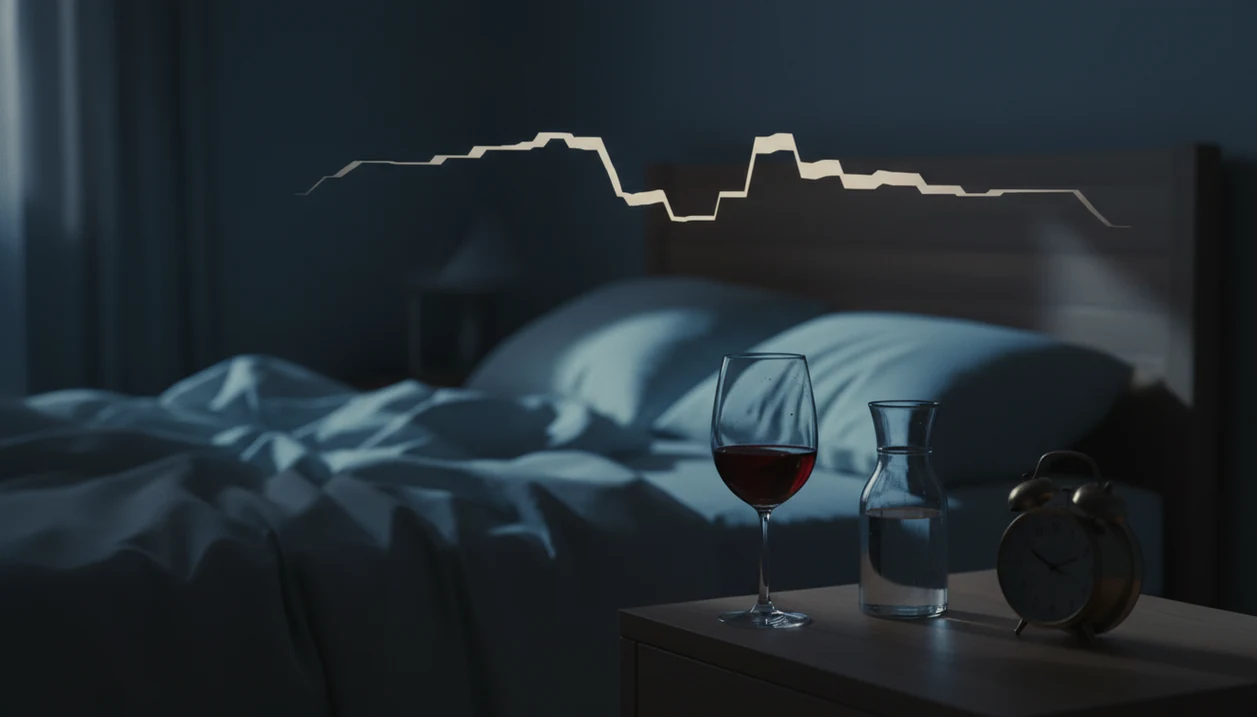
Alcohol and REM sleep are connected because alcohol can make you fall asleep faster while delaying, reducing, and fragmenting the REM sleep your brain needs for memory, emotional balance, and next-day clarity. That is why a full night in bed after drinking can still leave you foggy, anxious, and unrested.
Definition: Alcohol-related REM disruption is the shift in normal sleep architecture that happens when drinking delays REM onset, reduces REM percentage, and fragments sleep later in the night.
TL;DR
- Alcohol may feel like a sleep aid at first, but it usually worsens sleep architecture by reducing REM sleep and increasing second-half awakenings.
- REM sleep supports memory, learning, emotional regulation, and mental sharpness, so REM loss can show up as brain fog, irritability, poor focus, and stronger cravings.
- Cutting back on alcohol is one practical way to protect sleep quality, brain recovery, mood stability, and next-day decision-making.
Alcohol and REM sleep at a glance
Quick answer: Alcohol often makes sleep feel easier at first, but it can reduce and fragment REM sleep later in the night. For many people, that means more awakenings, lighter sleep, and next-day fogginess even after enough hours in bed.
Key takeaways
- Alcohol may shorten the time it takes to fall asleep while lowering sleep quality.
- REM disruption can affect mood, memory, focus, and emotional regulation the next day.
- Cutting back gradually may improve sleep continuity over time for many people.
- Late-night drinking is more likely to interfere with the second half of sleep.
- Tracking drinks, cravings, and sleep notes can reveal patterns that are easy to miss.
- Heavy daily drinkers should ask a clinician before stopping suddenly because withdrawal can be dangerous.
- Alcohol can shorten sleep onset, but it often reduces REM sleep and breaks up sleep later in the night.
- Sleep duration is not the same as sleep quality. Seven hours in bed can still leave the brain under-recovered.
- REM loss can show up the next day as brain fog, emotional swings, low drive, and that flat “I need something” feeling.
- A 2013 review in Alcoholism: Clinical and Experimental Research found that moderate and high bedtime alcohol doses delayed REM onset and reduced total REM percentage in most trials (the NIH).
- Cutting back is a sleep-quality experiment, not a character test.
The practical question is simple: what happens if you move the drink earlier, drink less, or skip it for a few nights? A tiny win here is noticing fewer 3 a.m. wakeups, not proving anything to anyone.
Medical scope and review standards
This article is educational. It can help you understand alcohol and sleep patterns, but it is not a medical diagnosis, treatment plan, detox plan, or substitute for a clinician who knows your history.
The page is written from reviews, clinical studies, and public-health sources, then translated into practical language. Alcohol withdrawal, suspected sleep apnea, violent dream enactment, severe insomnia, seizures, hallucinations, or symptoms that keep returning need professional care. App-based tracking can be useful for spotting trends, but it cannot confirm REM sleep, diagnose apnea, or replace a sleep study.
Our review standard is simple:
- Use established sleep and alcohol evidence before adding behavior tips.
- Separate likely mechanisms from claims that are still uncertain.
- Flag symptoms that should move from self-tracking to medical evaluation.
- Avoid treating streaks, wearable scores, or app estimates as clinical proof.
- Update the page when major alcohol-sleep evidence changes enough to affect the guidance.
If your sleep feels unsafe, severe, or tied to heavy daily drinking, the next best step is medical support, not another night of guessing.
Alcohol effects on sleep architecture
Sleep architecture is the pattern of cycling between light sleep, deep NREM sleep, and REM sleep across the night.
Alcohol changes that pattern. Its sedating effect can increase early-night sleep pressure, so you may fall asleep faster. Later, as your body metabolizes alcohol, sleep becomes less stable. The first REM period may arrive later, total REM percentage may drop, and awakenings often increase in the second half of the night.
That second half matters.
REM sleep normally becomes more frequent toward morning. If alcohol is wearing off right when REM should be rising, the brain may not get the same emotional and memory reset. That is one reason someone can sleep 7 to 8 hours and still wake up mentally dull. Effects vary by dose, timing, metabolism, sex, age, medication use, and baseline sleep health, so your own pattern is worth tracking.
Why alcohol makes sleep worse after helping you fall asleep
Does alcohol help sleep? Alcohol may help you fall asleep, but it does not create healthy sleep.
Sedation is not the same as natural sleep regulation. Alcohol can push the brain toward sleep quickly, then create rebound wakefulness later. That can mean lighter sleep, bathroom trips, thirst, elevated heart rate, snoring, and worse breathing in people prone to sleep apnea. The sticky bar table may be long forgotten, but your nervous system is still processing the alcohol at 4 a.m.
Sleep Foundation’s evidence summary reports that alcohol before bed can reduce REM sleep and fragment second-half sleep, even at doses many people consider moderate (sleepfoundation alcohol data). The worst disruption often lands when REM should be most active. For many adults, reducing alcohol close to bedtime is often easier than chasing extra sleep time because it protects the quality of the hours already available.
Alcohol brain fog and next-day sleep effects
REM sleep helps the brain consolidate memory, support learning, process emotion, and reset for the next day. When alcohol reduces REM and fragments sleep, the next morning can feel off even without a severe hangover.
- Brain fog: thoughts move slower, and simple choices take more effort.
- Weaker attention: reading the same message twice becomes normal.
- Irritability: small problems feel louder than they should.
- Anxiety or low mood: the nervous system feels less buffered.
- Stronger cravings: poor sleep can make cigarettes, vapes, and drinks feel more tempting.
The pocket check is real.
For adults trying to drink less, quit smoking, or stop vaping, poor sleep can weaken the exact decision-making skills needed at trigger points. Tools like Me Quit can help people track cravings, streaks, milestones, and mindful alcohol reduction alongside nicotine habits. If next-day anxiety is your main pattern, the link between poor sleep and alcohol rebound anxiety is worth understanding.
Alcohol, the glymphatic system, and brain cleanup
The glymphatic system is a sleep-linked waste-clearance process that helps move metabolic byproducts out of the brain.
Stable sleep appears important for this overnight cleanup, especially deep sleep and normal cycling through sleep stages. Alcohol-related fragmentation and REM disruption may reduce how restored the brain feels by morning, but the science should be stated carefully. It is biologically plausible that disrupted sleep interferes with overnight brain recovery. It is not accurate to say one drink permanently blocks “detox” or directly causes dementia.
Researchers are still studying the exact human relationship between alcohol, REM sleep, glymphatic clearance, and long-term brain fog. What is clearer is the everyday pattern: worse sleep often means worse focus, mood, and impulse control the next day. If you are mapping the wider brain-body effects of cutting back, our alcohol reduction guides cover related recovery topics in plain language.
Alcohol, REM sleep behavior disorder, and chronic insomnia risk
Regular or heavy drinking is associated with ongoing insomnia, fragmented sleep, and some REM-related disturbances. Probable REM sleep behavior disorder means a person may act out dreams or show abnormal movement during REM-like states, rather than staying safely still.
In a large U.S. community study of 11,905 adults, current drinkers were 23% more likely to have probable REM sleep behavior disorder six years later than non-drinkers (the NIH). A National Institute on Alcohol Abuse and Alcoholism review also reported that up to 72% of people with alcohol dependence have sleep problems, and that sleep disturbance can raise relapse risk (NIAAA).
Clinicians typically recommend medical guidance for violent dream enactment, suspected sleep apnea, withdrawal symptoms, or severe insomnia. Don’t try to tough those out alone. If alcohol is also tied to reward, stress, and cue-driven cravings, alcohol reward system changes can explain why nighttime habits feel so sticky.
When to seek medical help for alcohol-related sleep problems
Seek medical help when alcohol-related sleep problems involve safety, breathing, withdrawal, or symptoms that keep returning despite reasonable changes. Sleep trouble after drinking is common, but seizures, confusion, hallucinations, severe withdrawal symptoms, or dangerous nighttime behavior are not “just bad sleep.”
- Get urgent care if you or someone nearby has a seizure, severe shaking, confusion, hallucinations, chest pain, fainting, or signs of serious withdrawal.
- Ask a clinician before stopping suddenly if you have been drinking heavily every day, because withdrawal can become medically risky.
- Report dream enactment such as punching, kicking, falling out of bed, or injuring a partner; suspected REM sleep behavior disorder deserves professional evaluation.
- Schedule a sleep evaluation for loud snoring, gasping, choking, morning headaches, or daytime sleepiness, especially if alcohol makes breathing feel worse at night.
- Treat persistent insomnia, anxiety, or depression as health issues, not willpower failures. If sleep, mood, or cravings are stuck in a loop, medical and mental health support can make the next step safer.
Ways to protect REM sleep when drinking less alcohol
The most reliable sleep-supporting strategy is reducing alcohol close to bedtime or cutting back overall. Use this as a two-week experiment, not a lifetime verdict.
- Set a cutoff time at least several hours before bed, then note whether wakeups change.
- Log sleep quality each morning with wakeups, mood, focus, and cravings.
- Plan alcohol-free nights before demanding workdays or emotionally loaded mornings.
- Put water or gum where the drink usually sits during your wind-down routine.
- Avoid nicotine close to bed because vaping or smoking can add another layer of sleep disruption.
- Reset after a slip by writing the cue, routine, and reward, then choosing one replacement action.
Sleep may temporarily feel worse when someone first reduces heavy or regular alcohol use. Vivid dreams, restlessness, and rebound insomnia can happen. Me Quit can support craving, streak, and milestone tracking, but it is not detox care.
A two-week REM sleep tracking experiment
For 14 days, track drinks, drink timing, bedtime, wakeups, morning fog, mood, focus, and cravings. Keep the scoring simple: 1 to 5 is enough.
A good mequit addiction recovery hub should support private tracking, craving tools, streak repair, and planning — not diagnosis, detox, or emergency treatment. Apps such as Me Quit can support the habit-tracking side, while an alcohol reduction plan helps turn the data into next steps.
The useful question is not “Was I good?” It is “What made the next choice easier?”
Limitations
Alcohol and sleep research is useful, but it does not predict every person’s night perfectly.
- Real-world effects vary by genetics, age, sex, body size, medications, mental health, sleep disorders, and drinking pattern.
- There is no universally safe bedtime alcohol dose for sleep because people metabolize alcohol differently.
- People with heavy alcohol use may experience rebound insomnia, vivid dreams, anxiety, or withdrawal symptoms and may need medical support.
For people comparing private tools for limits and craving patterns, a best drink less app guide can help, but medical symptoms still deserve medical care.
FAQ
Does alcohol reduce REM sleep?
Yes. Alcohol commonly delays the first REM period and reduces total REM sleep, especially with moderate or high bedtime doses.
Why do I wake up foggy after drinking alcohol?
Post-drinking brain fog can come from REM loss, fragmented sleep, dehydration, and hangover physiology. It can happen even when you spent 7 to 8 hours in bed.
Is alcohol a good sleep aid?
No. Alcohol is a sedative that may make you sleepy, but it can worsen sleep quality and disrupt REM sleep.
When during the night does alcohol affect REM sleep?
Alcohol disruption often becomes more noticeable in the second half of the night. That is when alcohol is being metabolized and REM sleep normally becomes more frequent.
Can one drink affect sleep?
Yes, one drink may affect sleep in sensitive people. Timing, dose, metabolism, body size, medication use, and baseline sleep health all matter.
Does alcohol cause vivid dreams?
Alcohol can contribute to vivid dreams through REM rebound and fragmented sleep. Vivid dreams may also appear when someone cuts back after regular drinking.
Will quitting alcohol improve sleep?
Many people sleep better after reducing or stopping alcohol. However, people with heavy or regular use may have temporary rebound insomnia and should seek medical support if withdrawal symptoms appear.
Can alcohol worsen sleep apnea?
Yes. Alcohol can relax airway muscles, increase snoring, and worsen breathing-related sleep disruption in people with sleep apnea or suspected sleep apnea.