Why Alcohol Replacement Cravings Happen
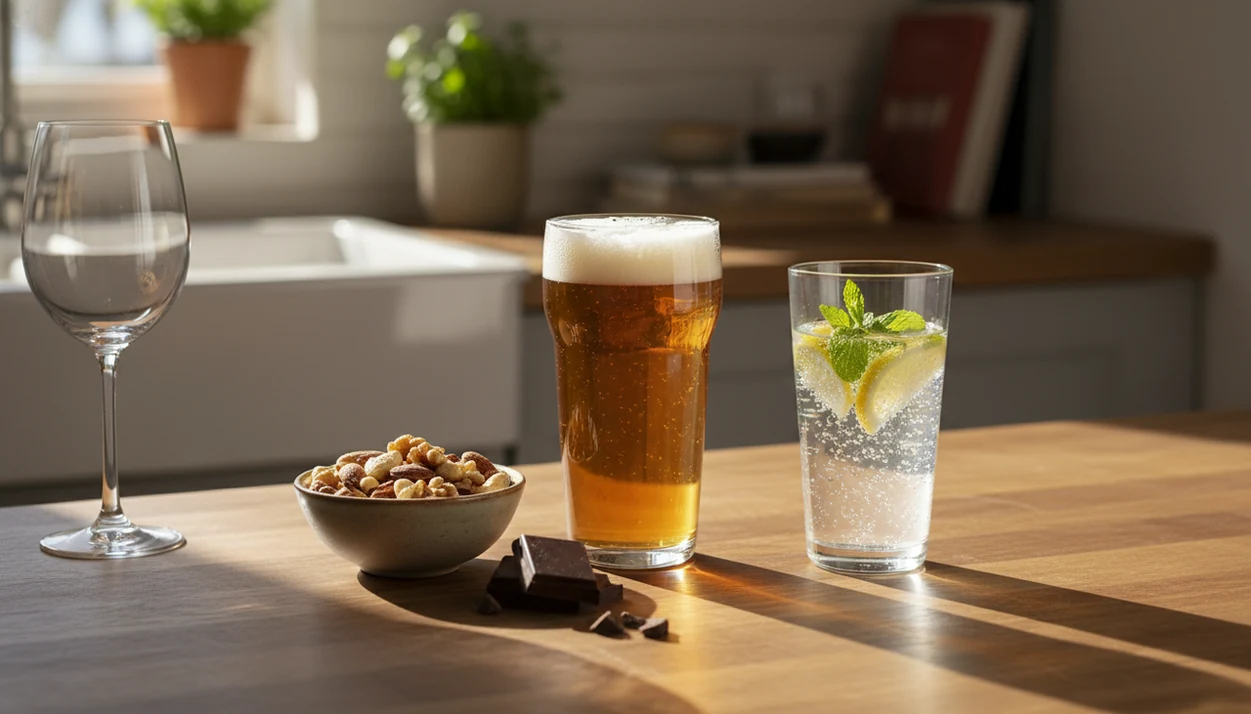
Alcohol replacement cravings happen because your brain still expects the reward, ritual, and relief it learned to associate with drinking. Alcohol-free drinks, sugar, and salty snacks can reduce the urge to drink in the short term, but they work best when used intentionally instead of becoming another automatic habit.
Definition: Alcohol replacement cravings are urges for alcohol-free beer, sweet foods, salty snacks, or other substitutes that mimic the reward, routine, or emotional relief previously linked to drinking.
TL;DR
- Replacement cravings are common because alcohol trains the brain to expect a fast reward from specific cues like stress, 5 p.m., glassware, pubs, or boredom.
- Alcohol-free beer, sweets, and salty snacks can help some people ride out cravings, but they can also keep the old drinking script active if used mindlessly.
- The goal is not to ban every substitute; it is to redirect cravings into planned rewards, changed cues, and repeatable coping routines.
Alcohol replacement cravings at a glance
Quick answer: Alcohol replacement cravings are common because the brain may still seek the reward, routine, and relief previously linked to drinking. Alcohol-free drinks, sweets, and salty snacks can be useful short-term bridges, but they work best when planned, portioned, and paired with non-food coping tools.
Key takeaways
- Use replacements deliberately, not as an automatic new ritual.
- Notice whether a substitute lowers the urge or keeps the craving cycle active.
- Pair drinks or snacks with a delay, walk, text, or breathing exercise.
- Evening cravings often need a routine change, not just a different beverage.
- Strong withdrawal symptoms, seizures, confusion, or heavy daily drinking need medical advice.
- Tracking time, place, mood, and substitute choice can reveal safer patterns.
- Alcohol replacement cravings are substitute urges. They show up as wanting alcohol-free beer, sugar, salty snacks, or another quick reward when you are not drinking.
- The main drivers are habit cues and dopamine reward. A patio table with ashtray and pint can make the brain expect relief before a drink is even ordered.
- These cravings are not a moral failure. They are a brain-and-routine adjustment after alcohol stops being the default reward.
- Blood sugar shifts can matter. Some people notice sweets feel unusually urgent after cutting back, especially if alcohol had replaced regular meals.
- Intentional redirection is the goal. For many people, a planned substitute works better than white-knuckling because it gives the craving window somewhere safer to land.
The pocket check is real.
How alcohol replacement cravings work in the brain
Alcohol replacement cravings happen when cues linked to drinking still activate reward expectation after alcohol is removed. The brain has learned a habit loop: cue, craving, response, relief.
Alcohol teaches the brain to connect certain moments with dopamine, comfort, or a fast mood shift. The end of work, boredom on the sofa, social pressure, and stress can all become cues. When alcohol is not available, the brain may search for the nearest substitute. That is the core of reward substitution alcohol patterns.
A substitute can calm the urge without fully changing the loop. A cold alcohol-free beer may reduce the immediate craving, but if it happens in the same chair, same glass, and same 6 p.m. mood, the old map may stay active. For deeper change, the reward has to move, not just the liquid.
For people who want the science behind cue learning, alcohol reward system changes explains why repeated drinking can reshape what feels motivating.
Alcohol-free beer cravings and non-alcoholic drink habit cues
Does alcohol-free beer help cravings, or can it make them stronger? It can do either, because the alcohol content and the cue strength are not the same thing.
Taste, fizz, bottle shape, glassware, and timing all carry ritual value. If you always opened a beer while starting dinner, an alcohol-free version may scratch the habit itch. For some people, that is enough to move through the craving window. For others, alcohol-free beer cravings keep attention fixed on the old drinking routine.
Small cue changes matter. Pour sparkling water in a rocks glass if the can feels too close. Drink the NA beer in the kitchen instead of the sofa corner. Move it from Friday night to Saturday lunch. Pair it with cooking or a walk, not scrolling and bargaining.
Alcohol-free drinks are not automatically safe or automatically dangerous. They work best when you can use them without rehearsing the whole drinking script.
Sugar cravings after quitting alcohol and blood-sugar reward loops
Sugar cravings after quitting alcohol are common, but they are not universal. Alcohol can affect appetite, blood sugar patterns, and reward pathways, so quick-energy foods may feel louder when drinking drops.
Alcohol provides about 7 kilocalories per gram; NIAAA’s alcohol-calorie guidance uses that conversion when estimating drink calories (NIAAA alcohol data). When that source disappears, the body may notice. Chocolate, desserts, soda, and candy can also mimic the fast reward of a drink. They are easy, sweet, and immediate.
That does not mean you need to panic about every biscuit. Planned treats can be part of a quit plan, especially early on. The issue is whether sweets become the only tool. Balanced meals, protein at breakfast, steady hydration, and a planned snack can reduce the emergency feeling.
A sour stomach before a social event can be a cue too. Sometimes the craving is anxiety wearing a sugar costume.
Reward substitution alcohol patterns: bridge, loop, or warning sign
Reward substitution can be a bridge, a loop, or a warning sign depending on how much control and flexibility you have. Short-term relief is useful; long-term relearning needs more than one substitute.
| Substitute | When it can be intentional | When it may become automatic |
|---|---|---|
| Alcohol-free drinks | Used at a planned time with a clear limit | Quantity rises, or the drink keeps old pub routines alive |
| Sweets | Planned dessert after dinner | Secret eating, distress, or constant grazing |
| Salty snacks | A measured bowl during a craving window | Large bags become the nightly replacement ritual |
| Movement | Walk, stretch, or gym session for stress relief | Exercise becomes punishment for cravings |
| Social connection | Calling someone before a risky moment | Only reaching out after a lapse |
| Hobbies | Gaming, music, cooking, reading, or craft | Avoiding every feeling through distraction |
The most useful substitute is one you can start, stop, and swap. Warning signs include secrecy, rising quantity, distress, inability to pause, and relying on one coping tool only. The same whack-a-mole pattern can show up with smoking or vaping after drinking drops.
6-step plan for alcohol replacement cravings
Use alcohol replacement craving tools as a plan, not a reflex. The aim is to redirect the urge while teaching your brain a new ending.
- Name the cue. Say what started it: 5 p.m., stress, boredom, dinner, TV, loneliness, or walking past the usual shelf.
- Choose the substitute. Pick one planned option, such as an alcohol-free drink, tea, dessert, salty snack, shower, walk, or call.
- Change the ritual. Move the glass, chair, time, route, or activity so the old drinking script does not run unchanged.
- Set a boundary. Decide the amount first, not after the craving has already taken over.
- Log the result. Track the craving, substitute, intensity, streak, money saved, or health milestone.
- Repeat or revise. Keep what worked and change what felt too close to drinking.
Tools like Me Quit can support private progress tracking for cravings, streaks, and milestones, especially when you want a phone prompt during a three-minute craving instead of arguing with yourself for an hour.
Alcohol replacement craving coping plan for evenings and weekends
Evenings and weekends are high-risk because they combine time cues, reward expectation, social pressure, and tired decision-making. A good plan uses if-then swaps before the craving peaks.
Evening trigger swaps
5 p.m. shutdown: If the workday ending triggers a drink, then change clothes, drink water, and walk for ten minutes before deciding anything.
Dinner cue: If cooking usually means pouring wine, then start with music, chopped vegetables, and a non-drink reward after eating.
TV cue: If the sofa brings cravings, then move the first 20 minutes elsewhere. Shower, game, fold laundry, or make tea first.
Weekend social cue swaps
Pub or party cue: If the bartender reaches for the usual bottle, then order your first drink by name before small talk starts.
Loneliness or boredom: If the urge is really emptiness, then call someone, cook something with steps, or go to bed early without making it dramatic.
Mindfulness and urge surfing can reduce cravings for some people, but results vary by person and support level. In a randomized clinical trial, mindfulness-based relapse prevention reduced substance use and heavy drinking compared with standard relapse prevention at 12-month follow-up (the NIH). Broader planning is covered in our alcohol reduction plan.
Alcohol replacement craving red flags for medical support
- Alcohol problems are common, and recovery is common too. NIAAA reports that 28.8 million U.S. adults had alcohol use disorder in 2022 (NIAAA alcohol data). Recovery is also common; a national survey analysis found that many adults with resolved substance-use problems describe themselves as in recovery (the NIH).
- Treatment is underused. NIAAA reports that only about 7.6% of people with past-year alcohol use disorder received alcohol treatment in 2022 (NIAAA alcohol data).
- Withdrawal symptoms need medical advice. Shaking, sweating, confusion, seizures, severe anxiety, or hallucinations are not self-help problems.
- Morning drinking, unsafe drinking, or repeated failed attempts are red flags. So are cravings that feel unmanageable.
- Support can include therapy, medication, structured programs, and medical care. Clinicians typically recommend medical guidance when withdrawal risk, pregnancy, severe dependence, or mental health crisis is present.
Me Quit can help you track cue patterns, cravings, alcohol-free days, streaks, and milestones across smoking, vaping, drinking, and mindful alcohol reduction.
Use Me Quit as a private logging and reflection aid, not as detox instructions, diagnosis, emergency care, or medical treatment.
Limitations
Alcohol replacement craving strategies can help, but they are not a complete safety plan for everyone.
- Mindfulness, urge surfing, and substitution tools do not work for every person or every stage of dependence.
- Some people need therapy, medication, medical care, or structured treatment.
- This content is informational. It is not a diagnosis, detox plan, emergency plan, or replacement for qualified medical support.
If anxiety spikes after drinking or cutting back, alcohol rebound anxiety may explain the next-day pattern.
FAQ
Why do I crave sugar after quitting alcohol?
Sugar cravings after quitting alcohol can happen because the body is adjusting to changes in reward pathways, appetite, and blood sugar patterns. Sweet foods provide quick energy and fast reward, but balanced meals and planned snacks usually work better than constant grazing.
Is alcohol-free beer triggering when I am trying not to drink?
Alcohol-free beer can help some people ride out a craving, but it may trigger others by preserving taste, timing, bottle, and glassware cues. Intention and cue changes matter more than the label alone.
Are alcohol replacement cravings normal in early sobriety?
Yes, alcohol replacement cravings are common when the brain and routine are adjusting to life without alcohol. They are not a sign of failure, but they are worth planning for.
Why do I want salty snacks instead of alcohol?
Salty snacks can satisfy ritual, oral fixation, crunch, and reward needs when alcohol is removed. They may reduce the urge briefly, but they do not resolve the cue that started the craving.
How long do alcohol cravings usually last?
Many alcohol cravings rise and fall within minutes, though some can last longer depending on stress, sleep, environment, and withdrawal risk. Repeated cue changes and support often reduce intensity over time.
Can non-alcoholic drinks prevent relapse?
Non-alcoholic drinks may reduce urges for some people, but they should not be the only relapse-prevention tool. A stronger plan includes trigger changes, coping skills, support, and medical care when needed.
What foods reduce alcohol cravings?
No food cures alcohol cravings, but protein, fiber, regular meals, hydration, and planned snacks can make cravings less urgent. Stable energy makes it easier to choose the next step.
When should I get help for alcohol cravings or withdrawal?
Get professional or medical help if you have withdrawal symptoms, morning drinking, unsafe drinking, repeated failed attempts, severe depression, panic, suicidal thoughts, or cravings that feel unmanageable. Me Quit can help track patterns, but urgent or severe symptoms need qualified care.