How Alcohol Changes Reward, Stress, and Cognitive Flexibility
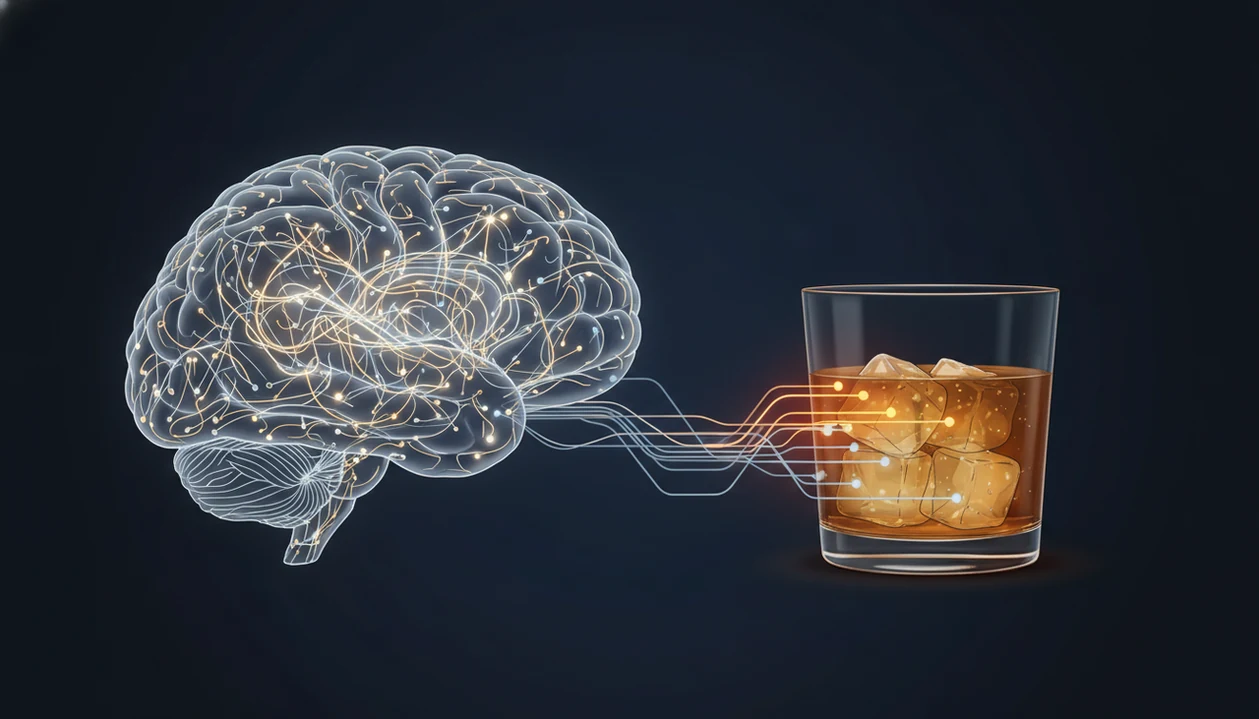
Alcohol reward system changes can make drinking feel less pleasurable over time while cravings stay strong. Repeated alcohol use can alter dopamine, endorphin, stress, endocannabinoid, and habit-learning systems, so drinking may shift from feeling good to feeling more like relief from feeling bad.
Definition: Alcohol reward system changes are adaptations in brain circuits for pleasure, motivation, stress, and learning that can make alcohol feel less satisfying while making it harder to stop automatically reaching for it.
TL;DR
- Alcohol can feel rewarding at first, but repeated use may blunt natural reward signaling and make everyday pleasures feel flatter.
- Cravings can persist even when the buzz fades because stress, habit, opioid, dopamine, and endocannabinoid systems adapt together.
- Alcohol can reduce cognitive flexibility, making it harder to change routines, learn from consequences, and choose long-term goals.
Alcohol reward system changes at a glance
Quick answer: Repeated alcohol use may recalibrate the brain’s reward and stress systems, so alcohol can feel less enjoyable while urges remain intense. For many people, change becomes easier when they treat cravings as learned brain signals, not as proof that drinking is still worth it.
Key takeaways
- Cravings can stay strong even when the pleasure from alcohol fades.
- Relief-driven drinking often feels urgent because it reduces discomfort short term.
- Triggers such as time, place, mood, and people can reactivate learned reward expectations.
- Tracking urges before drinking can reveal patterns that willpower alone may miss.
- Cutting back is safer with medical guidance if withdrawal symptoms are possible.
- New rewards often need repetition before they feel motivating again.
Alcohol reward system changes describe the shift from “I drink because it feels good” to “I drink because not drinking feels uncomfortable.” That reward-to-relief shift can involve dopamine, endorphins, stress systems, habit learning, and alcohol cognitive flexibility changes.
A weaker buzz does not mean alcohol has a weaker brain effect. It may mean the reward system has adapted, while cue-driven wanting and stress relief have become louder. The bartender reaching for the usual bottle can trigger the routine before the person has asked whether they actually want it.
For adults tracking cravings and drinking patterns, tools like Me Quit can help turn that moment into data: time, place, cue, feeling, and next choice. The goal is not self-blame. It’s a better trigger map.
Five facts about alcohol, dopamine, endorphins, and reward fading
- Alcohol can activate reward circuitry at first, especially systems involved in motivation, pleasure, social ease, and learned reward.
- Repeated drinking can blunt natural reward signaling, so ordinary pleasures may feel flatter and alcohol may deliver less emotional payoff.
- In one abstinent alcohol-dependent group, alcohol-dependent participants released significantly less endorphins than controls, and the reduced release was still present after long abstinence, according to an Imperial report ac alcohol data.
- A 2025 Nature Communications study summarized by Vanderbilt reported alcohol-induced dopamine regulation changes that persisted for at least 30 days into abstinence vanderbilt alcohol data.
- Some people who later develop alcohol use disorder show stronger rewarding responses to alcohol over time, not simple pleasure tolerance.
For many drinkers, the useful takeaway is plain: reward fading and craving strength can move in different directions.
How alcohol reward system changes work in the brain
Alcohol reward system changes work by shifting how motivation, pleasure, stress, and habit loops respond to alcohol and alcohol-related cues. Dopamine is not just a “pleasure chemical”; it helps the brain learn what to pursue, what to notice, and what might bring relief.
For medical grounding, NIAAA describes alcohol addiction as a cycle involving binge/intoxication, withdrawal/negative affect, and preoccupation/anticipation, which maps closely to the reward-to-relief shift described here NIAAA alcohol data.
Opioid and endorphin signaling are part of the warm, rewarding side of alcohol. Stress-system recruitment is the other side. Over time, drinking may move from positive reinforcement, “this feels good,” toward negative reinforcement, “this takes the edge off.” That is why the beer fridge hum during dinner prep can feel like a decision point before the bottle is even open.
The alcohol endocannabinoid system connection may also affect reward, mood, appetite, stress, and learning. The biology is plausible, but the timeline is less settled than dopamine and opioid findings.
Why alcohol stops feeling good but cravings stay strong
Alcohol can stop feeling good because the brain adapts to repeated reward signals. In everyday terms, hedonic adaptation alcohol users notice may look like needing more drinks for less lift, or getting the same drink and thinking, “That wasn’t worth it.”
Craving can stay strong because liking and wanting are not the same thing. Liking is the actual pleasure. Wanting is the pull toward the cue, the plan, the ritual, or the relief. The most useful behavior-change question is often not “Do I want a drink?” but “What is this craving promising right now?”
For people cutting back, urge surfing can help separate the body signal from the action. Tight chest, restless legs, “I need something.” Then a timer, water, food, a walk, or a text. Small friction helps. A practical alcohol reduction plan can make that pause easier to repeat.
Alcohol endocannabinoid system effects and reward learning
The endocannabinoid system is a signaling network involved in mood, reward, stress, appetite, pain, and learning. It includes naturally produced compounds and receptors that help the body adjust to changing internal states.
Alcohol may interact with endocannabinoid signaling in ways that influence reward and reinforcement. That could help explain why drinking can feel calming at first, then later feel more like a borrowed calm with a cost due later. However, the exact role, dose effects, and recovery timeline are less settled than the dopamine and opioid research.
So treat the alcohol endocannabinoid system as one piece of the map, not the whole map. Sleep, stress, cues, social setting, and learned routines still matter. The pocket check is real.
Alcohol cognitive flexibility changes that make drinking patterns stick
Cognitive flexibility is the ability to shift strategies and update behavior when outcomes change. If alcohol reduces flexibility, a person may keep repeating the same drinking routine even when the reward is weaker and the next morning is worse.
That rigidity shows up in small moments. A person plans two drinks, hits a stressful text, then defaults to the usual third. The brain chooses short-term relief because the old cue, routine, and reward pathway is already paved. Long-term goals become harder to hold in mind.
Tracking can support behavior change by making the pattern visible: craving time, location, emotion, drink count, sleep, and streak repair after a slip. It is not a diagnosis. It is a way to make the next choice easier. If sleep is part of the loop, alcohol and rem sleep is often worth reviewing.
How to use alcohol reward system changes to change a drinking pattern
Use reward-system changes as feedback, not a verdict. If alcohol feels less fun, more automatic, or mostly like relief, that is useful information for changing the loop before the next high-risk moment.
- Notice what the drink is doing in real time: pleasurable, neutral, relieving, or already regretful. Name it plainly instead of arguing with it.
- Log the basics after each drinking episode: cue, time, place, emotion, drink count, and next-morning effect. The pattern matters more than one perfect entry.
- Choose one friction step before the highest-risk cue. Put the alcohol out of sight, delay the first drink by 20 minutes, eat first, take a walk, or text someone before pouring.
- Compare the promise with the result. Did the drink deliver ease, connection, numbness, worse sleep, anxiety, or nothing much at all?
- Review the week and adjust one trigger plan. Keep what reduced harm, change what failed, and make the next cue a little less automatic.
The point is not to outthink every craving. It is to make the old routine slower, more visible, and easier to interrupt.
Reward fading versus alcohol harm continuing
Reduced pleasure does not equal reduced risk. Tolerance can coexist with less enjoyment, which means a person may drink more for a smaller payoff while alcohol continues to affect stress, sleep, mood, decision-making, and habit circuits.
A weaker buzz can be misleading. The person may think, “It barely does anything now,” but the next-day anxiety, poor sleep, or foggy decision-making still counts. A PMC-hosted neuroimaging study reported decreased volume in reward-related brain regions among people with alcoholism, supporting the idea that alcohol-related changes can be structural as well as chemical the NIH.
For regular drinkers, less enjoyment is not proof of safety. It may be a signal to reassess the routine, especially if drinking is tied to stress relief or automatic evening cues. Broader alcohol reduction guides can help connect brain changes with daily patterns.
Private behavior tracking for alcohol reward and craving patterns
Noticing reward, stress, cue, and craving patterns can help adults make more informed drinking decisions. A simple log can ask: Did alcohol feel rewarding, neutral, regretful, or mainly relieving?
Track the boring details. Time, place, drink count, craving intensity, sleep, trigger, streak, and milestone. The thumb hovering over a reset button after a limit break is not the end of the process; it is information for the next if-then plan.
Me Quit is a private tracking option for adults who want to stop smoking, stop vaping, drink less, and record cravings, streaks, and milestones. It can support pattern recognition and restart planning, but it does not provide diagnosis, detox care, or emergency treatment.
Limitations
Alcohol reward research is useful, but it cannot tell one person’s whole story from one symptom or one scan.
- There is no single brain change that explains every drinking pattern.
- Cravings can be shaped by sleep loss, stress, trauma, social pressure, medication, and mental health.
- This article is educational and is not a diagnosis or medical treatment plan.
Clinicians typically recommend medical support for people with heavy daily drinking, withdrawal symptoms, seizure history, pregnancy, or serious mental health risk. Don’t white-knuckle risky withdrawal alone.
Alcohol withdrawal can be medically dangerous. Seek urgent care or medical guidance if stopping alcohol causes shaking, confusion, fever, hallucinations, seizures, chest pain, or severe vomiting medlineplus.
When to seek medical help for alcohol withdrawal or alcohol use
Seek medical help right away if stopping or reducing alcohol brings severe symptoms, or if drinking feels unsafe to manage alone. Heavy daily drinkers should not suddenly quit without medical guidance because withdrawal can escalate quickly, even after a person feels committed and clear-headed.
- Call emergency services or go to urgent care for seizures, confusion, hallucinations, fever, chest pain, severe vomiting, fainting, or extreme agitation.
- Contact a clinician before quitting suddenly if you drink heavily every day, have had withdrawal shakes, sweats, panic, or past detox problems, or need alcohol to feel normal in the morning.
- Tell a medical professional if you are pregnant, might be pregnant, have a seizure history, liver disease, heart problems, or take medications that may interact with alcohol.
- Get immediate support if alcohol is linked with suicidal thoughts, self-harm urges, violence, psychosis, or feeling unable to stay safe.
- Ask about supervised withdrawal options if you are cutting down after a long high-intake period. Medical detox can reduce risk and make the first days less dangerous.
NIAAA and MedlinePlus both emphasize that alcohol withdrawal can be serious. This is not a moment for pride or secrecy; it is a moment for backup.
FAQ
Why does alcohol stop feeling good?
Alcohol can stop feeling good because the brain adapts to repeated reward signals, so the same drink may produce less pleasure. Drinking may then shift from enjoyment toward relief-seeking.
Does alcohol release dopamine?
Alcohol can affect dopamine signaling, especially in reward and motivation circuits. Dopamine is about learning, wanting, and pursuit, not only pleasure.
Does alcohol affect endorphins?
Alcohol can affect opioid and endorphin systems that contribute to pleasure and reward. One Imperial-reported study found reduced endorphin release in alcohol-dependent participants compared with controls.
What does hedonic adaptation mean in alcohol use?
Hedonic adaptation in alcohol use means the emotional payoff from repeated drinking fades over time. A person may need more alcohol for less reward.
Can cravings outlast the alcohol buzz?
Yes. Cues, stress, habit loops, and wanting can keep cravings strong after alcohol feels less enjoyable.
Does alcohol reduce cognitive flexibility?
Alcohol-related changes may make it harder to switch strategies, update behavior, and learn from consequences. That can make old drinking routines feel sticky.
Can the reward system recover after drinking less or stopping?
Recovery can happen, but timing varies by person, drinking history, sleep, stress, and health. Some dopamine, reward, or stress-system changes may linger for weeks or longer.
Does a lower buzz mean lower alcohol risk?
No. A lower buzz does not mean alcohol has stopped affecting the brain or body. Tolerance, sleep disruption, mood effects, and impaired decision-making can continue.