
How Alcohol May Contribute to Rare Cancer Risks
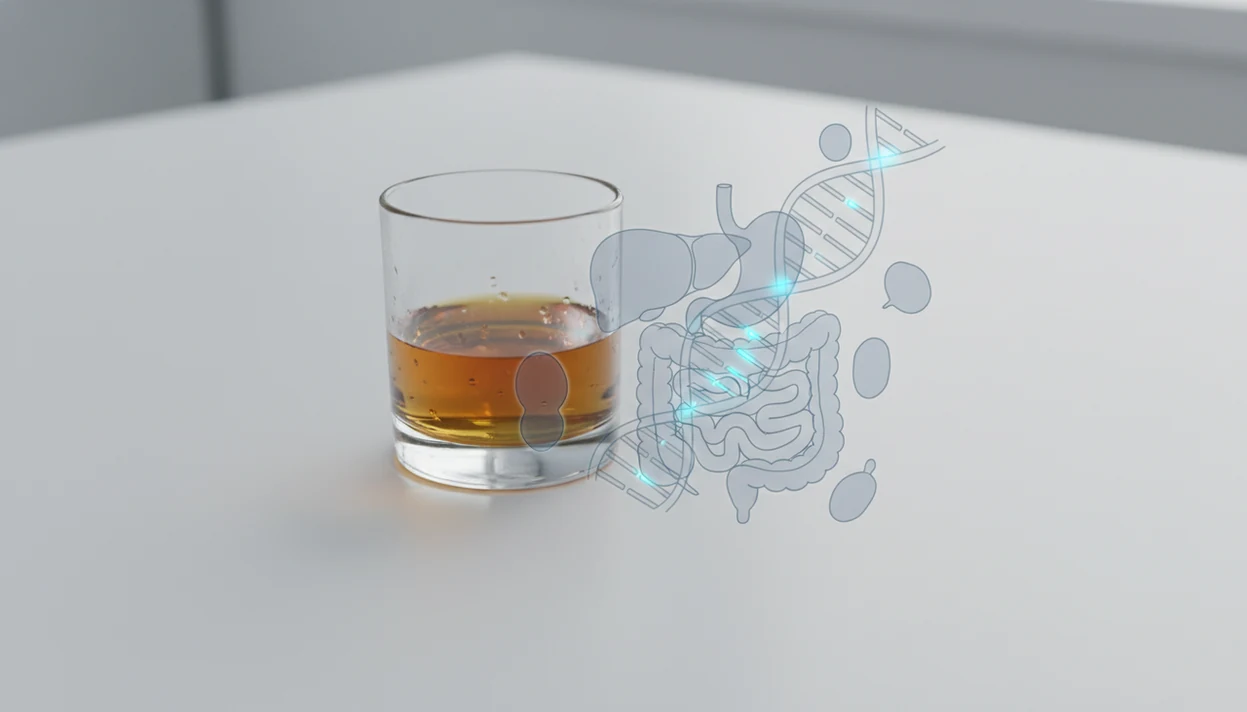
Alcohol rare cancer risk is plausible because the body converts alcohol into acetaldehyde, a toxic compound that can damage DNA, increase oxidative stress, and promote inflammation. The clearest cancer links involve common cancers such as mouth, throat, esophageal, liver, breast, and colorectal cancers; evidence for rare cancers such as adrenal gland cancer and small intestine cancer is much thinner and should be treated as uncertain.
Definition: Alcohol rare cancer risk refers to the possibility that drinking alcohol may contribute to less common cancers through acetaldehyde-related DNA damage, inflammation, oxidative stress, and interactions with other risk factors.
TL;DR
- Alcohol is a known human carcinogen, but the strongest evidence is for several common cancers rather than most rare cancers.
- Acetaldehyde, the toxic byproduct formed when the body breaks down alcohol, can damage DNA and proteins in ways relevant to cancer biology.
- For adrenal gland cancer and small intestine cancer, current evidence is limited, so risk should be discussed as biologically plausible rather than proven.
This article is for education and risk-awareness only. It cannot diagnose cancer, estimate your personal cancer risk, or replace advice from an oncologist, gastroenterologist, endocrinologist, or addiction-medicine clinician.
Alcohol rare cancer risk at a glance
Quick answer: Alcohol may contribute to cancer risk because it is metabolized into acetaldehyde, a toxic compound that can damage DNA and affect cell repair. For rare cancers, the evidence is usually limited or uncertain, so the most practical takeaway is to reduce overall alcohol exposure rather than assume a precise risk estimate.
Key takeaways
- Lower alcohol intake generally means lower lifetime exposure to acetaldehyde.
- Rare-cancer links are often uncertain because these cancers are hard to study in large numbers.
- Risk discussions are most useful when combined with personal factors such as family history, smoking, diet, and medical conditions.
- Binge drinking may create high short-term exposure even if weekly averages look moderate.
- Tracking when and why you drink can reveal patterns that are easier to change.
- People who drink heavily or daily should ask a clinician before stopping suddenly, because withdrawal can be dangerous.
Alcohol is a known human carcinogen, but alcohol rare cancer risk is less certain than the evidence for common alcohol-related cancers. Risk concern generally rises with more drinks, more drinking years, and combined exposures such as smoking or chronic inflammation.
The main biological reasons are acetaldehyde, oxidative stress, inflammation, and DNA damage. Ethanol is the shared exposure across beer, wine, and liquor, so switching drink type does not remove the cancer-relevant pathway. A party cooler packed with cans may look different from a glass of wine at dinner, but the body still has to process ethanol.
Rare digestive and endocrine cancers are harder to study because there are fewer cases. That means alcohol and adrenal gland cancer or alcohol and small intestine cancer should be described as uncertain, not settled.
Five facts about alcohol and rare cancer risk
- Alcohol is classified as a known human carcinogen by major health authorities, with the strongest links for mouth, throat, esophageal, liver, breast, and colorectal cancers. The National Cancer Institute summarizes alcohol as a cancer risk factor and cites major cancer types with the strongest evidence the National Cancer Institute alcohol data.
- Alcohol consumption accounted for about 5% of U.S. cancer cases and about 4% of U.S. cancer deaths in 2019, according to the National Cancer Institute the National Cancer Institute alcohol data.
- Acetaldehyde can damage DNA and proteins, which matters because cancer can begin when cellular repair systems fail.
- Even low levels of drinking may increase risk for some alcohol-related cancers, so “not heavy drinking” does not always mean “no risk.”
- Rare cancers such as adrenal gland cancer and small intestine cancer do not have strong direct causal evidence linking them to alcohol.
Small numbers matter. A study can miss a real signal when the cancer is rare.
How alcohol acetaldehyde DNA damage works
Alcohol acetaldehyde DNA damage occurs when ethanol is metabolized into acetaldehyde, a toxic compound that can bind to DNA and proteins and interfere with normal cell repair. In plain language, the body breaks alcohol down into a chemical that can leave cellular “scratches” behind.
Alcohol metabolism also contributes to oxidative stress, which means reactive molecules can injure cells faster than the body can neutralize them. Inflammation adds another layer. Repeated irritation in tissue can increase cell turnover, and more cell turnover gives more chances for copying errors.
That mechanism supports biological plausibility for rare cancers. It does not prove that alcohol causes a specific rare tumor. For rare cancers, mechanism is a map, not a measured risk estimate. The most defensible conclusion is that alcohol reduction lowers exposure to a known carcinogen, while cancer-type-specific certainty varies.
For behavior context, alcohol can also weaken inhibition and planning, which is covered in more detail in alcohol prefrontal control.
Alcohol and small intestine cancer evidence
Does alcohol cause small intestine cancer? Direct evidence linking alcohol to small intestine cancer is limited, and current public-health guidance does not treat alcohol as a confirmed cause of this rare cancer.
Small intestine cancer is difficult to study because it is uncommon. Fewer cases mean wider uncertainty, especially when researchers must separate alcohol from smoking, diet, inherited conditions, gut disease, and body weight. A clinic note saying “two drinks nightly” rarely captures decades of pattern, beverage size, or binge episodes.
The biological case is still plausible. Alcohol passes through the digestive tract, can affect nutrient absorption, may worsen gut inflammation, and produces acetaldehyde that can damage DNA. Those mechanisms are relevant to digestive tissues, but they do not establish causation for the small intestine.
For most readers, the practical takeaway is narrower: reducing alcohol can lower exposure linked to established alcohol-related cancers, even when small intestine risk remains uncertain.
Alcohol and adrenal gland cancer uncertainty
Does alcohol cause adrenal gland cancer? Alcohol is not a proven cause of adrenal gland cancer, and claims that present the link as settled go beyond the available evidence.
Adrenal gland cancer is rare. That makes strong population evidence difficult, because studies may have too few cases to detect a modest alcohol signal. Endocrine biology also complicates the picture. The adrenal glands interact with stress hormones, metabolism, blood pressure, and inflammation, so alcohol could be one exposure among many rather than a direct driver.
Obesity, metabolic health, smoking, and chronic inflammation can confound risk estimates. A chart might show alcohol use beside weight gain, sleep disruption, and high blood pressure. Which factor did what? Often, the data cannot cleanly answer.
Alcohol reduction is still a reasonable general cancer-risk step. It should not be framed as adrenal-specific prevention or treatment.
Alcohol cancer risk by amount and duration
Alcohol-related cancer risk generally increases with more drinks and more years of drinking. HHS-cited estimates compare alcohol-related cancers overall, not rare cancers specifically, so they should not be read as adrenal or small intestine cancer predictions.
| Drinking comparison | Women | Men | What it means |
|---|---|---|---|
| Less than 1 drink per week | About 17 alcohol-related cancers per 100 women | About 10 alcohol-related cancers per 100 men | Lower exposure group |
| 1 drink per day | About 19 alcohol-related cancers per 100 women | About 11 alcohol-related cancers per 100 men | Higher exposure group |
| Beverage type | Beer, wine, and liquor all contain ethanol | Beer, wine, and liquor all contain ethanol | Drink type does not erase risk |
These figures come from a large U.S. analysis cited by HHS hhs alcohol data. For cancer-risk awareness, the most common public-health approach is to reduce total ethanol exposure, not to search for a safer alcoholic beverage category.
How to use alcohol rare cancer risk information
Use alcohol rare cancer risk information as a decision aid, not a diagnosis or prediction. The safest interpretation is to separate what is well established from what is biologically plausible but still uncertain.
- Separate established cancer links from rare-cancer uncertainty. Alcohol has stronger evidence for several common cancers, while adrenal gland cancer and small intestine cancer should be treated as possible biological concerns rather than proven alcohol outcomes.
- Estimate weekly ethanol exposure by counting standard drinks, not by relying on labels such as beer, wine, craft cocktail, or “only at dinner.” The body processes ethanol either way.
- List personal confounders before drawing conclusions, including smoking, obesity, chronic gut disease, family history, inherited syndromes, poor nutrition, or long-running inflammation.
- Bring persistent symptoms to a clinician promptly, especially unexplained weight loss, blood in stool, lasting abdominal pain, new hormone-related changes, or a rare-cancer worry that is not going away.
- Choose one reduction target and track drinks for four weeks. Pick a weekly drink limit, alcohol-free days, or a stop date, then review the pattern instead of guessing.
Digestive and lifestyle factors that amplify alcohol rare cancer risk
Alcohol may interact with other exposures, which makes rare-cancer estimates harder to isolate. The issue is not only “how much alcohol,” but what else the tissue is exposed to over time.
- Smoking: Tobacco and alcohol together increase risk for several established alcohol-related cancers. A pub exit through the smoking area is a real relapse-risk setting, not just a social detail.
- Obesity and metabolic health: Higher body weight, insulin resistance, and fatty liver can overlap with drinking patterns and complicate cancer-risk analysis.
- Poor nutrition: Heavy or frequent drinking can displace protein, fiber, and micronutrients that support normal repair processes.
- Chronic gut inflammation: Conditions that irritate digestive tissue may make it harder to separate alcohol effects from baseline inflammation.
- Adjacent digestive evidence: A 2017 meta-analysis found alcohol consumption was associated with 39% higher odds of gastric cancer the NIH alcohol data, an adjacent signal rather than proof for small intestine cancer.
For readers comparing behavior change options, the alcohol reduction guides explain drinking patterns, cravings, and risk reduction without treating one factor as the whole story.
Practical alcohol reduction steps for cancer-risk awareness
If cancer risk is the reason you want to drink less, start with measurement before judgment. A weekly log can show total drinks, alcohol-free days, triggers, and the moments when “one” becomes “three.” Dry mouth after skipping drinks can be a useful body signal, but severe withdrawal symptoms need medical attention.
Track drink patterns before changing them
- Write down each drink with date, time, amount, and setting.
- Mark alcohol-free days so the week is visible, not guessed.
- Log the craving with trigger, intensity, and response, such as “8 p.m., dinner prep, 7/10, walked outside.”
- Review weekly totals before choosing a lower target.
Set a private reduction target
- Choose a limit for drinks per week or days per week.
- Set a quit date if stopping feels clearer than cutting back.
- Track streaks and milestones so progress is visible after the first hard week.
- Reset after a slip by noting the trigger, not by deleting the plan.
A private tracker such as Me Quit can help you log drinks, cravings, streaks, and reset plans. It is not a diagnosis, detox plan, cancer-screening tool, or substitute for medical care.
A practical next step is building an alcohol reduction plan that fits the week you actually live.
Limitations
The evidence has important limits, especially for rare cancers. These limits should stay visible, not buried.
- There is no strong direct proof that alcohol causes adrenal gland cancer.
- Direct evidence linking alcohol to small intestine cancer is limited.
- Rare cancers have small case numbers, so observational studies are often less precise.
Clinicians typically recommend medical support for possible alcohol withdrawal, especially when someone has heavy daily use, prior withdrawal symptoms, seizures, or severe anxiety after stopping. A mild hangover after two extra drinks is not the same as withdrawal.
FAQ
Can alcohol cause rare cancers?
Alcohol is a known carcinogen, but direct proof varies widely by cancer type. For many rare cancers, alcohol is better described as biologically plausible rather than confirmed.
Does alcohol cause adrenal cancer?
Alcohol is not established as a proven cause of adrenal gland cancer. Reducing alcohol may support general cancer-risk reduction, but it is not adrenal-specific prevention.
Does alcohol cause small intestine cancer?
Evidence linking alcohol to small intestine cancer is limited. The mechanisms are plausible, but the causal link is not confirmed.
What does acetaldehyde damage mean after drinking alcohol?
Acetaldehyde damage means injury to DNA and proteins caused by a toxic metabolite formed when the body breaks down alcohol. This damage is one reason alcohol is discussed in cancer biology.
Is wine safer than beer or liquor for cancer risk?
Cancer risk is linked to ethanol itself, not only to beer, wine, or spirits. Beverage type does not remove alcohol-related cancer exposure.
Can light drinking raise cancer risk?
Yes, even low alcohol intake may increase risk for some alcohol-related cancers. The clearest evidence applies to established alcohol-related cancers, not every rare cancer.
Does quitting alcohol lower cancer risk?
Reducing or stopping alcohol lowers exposure to ethanol and acetaldehyde over time. Apps such as Me Quit may help with tracking, but medical questions should go to a clinician.
Does smoking worsen alcohol-related cancer risk?
Yes, smoking can amplify cancer risk when combined with alcohol. Me Quit can help track cigarette, vape, and drink cravings, but it does not replace cancer screening or medical care.