
Why Alcohol Can Trigger Neurological Symptoms
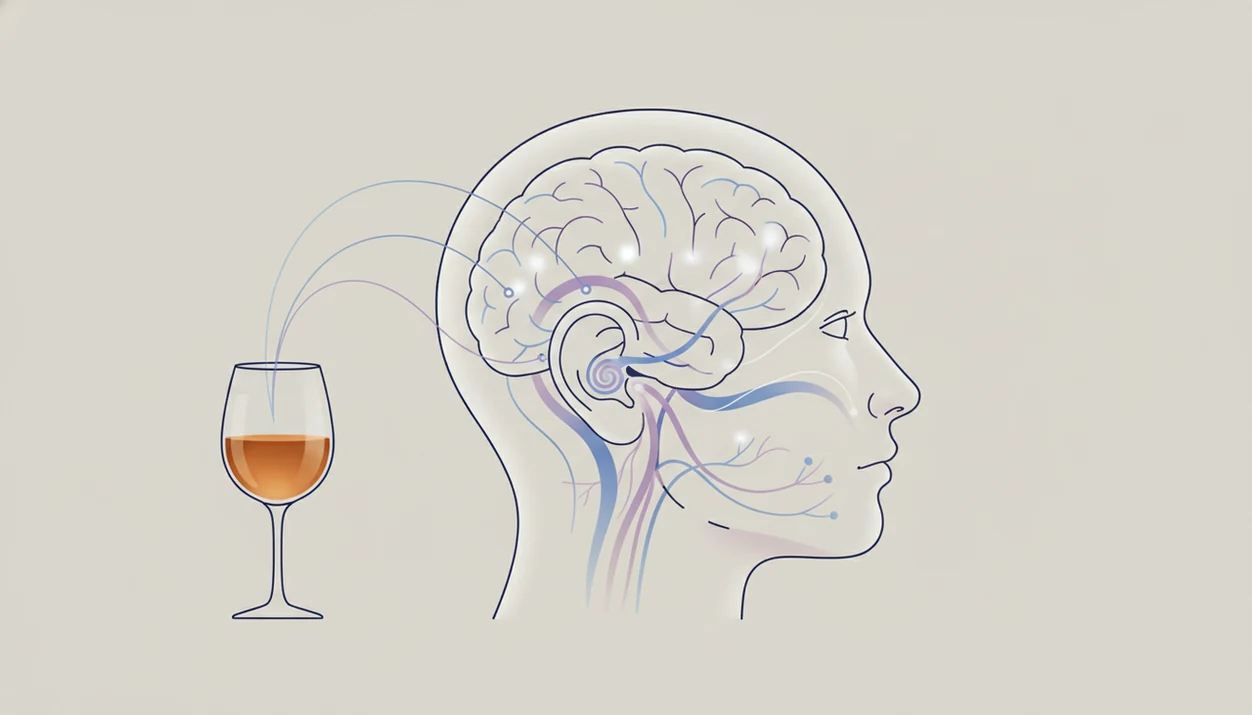
Alcohol can trigger neurological symptoms by changing hydration, blood flow, sleep quality, inflammation, and inner ear fluid balance, which may set off migraines, vertigo, tinnitus, facial nerve pain, or balance problems in sensitive people. These alcohol neurological symptom triggers vary widely, so repeated or one-sided symptoms should be tracked and discussed with a clinician rather than assumed to be a normal hangover.
> Definition: Alcohol neurological symptom triggers are alcohol-related body changes that can set off or worsen brain, nerve, balance, hearing, or inner ear symptoms in susceptible people.
TL;DR
- Alcohol can act as a migraine trigger, vertigo trigger, tinnitus amplifier, or inner ear fluid-balance disruptor, but it does not affect everyone the same way.
- The most useful first step is to track drink type, amount, timing, hydration, sleep, and symptoms for several weeks.
- Seek medical advice for severe vertigo, new neurological symptoms, one-sided hearing changes, facial weakness, persistent facial pain, or symptoms that occur without drinking.
Alcohol neurological symptom triggers at a glance
Quick answer: Alcohol may trigger neurological symptoms in sensitive people by affecting hydration, sleep, inflammation, blood vessels, and inner ear fluid balance. If symptoms are repeated, severe, one-sided, or different from your usual pattern, it is safer to track them and discuss them with a clinician instead of assuming they are just a hangover.
Key takeaways
- Even small amounts of alcohol may trigger symptoms for some people, especially after poor sleep, stress, or dehydration.
- Timing matters: symptoms that appear within hours may suggest a different pattern than symptoms that start the next day.
- Red wine, beer, spirits, and mixers can affect people differently, so tracking the exact drink can be useful.
- Reducing alcohol may lower exposure to a trigger, but it does not replace medical evaluation for new neurological symptoms.
- People who drink heavily should not stop suddenly without medical advice because alcohol withdrawal can be dangerous.
- Medication interactions matter; alcohol can worsen dizziness, sedation, and balance problems with some prescriptions.
Alcohol may trigger migraines, dizziness, vertigo, tinnitus, nerve pain sensations, and inner ear symptoms in some people, but it is usually a trigger or amplifier rather than the only cause. The pattern matters more than one rough morning.
A person might feel fine after one glass of wine one week, then get a spinning room after two cocktails and poor sleep the next. That does not prove a diagnosis. It does give you a decision point to track.
Severe migraine and balance symptoms are common enough to take seriously. The CDC reports that over 400,000 U.S. emergency department visits each year are attributed to migraine CDC, and NIDCD says 1 in 3 U.S. adults report dizziness or balance problems each year the NIH.
Tools like Me Quit can be a private way to track drinking patterns, symptom-linked cravings, and streak repair notes. It does not diagnose the cause of vertigo, migraine, tinnitus, or nerve pain.
Five facts about alcohol, migraine, vertigo, tinnitus, and nerve symptoms
- Alcohol can trigger migraine attacks in some people. Sensitivity is individual, and the same drink may not trigger every attack.
- Alcohol can worsen dizziness and vertigo. Dehydration, blood flow changes, and alcohol inner ear fluid balance shifts can all affect balance signals.
- Alcohol may aggravate Ménière’s disease symptoms. Some people notice more vertigo, tinnitus, or ear fullness after drinking, especially when sleep and salt intake also vary.
- Alcohol can make tinnitus more noticeable for some people. Evidence and personal responses are mixed, so it should not be treated as a universal tinnitus cause.
- Repeated symptoms can point to another condition. Migraine disorder, vestibular disease, hearing loss, nerve irritation, medication effects, or another neurological issue may be involved.
The useful question is not “Was I weak?” It is “What changed before the symptom showed up?”
How alcohol neurological symptom triggers work in the brain and inner ear
Alcohol neurological symptom triggers work by stressing several body systems at once: hydration, sleep regulation, blood vessel tone, inflammatory signaling, and nervous system sensitivity. In plain terms, alcohol can make the brain and balance system more reactive than usual.
Brain signaling and migraine sensitivity
For migraine-prone people, alcohol may stack with skipped meals, short sleep, stress, caffeine shifts, or dehydration. Blood vessel changes and acetaldehyde, a byproduct of alcohol metabolism, may also irritate sensitive pathways. The most common medically supported way to identify an alcohol migraine trigger is symptom tracking combined with clinician review when attacks are severe or recurring.
Inner ear fluid balance and vestibular signals
The inner ear helps tell the brain where your head is in space. Alcohol can change fluid balance and distort vestibular signal processing, which is the brain’s interpretation of balance input. One person may get temporary spins after drinking. Another person with an underlying vestibular disorder may get a longer flare.
That difference matters.
For broader brain effects of drinking, the related guide on alcohol neuroinflammation effects explains how inflammatory signaling may connect with brain fog and sensitivity.
Alcohol migraine trigger patterns and headache warning signs
Does alcohol trigger migraines? Alcohol can be an alcohol migraine trigger for some people, especially when it appears in a repeatable pattern with timing, drink type, dehydration, poor sleep, or skipped meals.
Common patterns include a same-evening headache after red wine, a next-day migraine after spirits, or a migraine that appears only when alcohol follows a stressful day. A brunch menu with bottomless mimosas can look harmless until the headache starts during the ride home. The trigger may be the alcohol, the late meal, the noise, the sugar, or all of them stacked.
The CDC reports that over 400,000 U.S. emergency department visits each year are attributed to migraine CDC. That does not mean every post-drinking headache is migraine. It means repeated severe symptoms deserve a clear log and medical input.
For migraine-prone adults, comparing drinking days with alcohol-free days is often more useful than guessing because migraine triggers commonly stack.
Alcohol inner ear fluid balance, Ménière’s disease vertigo, and tinnitus
Can alcohol affect vertigo, tinnitus, or ear fullness? Alcohol Meniere's disease vertigo and alcohol inner ear fluid balance searches usually point to the same concern: drinking may disturb the balance and hearing system in people who are already sensitive.
Vertigo and balance disruption
The inner ear helps control both balance and hearing. When fluid pressure or signal processing changes, a person may feel swaying, spinning, nausea, or pressure in one ear. NIDCD says 1 in 3 U.S. adults report at least one episode of dizziness or balance problems each year the NIH. Ménière’s disease affects about 615,000 people in the United States, according to NIDCD the NIH.
Tinnitus and ear fullness changes
Some people say alcohol makes ringing louder. Others notice no change, or only notice tinnitus when sleep is poor. A bartender reaching for the usual bottle may be your cue to pause and ask, “Do I want to test this tonight?”
Tinnitus responses to alcohol are mixed. Don’t over-read one night.
If drinking patterns are part of the experiment, the alcohol reduction guides cover lower-risk habit changes without turning the process into a public identity.
Alcohol facial nerve pain and nerve-like symptoms around the ear or jaw
Can alcohol cause facial nerve pain? Alcohol facial nerve pain is not one single condition, but drinking may amplify pain sensitivity, inflammation, jaw tension, poor sleep, migraine pathways, or pre-existing nerve irritation around the ear, cheek, temple, or jaw.
That sharp zap near the ear after a night out can be scary. It may be migraine-related facial pain, clenched-jaw muscle pain, sinus pressure, dental irritation, medication interaction, or a nerve condition. Alcohol is not automatically “alcohol neuropathy,” trigeminal neuralgia, or a facial nerve disorder.
Watch for red flags. Facial weakness, drooping, severe one-sided pain, new numbness, hearing changes, rash, confusion, fainting, or symptoms that persist after alcohol has cleared should be evaluated promptly. Clinicians typically recommend medical assessment for new neurological symptoms because timing alone cannot rule out more serious causes.
If the pattern also includes changes in memory, mood, or recovery after drinking, alcohol and neurogenesis gives more context on brain repair pathways.
When to seek medical care for alcohol-linked neurological symptoms
Seek medical care promptly when alcohol-linked symptoms are new, severe, one-sided, or different from your usual pattern. Tracking can support the appointment, but it cannot prove that a symptom is harmless or rule out neurological disease.
- Call emergency services for weakness, facial drooping, confusion, fainting, seizure, trouble speaking, new numbness, chest pain, or a sudden severe headache. Do not wait to see whether it was “just alcohol.”
- Contact urgent care or an ENT clinician for one-sided hearing loss, new ear fullness, severe spinning vertigo, repeated vomiting with vertigo, or balance trouble that makes walking unsafe.
- Book clinician review when migraines, facial pain, jaw or ear zaps, numbness, or tinnitus keep recurring after drinking or also happen on alcohol-free days.
- Bring your log of drink type, timing, sleep, hydration, medications, and symptoms, but treat it as context rather than a diagnosis.
- Ask before stopping suddenly if you drink heavily or daily. Alcohol withdrawal can be dangerous, and a clinician can help you cut back more safely.
How to track alcohol neurological symptom triggers
Use tracking to compare drinking days with alcohol-free days instead of relying on memory. Memory gets slippery after symptoms, especially when dizziness, pain, poor sleep, or anxiety are involved.
- Record the drink type and amount. Note wine, beer, spirits, cocktails, mixers, and the approximate number of standard drinks.
- Log the timing. Write when you started drinking, when symptoms began, and whether symptoms appeared the same evening or next day.
- Add body context. Track hydration, food, sleep, stress, medications, caffeine, menstrual cycle if relevant, and recent illness.
- Name the symptoms clearly. Use separate labels for migraine, spinning vertigo, swaying dizziness, tinnitus, ear fullness, facial pain, numbness, and balance trouble.
- Compare alcohol-free days. Look for symptom changes on dry days, not just after nights when symptoms were intense.
- Review the pattern weekly. Bring repeated, severe, one-sided, or new neurological symptoms to a clinician rather than self-diagnosing.
Me Quit can help you log drink cues, cravings, dry days, symptom notes, and streak repairs for private pattern tracking. It is not a medical diagnosis, detox, or emergency-care tool.
The pocket check is real.
If your tracking shows repeated alcohol-linked symptoms, a best drink less app guide can help you compare phone-based ways to set limits, plan dry days, and reduce cue-driven drinking.
Limitations
Alcohol is not a proven universal cause of migraine, vertigo, tinnitus, or facial nerve pain. It can be one variable in a larger trigger map, which is why careful tracking beats certainty after one episode.
- Persistent facial pain, one-sided hearing change, severe vertigo, fainting, weakness, confusion, rash, or new neurological symptoms require medical evaluation.
- Alcohol use context matters. CDC surveillance estimates found 25.1% of U.S. adults reported past-month binge drinking CDC alcohol data, and SAMHSA reported 7.5% had past-year alcohol use disorder SAMHSA.
- Cutting back can help reveal patterns, but people at risk for withdrawal should get medical guidance before stopping suddenly.
For long-term health context beyond symptoms, long term alcohol organ damage covers body-wide risks in more detail.
FAQ
Can alcohol trigger migraines?
Yes. Alcohol can trigger migraine attacks in some people, but it is not a universal migraine trigger.
Why do I get dizzy after drinking?
Alcohol can affect hydration, blood flow, balance signaling, and inner ear function. These changes can cause temporary dizziness or reveal an existing vestibular sensitivity.
Can alcohol worsen vertigo?
Yes, alcohol may worsen vertigo in people with vestibular sensitivity or inner ear disorders. Severe, recurring, or new vertigo should be assessed by a clinician.
Does alcohol affect tinnitus?
Alcohol may make tinnitus more noticeable for some people, but evidence and user responses are mixed. A symptom log can help show whether it matters for you.
Can alcohol cause facial nerve pain?
Alcohol may amplify pain sensitivity, jaw tension, migraine-related facial symptoms, or existing nerve irritation. Persistent facial pain, numbness, weakness, or one-sided symptoms need medical evaluation.
Does alcohol worsen Ménière’s disease?
Alcohol may aggravate vertigo, tinnitus, or ear fullness in some people with Ménière’s disease. Individual triggers vary, so tracking and clinician guidance are useful.
Which alcohol triggers migraines most?
Triggers vary, though some people report sensitivity to red wine, beer, spirits, congeners, dehydration, or the total amount consumed. Pattern tracking is more reliable than assuming one drink type is always the cause.
Should I stop drinking completely?
Reducing or avoiding alcohol during tracking may help identify patterns. If symptoms are severe, recurring, one-sided, or new, get medical advice rather than relying only on self-tracking.