How Alcohol Rewires the Brain’s Reward System
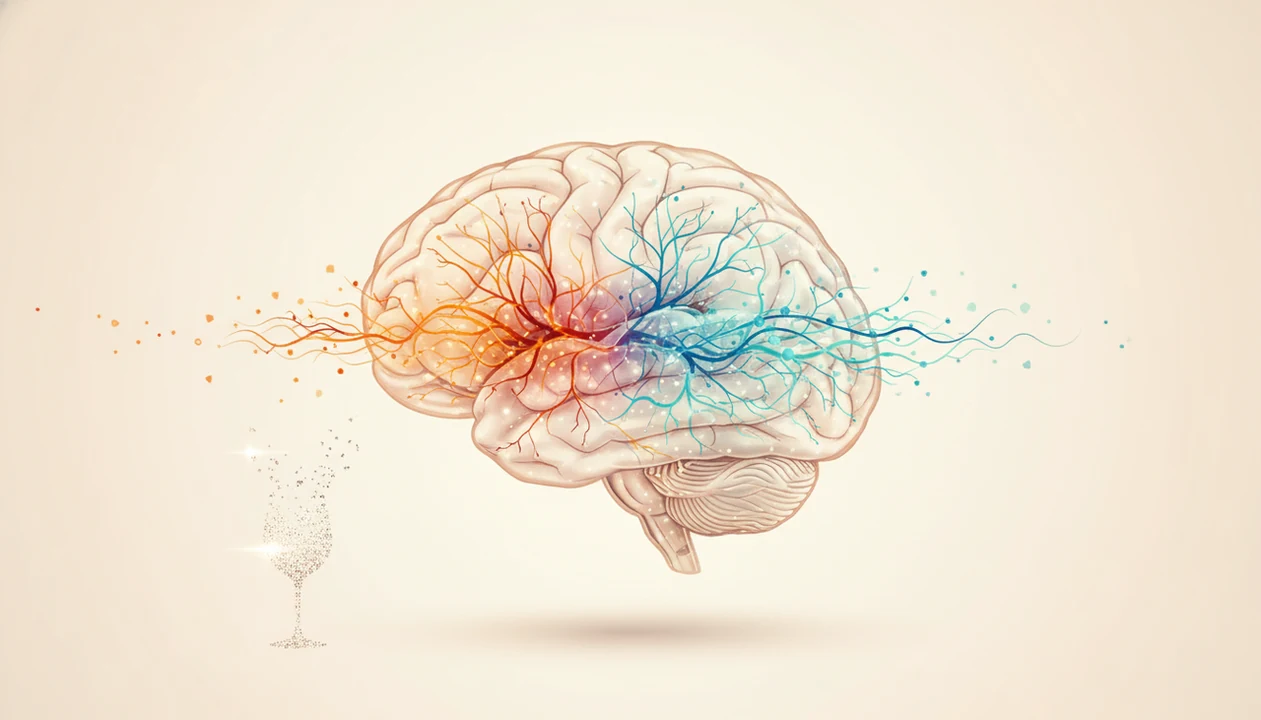
The term alcohol neuroadaptation recovery describes the brain’s gradual process of recalibrating dopamine, stress, sleep, motivation, and decision-making pathways after regular or heavy drinking. Recovery can begin within days to weeks, but reward sensitivity and cognitive function often improve over months rather than instantly.
> Definition: Alcohol neuroadaptation is the brain’s chemical and structural adjustment to repeated alcohol exposure, especially in reward, stress, memory, and impulse-control circuits.
TL;DR
- Alcohol can make the brain less responsive to ordinary rewards by overstimulating dopamine and related neurotransmitter systems.
- A “dopamine reset after quitting alcohol” is a useful phrase, but real recovery is gradual and involves GABA, glutamate, serotonin, stress hormones, sleep, and behavior change.
- Many brain changes improve with abstinence or major reduction, especially when paired with sleep, exercise, nutrition, therapy, social support, and craving tracking.
Alcohol neuroadaptation recovery: the core definition
Quick answer: Alcohol neuroadaptation recovery is the brain’s adjustment after repeated alcohol exposure, especially in reward, stress, sleep, and self-control systems. For many people, early improvements can appear within weeks, while motivation, mood stability, and decision-making may keep improving over months with reduced drinking or abstinence.
Key takeaways
- Feeling flat or unmotivated early on can be a temporary brain-recalibration phase, not personal failure.
- Sleep, exercise, nutrition, and predictable routines often support recovery more than willpower alone.
- Cravings are usually time-limited; tracking when they happen can reveal patterns you can change.
- Withdrawal symptoms can be medically risky for heavy daily drinkers; ask a clinician before stopping suddenly.
- Progress is often uneven, with better days and setback days rather than a straight line.
- Medication and counseling may help some people reduce relapse risk and stabilize early recovery.
Alcohol neuroadaptation recovery is the process of the brain shifting back toward healthier reward, stress, sleep, memory, and impulse-control balance after repeated alcohol exposure. It is not a character flaw, and it is not solved by “just wanting it more.”
Regular drinking teaches the brain to expect alcohol at certain decision points. The weeknight pour after laptop shutdown becomes a cue. The routine is drinking. The reward is relief, numbness, or social ease.
Over time, the brain adapts to that pattern. Recovery means those adaptations start changing again. Dopamine response, stress chemistry, sleep rhythm, and executive function may all move at different speeds.
The pace varies. Drinking history, age, liver health, sleep debt, stress load, mental health, nutrition, and support all matter. A restart can feel slow, but slow does not mean stuck.
5 facts about alcohol dopamine hijacking and brain recovery
- Alcohol can create outsized dopamine signaling. It can make drinking feel more rewarding than ordinary pleasures like food, music, conversation, or finishing a hard task.
- Repeated drinking can reduce reward sensitivity. The brain may downshift its response, which raises tolerance and makes normal life feel flatter for a while.
- Early recovery can start within days to weeks. Sleep may still be rough, cravings may spike, and mood may wobble, but the system is already reacting to less alcohol exposure.
- Motivation often lags behind the decision to quit. Flat mood, low pleasure, poor focus, and the “I need something” feeling can reflect reward-system recalibration.
- Neuroplasticity makes improvement common. Timelines differ, and people with severe withdrawal risk, seizures, hallucinations, or heavy long-term drinking need medical support.
That last point matters on the hard days. A dull Tuesday is not proof that your brain is broken.
Alcohol’s brain reward system cycle: dopamine, GABA, and glutamate
Alcohol affects the mesolimbic reward pathway, a brain circuit that helps tag something as worth repeating. In plain language, it teaches the brain, “Do that again.” Dopamine is part of that teaching signal, but alcohol does not only touch dopamine.
Alcohol also changes GABA, glutamate, serotonin, and stress systems. GABA slows the nervous system. Glutamate helps with alertness and learning. When alcohol keeps pushing those systems, the brain compensates. Then the same amount may feel less rewarding than it used to.
That is tolerance.
Negative reinforcement can follow. Drinking shifts from “this feels good” to “this stops the edge.” Dry mouth, restless legs, tight chest, and irritated thoughts can become the reason for another drink.
This is common enough to be a public-health issue. In 2022, about 29.5 million people aged 12 or older in the United States had alcohol use disorder, according to the NIAAA NIAAA alcohol data. For nervous-system context beyond reward, the related guide on alcohol nervous system regulation goes deeper.
Alcohol neuroadaptation recovery timeline by brain function
Recovery does not move like a clean countdown. Sleep, craving, mood, memory, and decision-making often improve on different schedules.
| Recovery window | What may happen | What to watch |
|---|---|---|
| Days 1-7 | Withdrawal risk, sleep disruption, anxiety, cravings, early stabilization | Severe shaking, seizures, hallucinations, confusion, or suicidal thoughts need urgent care |
| Weeks 2-4 | Clarity, sleep rhythm, and early brain-volume recovery may begin | Cravings can still appear at old drinking times |
| Months 1-3 | Reward sensitivity, mood stability, and executive function may improve | Motivation may remain uneven |
| Months 3-12 | Verbal memory and executive function can keep improving | Progress may be noticeable but incomplete |
| Year 1+ | Long-term recovery is possible | Some residual deficits can persist after severe long-term use |
First days after quitting alcohol
The first week can be medically risky for some people. Clinicians typically recommend supervised detox for people with severe dependence, past withdrawal seizures, hallucinations, or heavy daily drinking. For clinical context, alcohol withdrawal can include autonomic instability, seizures, and delirium tremens in higher-risk cases the NIH.
First month of alcohol abstinence
By weeks two to four, some people notice clearer mornings. Others mostly notice boredom, broken sleep, and cravings at the old pour time.
Three to twelve months of brain recovery
For many people, the most useful recovery plan is months of repeated cues, replacement actions, and support, not a single dopamine reset date.
Before you start: check alcohol withdrawal risk
Before cutting down or quitting, check whether withdrawal could be medically risky. If risk is high, the next step is not a tougher habit plan; it is clinician-guided care.
- Review your drinking pattern honestly. Heavy daily drinking, morning drinking to steady your body, or needing alcohol to sleep can signal dependence.
- Check your history before stopping abruptly. Call a clinician first if you have ever had withdrawal seizures, hallucinations, delirium, hospital detox, or severe shaking after reducing alcohol.
- Treat emergency symptoms as urgent. Seek immediate medical care for seizures, confusion, hallucinations, severe tremors, chest pain, fainting, high fever, uncontrolled vomiting, or suicidal thoughts.
- Separate tracking from detox supervision. A craving log, drink counter, or streak tool can show patterns, but it cannot monitor blood pressure, dehydration, delirium, or seizure risk.
- Choose the safer path for your level of risk. Lower-risk drinkers may plan gradual reduction with support and clear limits. Higher-risk drinkers need medical advice before a sudden stop, and some need supervised withdrawal.
5 steps to support dopamine reset after quitting alcohol
A dopamine reset after quitting alcohol is better treated as a practice plan than a deadline. Use the brain’s neuroplasticity by repeating small, low-drama choices.
The goal is not to force pleasure back on command. The goal is to reduce alcohol cues, repeat steadier rewards, and give sleep, stress chemistry, and decision-making circuits enough time to stabilize.
- Track drinking, cravings, triggers, and mood patterns. Log time, place, feeling, and what happened next, especially after work or during scrolling in bed.
- Stabilize sleep and morning light exposure. Get outside early when you can, and protect the first hour before bed from alcohol cues.
- Add low-friction exercise and movement. Start with a 10-minute walk, not a heroic gym plan.
- Replace alcohol rewards with repeatable natural rewards. Use food, connection, hobbies, music, goals, or a phone timer when the old cue hits.
- Get professional support when risk is high. Withdrawal symptoms, severe depression, anxiety, or repeated relapse loops deserve medical or behavioral health care.
Me Quit can help adults privately track cravings, drink limits, streaks, slips, and milestones. It can support cue tracking and streak repair, but it does not provide detox supervision, withdrawal monitoring, or emergency care.
Brain reward system alcohol symptoms during early recovery
Why do I feel flat, bored, foggy, or irritable after I stop drinking? These symptoms often happen because the brain reward system alcohol cycle is recalibrating after repeated dopamine spikes and stress-system rebound.
Common symptoms include anhedonia, low motivation, irritability, flat mood, brain fog, and cravings. The body may feel jumpy before the mind has words for it. Tight chest. Restless legs. That vague “I need something” signal.
These symptoms are common, but they are not proof of permanent damage. They are also not something to ignore if they become intense.
Get medical or behavioral health support for severe withdrawal, suicidal thoughts, hallucinations, seizures, severe depression, or inability to function. If cravings are the main issue, the guide on alcohol neuroadaptation cravings explains how cue, routine, and reward loops keep firing.
Common mistakes that slow alcohol neuroadaptation recovery
Mistake 1: Expecting dopamine to reset in a few days. Early relief is possible, but reward sensitivity usually rebuilds over weeks and months.
Mistake 2: Swapping alcohol for another high-spike reward. Compulsive sugar, gambling, endless scrolling, or risky spending can keep the reward system chasing intensity.
Mistake 3: Ignoring sleep because motivation feels urgent. Sleep is not a bonus habit. It is part of brain repair.
Mistake 4: Keeping the same cues and demanding willpower. If the glass, bottle, and favorite chair stay in the same place, the decision point stays loaded.
Mistake 5: Trusting rapid dopamine repair promises. Supplements and programs can sound tidy, but brain recovery is rarely that neat.
Private tracking helps because it turns a lapse into data. “I already messed up, so why not keep going?” becomes a streak repair moment. For broader habit plans, the alcohol reduction guides organize related brain, body, and craving topics.
MRI evidence that alcohol-related brain changes can improve
MRI research supports a careful message: alcohol-related brain changes can improve, but not instantly and not always completely. Chronic heavy drinking has been associated with measurable brain-volume and white-matter changes in regions involved in memory, decision-making, and impulse control the NIH.
Other MRI studies have found significant brain-volume increases after about four weeks of abstinence in several regions. That does not mean everyone feels normal in a month. It means measurable repair can begin earlier than many people expect.
A longitudinal study found that verbal episodic memory and executive functions can significantly improve over the first 3 to 12 months of abstinence, although not always to control-group levels the NIH. Longer-term data also show that meaningful abstinent recovery is common among people treated for alcohol use disorder.
Me Quit is a quit smoking app that helps adults stop smoking, stop vaping, drink less, and track cravings, streaks, and milestones. For related brain repair topics, alcohol neurogenesis recovery covers new-cell growth and recovery habits.
Limitations
Alcohol brain recovery science is useful, but it cannot promise a personal finish date.
- A clean “dopamine reset” is a simplified phrase, not a precise diagnosis or lab-confirmed endpoint.
- Cutting down may help some people, but others need full abstinence or medically supervised detox.
- This article is educational and is not a substitute for medical care, especially if withdrawal risk is present.
One more practical limit: an app can remind you, track patterns, and support a reset, but it cannot monitor blood pressure, seizures, delirium, or severe depression. Those need clinicians.
FAQ
Does alcohol lower dopamine?
Alcohol can initially increase dopamine signaling, which helps make drinking feel rewarding. With repeated use, the brain may become less sensitive to natural rewards.
Can dopamine recover after alcohol?
Dopamine-related reward function can improve for many people after stopping or sharply reducing alcohol. Recovery usually unfolds over weeks to months, not overnight.
How long does dopamine reset take?
There is no exact dopamine reset date after quitting alcohol. Motivation, pleasure, focus, and mood often continue improving for months.
Why is sobriety boring at first?
Early sobriety can feel boring because ordinary rewards may not register strongly yet. This anhedonia often reflects reward-system recalibration.
Can alcohol brain damage reverse?
Some alcohol-related brain changes can partially improve, including early structural changes seen in imaging studies. Severe or long-term heavy drinking can leave lasting deficits.
Does cutting down help the brain?
Reducing alcohol exposure may help the brain recover, especially if it improves sleep, nutrition, and craving control. Some people need abstinence or medical support instead.
What helps brain recovery fastest?
Sleep, exercise, nutrition, therapy, social connection, and craving tracking are evidence-aligned supports for alcohol neuroadaptation recovery. Me Quit may help with private tracking, but it is not medical treatment.
When is alcohol withdrawal dangerous?
Alcohol withdrawal is dangerous when seizures, hallucinations, confusion, severe shaking, high fever, or suicidal thoughts appear. Seek urgent medical support if any of these symptoms occur.