
Why Alcohol Makes Your Kidneys Work Harder
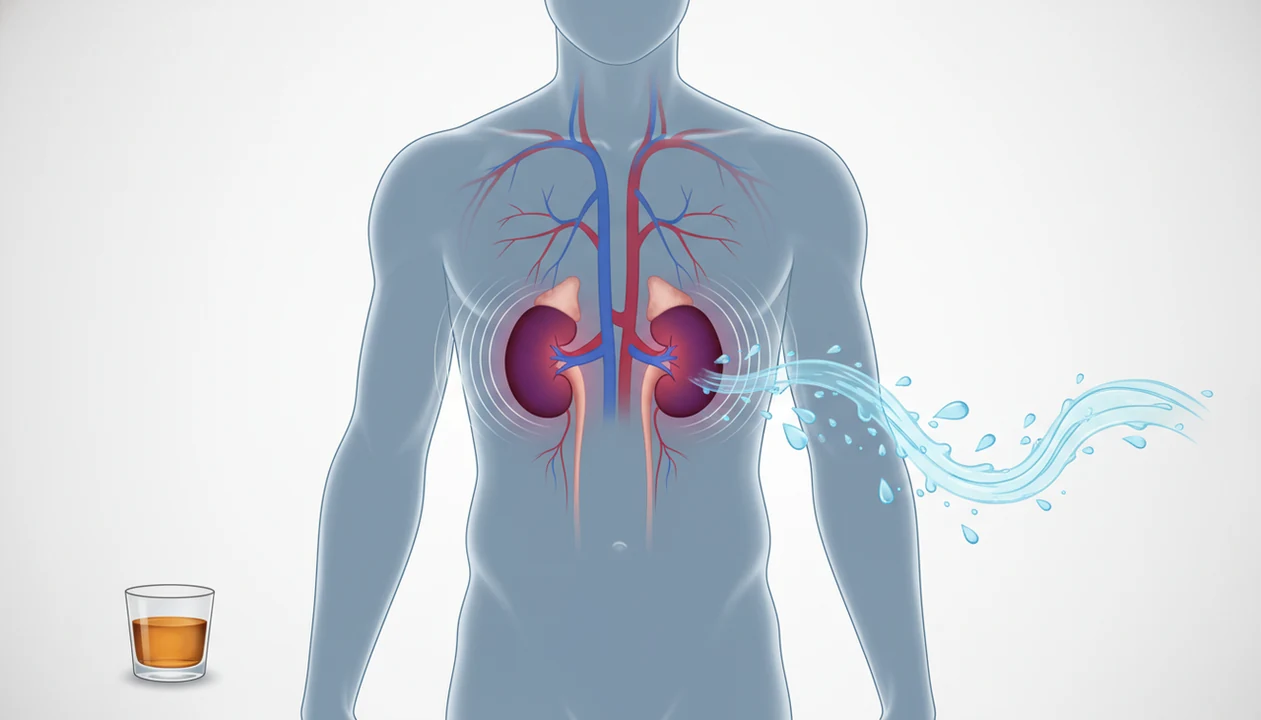
Alcohol kidney stress happens because your kidneys must filter alcohol-related waste while also correcting dehydration, electrolyte shifts, and blood pressure changes. Alcohol suppresses vasopressin, makes you urinate more, and can increase kidney workload most sharply during heavy or binge drinking.
> Definition: Alcohol kidney stress is the extra filtration, fluid-balance, hormone, and blood-pressure workload placed on the kidneys after drinking alcohol.
TL;DR
- Alcohol increases kidney workload by combining toxin processing, dehydration, urine loss, and electrolyte disruption.
- Alcohol suppresses vasopressin, the hormone that helps kidneys conserve water, which is why drinking can cause frequent urination and thirst.
- Heavy or binge drinking is the highest-risk pattern and is linked with acute kidney injury, high blood pressure, and higher long-term kidney disease risk.
Medical scope: This guide is educational and is not a diagnosis, detox plan, or substitute for kidney labs, blood pressure monitoring, or clinician advice. If you have kidney disease, liver disease, diabetes, high blood pressure, pregnancy, or medication concerns, use this as background for a medical conversation rather than personal drinking clearance.
Alcohol kidney stress at a glance
Quick answer: Alcohol can stress the kidneys because the body has to process alcohol while restoring normal fluid balance, blood chemistry, and circulation. The strain is often higher with heavy drinking, binge episodes, dehydration, illness, or other kidney stressors.
Key takeaways
- Spacing drinks and alternating with water may reduce dehydration-related strain, but it does not make heavy drinking risk-free.
- Kidney stress after drinking is more concerning if you also have diabetes, high blood pressure, kidney disease, or heart disease.
- Dark urine, dizziness, swelling, flank pain, or reduced urination after drinking should be taken seriously.
- Cutting down total alcohol intake is usually more protective than switching drink types.
- Avoid mixing heavy drinking with dehydration, intense exercise, illness, or frequent NSAID use unless a clinician says it is safe.
- People who drink daily or heavily may need medical guidance before stopping suddenly because withdrawal can be dangerous.
Alcohol kidney stress means your kidneys are doing extra cleanup and regulation after alcohol enters your bloodstream. The strain is not only about “filtering alcohol.” It also includes managing water loss, salt balance, acid-base chemistry, and pressure inside blood vessels.
Three pathways matter most: filtration demand, dehydration, and disrupted blood chemistry. A slow glass of wine with food is not the same kidney workload as several shots in a short window, but no alcoholic drink is kidney-neutral.
Pattern beats category.
Cutting back can reduce repeated kidney strain because it lowers the number of dehydration spikes, blood pressure surges, and next-day recovery cycles your kidneys must handle. For a deeper filtration view, the related guide on alcohol kidney filtration breaks down the filtering process.
Five facts about drinking and kidney strain
- Alcohol makes kidneys work harder by adding filtration demand while the body is also correcting fluid and blood chemistry changes.
- Alcohol acts as a diuretic, so many people urinate more and wake up thirsty after drinking.
- Binge drinking has been linked with acute kidney injury, including rare severe cases that require temporary dialysis.
- Alcohol suppresses vasopressin, also called antidiuretic hormone, which normally helps the kidneys conserve water.
- Mild alcohol-related strain may improve when drinking is reduced, but advanced kidney damage may not fully reverse.
The practical takeaway is simple: drinking and kidney strain are most concerning when alcohol arrives fast, repeatedly, or on top of other risks. A sour stomach before a social event can be a useful warning sign, not just nerves.
How alcohol kidney workload works
Kidneys filter blood, regulate fluid volume, balance sodium and other salts, help control acid-base chemistry, and respond to blood pressure signals. Alcohol adds simultaneous demands instead of one tidy task. Your kidneys may be handling extra urine output while also trying to keep blood concentration stable.
That’s the hard part.
Alcohol metabolism mainly happens in the liver, but alcohol-related metabolites and liver stress can still affect kidney function. When liver disease is present, kidney circulation and filtering pressure can become more vulnerable. A review in Alcohol Research: Current Reviews found that both acute and chronic alcohol consumption can compromise kidney function, especially when liver disease is also involved the NIH.
For many adults, reducing heavy drinking episodes is often more protective than switching beverage types because the kidneys respond to ethanol load, dehydration, and pressure changes.
Alcohol vasopressin kidney effects and dehydration
Vasopressin, also called antidiuretic hormone, tells the kidneys to hold onto water when the body needs fluid. Alcohol suppresses vasopressin signaling, so the kidneys release more water into urine instead of conserving it.
That is why the bathroom trips stack up.
Lower vasopressin can mean more urine output, less water retention, and dehydration. Then the kidneys have to regulate a smaller circulating fluid volume while keeping blood chemistry within a narrow range. The morning-after thirst is not random. It reflects a body trying to restore fluid balance after alcohol pushed water out.
Clinicians typically recommend that people with kidney disease, hypertension, diabetes, liver disease, or medication concerns ask for personalized alcohol guidance rather than guessing from general drinking limits.
Fluid and electrolyte imbalance from alcohol kidney stress
Electrolytes are charged minerals that support nerves, muscles, heart rhythm, and fluid balance. Sodium and magnesium are two examples that can be disrupted in heavy drinkers, especially when alcohol combines with vomiting, sweating, poor food intake, or frequent urination.
It can pile up quickly.
Clinical reviews report that alcohol can cause multiple fluid and electrolyte disturbances, including low sodium and low magnesium, which increase acute kidney injury risk in heavy drinkers. These shifts are one reason a heavy night can feel so physically messy the next day. The same kidney-function review notes that alcohol-related fluid and electrolyte abnormalities can interact with liver disease, dehydration, and acute kidney injury risk the NIH.
The kidneys do not manage alcohol in isolation. They manage alcohol plus lost fluid, missed meals, sleep loss, stomach upset, and sometimes liver strain. The liver connection is covered more fully in alcohol liver disease stages.
Binge drinking and acute kidney strain
Binge drinking is generally defined by the National Institute on Alcohol Abuse and Alcoholism as a pattern that brings blood alcohol concentration to 0.08% or higher, often about 4 or more drinks for women or 5 or more drinks for men within about 2 hours NIAAA alcohol data. That pattern can raise blood alcohol quickly and create a sharp dehydration load.
A rapid rise matters because the kidneys must respond while alcohol is still changing hormones, urine output, and blood vessel tone. Severe binge episodes have been linked with acute kidney injury, and some reported cases have required temporary dialysis.
Repeated acute stress episodes may also contribute to long-term kidney risk. One Friday 6 p.m. drink can quietly turn into a chain of automatic choices, especially if smoking or vaping joins the routine. For broader health effects beyond the kidneys, the guide on does alcohol kill brain cells explains what alcohol does to the brain.
High blood pressure as an alcohol kidney stress pathway
Kidneys are dense blood-filtering organs, so pressure inside blood vessels matters. Alcohol use can contribute to high blood pressure, and repeated pressure strain can damage the small vessels that supply kidney filters.
Per the CDC, hypertension accounts for about 29% of end-stage kidney disease cases in the United States CDC statistics. Alcohol is not the only cause of hypertension, but it is a recognized contributor.
The most common medically supported way to reduce alcohol-related pressure strain is to cut heavy drinking patterns while also monitoring blood pressure with a clinician when risk factors are present. If kidney symptoms or lab changes are already part of the picture, alcohol and kidney problems gives a wider risk overview.
Alcohol type versus alcohol amount for kidney stress
Beer, wine, and liquor do not have fundamentally separate kidney safety profiles. Total ethanol intake, drinking speed, hydration status, and the person’s health risks usually matter more than the beverage label.
| Drink type | Main kidney stress issue | Extra factors |
|---|---|---|
| Beer | Total alcohol dose across servings | Larger fluid volume can hide rising intake |
| Wine | Ethanol amount and repeat pours | Food, pace, and glass size change exposure |
| Liquor | Fast ethanol delivery in small volume | Shots and strong mixed drinks raise risk quickly |
| Mixed drinks | Alcohol plus speed of intake | Sugary mixers may worsen next-day dehydration for some people |
No alcoholic drink should be treated as kidney-safe. A sparkling water in a rocks glass can work because it preserves the hand-to-glass routine without adding ethanol.
Cutting back to reduce alcohol kidney workload
Fewer heavy-drinking episodes usually means fewer dehydration cycles, fewer blood pressure spikes, and less repeated kidney workload. Private habit tracking can help because it turns a vague goal into visible patterns: dry days, drink limits, craving windows, and reset notes.
Small next step.
Substitution routines also matter. A lime wedge sinking in club soda, a planned food stop before the bar, or leaving before the taxi queue fills with glowing vape tips can all reduce cue-driven drinking. Me Quit can help adults track cravings, dry days, drink limits, streaks, and milestones while they cut back.
Tools like Me Quit can support practical behavior change, not diagnose kidney disease or provide medical treatment. The alcohol reduction guides cover more ways to cut back without turning one slip into a restart from zero.
How to use this information to reduce alcohol kidney stress
Use this information by turning kidney risk into a few repeatable choices before drinking starts. The goal is not perfect control; it is fewer high-stress drinking windows and faster recognition when symptoms need medical help.
- Record your real pattern for a week or two, including total drinks, pour sizes, dry days, and any binge windows where drinks stack quickly.
- Set your limit before the first pour so the decision is made while your brain is clear, not during a craving or a noisy last-call moment.
- Alternate drinks with water or nonalcoholic substitutes to slow the pace and reduce the dehydration loop that makes kidneys work harder.
- Avoid stacking stressors such as alcohol plus skipped meals, fever, vomiting, heavy sweating, dehydration, or NSAID pain relievers unless a clinician has said they are safe for you.
- Track blood pressure or symptoms if you already have hypertension, diabetes, kidney concerns, liver disease, or abnormal labs.
- Ask a clinician promptly about swelling, reduced urination, flank pain, blood or foam in urine, or kidney test changes instead of trying to self-manage.
Combined kidney stressors: alcohol, smoking, NSAIDs, and illness
Kidney risk can stack when several stressors occur together. Alcohol may be more concerning when combined with smoking, high blood pressure, diabetes, liver disease, dehydration, or common painkillers such as NSAIDs.
- Smoking: Smoking can damage blood vessels, including the small vessels that support kidney filtering.
- High blood pressure: Pressure strain can injure kidney vessels over time.
- Diabetes: Blood sugar changes can add long-term filtering stress.
- Liver disease: Liver and kidney circulation are closely connected in advanced illness.
- NSAIDs and illness: Pain relievers, vomiting, fever, and dehydration can change kidney risk; ask a clinician before mixing concerns.
Me Quit offers private progress tracking and trigger awareness; it is not emergency care, detox supervision, or medication guidance.
When to seek medical help for kidney symptoms after drinking
Seek medical help promptly if kidney-type symptoms appear after drinking, especially if urination drops, swelling develops, confusion sets in, or urine looks bloody. Do not wait for an app or a next-day habit reset to sort out acute symptoms or possible detox risk.
Known kidney disease changes the threshold. If you already have chronic kidney disease, abnormal kidney labs, one kidney, diabetes, high blood pressure, or liver disease, call a clinician sooner because less reserve can make dehydration or medication effects more dangerous. Vomiting, fever, heavy sweating, NSAID pain relievers, and a heavy binge can all multiply the strain.
- Check for urgent signs such as very little urine, new swelling in the legs or face, severe flank pain, confusion, fainting, blood in urine, or symptoms of severe dehydration.
- Call medical care early if you have kidney disease or high-risk conditions, even if symptoms seem mild.
- Avoid guessing with apps because Me Quit and similar tools cannot triage acute kidney injury, withdrawal, poisoning, or detox needs.
- Bring clear details to clinicians: drink amounts, timing, medications or NSAIDs, vomiting or fever, urine changes, pain, swelling, and when symptoms started.
Limitations
Alcohol and kidney risk are real, but the evidence has limits.
- Exact zero-risk alcohol thresholds for kidney stress are not well defined for every individual.
- Many studies are observational, so they cannot prove direct causation in every case.
- Online information cannot replace personal medical advice, lab testing, or a clinician’s review.
If you already have abnormal kidney labs, swelling, blood pressure issues, or liver disease, general drinking advice is not enough. Bring the actual pattern to your clinician: number of drinks, timing, binges, medications, and symptoms.
FAQ
Does alcohol make kidneys work harder?
Yes. Alcohol increases kidney workload by adding filtration, hydration, electrolyte, and blood pressure demands at the same time.
Why do I pee more after drinking alcohol?
Alcohol suppresses vasopressin, the hormone that helps kidneys conserve water. Lower vasopressin makes alcohol act like a diuretic.
Can alcohol cause kidney damage?
Heavy or binge drinking can contribute to acute kidney injury and may increase long-term kidney disease risk. Risk is higher with hypertension, liver disease, diabetes, dehydration, or repeated binges.
Is beer bad for your kidneys?
Beer can stress the kidneys when total alcohol intake is high or drinking happens quickly. Amount and pattern matter more than beer versus wine or liquor.
Can kidneys recover after alcohol?
Mild alcohol-related strain may improve after cutting back or stopping. Advanced kidney damage may not fully reverse.
What are signs alcohol may be affecting your kidneys?
Possible signs include reduced urination, swelling, fatigue, flank pain, foamy urine, blood in urine, or high blood pressure. Early kidney stress may have no obvious symptoms.
Does drinking water protect kidneys from alcohol?
Water can help reduce dehydration. It does not cancel alcohol’s effects on vasopressin, blood pressure, electrolytes, or kidney cells.
When should I call a doctor after drinking alcohol?
Seek medical care for severe dehydration, confusion, reduced urination, swelling, blood in urine, severe pain, or known kidney disease. Urgent symptoms should not be managed with an app, including Me Quit.