
How Alcohol Can Increase Kidney Failure Risk
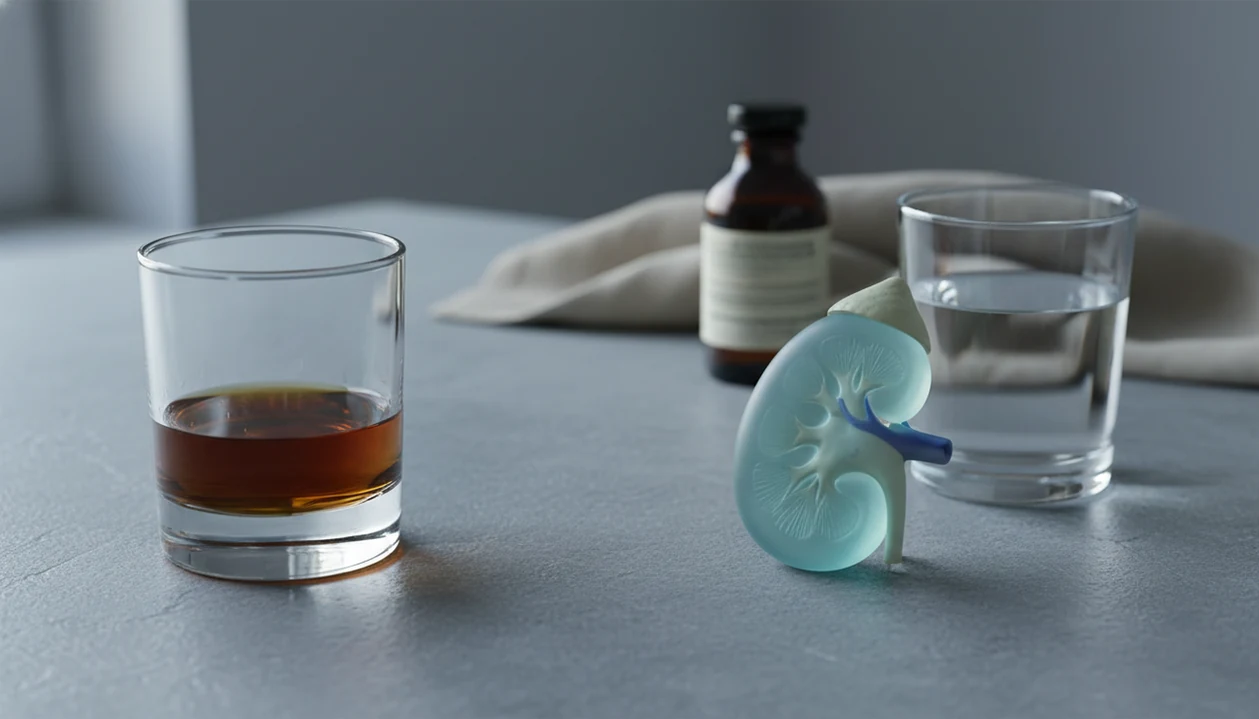
Heavy or binge drinking can increase kidney failure risk by dehydrating the body, raising blood pressure, and triggering acute kidney injury that may become chronic over time. The relationship between alcohol and kidney failure is strongest for repeated heavy drinking, existing chronic kidney disease, high blood pressure, diabetes, liver disease, or alcohol use disorder.
> Definition: Alcohol-related kidney damage means kidney strain or injury caused directly by alcohol handling in the kidneys or indirectly through dehydration, blood pressure changes, liver disease, heart stress, and medication interactions.
Medical scope: this page is educational and cannot diagnose kidney disease, acute kidney injury, alcohol use disorder, or medication safety; use urgent care or your clinician for symptoms, abnormal labs, CKD, pregnancy, or trouble controlling alcohol.
TL;DR
- Binge drinking can trigger acute kidney injury, especially when dehydration, vomiting, low blood pressure, NSAIDs, or other substances are involved.
- Chronic heavy drinking can worsen high blood pressure, liver disease, and heart health, all of which can accelerate chronic kidney disease.
- Light drinking may not raise CKD risk for many healthy adults, but that evidence does not make alcohol safe for people who struggle to control drinking.
Alcohol and kidney failure risk in 60 seconds
Quick answer: Alcohol may contribute to kidney failure risk, especially when drinking is heavy, frequent, or combined with high blood pressure, diabetes, dehydration, liver disease, or existing kidney disease. Cutting back or stopping can reduce kidney strain for many people, but anyone with kidney symptoms, severe dependence, or possible withdrawal risk should involve a clinician.
Key takeaways
- The kidneys are most vulnerable when alcohol is paired with dehydration, vomiting, heat exposure, or intense exercise.
- Blood pressure is a key link: alcohol can raise it, and high blood pressure is a major driver of kidney damage.
- People with CKD, diabetes, heart disease, or liver disease should ask a clinician what alcohol limit is safe for them.
- Binge drinking may trigger short-term kidney injury even in people without known kidney disease.
- Reducing drinks gradually can be safer than stopping suddenly if you drink heavily every day.
- Track cravings, triggers, and drinking patterns so you can spot risky situations before they escalate.
One ordinary drink rarely causes kidney failure by itself, but heavy drinking and binge drinking can raise risk. The concern is pattern, dose, medical history, and what happens around the drinking.
Acute kidney injury means kidney function drops suddenly, often during dehydration, illness, vomiting, low blood pressure, or toxin exposure. Chronic kidney disease means kidney function declines over months or years. Kidney failure is the severe stage, when the kidneys can no longer meet the body’s needs without major medical support.
Alcohol can strain kidneys through fluid loss, higher blood pressure, liver disease, heart strain, and direct kidney handling of ethanol. A 2019 review found that about 10% of ingested ethanol is excreted unchanged by the kidneys the NIH.
Tools like Me Quit can help adults privately track drinking urges and reduction goals, but they don’t diagnose kidney disease.
Five facts about alcohol, acute kidney injury, and CKD
- Heavy or binge drinking can cause alcohol acute kidney injury through dehydration, low blood pressure, and stress on kidney cells.
- Repeated acute kidney injury episodes can raise long-term chronic kidney disease risk, even if each episode seems to “clear up.”
- Chronic heavy drinking can worsen high blood pressure, liver disease, heart disease, and diabetes control, which all affect kidney function.
- Light to moderate drinking may look neutral in population data, but that average does not guarantee safety for one person.
- Kidney damage may improve if caught early, but scarring and long-term loss of kidney function may be permanent.
The beer fridge hum during dinner prep can feel like a small cue, not a medical risk. That’s why a trigger map matters. It catches the routine before the body pays for it.
For adults who binge, reducing peak drinking episodes is often more kidney-protective than only counting weekly totals because dehydration and blood pressure swings happen during the binge itself.
How alcohol harms kidney function
Alcohol can harm kidney function by disrupting fluid balance, raising blood pressure, and worsening diseases that already stress the kidneys. The kidneys filter blood, remove waste, manage electrolytes, regulate fluid levels, and help control blood pressure.
Alcohol has a diuretic effect, which means it can make you urinate more. If you are also sweating, vomiting, eating poorly, or not drinking water, blood flow to the kidneys can drop. Less blood flow can trigger acute kidney injury.
There’s a second pathway: pressure. Over time, heavy alcohol use can raise blood pressure, and high pressure damages small kidney blood vessels. Alcohol can also contribute indirectly through liver disease and heart disease; our page on How Alcohol Can Weaken the Heart explains the heart side of that loop.
Small amounts may not cause measurable harm in many healthy adults. But “healthy average” is not the same as “safe for me.”
A more useful pocket check is practical: if drinking is paired with heat, vomiting, hard exercise, NSAIDs, or known CKD, the kidney-risk context has changed.
Can alcohol cause kidney failure?
Can alcohol cause kidney failure? Yes, alcohol can contribute to kidney failure risk, especially through repeated heavy drinking, binge drinking, or drinking during high-risk medical situations.
Alcohol is often a contributor rather than the only cause. The bigger picture may include chronic kidney disease, high blood pressure, diabetes, liver disease, older age, dehydration, or medicines that affect kidney blood flow. NSAIDs, some blood pressure medicines, and certain diabetes medications can become more complicated when dehydration is present, so clinicians need the full context.
The National Kidney Foundation reports that about 1 in 3 patients with both liver disease and associated kidney dysfunction were alcohol dependent kidney alcohol data. That statistic matters because liver and kidney stress often travel together.
Clinicians typically recommend medical evaluation when kidney symptoms appear, rather than guessing from symptoms or drink counts alone.
Alcohol dehydration and kidney damage during binges
Binge drinking can create short-term kidney stress even in someone with no known kidney disease. The risk rises when alcohol-related fluid loss stacks with vomiting, sweating, poor water intake, hangover fluid loss, or low blood pressure.
When the body is dehydrated, less blood reaches the kidneys. That can trigger acute kidney injury, especially if the person also takes NSAIDs, uses stimulants, exercises hard, drinks in heat, or drinks while sick. A long day outside, a few strong pours, and ibuprofen before bed is not a harmless combo.
Watch for red flags: very low urination, confusion, swelling, severe vomiting, chest pain, or shortness of breath. Those symptoms need urgent medical care.
Don’t wait it out.
For people who notice kidney discomfort after drinking, the broader pattern is covered in alcohol and kidney problems, including common non-failure causes.
Drinking pattern and chronic kidney disease risk table
Population studies do not show one simple alcohol-and-CKD rule. A 2019 meta-analysis reported a 1.04 times CKD risk among drinkers compared with non-drinkers, a small and statistically non-significant average effect the NIH.
| Drinking pattern | Kidney risk pattern | Practical note |
|---|---|---|
| Occasional/light drinking | Often low risk for many healthy adults | Risk changes with medications, blood pressure, and medical history. |
| Moderate daily drinking | May appear neutral in some population data | Daily use can still reinforce habit loops. |
| Binge drinking | Higher acute kidney injury risk | Dehydration, vomiting, and low blood pressure are the danger points. |
| Chronic heavy drinking | Higher risk through blood pressure, liver, heart, and diabetes pathways | Long duration matters. |
| Drinking with existing CKD | More medically sensitive | Ask a clinician before assuming any amount is safe. |
The American Kidney Fund says about one standard drink per day does not increase kidney disease risk for most people. But population averages may not fit someone who can’t reliably stop at one drink. The hand-to-mouth reflex after lunch has a drinking version too: one pour becomes the routine.
Seven kidney-safe alcohol reduction steps for adults
These steps reduce risk; they do not guarantee kidney protection. If you have CKD, high blood pressure, diabetes, liver disease, pregnancy, or loss of control with alcohol, ask a clinician for personal guidance.
- Track drinks in real time, not the next morning.
- Set a limit before the first drink, using the National Kidney Foundation’s general ceiling of no more than 1 to 2 drinks per day for men and 1 drink per day for women and adults over 65 kidney alcohol data.
- Space drinks with alcohol-free intervals, especially at bars, dinners, and sports events.
- Hydrate before and during drinking, without using water as permission to binge.
- Avoid NSAIDs when drinking unless a clinician says otherwise, especially if you are dehydrated or sick.
- Ask a clinician if CKD or high blood pressure is present before setting your own alcohol rule.
- Plan a replacement action for the craving window, such as tea, gum, a walk, or a phone timer.
Apps in the Me Quit mequit addiction recovery hub for quit smoking, stop vaping, quit drinking, and mindful alcohol reduction can deliver craving logs, streak repair, drink limits, and private milestones, not kidney testing or medical clearance. If you want app comparisons, the best drink less app guide can help you sort tracking styles.
Alcohol kidney damage warning signs
Early kidney damage may have no obvious symptoms. That’s the frustrating part. You can feel mostly normal while creatinine, eGFR, urine albumin, or blood pressure numbers are already changing.
Possible kidney-related symptoms include reduced urination, foamy urine, blood in urine, swelling in the ankles or face, fatigue, nausea, high blood pressure, and flank pain. These symptoms can also come from causes unrelated to alcohol, such as infection, stones, medication effects, or another medical condition.
Lab testing matters. Kidney function cannot be confirmed by how a hangover feels or whether your back hurts after drinking.
Seek urgent care for confusion, inability to keep fluids down, severe dehydration, chest pain, shortness of breath, or very low urine output. For a closer look at filtration strain, read about alcohol kidney filtration damage.
When to seek medical help for kidney symptoms
Get same-day medical advice for new kidney symptoms after heavy drinking, and use emergency care for severe or fast-worsening symptoms. Symptoms can point to a problem, but they cannot confirm kidney injury without testing.
- Seek urgent care if you have very low or no urination, confusion, fainting, severe dehydration, chest pain, shortness of breath, severe vomiting, blood in urine, major swelling, or intense flank pain.
- Tell clinicians if you have higher-risk context such as chronic kidney disease, diabetes, hypertension, pregnancy, liver disease, or a recent illness with poor fluid intake.
- Bring details about how much alcohol you drank, the time window, vomiting or sweating, water intake, and whether the episode was unusual for you.
- List medications clearly, including NSAIDs like ibuprofen or naproxen, blood pressure medicines, diabetes medicines, supplements, and any recreational substances.
- Expect lab checks such as creatinine, eGFR, urine albumin, and electrolytes, because kidney strain can look like a hangover, infection, stone, or medication reaction from the outside.
If you are trying to reduce drinking, restart tracking after you are medically safe.
Limitations
General alcohol guidance has real limits, especially for kidney disease. Use this page as education, not a personal diagnosis.
- No alcohol level is universally safe for every person with CKD, high blood pressure, diabetes, liver disease, pregnancy, medication risks, or alcohol use disorder.
- Kidney risk depends on dose, drinking pattern, hydration, comorbidities, genetics, medications, and duration of drinking.
- This page cannot replace advice from a clinician who knows your labs, medications, and health history.
A quiet restart after a weekend lapse still counts as data. But if symptoms are present, restart the plan after medical advice.
FAQ
Can alcohol cause kidney failure?
Heavy or binge drinking can contribute to kidney failure risk, especially when combined with CKD, high blood pressure, diabetes, liver disease, dehydration, or kidney-affecting medicines. Alcohol is usually one contributor among several medical factors.
Can binge drinking hurt kidneys?
Yes. Binge drinking can cause dehydration, vomiting, low blood pressure, and toxin stress that may trigger acute kidney injury.
Is alcohol kidney damage reversible?
Early kidney injury may improve after stopping alcohol and treating the cause. Scarring, fibrosis, or advanced chronic kidney disease may be permanent.
What are alcohol kidney symptoms?
Possible symptoms include reduced urination, foamy urine, blood in urine, swelling, fatigue, nausea, high blood pressure, and flank pain. Early kidney disease may be silent, so creatinine, eGFR, urine albumin, and blood pressure testing are needed.
Does beer damage kidneys?
Kidney risk depends more on total alcohol amount, binge pattern, hydration, and health status than on beer versus wine or liquor. Large amounts of beer can still contribute to dehydration and kidney stress.
Is wine safer for kidneys?
Wine is not automatically kidney-safe. Dose, drinking frequency, CKD status, blood pressure, medications, and alcohol control matter more than red wine’s reputation.
Can CKD patients drink alcohol?
Some people with CKD may be allowed small amounts, but only with clinician guidance. Medication interactions, blood pressure, diabetes, liver disease, and kidney stage can change the advice.
How can I drink less?
Track drinks, set a limit before drinking, add alcohol-free days, space drinks, and use support tools such as Me Quit for private craving and streak tracking. If you cannot control drinking once you start, consider abstinence-oriented support and medical guidance.