
Can Alcohol Trigger Intestinal Inflammation and Gut Flare-Ups?
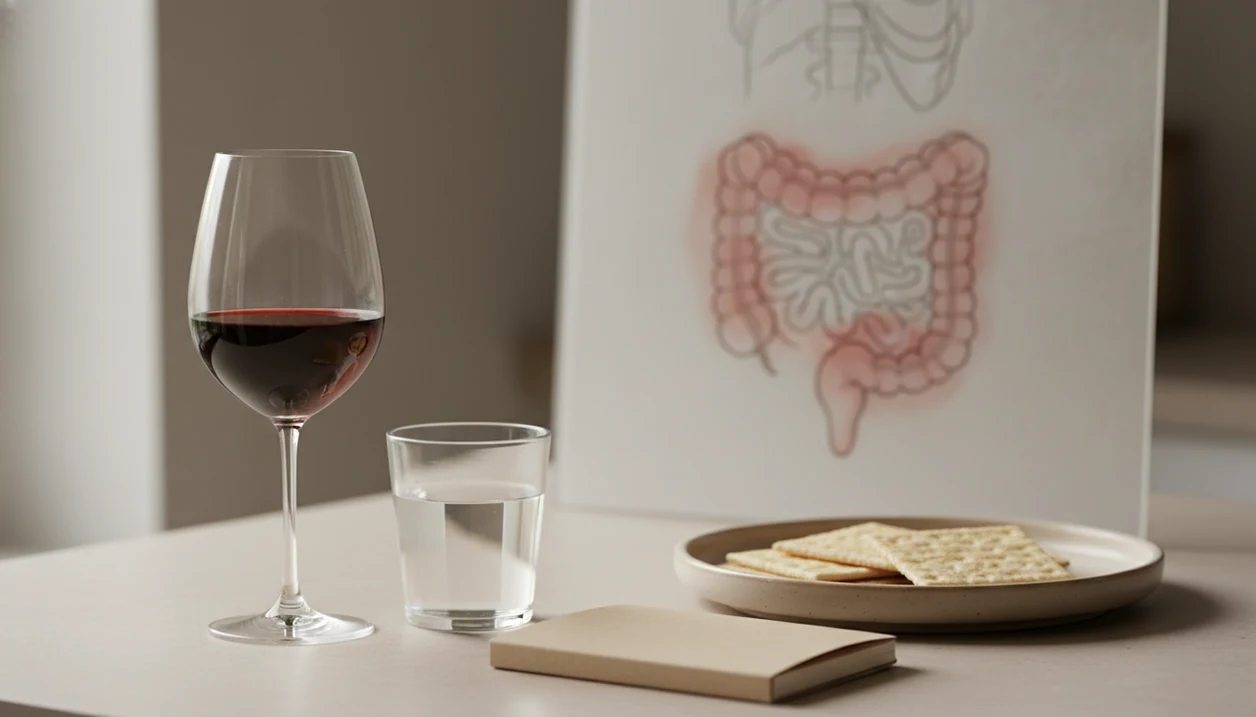
Yes, alcohol can trigger an alcohol intestinal inflammation flare in some people by irritating the gut lining, disrupting gut bacteria, and increasing intestinal permeability. The risk appears higher for people with ulcerative colitis, Crohn’s disease, enterocolitis, diverticulitis, or a history of alcohol-related diarrhea, cramping, pain, or bleeding.
> Definition: Alcohol-related intestinal inflammation is a pattern of gut irritation or immune activation after drinking that may worsen symptoms such as abdominal pain, diarrhea, cramping, urgency, bloating, or rectal bleeding.
TL;DR
- Alcohol can irritate the intestinal lining, alter the microbiome, and increase gut leakiness, which may worsen inflammatory bowel symptoms.
- People with IBD, especially ulcerative colitis, commonly report worse symptoms after drinking, even when their disease is otherwise inactive.
- During active enterocolitis, diverticulitis, colitis, or unexplained GI bleeding, avoiding alcohol is the safer default until a clinician says otherwise.
Alcohol intestinal inflammation flare: at-a-glance answer
Quick answer: Alcohol may worsen intestinal inflammation symptoms in some people, especially when the gut is already irritated or inflamed. If diarrhea, cramping, bleeding, urgency, or abdominal pain reliably follows drinking, an alcohol-free trial and medical guidance can help clarify whether alcohol is a personal trigger.
Key takeaways
- Symptoms after drinking are more informative when tracked by timing, drink amount, food, stress, and bowel changes.
- Binge drinking may be harder on the gut than small, spaced-out amounts for many people.
- Alcohol can contribute to dehydration, which may worsen diarrhea, constipation, dizziness, and fatigue.
- People taking antibiotics, steroids, immune suppressants, pain relievers, or IBD medications should ask a clinician about alcohol safety.
- Blood in stool, fever, severe pain, black stools, fainting, or persistent vomiting need prompt medical care.
- Stopping alcohol suddenly can be risky for people who drink heavily or daily; medical support may be needed.
Alcohol can worsen gut inflammation symptoms in susceptible people, but it does not affect everyone equally. The practical pattern is simple: symptoms repeatedly increase after beer, wine, liquor, or cocktails, then ease when alcohol is reduced or stopped.
Common alcohol gut inflammation symptoms include diarrhea, abdominal pain, cramping, urgency, bloating, nausea, and bleeding. Higher-risk groups include people with ulcerative colitis, Crohn’s disease, diverticulitis, enterocolitis, IBS overlap, and heavy or binge drinking patterns.
A half-poured wine glass on the counter can be useful evidence if it follows the same pattern three weekends in a row. Not moral evidence. Symptom evidence.
Repeated flares after drinking are a practical reason to reduce or stop alcohol for a defined period and track symptoms. A dated log is often more useful than trying to remember “what happened last month.”
Five facts about alcohol gut inflammation symptoms
- Alcohol can increase intestinal permeability, disrupt gut bacteria, and directly irritate the intestinal lining. Those mechanisms can expose the immune system to more gut-derived irritants.
- Many people with inactive IBD still report worse gastrointestinal symptoms after alcohol. In a U.S. cohort, 69% of inactive IBD patients who drank alcohol reported symptom worsening, compared with 43% of IBS patients, according to a 2013 study the NIH.
- Ulcerative colitis may have a stronger flare association with alcohol than Crohn’s disease. A 2025 meta-analysis report linked alcohol use in ulcerative colitis with a 2.62-fold higher flare risk.
- Alcohol is usually best avoided during active enterocolitis, diverticulitis, IBD flares, unexplained bleeding, or dehydration. Clinicians typically recommend removing avoidable gut irritants during active inflammation.
- There is no universally safe alcohol amount for people prone to gut inflammation flares. One drink may be uneventful for one person and followed by urgency, pain, or bleeding for another.
How alcohol intestinal inflammation works in the gut lining
Alcohol intestinal inflammation works by weakening the mucosal barrier, changing gut bacteria, and increasing immune exposure inside the bowel.
Ethanol and its metabolite acetaldehyde can irritate the intestinal lining. That lining is meant to act like a selective border, allowing nutrients through while limiting contact with toxins, bacteria, and inflammatory signals. When permeability increases, often called “leaky gut,” the immune system may encounter more material from inside the intestine.
The gut notices.
Alcohol can also shift the microbiome, the community of bacteria and other organisms that help regulate digestion and immune tone. NIH mechanistic reviews report that alcohol and its metabolites promote intestinal inflammation and impair gut barrier function the NIH. Those changes can translate into diarrhea, pain, urgency, bloating, nausea, and, in vulnerable conditions, bleeding.
For a wider body-system view, the immune effects are covered in our guide to alcohol immune system inflammation.
Alcohol and IBD flare risk in ulcerative colitis and Crohn’s disease
Can alcohol worsen IBD symptoms or trigger a flare? Yes, alcohol can worsen symptoms in some people with IBD, and available evidence suggests the association may be stronger for ulcerative colitis than for Crohn’s disease.
In a U.S. cohort, 69% of patients with inactive IBD who drank alcohol reported that alcohol worsened gastrointestinal symptoms, compared with 43% of IBS patients. That finding matters because the group was not limited to people already in an obvious flare the NIH.
A 2025 Digestive Disease Week conference report, which should be treated as preliminary until full peer-reviewed publication, reported that alcohol use in ulcerative colitis patients was associated with a higher risk of disease flare. Crohn’s disease evidence is more variable, and individual tolerance differs by disease location, medications, diet, and baseline inflammation.
Remission should not be treated as proof that alcohol is harmless. For people with IBD, symptom tracking after drinking is often more informative than a generic “moderate drinking” rule.
Alcohol and enterocolitis flare-ups during active bowel inflammation
Enterocolitis means inflammation involving the small intestine and colon. It may be linked with infection, immune disease, medication injury, ischemia, radiation, or other causes, so alcohol should not be assumed to be the root diagnosis.
During active bowel inflammation, alcohol can worsen diarrhea, cramping, nausea, dehydration, and mucosal irritation. It may also make it harder to judge whether symptoms are improving or getting worse. That matters when someone is already counting bathroom trips, checking stool color, and trying to keep fluids down.
During acute enterocolitis, avoiding alcohol is generally the safer default unless a clinician gives different advice. Seek medical care promptly for blood in stool, fever, severe pain, persistent vomiting, dehydration, or black stools.
Do not wait out black stools.
A clinician can evaluate the cause of enterocolitis symptoms and decide whether testing, fluids, medication changes, or urgent care is needed.
Alcohol and diverticulitis symptoms, flare caution, and evidence gaps
Direct research on alcohol-triggered diverticulitis flares is limited compared with IBD research. Still, alcohol may worsen gut irritation, dehydration, diarrhea, medication side effects, and pain perception during an active flare.
Diverticulosis means pouches are present in the colon. Diverticulitis means those pouches are inflamed or infected. IBD and infectious enterocolitis are different conditions, even when symptoms overlap on a bad day.
During active diverticulitis, fever, abdominal tenderness, antibiotics, or a restricted diet, avoiding alcohol is prudent risk reduction. Alcohol may also complicate sleep and hydration, both of which matter when the gut is already irritated.
The left-lower-quadrant ache that returns after dinner is not something to self-label forever. Recurrent left-lower abdominal pain, fever, bleeding, or worsening tenderness should be discussed with a clinician, especially if symptoms are new, severe, or different from prior episodes.
Alcohol drink types, dose patterns, and gut inflammation triggers
Ethanol itself can be a trigger for gut inflammation symptoms, not only carbonation, sugar, sulfites, histamines, gluten, or mixers. Drink type may affect symptoms, but it does not remove the barrier and microbiome effects of alcohol.
| Drink type | Possible gut-relevant issues | Caution for flare-prone people |
|---|---|---|
| Beer | Ethanol, carbonation, fermentable carbohydrates, gluten in many beers | Not automatically mild because the alcohol percentage is lower |
| Wine | Ethanol, histamines, sulfites, acidity | Red wine is not automatically safer for colitis |
| Liquor | Higher ethanol concentration per serving | Clear liquor is not automatically safer for Crohn’s or colitis |
| Cocktails | Ethanol plus sugar, citrus, caffeine, or mixers | Symptoms may reflect both alcohol and additives |
| Low-alcohol drinks | Lower ethanol exposure, but not zero | May still trigger symptoms in sensitive periods |
Binge drinking is especially risky for gut barrier injury and inflammatory signaling. A weeknight pour after laptop shutdown may look harmless, but dose, speed, food intake, and baseline disease activity all matter.
Personal symptom tracking is more defensible than universal drink recommendations.
Alcohol reduction plan for recurring gut inflammation symptoms
Reducing or avoiding alcohol after repeated gut flares is a practical experiment, not a moral judgment. For people who repeatedly flare after drinking, a 2- to 4-week alcohol-free trial can clarify patterns, with clinician input for diagnosed IBD, diverticulitis, enterocolitis, liver disease, or medication use.
Use a named tracking structure:
- Drink record: amount, drink type, timing, and whether it was with food.
- Body record: diarrhea, pain, urgency, bloating, nausea, bleeding, and hydration.
- Context record: sleep, stress, medications, travel, and unusually rich meals.
- Response record: non-alcoholic drink, exit plan, craving delay, meal planning, or social script.
- Review record: compare symptoms on drinking days, dry days, and the morning after.
A recovery app or tracking tool can support private logging and reset reminders, but it should not be treated as detox treatment, medical care, or a diagnosis.
MeQuit is an app-based support option for adults who want to drink less and track cravings, streaks, and milestones. Broader behavior-change options are also discussed in our alcohol reduction guides.
How to use an alcohol-free trial for gut inflammation symptoms
Use an alcohol-free trial as a short, structured symptom experiment after urgent causes have been ruled out. It is meant to clarify patterns, not prove a diagnosis or replace care for bleeding, fever, severe pain, dehydration, or worsening symptoms.
- Confirm first that red-flag symptoms have been medically assessed, especially new bleeding, black stools, severe abdominal pain, persistent vomiting, fever, fainting, or known IBD flare concerns.
- Choose a clear two- to four-week window with no alcohol, including beer, wine, liquor, cocktails, and “just one” social exceptions that make the pattern harder to read.
- Record each day’s meals, symptoms, sleep, stress, medications, hydration, and any accidental alcohol exposure. Keep the notes boring and dated; boring is useful.
- Compare flare frequency, urgency, stool changes, pain, bloating, nausea, and bleeding on alcohol-free days against your recent drinking days and mornings after.
- Bring the log to a clinician if symptoms persist, return quickly, or worsen during the trial. A clean record can help separate alcohol timing from medication effects, infection, diet changes, or active bowel disease.
Medication and dehydration risks with alcohol and gut inflammation
Alcohol can worsen dehydration from diarrhea, vomiting, fever, or poor oral intake. That risk is not abstract when someone is already lightheaded after multiple urgent bathroom trips.
Alcohol may also interact with or complicate common gut-related medications, including antibiotics, steroids, immunosuppressants, pain relievers, and acetaminophen. It can blur symptom judgment too. People may delay care because pain feels temporarily dulled or because nausea is blamed on the drink instead of the illness.
Ask a clinician or pharmacist whether alcohol is safe with your specific medications and diagnosis. This page is not the same as medical advice.
Seek urgent care for severe abdominal pain, blood in stool, fever, fainting, confusion, or inability to keep fluids down. The same risk-reduction logic applies across organs, including issues discussed in alcohol and kidney failure.
When to seek medical care for gut inflammation symptoms
Seek medical care quickly when gut symptoms suggest bleeding, infection, dehydration, or a flare that is getting worse. Alcohol reduction can support recovery, but it should not be used as a substitute for evaluation when red flags are present.
- Go to urgent care or an emergency department for black stools, bloody stools, fainting, confusion, severe abdominal pain, or inability to keep fluids down. Those symptoms can point to bleeding, dehydration, or illness that needs same-day assessment.
- Call a clinician for fever, worsening abdominal tenderness, persistent vomiting, lightheadedness, dry mouth, very low urination, or symptoms that are new, escalating, or different from your usual pattern.
- Avoid self-diagnosing IBD, diverticulitis, infection, enterocolitis, or gastrointestinal bleeding based on stool changes and pain alone. Similar symptoms can come from very different causes.
- Ask whether alcohol is safe with antibiotics, steroids, immunosuppressants, pain relievers, or any medication prescribed for a gut flare.
- Use cutting back on alcohol as risk reduction while you follow the care plan, track symptoms, hydrate, and get medical advice when symptoms do not settle.
Limitations
The evidence on alcohol and gut inflammation is useful, but it has real limits.
- Research on alcohol and diverticulitis or non-IBD enterocolitis is limited compared with IBD research.
- Alcohol tolerance varies widely. One person may react to one drink, while another reports no obvious symptoms.
- This page cannot diagnose IBD, diverticulitis, enterocolitis, infection, or gastrointestinal bleeding.
Clinicians typically recommend avoiding alcohol during active GI flares, unexplained bleeding, dehydration, fever, severe pain, or medication uncertainty. If alcohol reduction is part of a broader health plan, our best drink less app guide explains app-based tracking options without replacing medical care.
FAQ
Can alcohol inflame your intestines?
Yes. Alcohol can irritate the gut lining, alter gut bacteria, and increase intestinal permeability in some people.
Can alcohol cause a colitis flare?
Alcohol may worsen colitis symptoms and appears more strongly associated with ulcerative colitis flares than with some other bowel conditions. Crohn’s disease responses vary by person.
Can alcohol trigger enterocolitis symptoms?
Alcohol may worsen diarrhea, cramping, nausea, dehydration, and irritation during enterocolitis. It should not be assumed to be the root cause.
Can alcohol worsen diverticulitis?
Direct evidence for alcohol-triggered diverticulitis flares is limited. Avoiding alcohol during active diverticulitis is usually prudent, especially with fever, pain, antibiotics, or restricted intake.
What are alcohol gut symptoms?
Common alcohol-related gut symptoms include diarrhea, cramping, abdominal pain, urgency, bloating, nausea, and bleeding. Bleeding should be discussed with a clinician.
Is wine safer for colitis?
Wine is not automatically safer for colitis because ethanol itself can affect gut barrier function and symptoms. Some people also react to acidity, histamines, or sulfites.
Should I stop drinking during flares?
Avoiding alcohol during active gut flares is generally safer, especially with diarrhea, bleeding, dehydration, fever, severe pain, or medication use. Ask a clinician for condition-specific guidance.
How long should I avoid alcohol?
Discuss timing with a clinician if you have IBD, diverticulitis, enterocolitis, bleeding, or medication concerns. If alcohol repeatedly triggers symptoms, a symptom-tracked alcohol-free trial may help clarify the pattern.