
How Alcohol Irritates the Stomach Lining and Worsens Gastric Ulcers
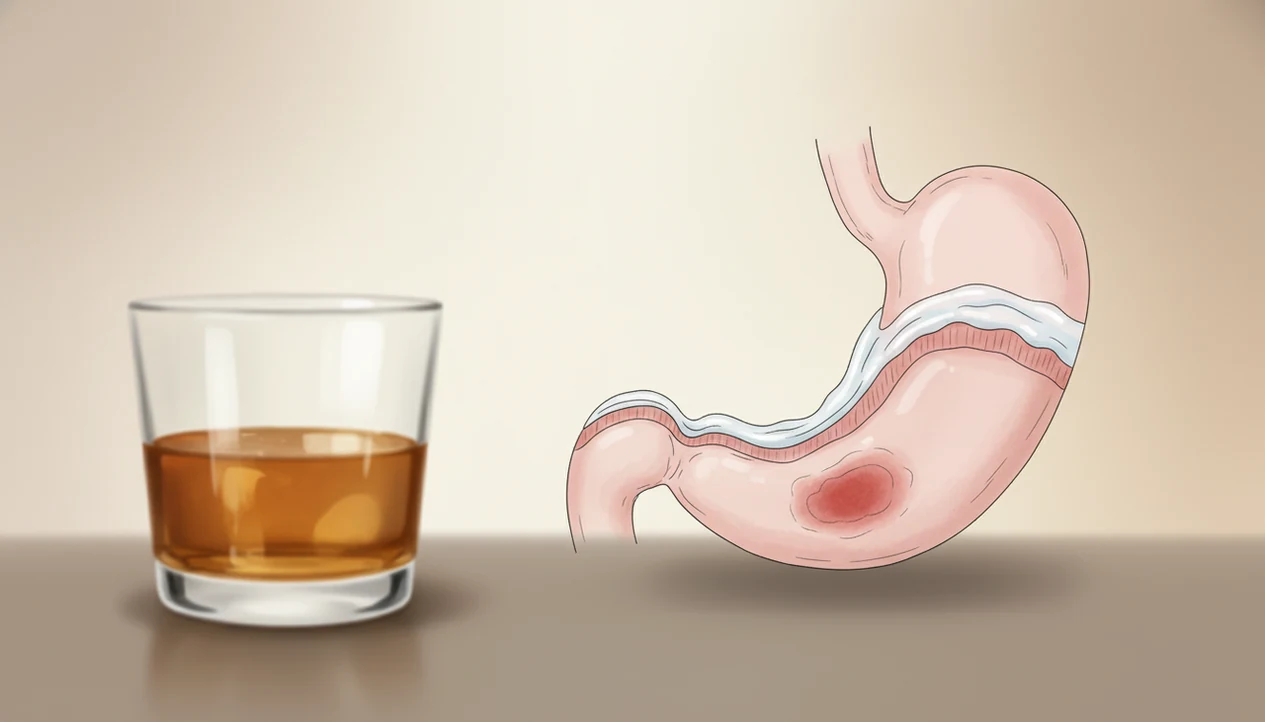
Alcohol can irritate the stomach lining, worsen gastritis, increase ulcer pain, and delay healing, especially with heavy or frequent drinking. For alcohol and gastric ulcers, the clearest evidence is that alcohol acts as a damaging irritant and risk modifier, while most peptic ulcers are still mainly caused by H. pylori infection or long-term NSAID use.
This guide is educational and is not a diagnosis. If you have severe pain, black stools, vomiting blood, fainting, or persistent vomiting, seek urgent medical care rather than trying to manage symptoms with alcohol changes alone.
> Definition: A gastric ulcer is an open sore in the stomach lining, and alcohol can worsen the inflammation and acid injury around it even when alcohol is not the original cause.
TL;DR
- Alcohol can weaken the stomach’s mucus barrier, increase irritation from acid, and make gastritis or ulcer symptoms feel worse.
- H. pylori infection and NSAID pain relievers cause most peptic ulcers, but alcohol can slow healing and raise the risk of bleeding.
- People with chronic gastritis, recurrent ulcers, or alcohol-related stomach pain should avoid alcohol while getting medical evaluation and treatment.
Alcohol and Gastric Ulcers: The 5 Facts That Matter Most
Quick answer: Alcohol does not cause most gastric ulcers by itself, but it can irritate the stomach lining, worsen gastritis, increase pain, and slow healing for many people. If ulcer symptoms flare after drinking, reducing or stopping alcohol is often a practical part of recovery, alongside medical evaluation for H. pylori, NSAID use, and bleeding risk.
Key takeaways
- Avoid drinking during active ulcer pain unless your clinician says it is safe.
- Even moderate alcohol may worsen symptoms in sensitive stomachs.
- Do not rely on antacids to make drinking “safe” with an ulcer.
- Ask about H. pylori testing if ulcer symptoms persist or return.
- Mixing alcohol with NSAIDs may raise stomach irritation and bleeding risk.
- Seek urgent care for black stools, vomiting blood, fainting, or severe pain.
- Heavy alcohol use can inflame and erode the stomach lining, causing alcohol stomach lining inflammation and gastritis.
- Most peptic ulcers are caused by H. pylori infection or long-term NSAID use, not alcohol alone.
- Drinking with an active ulcer can worsen burning pain, nausea, bloating, bleeding risk, and healing time.
- Evidence for alcohol as a direct ulcer cause is mixed, but evidence for mucosal injury from heavy drinking is stronger.
- Reducing or stopping alcohol supports healing, but it does not replace ulcer treatment.
A common pattern is stomach burning after drinks that felt “normal” last month. The body changed before the habit did.
For people with ulcer symptoms, avoiding alcohol during evaluation is often safer than switching drink types because irritation depends on alcohol exposure, stomach sensitivity, and the underlying ulcer cause.
How Alcohol Stomach Lining Inflammation Works
Alcohol stomach lining inflammation works by weakening the stomach’s mucus-bicarbonate barrier, the protective layer that helps keep acid away from living tissue. Once that barrier is thinner, acid, digestive enzymes, and bile can irritate the lining more easily.
In heavier or binge drinking, alcohol can also promote oxidative stress, swelling, erosions, and bleeding-prone injury. In plain language, the stomach lining becomes less defended and more reactive. A person may notice sour stomach before a social event, then burning pain after drinking, then nausea the next morning.
Repeated gastritis episodes matter. Each flare can leave the lining more sensitive for a while, especially if alcohol is paired with NSAIDs, smoking, irregular meals, or stress. Over time, chronic irritation can make ulcer symptoms easier to trigger, even if alcohol did not start the ulcer process.
The pathway is simple: less protection, more acid contact, more inflammation, more pain.
Alcohol Peptic Ulcers Versus H. pylori and NSAID Ulcers
Peptic ulcers are open sores in either the stomach or the first part of the small intestine, and the leading causes are H. pylori infection and NSAID pain relievers.
In the United States, about 5 to 10% of people develop a peptic ulcer during their lifetime, according to NIDDK NIDDK. Worldwide, about 30 to 40% of adults are infected with Helicobacter pylori, based on a 2019 review the NIH.
Alcohol peptic ulcers are better understood as ulcers aggravated by alcohol rather than ulcers usually caused by alcohol alone. Drinking can worsen pain, increase acid-related irritation, and make treatment feel slower. A person taking ibuprofen for a sore back after a night out may be stacking risks without realizing it.
For a related stomach-focused overview, the broader alcohol gastritis and ulcers guide covers overlapping symptoms.
Alcohol Chronic Gastritis and the Path to Ulcer Pain
Does repeated drinking-related gastritis make ulcer pain more likely? Yes, repeated alcohol gastritis can leave the stomach lining inflamed, fragile, and more sensitive to acid injury.
Acute alcohol gastritis may feel like burning upper-abdominal pain, nausea, bloating, vomiting, early fullness, or a raw ache after drinking. Symptoms can settle in a day or two, but that does not mean the lining fully recovered.
Weekend binges can still matter. A person may feel fine by Tuesday, then repeat the same pattern on Friday. Over months, repeated inflammation can become alcohol chronic gastritis, which is a longer-running irritation of the stomach lining.
That chronic irritation does not prove an ulcer is present. It does mean new or recurring pain deserves medical evaluation, especially when symptoms cluster with weight loss, vomiting, black stools, or regular NSAID use.
Can Beer, Wine, or Spirits Be Safe With Gastric Ulcers?
No alcoholic drink is reliably safe with gastric ulcers. Beer, wine, and spirits can all irritate the stomach lining, and switching categories is not a dependable ulcer-safety strategy.
| Drink type | Why people ask | Practical ulcer concern |
|---|---|---|
| Beer | Lower alcohol by volume than spirits | Larger volume can still irritate the stomach and worsen bloating |
| Wine | Red wine is often viewed as gentler | Wine still contains alcohol and acids that may trigger pain |
| Spirits | Higher proof, smaller serving | Concentrated alcohol may feel harsher on an inflamed lining |
| Mixed drinks | Diluted with juice or soda | Sugar, carbonation, and alcohol can all worsen symptoms |
Food intake, drink speed, alcohol content, and individual sensitivity all matter. A beer fridge hum during dinner prep can be a real trigger, but the stomach only registers exposure, not the intention behind it.
People cutting back for digestive reasons may also find our alcohol reduction guides useful.
How to Apply This Information if Alcohol Worsens Ulcer Symptoms
If alcohol makes ulcer-like pain, nausea, or burning worse, treat that pattern as a reason to pause drinking and get evaluated, not as proof of one diagnosis. The safest next step is to reduce irritation while gathering details a clinician can use.
- Stop alcohol temporarily while symptoms are active, changing, or being checked. Switching from spirits to beer or wine is still exposure, and it may blur the pattern.
- Write a simple symptom log with pain timing, what and how much you drank, meals, NSAID use such as ibuprofen or naproxen, vomiting, black stools, and sleep.
- Ask a clinician whether H. pylori testing, acid-reducing medicine, endoscopy, or medication changes make sense for your situation.
- Avoid NSAIDs unless a clinician says they are appropriate, especially if you have a known ulcer, bleeding risk, or worsening stomach pain after taking them.
- Seek urgent care immediately for vomiting blood, black tarry stool, fainting, severe sudden abdominal pain, or weakness that feels out of proportion.
Alcohol, Ulcer Bleeding, and Warning Symptoms
Ulcer bleeding and perforation are serious complications, and alcohol-related stomach pain should not be self-diagnosed when red flags appear. Prompt medical care is important if any warning symptom develops.
Red flags to know:
- Vomiting blood: Blood may look bright red or like coffee grounds.
- Black stools: Tarry, black stool can signal digested blood.
- Severe sudden abdominal pain: This can occur with perforation or another urgent condition.
- Fainting or extreme weakness: Blood loss or dehydration may be involved.
- Persistent vomiting: Ongoing vomiting raises dehydration and bleeding concerns.
- Unexplained weight loss: This needs evaluation, even without severe pain.
- Trouble swallowing: New swallowing difficulty should be assessed.
Concern is higher with heavy drinking, NSAID use, smoking, or a known ulcer history. Cold porch rail before sunrise, cigarette in hand, stomach burning already started. That combination deserves more than antacids and guessing.
Reducing Alcohol for Gastric Ulcer Healing and Recovery
Avoiding alcohol during ulcer treatment can reduce irritation and support healing. It is supportive care, not a substitute for antibiotics for H. pylori, acid suppression, medication changes, endoscopy, or follow-up when those are needed.
Clinicians typically recommend treating the underlying ulcer cause while reducing irritants such as alcohol, NSAIDs, and smoking. Vaping, stress, irregular meals, and poor sleep can also make symptom patterns harder to read.
NIDDK lists H. pylori treatment, NSAID changes, acid-reducing medicines, and follow-up as core ulcer-care steps, depending on the cause NIDDK.
Tools like Me Quit can help adults track drink cravings, dry days, sober streaks, and milestones while they work on drinking less. Me Quit is a quit smoking app that helps adults stop smoking, stop vaping, drink less, and track cravings, streaks, and milestones.
A private tracking tool can support habit awareness by logging cravings, dry days, relapse patterns, and goals; it should not diagnose ulcers, replace endoscopy, or substitute for medical treatment.
A craving log works best when it records time, trigger, intensity, and response, while a vague mood note is harder to use later.
Limitations
The evidence on alcohol and gastric ulcers has important limits, so this topic should not be reduced to “alcohol causes all ulcers.” The available evidence is stronger for alcohol-related mucosal injury than for alcohol as the main direct cause of most peptic ulcers.
- Human studies do not consistently prove that alcohol directly causes most ulcers.
- Individual risk varies, especially with prior ulcers, liver disease, bleeding risk, or alcohol use disorder.
- A mild hangover after two extra drinks is not the same as alcohol withdrawal symptoms that need medical attention.
If alcohol reduction is part of the plan, the best drink less app guide can help compare tracking approaches without treating stomach disease as an app problem.
FAQ
Can alcohol cause stomach ulcers?
Alcohol is not usually the main cause of stomach ulcers, but heavy drinking can damage the stomach lining and worsen ulcer risk. Most peptic ulcers are linked to H. pylori infection or NSAID use.
Can I drink with an ulcer?
People with an active ulcer are generally advised to avoid alcohol until the ulcer has healed. Alcohol can worsen pain, irritation, bleeding risk, and healing time.
Does alcohol worsen gastritis?
Yes, alcohol can irritate and inflame the stomach lining and worsen gastritis symptoms. This may include burning pain, nausea, bloating, vomiting, or early fullness.
What alcohol is worst for ulcers?
No alcohol type is reliably safe for ulcers. Higher-proof drinks, larger amounts, binge patterns, and drinking on an irritated stomach may be especially aggravating.
Is beer bad for ulcers?
Beer still contains alcohol and can worsen ulcer or gastritis symptoms. Lower alcohol by volume does not make it safe for an active ulcer.
Is wine bad for ulcers?
Wine can still irritate the stomach lining and worsen gastritis or ulcer pain. Red wine should not be treated as a stomach-healing drink.
How long do ulcers take to heal?
Many ulcers heal over weeks with proper treatment, but timing depends on H. pylori status, NSAID use, acid suppression, smoking, and alcohol avoidance. A clinician can confirm the right treatment and follow-up plan.
When is ulcer pain an emergency?
Ulcer pain needs urgent care with vomiting blood, black stools, fainting, persistent vomiting, or sudden severe abdominal pain. Trouble swallowing or unexplained weight loss also warrants prompt medical evaluation.