
How Alcohol Can Affect Gallbladder and Pancreas Pain
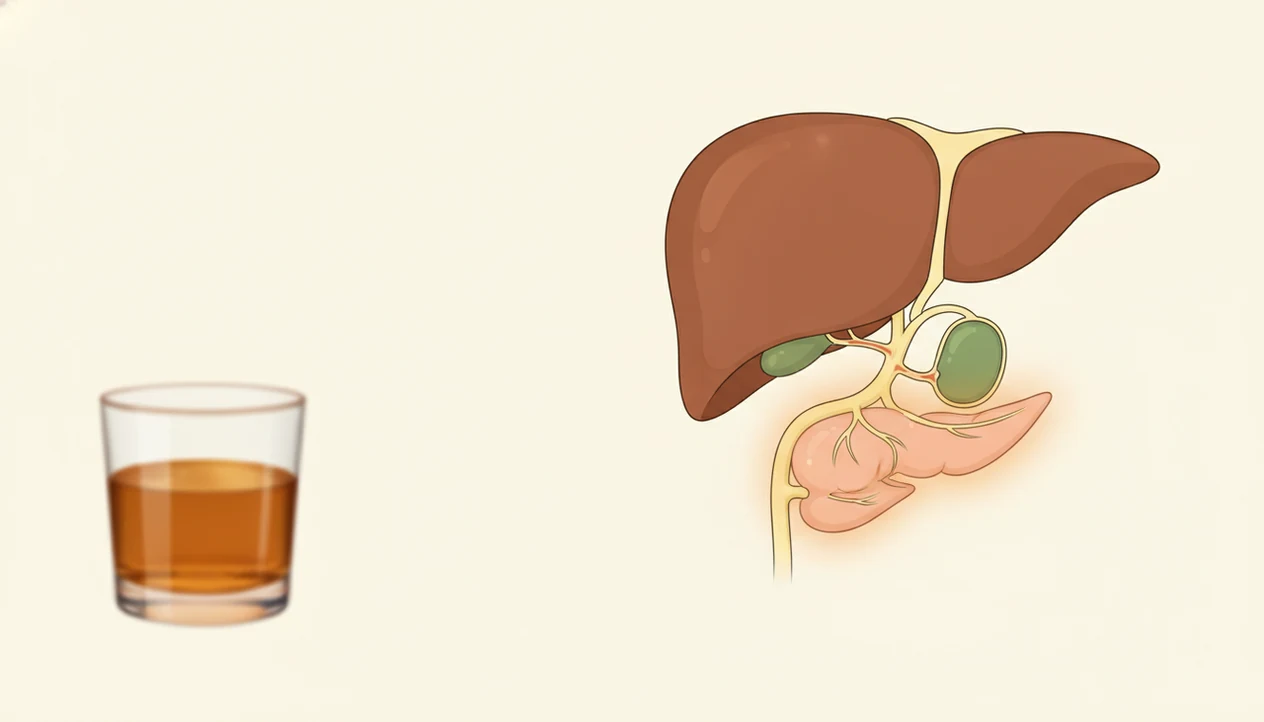
Alcohol can worsen upper abdominal pain by increasing pancreatitis risk, aggravating existing gallbladder or bile duct problems, and contributing to attacks when gallstones block the shared drainage pathway. If you are searching for alcohol gallbladder pancreas pain, severe pain with vomiting, fever, yellow skin or eyes, or pain spreading to the back needs urgent medical care.
Definition: Alcohol-related gallbladder and pancreas pain refers to upper abdominal pain after drinking that may involve bile flow, gallstones, cholecystitis, bile duct blockage, or acute pancreatitis.
TL;DR
- Gallstones and alcohol are two of the biggest causes of acute pancreatitis, with gallstones leading and alcohol a major contributor.
- Alcohol is more directly linked to pancreatitis than to gallstone formation, but gallstones can trigger pancreas inflammation by blocking the bile or pancreatic duct.
- People with pancreatitis, cholecystitis, gallstones, or bile duct symptoms are commonly advised to avoid alcohol and seek medical guidance.
Alcohol Gallbladder Pancreas Pain: At-a-Glance Warning Signs
Quick answer: Alcohol may contribute to upper abdominal pain by irritating the pancreas, worsening pancreatitis risk, or aggravating bile and gallbladder problems that already exist. Severe or persistent pain, vomiting, fever, jaundice, faintness, or pain that spreads to the back should be treated as urgent, not managed with tracking or home observation alone.
Key takeaways
- Upper right or upper middle belly pain after drinking can come from several organs, including the gallbladder, bile ducts, liver, stomach, or pancreas.
- Gallstones can block drainage and may trigger sudden pain or pancreatitis, even if alcohol is not the only cause.
- Ongoing heavy drinking is a well-recognized pancreatitis risk for many people.
- Yellow skin or eyes, dark urine, fever, or repeated vomiting can suggest a blockage or infection that needs prompt care.
- Stopping or reducing alcohol after a warning episode is often recommended, but sudden withdrawal can be dangerous for dependent drinkers.
- If you drink daily or heavily, ask a clinician about safe alcohol reduction, medication options, and withdrawal support.
Upper belly pain after drinking is more concerning when it is severe, persistent, or paired with vomiting, fever, jaundice, faintness, confusion, or a racing pulse. Pain can sit in the upper right abdomen, the upper middle abdomen, the back, or under the right shoulder blade.
A mild sour stomach after a party cooler packed with cans is one thing. Pain that makes you curl forward, sweat, or stop mid-sentence is different.
Online guidance cannot diagnose gallstones, cholecystitis, bile duct obstruction, or pancreatitis. Those conditions overlap too much. Gallbladder pain often sits higher on the right side and may follow fatty food. Pancreatitis pain often feels deep in the upper middle belly and can push through to the back.
If severe symptoms start after drinking, treat it as urgent. Call a clinician, urgent care, or emergency services, especially if yellow skin or eyes appear.
Five Facts About Alcohol, Gallstones, and Pancreatitis Risk
- Heavy alcohol use is a major cause of acute and chronic pancreatitis, especially when drinking is repeated over years.
- Gallstones are the leading cause of acute pancreatitis, and alcohol is another major cause in many hospital cases.
- Gallstones can block the bile duct or pancreatic duct, trapping digestive enzymes and triggering pancreatic inflammation.
- Mayo Clinic notes that people who consume four to five alcoholic drinks per day have a higher pancreatitis risk than non-drinkers: https://www.mayoclinic.org/diseases-conditions/pancreatitis/symptoms-causes/syc-20360227
- Smoking plus heavy drinking can compound pancreatic and biliary risk, which makes quitting cigarettes and reducing alcohol a real prevention priority.
The hand-to-mouth reflex after lunch can matter here too. A person who reaches for a cigarette before thinking may also pour “just one” drink at the same decision point. Linked cues deserve a linked plan.
For adults with recurring upper abdominal pain, reducing alcohol and stopping smoking is often safer than trying to guess which habit matters more, because both can raise digestive-system risk in different ways.
How Alcohol Affects the Gallbladder, Bile Ducts, and Pancreas
Alcohol can affect pancreas pain directly, while gallbladder problems often involve bile storage, stone movement, and duct blockage. The gallbladder stores bile, then squeezes bile into the small intestine to help digest fat.
The pancreas releases digestive enzymes through small ducts near the bile duct. In plain language, both systems drain into the same neighborhood. If a gallstone slips into the common bile duct or blocks the pancreatic duct, fluid can back up. Enzymes may activate too early and inflame the pancreas.
That is the mechanism.
Alcohol can irritate pancreatic cells, change how enzymes are handled, and increase inflammatory stress. It is not the main direct cause of most gallstones, though. Gallstones are more often shaped by factors such as age, body weight, pregnancy, diet, medications, and family history.
If your pain feels more like stomach burning than deep organ pain, alcohol and gastric ulcers may be a separate pattern to understand.
Alcohol and Cholecystitis: When Gallbladder Inflammation Flares
Does alcohol cause cholecystitis or make a gallbladder attack worse? Cholecystitis means gallbladder inflammation, often because a gallstone blocks the cystic duct and bile gets trapped.
Alcohol may worsen symptoms indirectly. It can change digestion, contribute to dehydration, increase inflammatory strain, or irritate the pancreas at the same time. That overlap is why the pain can feel confusing at 2 a.m., especially if the gas station counter beside menthol packs was also part of the night’s routine.
A gallbladder attack often causes upper right pain, nausea, tenderness, and pain after fatty meals. Cholecystitis can add fever and steady tenderness. Pancreatitis more often causes deep upper middle pain that may move to the back.
But you cannot sort this out reliably by location alone. Untreated cholecystitis can become serious, especially when fever, vomiting, or worsening pain appears. Medical evaluation is the safer next step.
Alcohol Gallstones Pancreatitis: The Shared Duct Problem
Gallstones and alcohol are discussed together because gallstones and heavy alcohol use are two of the main recognized causes of acute pancreatitis, according to NIDDK: https://www.niddk.nih.gov/health-information/digestive-diseases/pancreatitis/symptoms-causes
Here is the simple anatomy. The bile duct and pancreatic duct drain close together, like two small roads meeting before the same exit. A gallstone can jam that exit. When pancreatic enzymes cannot drain normally, they may activate inside the pancreas and start damaging pancreatic tissue. That process is sometimes described as the pancreas digesting itself.
No wonder the pain can be brutal.
Acute pancreatitis is also a common gastrointestinal reason for hospitalization, with about 275,000 U.S. hospital discharges each year reported in the same review. Still, this does not mean every person with gallstones drinks, or every person who drinks will get pancreatitis. Risk is patterned, not guaranteed.
Alcohol Acute Pancreatitis Cause: Symptoms That Fit the Pattern
Can alcohol cause acute pancreatitis? Yes, alcohol is a major cause of acute pancreatitis, especially with ongoing heavy drinking, and the pain pattern often feels severe and deep in the upper middle abdomen.
The pain may radiate through to the back. It can come with nausea, vomiting, fever, a swollen or tender abdomen, and symptoms that worsen after eating or drinking. People sometimes describe a tight chest, restless legs, and an “I need something” feeling before they drink again, but pancreatitis pain is not a craving. It needs medical assessment.
Better Health Channel reports that heavy alcohol use is linked to about half of acute pancreatitis cases, and Mayo Clinic notes that four to five drinks per day increases risk compared with non-drinking. Sources: https://www.betterhealth.vic.gov.au/health/conditionsandtreatments/pancreatitis and https://www.mayoclinic.org/diseases-conditions/pancreatitis/symptoms-causes/syc-20360227
Pancreatitis can be life-threatening. Clinicians typically diagnose it with a physical exam, blood tests, and imaging, not with symptom-matching online. If pain is severe or persistent, do not wait it out.
Alcohol Bile Duct Problems Versus Pancreas Pain
Bile duct pain and pancreas pain can overlap, so symptom clues can guide urgency but cannot confirm the cause. Jaundice, dark urine, pale stools, and fever may point toward bile duct obstruction or infection and need prompt medical care.
| Possible problem | Common pain location | Radiation | Common triggers | Other symptoms | Urgency |
|---|---|---|---|---|---|
| Gallbladder attack | Upper right abdomen | Right shoulder blade or back | Fatty meal, sometimes alcohol-linked meals | Nausea, bloating, waves of pain | Same-day advice if severe or recurrent |
| Cholecystitis | Upper right abdomen | Back or shoulder | Blocked cystic duct | Fever, tenderness, vomiting | Urgent evaluation |
| Bile duct blockage | Upper right or upper middle abdomen | Back | Gallstone movement | Jaundice, dark urine, pale stools, fever | Urgent or emergency care |
| Pancreatitis | Upper middle abdomen | Straight through to back | Heavy drinking, gallstones, eating | Vomiting, fever, swollen belly, rapid pulse | Emergency evaluation if severe |
A brunch menu with bottomless mimosas can blur the trigger map because fat, alcohol, and timing all pile together. The comparison helps, but overlapping symptoms require medical assessment.
For nausea, burning, and gut irritation that do not fit the patterns above, alcohol gastritis ulcers covers stomach-lining clues.
How to Use This Information When Upper Abdominal Pain Happens
Use this information as a safety filter, not a diagnosis tool. First decide whether the symptoms are urgent, then use the pattern details to describe what happened clearly to a clinician.
- Check red flags first. Look for severe or persistent pain, vomiting, fever, jaundice, faintness, confusion, rapid pulse, or pain spreading to the back before comparing gallbladder versus pancreas clues.
- Avoid alcohol during symptoms. Do not drink while pain is active, or when vomiting, fever, yellow skin or eyes, dark urine, or pale stools are present.
- Write down the pattern. Note when pain started, where it sits, whether it moves, what you ate, how much alcohol you had, and whether smoking or vaping cues were part of the same window.
- Call for urgent help when symptoms escalate. Use urgent care, your clinician’s after-hours line, or emergency services if symptoms are severe, worsening, or paired with jaundice, fever, repeated vomiting, fainting, or confusion.
- Bring your notes to care. Share the timeline with a clinician so testing, imaging, and diagnosis are based on evidence, not guesswork.
Alcohol Reduction After Gallbladder or Pancreas Symptoms
After pancreatitis, gallstones, cholecystitis, or recurring upper abdominal pain, alcohol reduction should be discussed with a clinician. There is no guaranteed safe alcohol level after pancreatitis or active biliary disease.
Try these behavior-change steps:
- Track drinks. Write down amount, time, food, symptoms, and next-day pain.
- Map triggers. Note whether pain follows fatty meals, late drinking, stress, or smoking.
- Plan alcohol-free days. Put them on the calendar before cravings start.
- Avoid alcohol during flares. Do not test your body when pain is active.
- Seek craving support. Use a clinician, counselor, support group, or private app.
Smoking cessation belongs in the same plan. The corner-store chest flutter and the “just one drink” thought often arrive together.
MeQuit is a quit smoking app that helps adults stop smoking, stop vaping, drink less, and track cravings, streaks, and milestones. Tools like Me Quit can support drink logging, craving pauses, and streak repair, not diagnose pancreas or gallbladder disease.
The alcohol reduction guides can help you build a practical cut-back plan while medical questions are handled by a clinician.
Medical Review and Source Standards
This article was editorially reviewed for medical accuracy, safety framing, and source quality. It is educational support, not a diagnosis, treatment plan, or substitute for urgent medical care.
Our sourcing process favors government health agencies, hospital and academic medical centers, and peer-reviewed clinical literature when available. Behavior-change guidance is kept separate from emergency guidance: red-flag symptoms are directed toward clinicians, urgent care, or emergency services, while drink tracking, craving pauses, and smoking-cessation planning are presented as support tools only.
- Check source authority. We prioritize public-health, hospital, academic, and clinical references over unsourced claims or personal anecdotes.
- Separate safety from coaching. We do not treat severe abdominal pain, jaundice, fever, vomiting, faintness, or confusion as a habit-change problem.
- Review language for limits. We avoid promising that alcohol reduction, apps, or tracking can diagnose gallbladder, bile duct, or pancreas disease.
- Update on a schedule. Last editorial review: May 31, 2026. Planned review cadence: at least annually, or sooner if major clinical guidance changes.
Limitations: Alcohol Gallbladder Pancreas Pain Evidence
Research can explain risk patterns, but it cannot predict exactly who will develop gallstones, cholecystitis, bile duct blockage, or pancreatitis after drinking. Individual susceptibility varies a lot.
Key limits:
- Alcohol is not the main direct cause of most gallstones; obesity, diet, age, pregnancy, medications, and genetics may matter.
- Online information cannot replace urgent evaluation for severe pain, fever, vomiting, jaundice, faintness, or confusion.
- Me Quit supports behavior change but does not diagnose, treat, or replace medical care.
A phone reminder during a smoke break can help you pause and choose a replacement action. However, pain with red flags is not a habit-coaching problem. It is a medical-safety problem.
A behavior-change tool can help with private tracking, craving support, and reset plans; it cannot provide lab results, imaging, diagnosis, or emergency treatment.
FAQ: Alcohol, Gallbladder, and Pancreas Pain
Can alcohol cause gallbladder pain?
Alcohol may aggravate gallbladder symptoms indirectly, but gallstones and gallbladder disease often have other causes. Upper right pain after drinking should be discussed with a clinician, especially if it recurs.
Can alcohol cause pancreatitis?
Yes, alcohol is a major cause of acute and chronic pancreatitis, especially with ongoing heavy drinking. Severe upper abdominal pain after drinking needs medical evaluation.
What does pancreas pain feel like?
Pancreatitis pain often feels like severe upper middle abdominal pain that may spread to the back. Nausea, vomiting, fever, or a tender swollen belly makes it more urgent.
Can gallstones cause pancreatitis?
Yes, gallstones can block the shared drainage pathway near the pancreatic duct. This can trap digestive enzymes and trigger acute pancreatitis.
Can I drink alcohol if I have gallstones?
Ask your clinician, especially if you have pain, bile duct symptoms, or pancreatitis risk. Avoiding alcohol during symptoms is usually the safer choice.
Can I drink alcohol after pancreatitis?
Many clinicians recommend complete abstinence after pancreatitis to reduce recurrence risk. Follow the plan from your treating clinician.
Does smoking worsen pancreatitis risk?
Yes, smoking can compound pancreatitis risk, especially when combined with heavy alcohol use. Me Quit may help with smoking and vaping cravings, but medical risk should be managed with a clinician.
When is upper belly pain urgent?
Upper belly pain is urgent when it is severe, persistent, spreading to the back, or paired with fever, vomiting, jaundice, fainting, rapid pulse, or confusion. Seek emergency evaluation for those symptoms.