How Alcohol Hijacks Your Brain’s Dopamine Reward System
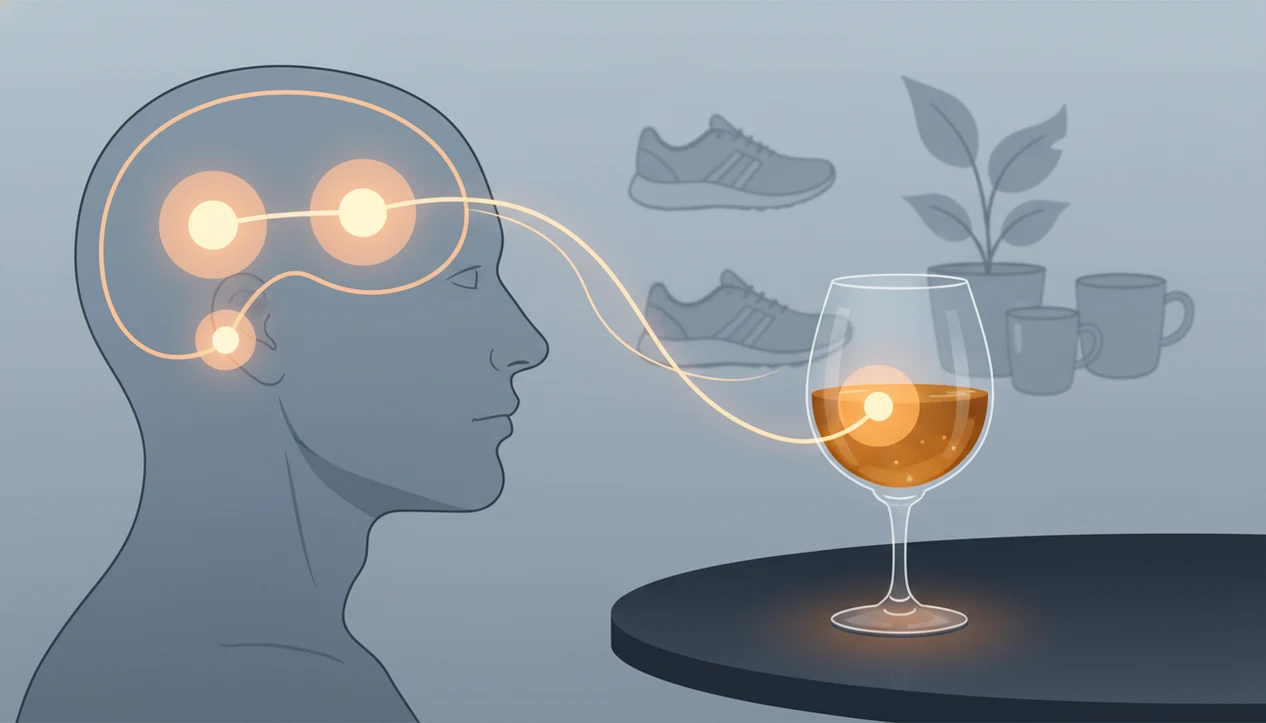
Alcohol hijacks the alcohol dopamine reward system by making drinking feel more rewarding than it really is, then training the brain to notice alcohol cues and crave repeat use. Over time, healthier rewards can feel less satisfying, which is why cutting back works best when you replace alcohol with steady, natural rewards rather than relying on willpower alone.
> Definition: The alcohol dopamine reward system is the brain’s reward circuitry, especially the VTA, nucleus accumbens, and prefrontal cortex, being activated and reshaped by alcohol in ways that affect pleasure, motivation, learning, and craving.
TL;DR
- Alcohol indirectly raises dopamine in reward pathways that normally respond to food, connection, achievement, and safety.
- Repeated heavy drinking can blunt everyday pleasure while making alcohol cues feel more urgent and rewarding.
- Dopamine reward swapping works best when alcohol is replaced with sustainable rewards like exercise, social connection, hobbies, sleep, and measurable milestones.
Alcohol dopamine reward system definition
Quick answer: Alcohol can make the brain assign outsized reward value to drinking cues, which may strengthen cravings and habits over time. For many people, cutting back works better when alcohol is replaced with repeatable, low-risk rewards that the brain can learn to expect instead.
Key takeaways
- Cravings are often learned brain predictions, not proof that you need alcohol.
- Cue awareness helps separate the urge to drink from the decision to drink.
- Small, repeated rewards usually work better than one big lifestyle overhaul.
- Sleep, food, stress, and social context can strongly affect alcohol urges.
- Withdrawal symptoms can be medically serious; heavy daily drinkers should ask a clinician before stopping suddenly.
- Progress may show up first as shorter cravings, fewer automatic pours, or easier recovery after a slip.
The alcohol dopamine reward system is the brain’s motivation-and-learning circuitry being pushed by alcohol, then trained to treat drinking cues as important. Dopamine is not just a “pleasure chemical.” It helps the brain learn what to repeat, what to seek, and what predicts relief or reward.
The key pathway is the mesolimbic reward pathway: the ventral tegmental area, or VTA, sends signals toward the nucleus accumbens and prefrontal cortex. In plain terms, that circuit links wanting, reward, memory, and decision-making.
Alcohol does not press one clean dopamine button. It affects dopamine indirectly through GABA, glutamate, opioid, and stress systems. That is why the first drink after work can feel calming, but the same pattern can later feel automatic and harder to interrupt.
The pocket check is real.
Five facts about alcohol and brain reward pathways
- Alcohol activates the mesolimbic pathway and indirectly increases dopamine release, especially in reward areas linked with reinforcement and motivation.
- Repeated heavy drinking can blunt natural rewards, so food, hobbies, sex, rest, or conversation may feel less satisfying for a while.
- Alcohol cues can become unusually loud to the brain. A pub exit through the smoking area may trigger both drinking and nicotine urges.
- Long-term alcohol use can reshape receptors, transporters, and stress-related reward signaling; animal research has found some changes still detectable at least 30 days into abstinence.
- Shared reward circuitry helps explain why alcohol, cigarettes, vaping, gambling, and scrolling can overlap in habit loops.
For many adults, the most practical way to change alcohol reward learning is to pair reduced drinking with repeated, specific non-alcohol rewards. Related risks beyond reward pathways are covered in the alcohol reduction guides.
How alcohol rewires the mesolimbic reward pathway
Alcohol rewires the mesolimbic reward pathway by changing how the brain predicts, values, and remembers reward. The mechanism is neuroadaptation, which means the brain adjusts its signaling after repeated exposure.
Alcohol affects GABA and glutamate, the brain’s brake-and-accelerator systems. It also affects opioid signaling, which helps shape pleasure and relief, and stress circuits that can make discomfort feel like a reason to drink. NIAAA summarizes alcohol’s broader effects on reward, stress, and decision-making circuits here: https://www.niaaa.nih.gov/publications/alcohol-and-brain-overview. Human imaging and neurochemical studies have reported dose-related, circuit-specific links between alcohol intake and dopamine release in the striatum, according to a 2014 review in Alcohol Research: Current Reviews (the NIH).
The learning piece matters. If the bartender reaches for the usual bottle before you speak, the setting itself can become part of the reward prediction. Over time, alcohol cues can create wanting before a person consciously decides.
After repeated heavy use, dopamine signaling can become blunted. Normal pleasures may feel flat, not because they are gone forever, but because the system is recalibrating. Alcohol tolerance is closely related to this process, and the overlap is explained in alcohol dopamine tolerance.
Safety checks before alcohol reward swapping
Before trying dopamine reward swapping alcohol habits, check whether changing alcohol use is medically safe for you. People who drink heavily every day, have had withdrawal symptoms, or have a history of seizures should seek medical guidance before stopping suddenly.
A mild hangover after two extra drinks is not the same as alcohol withdrawal. Warning signs can include shaking, sweating, confusion, hallucinations, racing heart, or seizures. Clinicians typically recommend medical support when withdrawal risk is present, because alcohol withdrawal can become dangerous.
Write down your highest-risk times, the reward you expect from alcohol, and what usually happens next. Mood, sleep, motivation, and cravings may swing during early change.
Tools like Me Quit can support private behavior-change tracking for cravings, streaks, and milestones. It is not a detox service, emergency service, or substitute for medical treatment.
How to use dopamine reward swapping for alcohol cravings
Use dopamine reward swapping by interrupting one familiar drinking loop and giving the brain a safer reward that meets the same need. The goal is not to argue with a craving; it is to act during the craving window and measure what changes.
- Choose one repeat cue instead of rebuilding your whole routine. Start with a predictable moment, such as arriving home, finishing dinner, opening a show, or passing the shop where you usually buy alcohol.
- Name the reward you expected from drinking. Be plain: relief, connection, confidence, celebration, numbness, boredom relief, or a marker that the day is over.
- Pick one safer substitute that serves that same reward. Use a walk for decompression, a text or call for connection, music for mood shift, food for grounding, or a small task for completion.
- Delay drinking for 10 to 20 minutes while you do the replacement action. Do not wait passively; move, call, cook, shower, stretch, or leave the room.
- Log craving intensity before and after the swap. A 7/10 becoming a 5/10 is useful data, even if the craving does not disappear.
Step 1: Map alcohol cues in the reward pathway
Cue mapping turns a vague craving into a readable pattern. Log the time, place, emotion, people nearby, and craving intensity before drinking or before choosing not to drink.
A useful entry is specific: “6:40 p.m., bus stop, tense, alone, craving 7/10, wanted decompression, walked two blocks instead.” That gives the brain’s learned pathway a shape. It also separates physical craving from boredom, stress relief, routine, or social expectation.
Cravings feel less random when you can see the sequence. The gas station counter beside menthol packs might belong to a smoking loop, while a Friday group chat might belong to a drinking loop.
If nicotine, vaping, and alcohol overlap, an app like Me Quit can help track patterns across all three. For app comparisons focused on drink limits, the best drink less app guide may be useful.
Step 2: Replace alcohol with 8 natural rewards
Natural rewards instead of alcohol work best when they match the need alcohol was filling. The first few tries may feel underwhelming. That does not mean they are useless; it may mean the reward system is recalibrating.
- Walking: Low-friction movement can reduce agitation and create a clean transition after work.
- Strength training: Short, repeatable sessions give the brain measurable effort and completion.
- Cooking: Preparing a real meal can replace the “pour and pause” ritual.
- Music: One planned playlist can carry emotion without adding alcohol.
- Creative hobbies: Drawing, repair projects, writing, or photography give visible progress.
- Social connection: A text, call, or planned visit can replace drinking for relief or belonging.
- Volunteering: Helping someone else can create meaning without chasing intensity.
- Learning goals: A language lesson or course module gives reward through progress.
Avoid swapping alcohol for gambling, compulsive shopping, or constant social media. Repetition beats a quick spike.
Step 3: Use a 20-minute alcohol reward swap routine
A 20-minute reward swap routine gives the craving time to rise, peak, and change before the drinking decision. It works better when the replacement reward fits the same need: relaxation, connection, celebration, or decompression.
Pick one cue first. Do not try to rebuild every evening at once. If the last drink is marked on a phone at 9:30 p.m., start with the hour before that, not the whole week.
Numbered reward-swapping steps
- Choose one alcohol cue you want to interrupt, such as arriving home, finishing dinner, or opening a show.
- Select one replacement reward that fits the same need, such as a walk for decompression or a call for connection.
- Delay the drink for 10 to 20 minutes while doing the replacement action.
- Log the craving before and after with intensity, trigger, action, and result.
- Review weekly and keep, adjust, or replace the reward based on what actually reduced craving.
Good alcohol-reduction tracking tools, including Me Quit, should offer private craving logs, streaks, and habit feedback. They should not claim to provide detox care or make cravings vanish.
Evidence behind alcohol dopamine reward swapping
The evidence supports alcohol dopamine reward swapping as a plausible support strategy, not a guaranteed outcome. It fits what addiction neuroscience says about reward learning, cue-triggered craving, and safer replacement behaviors.
NIAAA describes alcohol as affecting reward, stress, and decision-making circuits, and it also warns that withdrawal can be medically risky for some people. Reviews of dopamine and alcohol reinforcement describe the striatum as a key reward area where alcohol-related learning and motivation can become stronger. Some of this evidence comes from human imaging, self-report, and clinical research; some comes from animal studies that let researchers examine brain changes more directly. Animal findings can clarify mechanisms, but they do not map perfectly onto a person’s Friday night, work stress, or social pressure.
A practical reward-swap plan follows the evidence without overpromising:
- Track the cue that predicts drinking, such as time, place, mood, people, or routine.
- Match the replacement reward to the same need, like relief, connection, or completion.
- Repeat the swap often enough for the brain to learn a new prediction.
- Measure craving before and after, then adjust based on real behavior.
Common mistakes with alcohol dopamine reward system change
“Can I fix dopamine by just quitting alcohol and waiting?” Not always. Time can help, but reward learning also needs new cues, new routines, and repeated non-alcohol rewards.
A common mistake is treating alcohol as if it simply boosts dopamine in one clean direction. The available evidence points to a more mixed process involving GABA, glutamate, opioids, dopamine, stress, and learned prediction. Another mistake is expecting dopamine to “reset” immediately after cutting back.
Willpower alone often fails when cue learning is strong. If the couch, glass, playlist, and 8 p.m. silence all predict drinking, the brain is responding to a trained sequence.
A slip is data, not a character verdict. Reset the plan. Change the environment, track the cue, and add a planned reward before the next high-risk window.
Progress signs in brain reward pathway recovery
Progress in brain reward pathway recovery usually shows up as behavior before it shows up as confidence. Signs include fewer automatic cravings, faster craving recovery, more interest in hobbies, better sleep, steadier mood, and improved self-trust.
It may be small at first. A person notices the fruit flavor smell in a hoodie and does not immediately reach for the vape or a drink. Another person gets through the first 15 minutes after work without opening the fridge.
Milestone tracking can reinforce new learning because the brain responds to visible progress. A calendar streak, money saved total, or count of alcohol-free evenings gives the prefrontal cortex something concrete to evaluate.
Me Quit can track streaks, cravings, and milestones privately. If you are comparing alcohol’s wider effects, how long alcohol affects body gives a separate timeline.
Limitations
Neuroscience can explain risk patterns, but it cannot predict one person’s outcome with certainty.
- Individual dopamine responses to alcohol vary widely by genetics, drinking pattern, stress, sleep, age, and mental health.
- “Dopamine detox” language is oversimplified and can mislead readers into thinking dopamine is harmful.
- An app can support tracking and behavior change, but it does not replace emergency care, detox, therapy, or medical treatment.
For health risks beyond reward and cravings, alcohol’s vascular and cognitive links are discussed in alcohol dementia and stroke risk.
FAQ
Does alcohol release dopamine?
Alcohol indirectly increases dopamine in reward-related brain areas, especially early in drinking. It does this through several systems, including GABA, glutamate, opioid, and stress signaling.
Does alcohol lower dopamine later?
Repeated heavy drinking can blunt dopamine signaling over time. This may make everyday rewards feel less satisfying and alcohol cues feel more urgent.
What is the alcohol dopamine crash?
The alcohol dopamine crash is a plain-language term for the drop in mood, motivation, and reward sensitivity that can follow drinking. It is not a formal diagnosis.
How long does dopamine take to recover after quitting alcohol?
Recovery varies by person, drinking history, sleep, stress, and health status. Reward-system changes can persist for weeks or longer in some research models.
Can exercise replace alcohol dopamine?
Exercise can support natural reward pathways and improve mood regulation. It should not be expected to feel instantly equivalent to alcohol.
Why do alcohol cravings happen?
Alcohol cravings happen when the brain learns that certain cues predict reward, relief, or social ease. Stress, routine, and environment can all strengthen the loop.
Is dopamine detox real?
“Dopamine detox” is an oversimplified phrase. Balanced reward retraining is more accurate than trying to eliminate dopamine.
Can an app track alcohol cravings?
Yes. Me Quit can support private tracking of alcohol cravings, streaks, and milestones. It is a behavior-change tool, not medical detox or emergency care.