
Can Alcohol Cause an Enlarged or Weakened Heart?
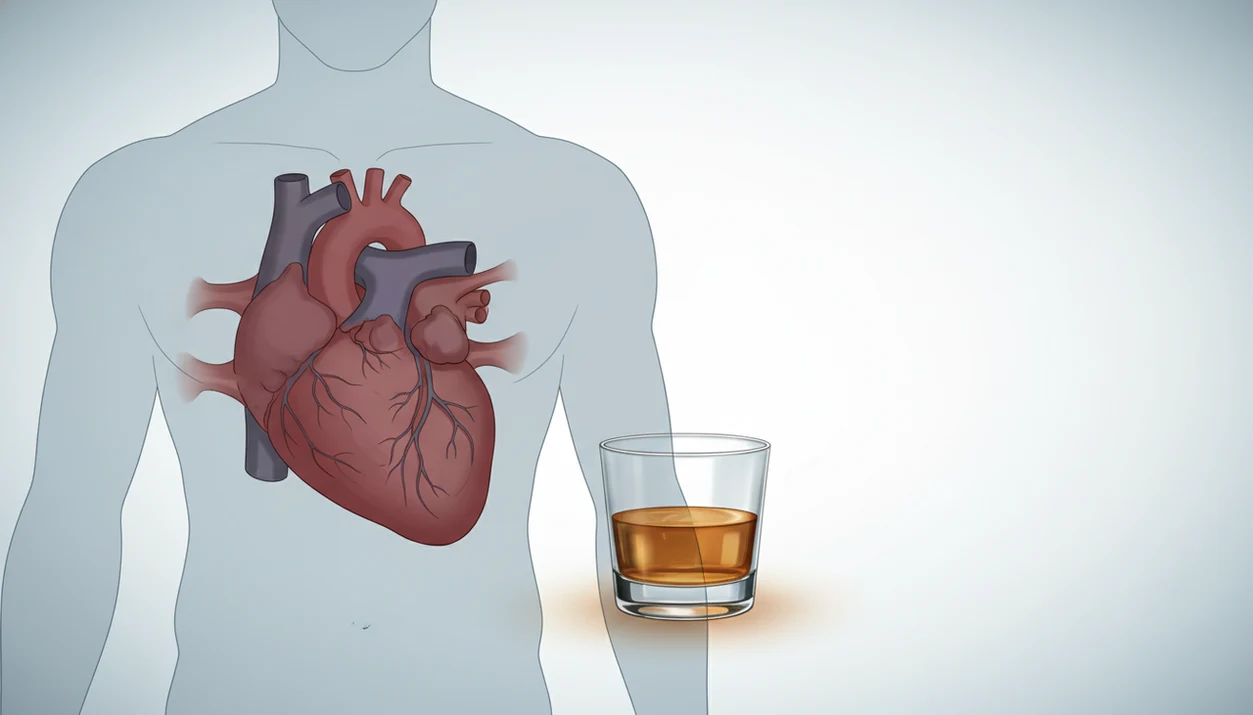
Yes. Long-term heavy drinking can damage heart muscle cells, stretch and enlarge the heart, and reduce pumping strength; common alcohol enlarged heart symptoms include breathlessness, swelling in the legs or ankles, fatigue, dizziness, and rapid or irregular heartbeats.
> Definition: Alcoholic cardiomyopathy is a form of dilated cardiomyopathy in which chronic alcohol exposure weakens and enlarges the heart muscle, making it harder for the heart to pump blood effectively.
TL;DR
- Alcohol can weaken and enlarge the heart muscle over time, especially with years of heavy regular drinking.
- Warning signs often look like heart failure: shortness of breath, ankle or leg swelling, fatigue, palpitations, dizziness, or fainting.
- Stopping alcohol early can sometimes improve heart function, but symptoms need medical evaluation because advanced damage may be permanent or life-threatening.
This guide is educational and is not a diagnosis. If you have new chest pain, fainting, severe shortness of breath, blue lips, confusion, or pink frothy sputum, seek emergency medical care instead of using an online checklist.
Alcohol enlarged heart symptoms at a glance
Quick answer: Yes. Long-term heavy alcohol use can weaken heart muscle, stretch the heart chambers, and reduce pumping ability, a condition often called alcohol-related cardiomyopathy. Symptoms such as shortness of breath, ankle or leg swelling, fatigue, dizziness, or irregular heartbeat should be discussed with a clinician promptly.
Key takeaways
- An enlarged heart related to alcohol often develops gradually, so early symptoms can be easy to dismiss.
- Stopping or sharply reducing alcohol may help prevent further damage, but medical guidance is important.
- Breathlessness at rest, chest pain, fainting, or severe swelling can be urgent warning signs.
- Alcohol withdrawal can be dangerous for heavy daily drinkers and may require supervised care.
- Heart medications, nutrition support, and alcohol treatment are often used together.
- Tracking drinks, cravings, sleep, and symptoms can help reveal patterns to share with a clinician.
Alcohol enlarged heart symptoms often look like heart failure symptoms: shortness of breath, swollen feet or ankles, fatigue, weakness, dizziness or fainting, chest discomfort, rapid or irregular heartbeat, and waking up breathless at night. These signs deserve medical attention, especially if they are new, getting worse, or happening with light activity.
Early symptoms can be annoyingly vague. A person may blame stairs, poor sleep, or a rough weekend before noticing the same breathless feeling during a short walk to the mailbox. The pattern matters.
Don’t diagnose yourself from a checklist. Do take the checklist seriously.
Seek urgent care now for chest pain, fainting, severe breathlessness, blue lips, coughing pink frothy mucus, or new confusion. Those symptoms can signal dangerous fluid buildup, low oxygen, rhythm problems, or another emergency that needs immediate medical assessment.
How to use this alcohol enlarged heart symptom guide
Use this guide as a safety filter, not a diagnosis. Start by ruling out emergency symptoms, then use a simple log to make patterns clear enough to discuss with a clinician.
- Check for danger signs first. Seek urgent care now if you have chest pain, fainting, severe shortness of breath, blue lips, confusion, or pink frothy sputum.
- Record symptoms by date. Write down breathlessness, swelling, palpitations, fatigue, and any new limits on stairs, walking, work, sleep, or exercise. Note what was happening before the symptom appeared.
- Estimate alcohol intake in standard drinks. Count the alcohol dose, not just the number of glasses, cans, or pours. A double liquor pour, a strong craft beer, and a full wine glass can each be more than one standard drink.
- Book medical evaluation for symptoms that persist or worsen. This is especially important if breathlessness, swelling, palpitations, or fatigue are new, recurring, or showing up with lighter activity than usual.
- Bring the log to the visit. Share the symptom timeline and alcohol history honestly so the clinician can choose the right tests and follow-up plan.
Five facts about alcohol heart enlargement and cardiomyopathy
- Long-term heavy alcohol use can thin, weaken, and enlarge the heart muscle. This alcohol heart enlargement is usually described as alcoholic cardiomyopathy or alcohol-induced dilated cardiomyopathy.
- Symptoms often come from fluid backup and reduced pumping ability. Breathlessness, ankle swelling, nighttime coughing, and wiped-out legs can happen when blood is not moving forward well.
- Stopping alcohol can improve or partly reverse damage when caught early. For many people, the most common medically supported way to reduce further alcohol-related heart injury is abstinence combined with heart-failure care.
- About 80 grams of alcohol per day for at least 5 years is linked to higher risk. That is roughly 5 to 6 U.S. standard drinks daily, but no exact safe threshold rules cardiomyopathy in or out; reviews of alcoholic cardiomyopathy commonly use this exposure range as a high-risk benchmark (NCBI Bookshelf: https://www.ncbi.nlm.nih.gov/books/NBK513322/).
- Recovery usually needs two tracks. Cardiology care treats the heart, and structured alcohol-reduction or abstinence support helps make the next no-drink decision easier when the old routine shows up at 6 p.m.
How alcohol weakened heart muscle develops
Alcohol weakened heart muscle develops when alcohol and acetaldehyde, its toxic breakdown product, injure cardiac muscle cells and disrupt how those cells make energy. The technical pieces include oxidative stress, mitochondrial injury, inflammation, and impaired energy use. In plain English, the heart cells get less able to contract and recover.
When contraction weakens, the main pumping chamber often stretches to compensate. At first, that stretch may help move blood. Over time, the ventricle can become larger, thinner, and less efficient. Forward flow drops, pressure rises, and fluid can back up into the lungs, legs, and abdomen.
The swollen-shoe moment is easy to dismiss.
Vulnerability is not identical from person to person. Genetics, nutrition, high blood pressure, arrhythmias, viral injury, thyroid disease, and other heart conditions can change how much alcohol exposure the heart tolerates before the system starts slipping.
Alcohol cardiomyopathy signs versus ordinary hangover symptoms
A hangover can cause a racing heart, shaky anxiety, dehydration, poor sleep, and a heavy tired feeling. Alcohol cardiomyopathy signs are more concerning when symptoms persist, progress, or appear with ordinary activity, especially breathlessness, swelling, exercise intolerance, or waking up gasping.
Symptoms after drinking can also reveal an underlying rhythm problem or alcohol weakened heart muscle. The next morning may not be “just nerves” if your heart is pounding hard, your chest feels tight, and walking across the room feels oddly difficult. For shorter-term alcohol effects, the difference between dehydration and something more serious is covered in alcohol electrolyte hangover.
| Symptom pattern | More hangover-like | More concerning for cardiomyopathy | When to seek care |
|---|---|---|---|
| Heartbeat | Brief racing after alcohol, anxiety, or poor sleep | Repeated rapid, irregular, or pounding beats | Same day if persistent; urgent if fainting or chest pain |
| Breathing | Mild breathlessness with dehydration or panic | Breathless on stairs, lying flat, or at night | Urgent if severe or blue lips appear |
| Swelling | Puffy feeling after salty food | New ankle, foot, or leg swelling | Prompt medical evaluation |
| Energy | One bad sleep day | Ongoing fatigue or weakness with light activity | Clinician visit soon |
Alcohol heart enlargement risk by drinking pattern
Does beer, wine, or liquor cause different heart enlargement risk? Total ethanol exposure matters more than the drink type, so a large daily beer intake can matter as much as liquor if the alcohol dose is similar.
Research commonly links heavy chronic intake around 80 grams of alcohol per day for at least 5 years with higher alcoholic cardiomyopathy risk. That is roughly 5 to 6 standard drinks per day. Still, there is no precise threshold that guarantees safety or proves harm for one individual.
Social heavy drinking can land in this range without looking dramatic. Think of a party cooler packed with cans, then a few more at home, repeated most weekends and some weeknights. No moral label needed. The heart only sees the dose, duration, blood pressure strain, rhythm effects, sleep disruption, and nutritional wear. Genetics or existing heart disease can lower the margin. If alcohol has also become tied to stress relief or reward, alcohol dopamine tolerance explains why “just cut back” can feel harder than it sounds.
Medical diagnosis for alcohol-related enlarged heart symptoms
An enlarged heart cannot be confirmed from symptoms alone. Clinicians diagnose alcohol-related enlarged heart symptoms by combining your history, alcohol intake, physical exam, ECG, blood tests, chest imaging, and an echocardiogram, with cardiac MRI or coronary testing in some cases.
Dilated cardiomyopathy, the broader category that includes alcoholic cardiomyopathy, affects about 1 in 500 adults in the United States, according to the National Heart, Lung, and Blood Institute (the NIH). That number is broad, but it gives a useful frame: this is not rare enough to ignore.
Clinicians also need to rule out coronary artery disease, valve disease, viral myocarditis, inherited cardiomyopathy, hypertension, thyroid disease, anemia, and other causes. Be honest about alcohol, including serving size and frequency. A “glass” poured to the rim is not the same as one standard drink. That detail changes treatment planning, follow-up timing, and the conversation about whether abstinence is medically necessary.
Treatment options for alcohol weakened heart muscle
Complete abstinence is commonly recommended for alcoholic cardiomyopathy, especially when pumping function is reduced. Treatment usually has two parts: evidence-based heart-failure care and practical support to stop drinking or make a medically guided reduction plan.
- Heart-failure medication care: Clinicians may use guideline-directed medications to reduce strain, improve pumping conditions, and lower future risk.
- Fluid and pressure management: Diuretics, low-salt eating, fluid guidance, and blood pressure control can help reduce swelling and breathlessness.
- Rhythm and device care: Some people need arrhythmia treatment, implanted devices, or advanced heart-failure care when disease is severe.
- Alcohol-use support: Counseling, medical care, mutual support groups, craving medications, and trigger tracking can reduce relapse risk.
- Private habit tools: Tools like Me Quit can help adults track cravings, streaks, dry days, and milestones, but they do not replace cardiology care.
Clinicians typically recommend pairing alcohol abstinence with heart-failure treatment when alcohol is suspected to be driving cardiomyopathy.
Recovery outlook after alcohol cardiomyopathy signs appear
Some people improve significantly after stopping alcohol, especially when alcohol cardiomyopathy signs are caught early and the heart has not developed advanced scarring or severe pump failure. Improvement can take months, not days, and it usually requires repeat imaging, medication adjustments, and steady follow-up.
No one can promise full reversal from the outside. That’s the frustrating part.
Ongoing heavy drinking raises the risk of progressive heart failure, dangerous arrhythmias, hospitalization, and sudden death. Symptomatic dilated cardiomyopathy with heart failure can carry a high annual mortality risk without effective treatment, especially when disease is advanced or alcohol use continues.
For people with early disease, abstinence is often easier to sustain when the plan includes trigger removal, replacement routines, and a fast reset after a slip because the old cue-routine-reward loop does not disappear just because the diagnosis is serious.
Daily tracking for alcohol heart enlargement recovery habits
Daily tracking cannot diagnose alcohol heart enlargement, but it can make recovery habits more visible. Log each drink honestly, including serving size and alcohol percentage. A tall craft beer, a double pour, and a standard 12-ounce beer are not the same entry.
If your clinician recommends it, track weight change, swelling, breathlessness, palpitations, sleep, and exercise tolerance. Write down the decision point too: stress after work, social pressure, loneliness, or the automatic “I need something” feeling before pouring a drink. Then pair each cue with a replacement action, such as a phone timer, a walk, food, or a check-in text.
Me Quit can be used as a private habit log for adults who are trying to stop smoking, stop vaping, drink less, or track cravings, streaks, and milestones. Me Quit-style tracking can support behavior change, but it does not provide echocardiograms, detox care, emergency treatment, or cardiology follow-up. For broader behavior plans, the alcohol reduction guides can help organize the next steps.
Limitations
Symptoms alone cannot prove alcohol caused an enlarged or weakened heart. They can point to risk, but testing is what separates a useful hunch from a medical diagnosis.
- Some people with alcoholic cardiomyopathy have few symptoms until the disease is advanced.
- Coronary disease, inherited cardiomyopathy, valve disease, lung disease, kidney disease, anemia, thyroid disease, and infections can cause similar symptoms.
- There is no exact alcohol threshold that predicts individual risk.
If breathlessness, swelling, fainting, chest pain, or confusion is new, don’t wait for a streak to look tidy. Get medical help first.
FAQ
What are four common signs of cardiomyopathy?
Four common signs of cardiomyopathy are breathlessness, swelling in the legs or ankles, fatigue, and an irregular or racing heartbeat.
Can alcohol enlarge your heart?
Yes. Chronic heavy alcohol use can weaken and stretch the heart muscle, causing alcoholic cardiomyopathy, a form of dilated cardiomyopathy.
Can alcoholic cardiomyopathy be reversed?
Alcoholic cardiomyopathy can sometimes improve with early abstinence and medical treatment. Advanced heart damage may not fully reverse.
How much alcohol can damage the heart?
Research links about 80 grams of alcohol per day for at least 5 years, roughly 5 to 6 standard drinks daily, with higher risk. No exact safe threshold exists for every person.
Do palpitations after drinking mean heart damage?
Palpitations after drinking can come from dehydration, anxiety, poor sleep, or rhythm changes. Persistent, severe, or repeated alcohol-triggered palpitations should be evaluated.
How is alcoholic cardiomyopathy diagnosed?
Diagnosis usually includes alcohol history, physical exam, ECG, blood tests, echocardiogram, and sometimes imaging or coronary testing. Clinicians also rule out other causes of cardiomyopathy.
Can beer cause an enlarged heart?
Beer can contribute to an enlarged heart if total alcohol intake is high over time. Ethanol dose matters more than whether the alcohol comes from beer, wine, or liquor.
When is breathlessness an emergency?
Breathlessness is an emergency when it is severe or occurs with chest pain, fainting, blue lips, confusion, or pink frothy sputum. Call emergency services or seek urgent care immediately.