How Alcohol Changes Dopamine and Builds Tolerance
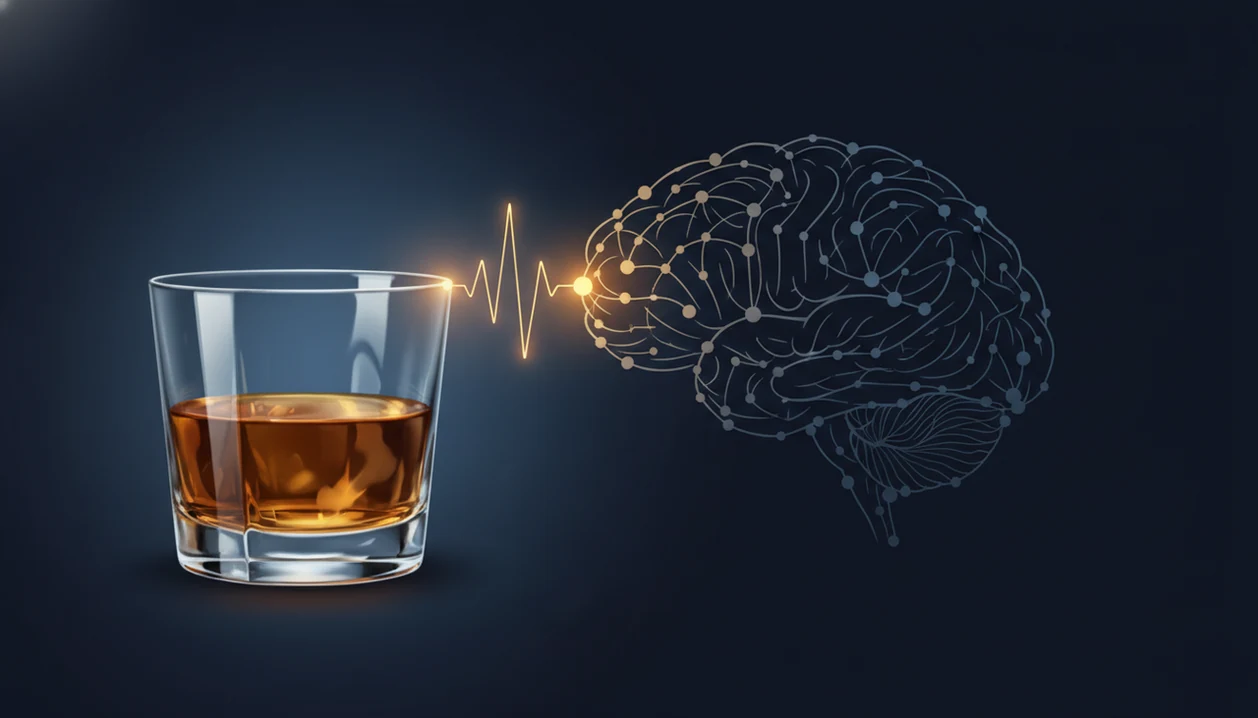
Alcohol dopamine tolerance happens when repeated drinking teaches the brain to respond less strongly to the same amount of alcohol, so the old buzz may feel weaker and the urge to drink more can grow. Dopamine is only part of the story: alcohol also remodels GABA, glutamate, stress, and learning systems that shape reward, anticipation, and control.
> Definition: Alcohol dopamine tolerance is the brain-behavior pattern where repeated alcohol exposure changes reward signaling so the same drinking pattern produces less reward, stronger anticipation, or a need for more alcohol to feel the same effect.
- Alcohol can increase dopamine release in reward circuits, especially in the nucleus accumbens, which helps make drinking feel reinforcing.
- Tolerance is not just liver metabolism; it can involve receptor sensitivity, reward learning, GABA and glutamate adaptation, and habit formation.
- Feeling less drunk or less rewarded does not mean alcohol is safer, because impairment and health risks can still accumulate.
Alcohol dopamine tolerance at a glance
Quick answer: Alcohol can make dopamine signaling feel less responsive over time, so the same amount may produce less reward and more anticipation of the next drink. Tolerance is not just “low dopamine”; it often involves learning, stress chemistry, GABA, glutamate, sleep, and withdrawal-related changes.
Key takeaways
- Needing more alcohol for the same effect can be a tolerance signal.
- A weaker buzz does not mean alcohol is safer; impairment can still occur.
- Cravings may be strongest in familiar drinking cues, not only during stress.
- Sleep disruption can make next-day urges feel more intense.
- Cutting back gradually may be safer for people who drink heavily.
- Tracking amount, timing, mood, and triggers can reveal patterns sooner.
Alcohol dopamine tolerance means the reward system adapts to repeated alcohol exposure, so the same drink pattern may produce a weaker buzz or a stronger pull to drink more. It is about learning, brain compensation, and repeated reinforcement, not immunity to alcohol.
A person may say, “I can handle it now,” but that can hide the more important point. The brain and body may still be impaired. Reaction time, judgment, sleep quality, stomach irritation, and next-day anxiety can still worsen even when the subjective buzz feels smaller.
Dopamine is one pathway in a larger system. Alcohol also affects GABA, glutamate, stress hormones, habit circuits, and liver metabolism. The full alcohol dopamine reward system is better understood as a network, not a single “pleasure chemical” switch.
The quieter buzz can be misleading.
Five facts about alcohol dopamine baseline changes
- Alcohol can activate reward circuitry. A major review describes alcohol-related dopamine release in the nucleus accumbens, a region involved in reward learning and reinforcement the NIH.
- Repeated exposure can change sensitivity. Over time, the brain may adapt through altered receptor signaling, reduced responsiveness, or other neuroadaptive changes.
- Tolerance can reduce reward without reducing harm. Drinking may feel less dramatic while impairment, accidents, sleep disruption, dependence risk, and organ strain continue.
- Dopamine is about wanting, not just liking. It helps attach motivation to cues, routines, places, and expected rewards.
- Ordinary rewards can feel flatter. When alcohol becomes a dominant reward cue, dinner, conversation, exercise, or a quiet evening may register as less interesting for a while.
That last point matters in real life. The party cooler packed with cans can start to feel more motivating than the party itself.
How alcohol dopamine tolerance works in the brain
Alcohol dopamine tolerance works through neuroadaptation: repeated alcohol exposure changes reward signaling, receptor sensitivity, and learned cue responses so the same amount of alcohol may feel less rewarding over time.
Alcohol can increase dopamine activity in mesolimbic reward pathways, including the nucleus accumbens. In plain terms, the brain starts tagging drinking as something worth repeating. NIAAA describes alcohol’s effects as involving reward, stress, and executive-function circuits, not dopamine alone NIAAA alcohol data. If the same pattern happens often, the system may compensate. Receptors can become less sensitive, signaling can shift, and the brain may require a stronger input to create the same perceived effect.
The mechanism is not only dopamine downregulation. Alcohol enhances GABA-related inhibition, suppresses glutamate-related excitation, and can later produce rebound effects as the brain tries to restore balance. Stress systems and habit circuits can also become involved.
Clinicians typically describe tolerance as one possible marker of alcohol-related risk, not as proof of a specific diagnosis by itself. It is also not accurate to say alcohol permanently “drains” dopamine. The available evidence points to changed signaling, sensitivity, learning, and control.
Before you track alcohol tolerance
Before you track alcohol tolerance, set the safety boundary first: this is a personal observation log, not a diagnosis, detox plan, or reason to push your drinking higher. Do not “test” tolerance by intentionally adding drinks to see what happens.
- Decide what you will not do. Do not drive, work, swim, use tools, or care for others after drinking. If pregnancy is possible, you are pregnant, or you are trying to conceive, stop and get medical guidance instead of experimenting.
- Check medications and health risks. Review prescriptions, sleep aids, anxiety medicines, pain medicines, and other substances before drinking. Mixing can change impairment quickly.
- Record your baseline. Before the first drink, write the date, time, food intake, sleep, mood, stress level, craving score, planned limit, location, and who you are with.
- Watch for withdrawal risk. If you get shakes, sweating, nausea, panic, hallucinations, seizures, confusion, or need alcohol to feel normal, do not start a self-tracking experiment. Seek medical support before cutting down.
- Keep the goal narrow. Track patterns so you can make safer choices, not prove you can handle more.
How to track alcohol tolerance and dopamine-driven drinking patterns
You can track alcohol tolerance by recording what you drank, what you expected, what you felt, and what happened afterward. This is observation, not a medical diagnosis.
- Record each drink. Note the type, amount, start time, and setting.
- Rate craving before drinking. Use a 0 to 10 score and write the trigger, such as stress, boredom, or a pub exit through the smoking area.
- Rate the buzz. Log when you first felt an effect, how strong it was, and how long it lasted.
- Track the after-effect. The next morning, note mood, sleep, stomach symptoms, anxiety, and whether you wanted to drink again.
- Review weekly. Look for rising drink counts, shorter buzz, stronger anticipation, or more “automatic” drinking.
Tools like Me Quit can help adults track cravings, streaks, milestones, and drink-less goals privately. A good mequit addiction recovery hub for quit smoking, stop vaping, quit drinking, and mindful alcohol reduction should deliver practical logs and reset plans, not a diagnosis, detox protocol, or promise that cravings disappear.
Reward prediction error alcohol effects and drinking anticipation
Why can alcohol feel compelling before the first sip? Reward prediction error is the gap between the reward the brain expects and the reward it actually gets.
With repeated drinking, alcohol-related cues can become learned predictors. A certain glass, Friday evening, a tense commute, a familiar bar stool, or the beer fridge hum during dinner prep may start the reward sequence before alcohol reaches the bloodstream. This cue-learning pattern is consistent with addiction models that describe dopamine as a signal for prediction, salience, and learned reinforcement, not just pleasure the NIH. Dopamine is closely tied to that prediction process.
This helps explain a frustrating pattern. Anticipation can stay strong even when the actual buzz becomes weaker. The brain has learned, “This is the thing that changes my state,” even if the result is now brief, dull, or followed by poor sleep.
For people who drink from cues rather than clear choice, craving can feel automatic because the brain has already started preparing for the expected reward. The urge is real. It is not always an accurate forecast.
Why alcohol tolerance happens beyond dopamine downregulation
Alcohol tolerance happens through several mechanisms, and dopamine downregulation is only one possible part. Metabolism, brain compensation, learned behavior, and drinking context can all change how alcohol feels.
| Type of tolerance | What changes | What it can look like | Key caution |
|---|---|---|---|
| Dopamine/reward tolerance | Reward signaling and cue learning adapt | The same drinks feel less rewarding | Craving may rise even as pleasure falls |
| Metabolic tolerance | The liver processes alcohol differently over time | A person may feel effects later or less strongly | Blood alcohol risk still matters |
| Functional tolerance | The brain compensates for alcohol’s depressant effects | Speech or movement may look more controlled | Judgment and coordination can still be impaired |
| Behavioral tolerance | A person learns to perform familiar tasks while drinking | They seem “normal” in routine settings | New settings can expose impairment quickly |
For many people, the safer interpretation is simple: appearing less intoxicated is not the same as being unimpaired. The alcohol effects days pattern can also extend beyond the drinking window.
Alcohol downregulation brain signs that deserve attention
Alcohol downregulation brain signs are practical patterns that may suggest tolerance, stronger reinforcement, or escalating cue-driven use. They do not diagnose alcohol use disorder by themselves.
- Needing more drinks. The old amount no longer gives the same buzz, so the planned limit keeps moving.
- Shorter reward window. The first drink feels promising, but the effect fades quickly.
- Earlier drinking. The start time creeps from late evening to dinner, then to “just before” dinner.
- Cue-triggered craving. A gas station counter beside menthol packs, a certain route home, or a group chat can suddenly make drinking feel urgent.
- Flatter ordinary pleasure. Food, music, sex, exercise, or conversation may feel muted compared with the expected alcohol effect.
Reduced enjoyment of normal activities can reflect a reward-system shift, not a character flaw. If drinking feels hard to control, consider a lower-risk plan, a tracking period, or professional support.
Small changes count.
Common mistakes when interpreting alcohol tolerance
The biggest mistake is treating tolerance as protection. A weaker buzz can mean the brain and body have adapted, not that driving, organs, judgment, or dependence risk are safer.
- Separate feeling sober from being safe. If you have been drinking, do not use confidence, clear speech, or “I feel fine” as a driving test. Reaction time and judgment can still be impaired even when the buzz feels muted.
- Avoid reading tolerance as liver strength. Being able to drink more does not prove the liver is protected. It may simply mean your body and brain are compensating while health strain continues.
- Do not chase a bigger effect. Adding drinks to “check” whether dopamine has changed can reinforce the same cue-and-reward loop you are trying to understand.
- Distinguish hangover from withdrawal. A headache, nausea, poor sleep, and regret after overdrinking are not the same as shakes, sweating, panic, hallucinations, confusion, seizures, or needing alcohol to feel normal.
- Treat escalation as information. If your planned limit keeps moving, use that as a reason to pause, track, reduce risk, or seek support.
Reducing alcohol tolerance without chasing a dopamine reset
Reducing alcohol exposure may help reward sensitivity improve for many people, but there is no guaranteed “dopamine reset” timeline. The brain can recalibrate, yet sleep, stress, drinking history, medications, mental health, and overall health all shape the pace.
A practical plan is usually more useful than a dramatic reset claim. Set drink limits before the first drink. Add alcohol-free days. Plan for cues, especially times, people, and places that make drinking feel automatic. Build replacement rewards that are specific enough to do tonight, such as a late walk, a meal out without alcohol, or a gym class already booked.
The most common behavior-change route is reduced exposure combined with cue planning and repeated tracking, because tolerance is maintained by both biology and learned routine.
Me Quit can support mindful alcohol reduction by helping adults track cravings, drink-less goals, streaks, and milestones alongside quit-smoking or stop-vaping goals. For broader planning, the alcohol reduction guides cover related brain, body, and craving topics.
Limitations
Dopamine is a useful explanation for alcohol tolerance, but it cannot prove what is happening in one person’s brain at home.
- Feeling less buzzed can still come with impaired judgment, falls, driving risk, dependence risk, and organ harm.
- A mild hangover after two extra drinks is different from alcohol withdrawal symptoms, which can require medical attention.
- Online dopamine detox claims are often overstated and should not replace clinical help when drinking feels unsafe or hard to stop.
A 2022 review described alcohol tolerance as a clinically important but still understudied factor in alcohol-related problems; pair this claim with the review’s inline URL before publication. If symptoms include shaking, confusion, seizures, hallucinations, chest pain, or severe withdrawal concern, seek urgent medical support.
When to seek medical help for alcohol tolerance or withdrawal
Seek medical help if alcohol tolerance is rising, drinking feels hard to control, or stopping causes symptoms that feel more intense than a hangover. Get urgent care now for seizures, confusion, hallucinations, chest pain, fainting, severe agitation, or symptoms that are rapidly worsening.
Withdrawal can be dangerous after heavy repeated drinking because the brain has adapted to alcohol’s depressant effects. When alcohol drops suddenly, the rebound can affect the nervous system, heart rate, blood pressure, sleep, anxiety, and perception. This is not a willpower test or something a tracking streak can safely manage on its own.
- Call emergency services if there are seizures, chest pain, severe confusion, hallucinations, or loss of consciousness.
- Contact a clinician before cutting down sharply if you drink heavily most days, wake up shaky, or need alcohol to feel normal.
- Tell the truth about amounts, timing, medications, and other substances so support can be safer.
- Ask for help early if planned limits keep moving or drinking feels automatic.
- Use tracking tools carefully as pattern logs, not substitutes for clinical care, diagnosis, detox supervision, or medication advice.
FAQ
Does alcohol increase dopamine?
Yes. Alcohol can increase dopamine release in reward circuits, especially early in a drinking episode and in brain regions tied to reinforcement.
What is alcohol dopamine tolerance?
Alcohol dopamine tolerance is a pattern where repeated alcohol exposure changes reward signaling, so the same drinking pattern may feel less rewarding or create stronger anticipation.
Why does alcohol stop working?
Alcohol may “stop working” because the brain adapts through tolerance, altered receptor sensitivity, and learned reward changes. The person may need more alcohol to feel an effect, but risk still increases.
Can dopamine baseline recover?
Reward sensitivity can improve for many people after reducing or stopping alcohol, but the timeline varies. Sleep, stress, drinking history, and health conditions can affect recovery.
Is tolerance only liver related?
No. Metabolic tolerance involves liver processing, but brain-based tolerance can involve dopamine, GABA, glutamate, stress systems, and learned behavior.
Does tolerance mean less impairment?
No. A person may feel or appear less intoxicated while still having impaired judgment, coordination, reaction time, and health risk.
Why do I crave alcohol?
Alcohol cravings can come from learned cues, reward prediction, dopamine signaling, stress relief learning, and habit loops. A craving log can help identify time, trigger, intensity, and response.
Can drinking less reduce tolerance?
Drinking less can reduce tolerance for some people by lowering repeated alcohol exposure. Changes are individual, and medical support is important if withdrawal symptoms or loss of control are present.