
How Alcohol Irritates the Stomach and Esophagus
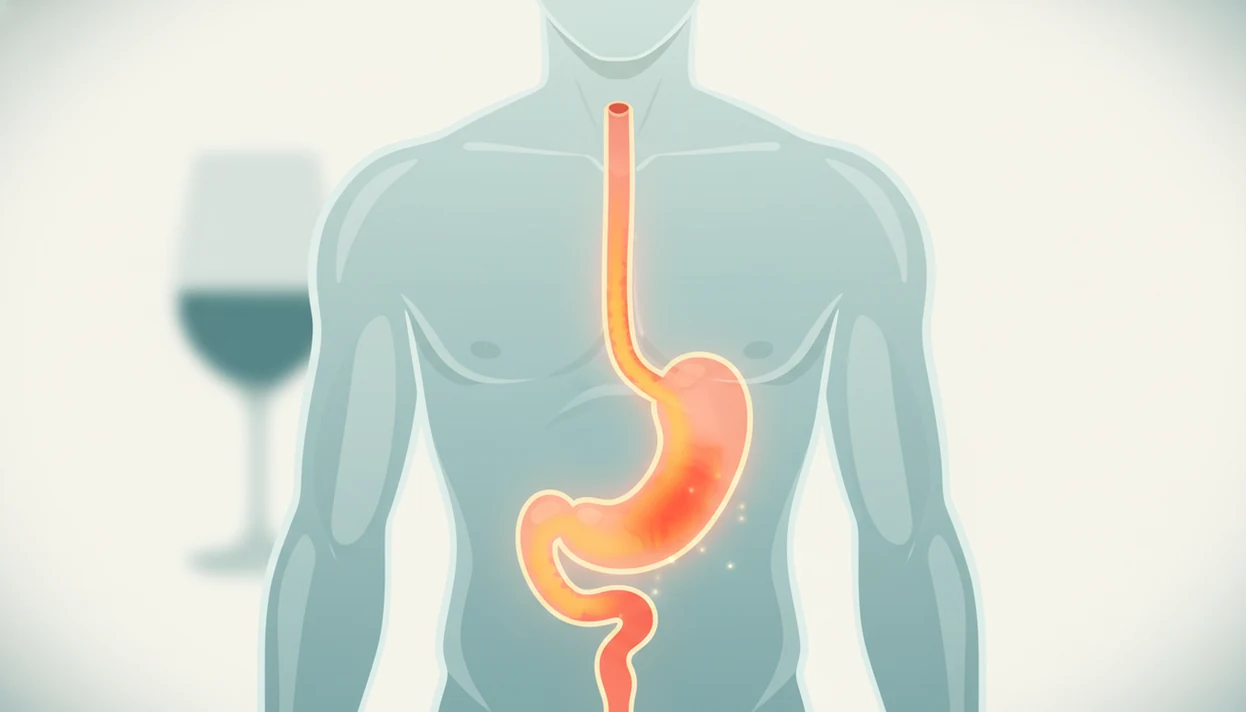
Alcohol can irritate the stomach and esophagus by increasing acid, weakening the valve that keeps acid down, and inflaming delicate digestive lining. This is why alcohol digestive irritation reflux can show up as heartburn, nausea, burning throat, regurgitation, stomach pain, or worsening GERD symptoms.
> Definition: Alcohol-related digestive irritation is the stomach, esophagus, and reflux symptom pattern that can occur when drinking alcohol increases acid exposure, weakens the lower esophageal sphincter, and inflames digestive tissue.
TL;DR
- Alcohol can trigger reflux by relaxing the lower esophageal sphincter, the valve between the stomach and esophagus.
- Repeated drinking can irritate the stomach lining and may contribute to gastritis, ulcers, or bleeding in higher-risk people.
- Reducing alcohol, adding alcohol-free days, and tracking symptoms can help identify whether drinking is driving heartburn or upset stomach.
At-a-glance signs of alcohol digestive irritation and reflux
Quick answer: Alcohol may irritate the stomach and esophagus, loosen the lower esophageal sphincter, and make reflux symptoms more likely for many people. Cutting back, avoiding drinking close to bedtime, and tracking symptom patterns can help identify whether alcohol is a major trigger.
Key takeaways
- Heartburn after drinking often reflects irritation, reflux, or both.
- Symptoms that repeat after alcohol are a useful signal to reduce or pause drinking.
- Drinking with food may feel easier on the stomach than drinking on an empty stomach.
- Lying down soon after alcohol can make reflux more likely.
- Severe pain, vomiting blood, black stools, or trouble swallowing need medical care.
- People who drink heavily should ask a clinician before stopping suddenly because withdrawal can be dangerous.
Alcohol digestive irritation and reflux often feels like heartburn, sour burps, burning in the throat, nausea, bloating, stomach pain, vomiting, diarrhea, or reflux the morning after drinking. Symptoms can start during drinking, wake you overnight, show up the next morning, or build after repeated drinking over weeks.
The pattern matters. A Friday 6 p.m. drink that reliably leads to chest burn at midnight is useful information, not a character flaw. Tools like Me Quit can help adults track drinks, cravings, and symptom timing to test whether cutting back improves reflux.
Get urgent medical evaluation for chest pain, vomiting blood, black stools, trouble swallowing, food sticking, or unintentional weight loss. Don’t wait those out at home.
Five facts about alcohol upset stomach and acid reflux
- Alcohol can directly irritate the stomach and esophagus lining and may increase stomach acid, which can cause burning, nausea, and an alcohol upset stomach.
- Alcohol can relax the lower esophageal sphincter, the valve between the stomach and esophagus, making acid reflux more likely.
- Heavy or chronic alcohol use is associated with higher GERD risk and complications such as esophagitis and Barrett’s esophagus.
- Repeated irritation can contribute to gastritis and stomach ulcers, especially when combined with NSAIDs, H. pylori infection, or heavy drinking.
- Cutting back, alcohol-free days, or quitting can reduce reflux symptoms for many people, especially when paired with smoking or vaping reduction.
For many adults, reducing alcohol is easier to test than guessing between foods because the drinking pattern is usually visible on a calendar. The party cooler packed with cans tells a clearer story than memory does on Monday.
How alcohol digestive irritation reflux works in the gut
Alcohol-related digestive irritation happens when alcohol changes valve function, acid exposure, stomach lining defense, and gut movement at the same time. The lower esophageal sphincter, or LES, is the muscle valve that normally limits acid from moving upward into the esophagus.
When alcohol relaxes that valve, acid can splash upward and irritate tissue not built for stomach acid. Cleveland Clinic lists alcohol among common reflux triggers that relax the LES and promote GERD symptoms clevelandclinic. Alcohol may also increase acid, reduce protective mucus, alter motility, and disturb gut bacteria. In plain English, the gut’s timing and protective coating get thrown off.
That is why one drinking episode can cause burning chest pain, sour taste, nausea, gastritis-like aching, diarrhea, or delayed symptoms the next day. Drinkaware also notes that alcohol can irritate the stomach lining and contribute to gastritis, ulcers, and acid-related symptoms over time co alcohol data.
Alcohol and esophageal ulcers, GERD, and long-term inflammation
Alcohol is not the only cause of ulcers, but repeated reflux and tissue irritation can worsen inflammation and delay healing. Esophagitis means the esophagus is inflamed. Stomach ulcers are sores in the stomach lining. Esophageal ulcers are sores in the swallowing tube, often linked with acid injury, pills, infection, or other conditions.
Long-term reflux can also contribute to Barrett’s esophagus, a tissue change associated with higher esophageal cancer risk. That does not mean alcohol alone causes every case. The risk picture depends on reflux severity, smoking, weight, genetics, medications, and other factors. The overlap with nicotine is real; beer breath during a vape craving can turn into a double trigger for reflux and relapse.
A 2010 meta-analysis found chronic excessive alcohol use had about 2.85 times higher odds of GERD compared with non-abusers the NIH. A 2019 systematic review also found that higher alcohol intake and drinking frequency were associated with increased GERD risk, although results varied by study design and population the NIH. Seek care for painful swallowing, food sticking, persistent vomiting, blood, black stools, severe chest pain, or symptoms lasting more than two weeks.
Alcohol acid reflux ulcers versus ordinary heartburn symptoms
Alcohol acid reflux ulcers cannot be diagnosed from symptoms alone. The same burning or stomach pain can come from reflux, gastritis, ulcers, H. pylori, NSAIDs, bile reflux, gallbladder disease, or even heart-related chest pain.
| Pattern | Typical symptoms | Timing after alcohol | When to seek care |
|---|---|---|---|
| Occasional heartburn | Burning chest, sour burps | During drinking or after a large meal | If it becomes frequent or severe |
| GERD-like reflux | Regurgitation, throat burn, cough, morning-after reflux | Overnight or next morning | If symptoms recur weekly or need frequent medicine |
| Gastritis | Upper stomach ache, nausea, bloating | Same night or next day | If pain persists, worsens, or vomiting occurs |
| Stomach ulcers | Gnawing pain, nausea, possible bleeding | May flare after drinking or NSAIDs | Urgent care for black stools or blood |
| Possible esophageal ulcers | Painful swallowing, food sticking, chest pain | Often after repeated irritation | Prompt medical evaluation |
Self-diagnosis is shaky here. A crumpled antacid packet in a bag is not a workup.
When to seek medical help for alcohol-related reflux or ulcer symptoms
Seek medical help right away if reflux or stomach pain comes with chest pain, vomiting blood, black stools, faintness, confusion, or severe dehydration. Alcohol-related ulcers, GERD, gastritis, and heart symptoms can overlap, so the safest move is to treat warning signs as medical until proven otherwise.
For non-urgent symptoms, recurring reflux still deserves review when it keeps returning, needs frequent antacids or acid reducers, wakes you at night, or does not improve after reducing alcohol and late-night triggers. Also book care for trouble swallowing, painful swallowing, food feeling stuck, unexplained weight loss, persistent vomiting, or symptoms lasting more than two weeks.
- Call emergency services for chest pressure, severe chest pain, blood in vomit, tar-like stools, severe weakness, or signs of dangerous dehydration.
- Arrange prompt medical evaluation for swallowing problems, food sticking, weight loss, repeated vomiting, or worsening pain.
- Schedule a routine clinician visit when heartburn or regurgitation recurs weekly or keeps needing medicine.
- Seek supervised withdrawal support if you drink heavily and feel dependent; stopping suddenly can be dangerous without medical guidance.
Worst alcohol for acid reflux and safer drinking patterns
“What alcohol is worst for acid reflux?” Any alcohol can trigger reflux, not just liquor. Beer, wine, cocktails, and spirits can all relax the LES or irritate the gut, especially in larger amounts or late at night.
For some people, the problem is the drink plus the setting. Carbonation, high volume, sugary mixers, citrus, caffeine, and large meals can worsen symptoms. Lying down soon after drinking adds pressure at the worst time. UNC Health notes that alcohol can worsen digestive problems such as acid reflux, diarrhea, and gastritis, and advises moderation for people with gut symptoms unchealth alcohol data.
There is no universally safe alcohol for reflux because tolerance varies. Safer patterns include smaller amounts, earlier timing, water between drinks, avoiding lying down after drinking, avoiding NSAIDs when possible, and adding alcohol-free days. If sleep is part of the pattern, alcohol can also worsen rest quality; we cover that in alcohol deep sleep.
Ways to reduce alcohol upset stomach and reflux risk
A useful reduction plan starts with patterns, not willpower. Track the drink type, number of drinks, timing, food, bedtime, sleep position, reflux symptoms, bowel changes, and next-morning nausea for at least two weeks.
- Log each drinking episode with amount, timing, food, and symptoms the same night or next morning.
- Test a two-to-four-week reduction period or alcohol-free stretch to see whether reflux improves.
- Move drinking earlier and avoid lying down soon after alcohol.
- Avoid known food triggers such as large, fatty, spicy, or acidic meals if they match your symptoms.
- Review medication use with a clinician if you often need antacids, acid reducers, or NSAIDs.
- Reset after a slip by noting the trigger pattern, not restarting from zero.
Me Quit can support private drink tracking, craving notes, streaks, and small behavior-change steps, but it does not diagnose ulcers, treat GERD, or replace medical care. For broader behavior-change context, the alcohol reduction guides explain cravings, limits, and dry-day planning.
Limitations
Alcohol and reflux research is useful, but it does not predict every person’s symptoms. Individual tolerance varies, especially at low or occasional intake levels.
- Alcohol may worsen reflux without being the only cause of GERD, gastritis, or ulcers.
- Cutting back can improve symptoms, but it may not reverse Barrett’s esophagus, long-standing ulcers, or structural damage.
- People with severe alcohol dependence should not stop suddenly without medical guidance because withdrawal can be dangerous.
Clinicians typically recommend medical evaluation for persistent reflux, swallowing problems, bleeding signs, severe pain, or symptoms that keep returning despite lifestyle changes. For related higher-risk digestive outcomes, read about alcohol digestive bleeding.
FAQ
Why does alcohol cause heartburn?
Alcohol can relax the lower esophageal sphincter, allowing stomach acid to move upward into the esophagus. It can also irritate the esophageal lining, making burning symptoms more noticeable.
Can alcohol cause acid reflux?
Yes, alcohol can trigger or worsen acid reflux, especially with larger amounts, repeated drinking, late-night drinking, or meals that increase stomach pressure. Persistent reflux should be discussed with a clinician.
Can alcohol cause ulcers?
Alcohol can contribute to gastritis and may increase ulcer risk, especially with NSAID use, H. pylori infection, or heavy drinking. It is not the only cause of ulcers.
What alcohol is worst for reflux?
There is no single worst alcohol for everyone because reflux triggers vary. Carbonated drinks, high-volume beer, wine, citrus cocktails, sugary mixers, and late-night spirits may all cause symptoms.
Can reflux happen days later?
Reflux symptoms can recur after drinking if the esophagus or stomach lining remains irritated. Ongoing symptoms days later may also reflect GERD, gastritis, medication effects, or another condition.
How do I stop alcohol heartburn?
Reduce alcohol, avoid drinking near bedtime, stay upright after drinking, avoid large trigger meals, and track which patterns lead to symptoms. Seek care if heartburn is frequent, severe, or needs regular medication.
Is vomiting acid after drinking serious?
Vomiting acid after drinking can become serious if there is blood, black stool, severe pain, dehydration, confusion, or repeated vomiting. Those signs need urgent medical care.
Does quitting alcohol help GERD?
Reducing or quitting alcohol helps many people reduce reflux triggers, especially when symptoms reliably follow drinking. It may not replace medical care for chronic GERD, ulcers, Barrett’s esophagus, or swallowing symptoms.