How Alcohol Disrupts Deep Sleep, REM Sleep, and Brain Recovery
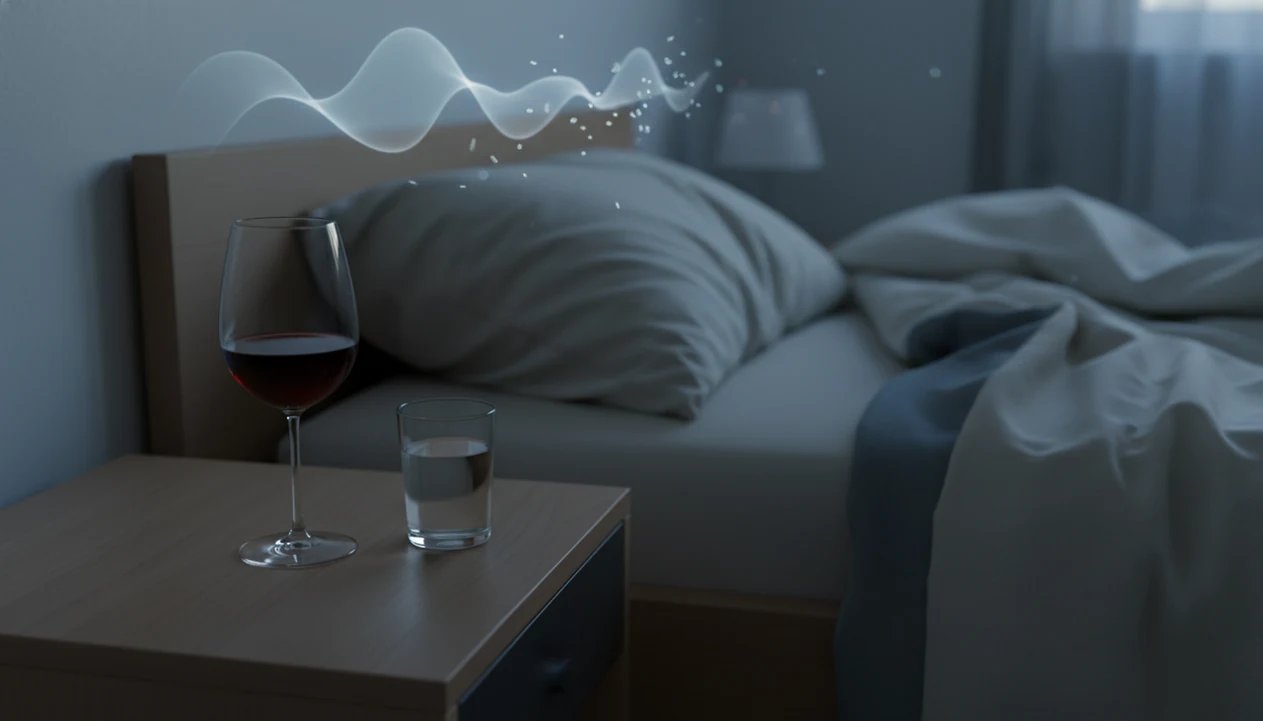
The alcohol deep sleep brain connection is usually negative: alcohol may help you fall asleep faster, but it fragments sleep, suppresses REM sleep, and can reduce the deep-sleep conditions your brain uses for repair and waste clearance. That is why a night of drinking can leave you awake at 3 a.m. and foggy the next morning, even after enough hours in bed.
Definition: Alcohol-related sleep disruption is the change in sleep architecture caused by alcohol, including less restorative deep sleep, REM suppression, more awakenings, and altered brain recovery overnight.
TL;DR
- Alcohol can feel sedating at first, but it often makes the second half of the night lighter, more fragmented, and less restorative.
- Deep stage 3 non-REM sleep is when the glymphatic system works best, so alcohol-disrupted sleep may interfere with brain waste clearance.
- Morning fog after drinking is not just dehydration; REM suppression, poor sleep architecture, stress-hormone shifts, and reduced recovery all contribute.
Alcohol deep sleep brain effects at a glance
Quick answer: Alcohol often makes sleep feel easier at first, but it usually worsens sleep quality later in the night. For many people, drinking reduces restorative sleep continuity, increases awakenings, and contributes to next-day brain fog even after 7 to 8 hours in bed.
Key takeaways
- A faster bedtime after alcohol does not mean better sleep.
- Brain fog after drinking is often a sleep-quality problem, not just dehydration.
- Stopping alcohol close to bedtime may improve overnight stability for many people.
- Tracking drinks, wake-ups, and fogginess can reveal personal patterns within 1 to 2 weeks.
- Heavy daily drinkers should not quit suddenly without medical guidance.
- Sleep improvement after reducing alcohol may be gradual, not immediate.
- Alcohol can shorten sleep latency, which means you may fall asleep faster, but faster sleep onset is not the same as better sleep quality.
- Alcohol commonly suppresses REM sleep and fragments the second half of the night, so you may wake more often after the first few hours.
- Deep stage 3 non-REM sleep supports the glymphatic system, the brain’s sleep-linked waste-clearance pathway.
- Morning fog after drinking has several causes, including REM loss, lighter sleep, dehydration, stress-system activation, and disrupted recovery.
- Cutting back before bed is usually the first practical lever because it changes the sleep environment before the night starts.
The tricky part is that alcohol feels helpful at 10 p.m. It can make the pillow feel heavier. Then the beer fridge hum during dinner prep turns into a 3 a.m. wake-up with a dry mouth and busy thoughts.
Small change first.
How alcohol disrupts deep sleep and brain recovery works
Alcohol disrupts brain recovery by changing the order and quality of sleep stages, not just by shortening the night. It may sedate you early, then create rebound arousal as your body breaks it down.
A normal night cycles through lighter non-REM sleep, deeper stage 3 non-REM sleep, and REM sleep several times. Stage 3 is the slow-wave phase, the heavy restorative sleep linked with physical repair and the glymphatic system, the brain’s overnight cleanup pathway. REM is the more active dreaming phase that supports memory, emotion processing, and mood balance. When alcohol suppresses REM early and fragments sleep later, those cycles become less smooth. You may still log hours in bed, but the brain gets fewer clean passes through deep sleep, REM, and recovery.
The effect is not identical for everyone. Dose matters. Timing matters. Drinking close to bedtime usually creates more disruption than stopping earlier. Tolerance can make the sedating feeling less obvious without making sleep healthier. Sleep debt can also blur the signal because you may crash hard at first, then still wake foggy, flat, or wired.
Before you start changing alcohol and sleep habits
Before you self-test alcohol and sleep, make sure the experiment is safe. If you drink heavily, feel dependent, get withdrawal symptoms, or need alcohol to function, talk with a clinician before stopping abruptly.
Some medications and sleep conditions can change the risk picture. Be extra cautious if you use sedatives, benzodiazepines, opioids, sleep pills, antidepressants, antihistamines, blood pressure medicines, or other drugs that affect breathing, alertness, heart rate, or mood. Sleep apnea, restless legs, insomnia, circadian rhythm problems, parasomnias, and seizure history also make alcohol-sleep experiments less simple.
- Check safety first if your drinking is heavy, daily, escalating, or linked with shaking, sweating, panic, vomiting, confusion, or past withdrawal.
- Choose one variable to test at a time, such as drink amount, alcohol-free nights, or a bedtime cutoff.
- Keep the rest steady when you can, including bedtime, caffeine timing, late meals, and screen habits.
- Track a baseline for several nights before judging change, because one rough night can be noise.
- Compare patterns across drinking and alcohol-free nights before making big conclusions.
Alcohol sleep architecture disruption across NREM and REM cycles
Sleep architecture is the nightly pattern of cycling through light sleep, deep non-REM sleep, and REM sleep in repeated stages. Alcohol changes that pattern by acting like a sedative early, then pushing the body toward lighter, more broken sleep as it is metabolized.
That early sedation is why a nightcap can feel convincing. You lie down and drop off quickly. But later, as blood alcohol falls, rebound arousal can show up. The brain and body become more activated, heart rate may stay higher, and sleep can break into short pieces.
For many people, the second half of the night is where the damage feels obvious. You wake, check the clock, roll over, and never quite return to solid sleep. That is alcohol sleep architecture disruption in plain terms: the night contains hours in bed, but fewer restorative cycles. For more on how alcohol changes judgment the next day, the related pattern is covered in alcohol decision making.
Alcohol REM sleep suppression and memory recovery
How does alcohol affect REM sleep? Alcohol commonly suppresses REM sleep earlier in the night, which matters because REM supports emotional processing, learning, memory consolidation, and mood regulation.
A review of alcohol and sleep research describes this pattern as early-night REM suppression followed by more fragmented sleep later in the night the NIH.
REM is not just “dream sleep.” It helps the brain sort what happened, soften emotional edges, and connect new information with older memories. When alcohol cuts into REM, the next morning can feel oddly flat or scattered. You may have slept, but your brain did not get its usual processing window.
Some people notice vivid dreams later in the night or after an alcohol-free night. That may reflect REM rebound, where the brain tries to recover missed REM. It can feel intense, especially if you are cutting back after regular evening drinking.
Less REM can contribute to low mood, poor focus, and grogginess. Not dramatic. Just enough to make email, errands, or a school run feel harder than they should.
Alcohol glymphatic system effects during stage 3 deep sleep
The glymphatic system is the brain’s waste-clearance pathway, and it appears to work most strongly during stage 3 non-REM deep sleep. During this deep-sleep state, cerebrospinal fluid helps clear metabolic waste from brain tissue.
In a controlled study, glymphatic activity increased by about 60% during sleep compared with wakefulness, showing how closely brain waste clearance depends on healthy sleep science. Clinical summaries also describe stage 3 deep sleep as the phase most tied to this cleaning process.
Alcohol complicates the picture because it can fragment the sleep stages that create good conditions for glymphatic flow. That does not prove one specific drink blocks a fixed amount of brain clearance in every person. Human dose-response data are still limited.
The safer takeaway is narrower and more useful: alcohol-disrupted deep sleep may reduce the optimal overnight conditions your brain uses for cleanup. If you are comparing brain effects beyond sleep, our alcohol dementia and stroke risk guide covers longer-term concerns.
Alcohol morning brain fog after 7 to 8 hours in bed
Why do I feel foggy after drinking even if I slept 7 to 8 hours? Morning fog can happen because sleep quality, REM timing, deep sleep, hydration, and stress physiology all matter, not just total hours in bed.
Dehydration can be part of it. It is not the whole story. REM suppression can affect mood and mental sharpness. Fragmented deep sleep may reduce the recovery conditions that support clearer thinking. Early waking also makes the morning feel longer before it has even started.
A person can be “asleep” from 11 p.m. to 7 a.m. and still wake unrested. The clock says enough. The brain says no.
One useful question is: “What did my night actually contain?” Count awakenings, vivid dreams, dry mouth, restless legs, and that dull forehead feeling. If fog tends to follow drinking nights, not alcohol-free nights, you have a pattern worth respecting. For cravings that rise after poor sleep, read how long do alcohol cravings last.
Alcohol cortisol morning spikes and 3 a.m. waking
Alcohol’s sedative effect wears off as your body metabolizes it, and that shift can trigger rebound arousal. Many people experience this as 3 a.m. waking, racing thoughts, restlessness, or a cortisol-like morning surge.
Cortisol responses vary, so it is better to be cautious here. Not everyone gets the same hormone pattern after drinking. Still, the lived experience is common: you fall asleep hard, then wake wired. Your jaw may feel tight. The room is quiet, but your brain is already making a list.
That kind of broken night can also affect the next day’s choices. Poor sleep tends to increase cravings and reduce self-control, especially around familiar cues. The hand-to-mouth reflex after lunch can show up before you have fully decided anything.
For people cutting back, protecting sleep is not a moral issue. It is a friction issue. Better sleep often makes the next decision point easier.
5 ways to protect deep sleep when drinking less alcohol
Use this as a small experiment, not a purity test. Clinicians and sleep-health guidance commonly recommend avoiding alcohol close to bedtime because alcohol can fragment sleep despite its early sedating effect. Sleep-health guidance also notes that alcohol close to bedtime can reduce sleep quality even when it shortens time to fall asleep sleepfoundation alcohol data.
- Set a cutoff several hours before bed when possible, then compare nights with and without that cutoff.
- Choose alcohol-free nights each week so your body has clean comparison data.
- Log bedtime, awakenings, morning fog, and cravings before memory smooths the night over.
- Keep sleep timing consistent so alcohol is the main variable you are testing.
- Reset after a slip by recording what happened, not by starting a shame spiral.
Set a bedtime alcohol cutoff
Pick a clear if-then plan: if it is after your cutoff, then switch to tea, water, or a snack. The lime wedge sinking in club soda can be a real replacement action, not a punishment.
Log sleep and morning fog
Write down the basics within 10 minutes of waking: bedtime, wake-ups, dreams, fog, mood, and cravings. Tools like Me Quit can help adults privately track drink limits, cravings, streaks, and milestones without turning the process into a public performance.
Review alcohol-free night patterns
After a week or two, compare alcohol-free nights with drinking nights. For most self-trackers, alcohol-free comparison nights are often clearer than guessing because they give the same person a simple before-and-after pattern.
5 common alcohol deep sleep mistakes
- Mistaking sedation for deep sleep: Passing out quickly can be alcohol’s sedative effect, not proof that stage 3 deep sleep improved.
- Counting only hours in bed: Total time matters, but restorative sleep depends on cycling through deep sleep and REM without repeated disruption.
- Blaming only dehydration: Water helps some symptoms, but morning fog also reflects REM loss, fragmented sleep, and stress-system activation.
- Overtrusting wearables: Watches can estimate stages and trends, but they do not measure glymphatic flow or diagnose sleep disorders.
- Switching alcohol type: Wine, beer, and spirits may feel different socially, but ethanol is still the sleep-disrupting ingredient.
The low battery blink during a craving is a good reminder: devices give clues, not the whole story. If your wearable says you slept, but your brain feels slow, include both pieces of data.
Me Quit is a private addiction recovery hub for quit smoking, stop vaping, quit drinking, and mindful alcohol reduction; it can support trigger tracking and streak repair, but it is not diagnosis, detox care, or emergency support.
14-day alcohol sleep architecture tracking test
A 14-day test can show whether alcohol is driving your awakenings, fog, mood changes, or next-day cravings. Use wearables as trend tools, not diagnostic devices, and look for patterns across multiple weeks if results are mixed.
| What to track | Drinking nights | Alcohol-free nights |
|---|---|---|
| Number of awakenings | Note clock times and how long you stayed awake | Compare whether sleep is less broken |
| Vivid dreams | Watch for REM rebound or unusual dream intensity | Note whether dreams shift after dry nights |
| Resting heart rate | Use a wearable trend, if available | Compare against your own baseline |
| Morning mood | Rate low, steady, or anxious | Look for repeat differences |
| Focus before noon | Note fog, recall, and task switching | Compare work or parenting mornings |
| Cravings | Record alcohol, cigarette, or vape urges | Note whether better sleep lowers urges |
The most useful tracking method is the one you will actually repeat because sleep patterns need several nights, not one dramatic data point. Me Quit can support this kind of private pattern review by tracking cravings, sober streaks, dry days, and milestones. The broader alcohol reduction guides can help you connect sleep changes with other body and brain signals.
Limitations
Alcohol, deep sleep, and brain recovery research is useful, but it has real limits. Treat this as education, not a diagnosis or treatment plan.
- Individual sensitivity varies widely by age, sex, sleep debt, medications, health conditions, tolerance, and drinking pattern.
- Heavy alcohol use, withdrawal symptoms, seizures, confusion, or needing alcohol to function require medical support, not a self-guided sleep experiment.
- Morning anxiety after drinking can overlap with mental health symptoms, so persistent distress deserves professional care.
Animal research has reported impaired glymphatic flow, neuroinflammation, and astrocyte changes after chronic alcohol exposure, but translating that into everyday human risk requires caution the NIH.
When to get medical help for alcohol-related sleep problems
Get medical help if alcohol is tied to unsafe symptoms, worsening mood, or a feeling that you cannot sleep or function without it. Sleep experiments are not the right tool when withdrawal, dependence, or severe distress may be involved.
Urgent symptoms can include seizures, confusion, hallucinations, severe agitation, chest pain, fainting, repeated vomiting, fever, or shaking and sweating that feel out of control. Severe depression, thoughts of self-harm, or anxiety that will not settle also deserve prompt professional support.
- Call emergency services if you have a seizure, severe confusion, hallucinations, trouble breathing, chest pain, or thoughts of harming yourself.
- Contact a clinician quickly if you need alcohol to fall asleep, steady your nerves, stop shaking, or get through the day.
- Ask for supervised help before abruptly stopping if you drink heavily or have had withdrawal symptoms before.
- Share the full picture of insomnia, panic, medications, blackouts, depression, and any seizure history, even if it feels awkward.
- Avoid self-guided fixes like adding sleep pills, extra alcohol, or aggressive cutoffs without medical advice when symptoms are persistent or intense.
FAQ
Does alcohol reduce deep sleep?
Alcohol can feel sedating at first, but it may fragment sleep later and reduce the quality of restorative deep sleep. Sleep quality matters as much as total sleep duration.
Does alcohol suppress REM sleep?
Yes, alcohol commonly suppresses REM sleep, especially earlier in the night. REM rebound, including vivid dreams, may happen later or on alcohol-free nights.
Why do I wake up at 3 a.m. after drinking alcohol?
Alcohol is metabolized during the night, and the sedating effect can shift into rebound arousal. That can cause fragmented sleep, racing thoughts, and stress-system activation.
Why does alcohol cause brain fog the next morning?
Alcohol-related morning fog can come from poor sleep architecture, REM loss, deep-sleep disruption, dehydration, and stress physiology. It can happen even after 7 to 8 hours in bed.
What is the glymphatic system?
The glymphatic system is the brain’s sleep-linked waste-clearance pathway. It is most associated with deep non-REM sleep.
Does alcohol block the brain's cleaning system during sleep?
Alcohol-disrupted sleep may interfere with the conditions that support glymphatic clearance. Direct human data on exact alcohol dose and glymphatic blockage are still emerging.
When should I stop drinking alcohol before bed?
Avoid alcohol close to bedtime when possible, and test earlier cutoffs against alcohol-free nights. Your own awakenings, fog, and cravings are useful trend markers.
Can sleep recover after quitting alcohol?
Sleep can improve after reducing or quitting alcohol, though timing varies by person and drinking history. Some people notice temporary REM rebound or vivid dreams during adjustment.