
How Alcohol May Contribute to Brain Swelling
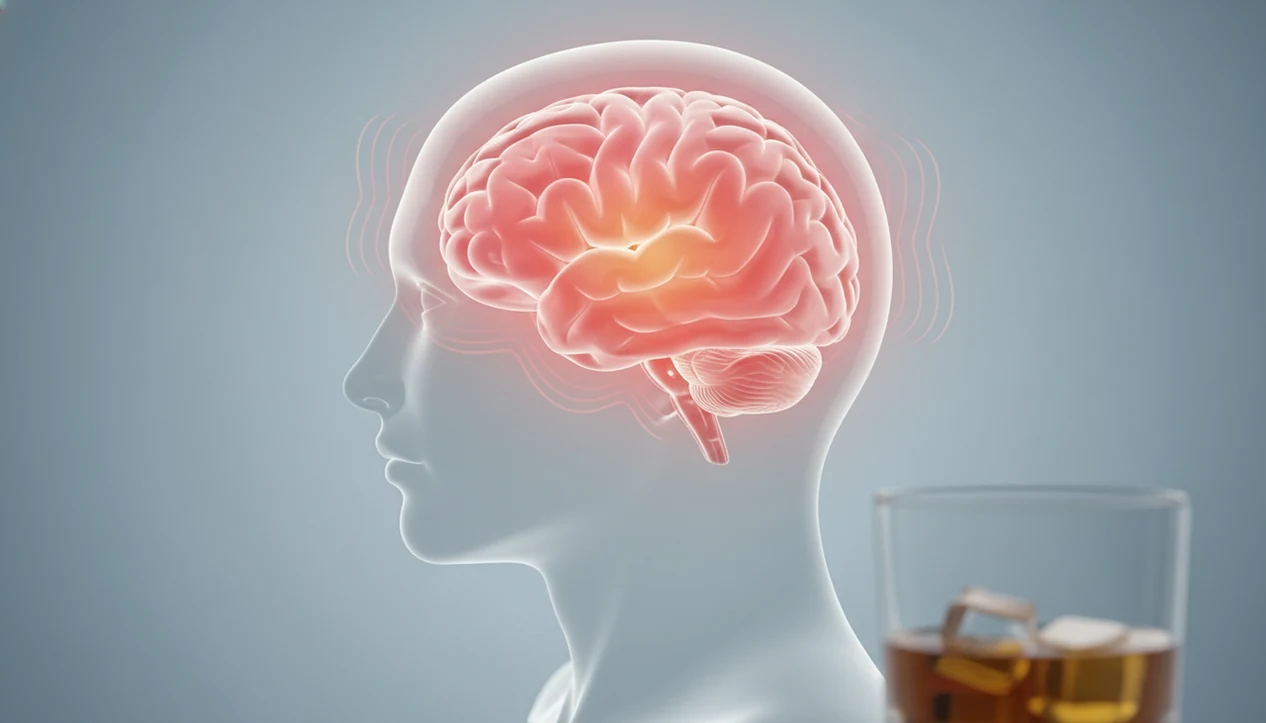
The link between alcohol and brain swelling is usually indirect: heavy drinking can raise the risk of head injury, severe dehydration or sodium imbalance, liver failure, thiamine deficiency, seizures, stroke, and inflammation that may worsen cerebral edema. New confusion, seizures, repeated vomiting, severe headache, extreme sleepiness, or trouble speaking or walking after drinking should be treated as urgent medical red flags.
This article is educational and cannot diagnose cerebral edema, concussion, stroke, withdrawal, or liver-related brain dysfunction. If symptoms are sudden, severe, or neurological, use emergency care rather than home monitoring.
Definition: Alcohol-related brain swelling means cerebral edema or dangerous brain pressure that develops or worsens in the setting of alcohol use, often through injury, metabolic imbalance, vitamin deficiency, withdrawal, liver disease, stroke, or inflammation rather than alcohol alone.
- Alcohol does not usually cause brain swelling like a simple hangover; the serious risk comes from complications such as trauma, low sodium, seizures, liver failure, stroke, or thiamine deficiency.
- Brain swelling symptoms after alcohol can include severe headache, confusion, vomiting, seizure, extreme drowsiness, vision changes, poor coordination, slurred speech, or weakness.
- People who drink heavily should not abruptly stop without medical advice if they are at risk for withdrawal seizures or delirium.
Alcohol and brain swelling: the emergency answer
Quick answer: Alcohol does not usually cause brain swelling by itself, but heavy drinking may contribute to conditions that can raise pressure in or around the brain. After drinking, symptoms such as new confusion, seizure, repeated vomiting, severe headache, extreme drowsiness, weakness, or trouble speaking or walking should be treated as a medical emergency.
Key takeaways
- Call emergency services for neurological symptoms after drinking, especially after any fall or head impact.
- Do not let someone “sleep it off” if they are hard to wake, vomiting repeatedly, or acting confused.
- Heavy alcohol use can worsen dehydration, electrolyte problems, injuries, seizures, and liver-related illness.
- Stopping alcohol suddenly can be dangerous for people who drink heavily or daily; medical guidance may be needed.
- Tracking when and why you drink can help identify patterns before risky episodes happen.
- Reducing alcohol often works best with a safety plan, support, and medical care when dependence is possible.
Alcohol may contribute to cerebral edema, but usually through serious complications rather than a normal hangover. The urgent question is not “Was alcohol involved?” but “Are there neurological red flags now?”
A routine hangover headache can feel miserable. It should not cause seizure, sudden confusion, one-sided weakness, trouble speaking, or trouble walking. Repeated vomiting also matters because it can worsen dehydration and may appear with rising brain pressure.
Seek urgent medical care after drinking if there is a seizure, sudden confusion, severe headache, repeated vomiting, extreme drowsiness, vision changes, weakness, trouble speaking, or trouble walking. Do the same after any fall, crash, assault, or possible head impact, even if the person “seems mostly fine.”
The quiet part is easy to miss.
No article can diagnose brain swelling from symptoms alone. Brain imaging, vital signs, and blood tests are usually needed.
Five facts about alcohol cerebral edema risk
- Heavy or long-term alcohol use can damage brain tissue and blood vessels, making bleeding, stroke, and swelling risks harder to separate in real patients.
- Alcohol cerebral edema is often indirect. Common pathways include head trauma, severe low sodium, liver failure, stroke, and thiamine deficiency.
- Alcohol withdrawal after heavy use can cause seizures and delirium. Clinicians typically recommend medical supervision for people at risk of severe withdrawal.
- Thiamine deficiency can cause Wernicke encephalopathy, a brain emergency marked by confusion, abnormal eye movements, and poor coordination. It is often missed because the full symptom triad may not appear.
- Reducing or quitting alcohol, improving nutrition, preventing head injuries, and seeking early care may lower risk. They cannot guarantee that existing brain injury will reverse.
A useful public-health takeaway is simple: alcohol-related cerebral edema risk is usually a complication signal, not a normal after-effect of drinking.
Alcohol and brain swelling mechanisms
Alcohol-related brain swelling means cerebral edema or dangerous brain pressure that develops or worsens through disrupted brain barriers, metabolic imbalance, vitamin deficiency, organ failure, injury, or stroke.
How alcohol and brain swelling mechanisms work: heavy drinking can increase inflammation and weaken the blood-brain barrier. In plain terms, the brain’s usual filter becomes leakier, and fluid regulation becomes less stable. That does not mean every headache after drinking is swelling.
Alcohol can also cause fluid loss. Severe vomiting, poor intake, or overcorrection with plain water can contribute to electrolyte imbalance, especially severe low sodium. Low sodium can pull water into brain cells and become life-threatening. For clinical background on severe hyponatremia and brain swelling risk, see StatPearls/NCBI: https://www.ncbi.nlm.nih.gov/books/NBK470386/.
Thiamine deficiency is another route. Wernicke encephalopathy is a medical emergency, not ordinary “brain fog.” For Wernicke encephalopathy signs and urgency, see StatPearls/NCBI: https://www.ncbi.nlm.nih.gov/books/NBK470344/. Alcohol-related liver failure can also raise ammonia and other toxins, causing brain dysfunction and sometimes swelling. Trauma and stroke remain major indirect routes, especially when drinking leads to falls, fights, or delayed care.
For a broader mechanism discussion, alcohol brain inflammation is closely related but not identical to cerebral edema.
Alcohol dehydration and brain pressure symptoms
Does alcohol dehydration cause brain pressure? Alcohol can cause fluid loss, thirst, headache, light sensitivity, and nausea, but dehydration alone is not the same as confirmed cerebral edema.
A headache after drinking becomes more concerning when it is sudden, severe, worsening, or paired with neurological changes. Warning signs include confusion, seizure, repeated vomiting, extreme sleepiness, vision changes, weakness, slurred speech, poor coordination, or trouble walking.
Repeated vomiting sits in both categories. It can worsen dehydration, but it can also appear with dangerous brain pressure or head injury. That overlap is why symptoms after drinking can be hard to judge at home.
A person sitting in the after-dinner chair facing the open window may blame the headache on “just too much.” If speech sounds off or walking looks wrong, that is not a wait-and-see situation. Imaging and medical evaluation are needed to confirm or rule out brain swelling.
Head injury, seizures, and alcohol cerebral edema
Can alcohol lead to brain swelling through injury or seizures? Yes. Falls, crashes, assaults, and withdrawal seizures are among the clearest indirect routes from alcohol use to cerebral edema.
Alcohol is common in traumatic brain injury presentations, although estimates vary by setting and testing method. Cite the specific 1,432-patient hospital study inline if keeping the 37% figure; otherwise use a broader sourced statement such as: NIAAA notes that alcohol is a major contributor to traumatic injury and emergency care visits: https://www.niaaa.nih.gov/publications/brochures-and-fact-sheets/alcohol-and-trauma.
Trauma can cause bleeding, bruising, swelling, and rising intracranial pressure. A person may not remember hitting their head, especially after blackouts. Yellowed fingers after a lunch break are visible; a slow brain bleed is not.
Seizures after heavy drinking or during withdrawal need medical attention. Evaluation is especially important after any head impact with confusion, vomiting, seizure, worsening headache, or loss of consciousness. Related vascular risks are covered in alcohol brain vessels.
Alcohol-related brain damage versus brain swelling
Acute brain swelling is a time-sensitive medical condition, while alcohol-related brain damage usually refers to longer-term changes in memory, balance, mood, and thinking.
| Term | Usual pattern | What it may look like | Why it matters |
|---|---|---|---|
| Acute cerebral edema | Hours to days | Severe headache, vomiting, confusion, seizure, drowsiness, weakness | Needs urgent evaluation and treatment |
| Alcohol-related brain damage | Months to years | Memory problems, poor balance, slowed thinking, mood change | May improve partly with abstinence, nutrition, and time |
| Wernicke-Korsakoff spectrum | Acute deficiency can become chronic injury | Confusion, eye movement problems, poor coordination, lasting memory gaps | Thiamine-related emergency can be missed |
| Dementia risk | Long-term population-level risk | Progressive cognitive decline | A Lancet cohort of over 1 million adults linked alcohol use disorders with more than threefold higher dementia risk |
Some brain changes may improve after sustained abstinence and nutrition support. Others persist. For the longer-term picture, alcohol brain shrinkage dementia explains chronic structural risk.
Lowering alcohol and brain swelling risk safely
How do you lower alcohol and brain swelling risk safely? Reduce risk by staying within lower-risk drinking limits, avoiding head injury, treating withdrawal risk seriously, and getting medical help for neurological symptoms.
The 2020–2025 U.S. Dietary Guidelines state that adults who drink should limit intake to 2 drinks or less per day for men and 1 drink or less per day for women. People who drink heavily, have morning shakes, have had withdrawal symptoms, or have a seizure history should ask a clinician before stopping abruptly.
- Set a safer goal using drink limits, dry days, or a medically supervised quit plan.
- Log symptoms with time, trigger, amount consumed, intensity, and response.
- Protect the head by avoiding driving, heights, and risky situations after drinking.
- Discuss nutrition with a clinician, including thiamine if heavy use or poor intake is present.
- Seek urgent care for confusion, seizure, repeated vomiting, severe headache, weakness, or trouble walking.
Me Quit can support private tracking of cravings, drinking patterns, streaks, and milestones when someone is trying to reduce alcohol. It does not diagnose brain swelling, monitor withdrawal risk, or replace emergency care, detox support, or medical advice.
For practical next steps, the alcohol reduction guides cover lower-risk planning without replacing medical care.
Medical review and source standards
This article was reviewed for clinical accuracy by a medical editor, with emphasis on emergency symptoms, alcohol-related complications, and limits of self-assessment. That review supports safer education; it does not create a diagnosis, a detox plan, or a personal care plan.
The source standard is deliberately conservative because brain swelling, seizure, withdrawal, stroke, and head injury can overlap in real life. Government guidance, academic medical references, peer-reviewed research, and clinician-facing references are prioritized over personal anecdotes or marketing claims. Emergency-symptom language is checked against medical authorities so the advice stays simple: neurological red flags after drinking belong in urgent care, not in home troubleshooting.
- Check emergency warning signs against established medical references before publication.
- Prioritize sources from public health agencies, academic centers, peer-reviewed journals, and clinical references.
- Update the page when guidance changes or when newer evidence clarifies risk.
- Record the publication or latest update date so readers can judge clinical freshness.
- Separate education from treatment decisions, especially for withdrawal, seizures, head injury, or possible cerebral edema.
Limitations
The available evidence is useful, but it cannot predict exactly who will develop brain swelling after alcohol use.
- There is no reliable home test that separates hangover, dehydration, concussion, stroke, infection, withdrawal, and cerebral edema.
- Much of the strongest evidence comes from hospital patients, autopsies, traumatic brain injury studies, or severe alcohol use disorder.
- Supplements, thiamine, hydration packets, and detox products cannot replace emergency evaluation for neurological red flags.
A mild hangover after two extra drinks is different from withdrawal symptoms, seizure, or a new neurological deficit.
FAQ
Can alcohol cause brain swelling?
Alcohol can contribute indirectly to brain swelling through trauma, stroke, severe low sodium, liver failure, withdrawal seizures, or thiamine deficiency. It is not usually a simple hangover effect.
What is alcohol cerebral edema?
Alcohol cerebral edema means brain swelling or dangerous brain pressure occurring in the setting of alcohol-related complications. It is a medical emergency, not a hangover label.
Can a hangover cause brain swelling?
A typical hangover can cause headache, nausea, thirst, and fatigue. Severe headache with confusion, seizure, repeated vomiting, weakness, vision changes, or trouble walking needs urgent evaluation.
What symptoms after drinking need emergency care?
Emergency symptoms include seizure, sudden confusion, severe headache, repeated vomiting, extreme drowsiness, weakness, vision changes, slurred speech, or trouble walking. Loss of consciousness or head impact also warrants urgent care.
Can alcohol withdrawal cause brain swelling?
Alcohol withdrawal can cause seizures and delirium, which may involve serious brain complications. People at risk of withdrawal should seek medical supervision before abrupt cessation.
Does alcohol raise brain pressure?
Alcohol may raise the risk of dangerous brain pressure through dehydration, electrolyte imbalance, trauma, bleeding, stroke, or liver-related brain dysfunction. Medical evaluation is needed to confirm brain pressure.
Can brain damage from alcohol improve?
Some cognitive and brain changes may improve after stopping alcohol, improving nutrition, and allowing time for recovery. Severe injuries, Wernicke-Korsakoff syndrome, stroke, or trauma may leave lasting effects.
Should heavy drinkers stop suddenly?
Heavy or dependent drinkers should not stop suddenly without medical advice. Withdrawal can cause seizures, delirium, and other dangerous complications.