Why Shorter Winter Days Can Make Alcohol Cravings Stronger
Quick answer: Winter alcohol cravings often get stronger because shorter days can disrupt mood, sleep, stress regulation, and dopamine-seeking habits. Darkness does not force anyone to drink, but it can make alcohol feel like a faster way to get relief, comfort, or energy when the brain is already under seasonal strain.
> Definition: Winter alcohol cravings are stronger urges to drink during darker, colder months, often linked to seasonal mood shifts, disrupted sleep, stress, boredom, and learned drinking routines.
TL;DR
- Shorter daylight hours can affect circadian rhythm, serotonin, stress hormones, and dopamine-seeking behavior.
- Alcohol may feel relaxing in the moment, but it can worsen sleep quality, mood, and next-day craving intensity.
- Bright light, movement, social contact, urge surfing, and craving tracking can make winter urges more predictable and easier to manage.
Winter alcohol cravings at a glance
Quick answer: Winter alcohol cravings often increase because shorter, darker days may affect mood, sleep, stress regulation, and reward-seeking behavior. Alcohol can start to feel like quick relief, but that relief is usually temporary and may make next-day cravings, sleep, and mood harder to manage.
Key takeaways
- Name the craving before acting: stress, boredom, loneliness, fatigue, or habit.
- Plan an alcohol-free evening routine before sunset, when motivation may be lower.
- Eat regularly and hydrate; hunger and dehydration can feel like drinking urges.
- Use light, movement, and social contact as low-risk ways to support winter mood.
- Track patterns by time, place, emotion, and trigger instead of relying on memory.
- If cutting down causes shaking, confusion, seizures, or severe symptoms, seek medical help promptly.
Winter alcohol cravings are a seasonal pattern: the urge to drink feels louder when days are short, nights start early, and your normal mood or energy is lower. It is common, manageable, and not a moral failure.
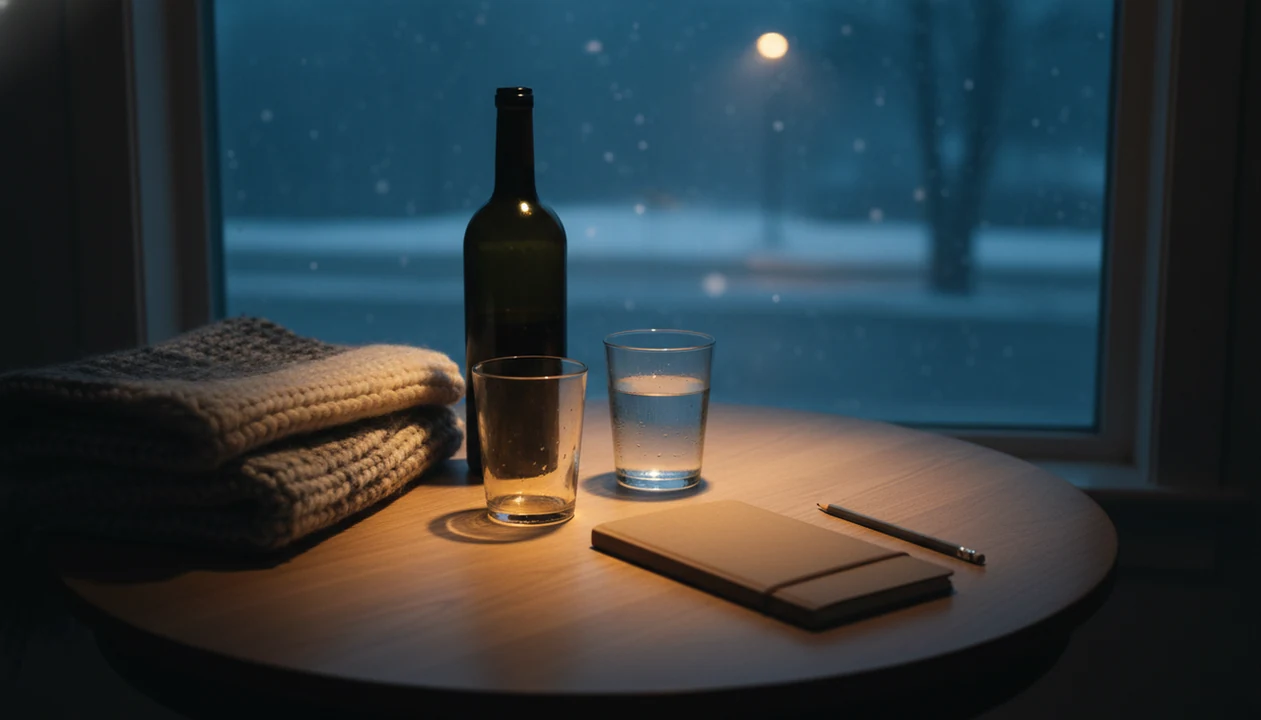
The usual stack is simple. Less daylight can shift sleep timing. Low mood makes quick comfort more tempting. Stress, isolation, and old habit cues fill in the rest. The bottle on the counter can become a decision point before dinner even starts.
The room gets dark too early.
A first step is to name the pattern before judging it. Tools like Me Quit can help adults privately track cravings, streaks, and milestones, which makes winter urges easier to spot instead of treating each one like a surprise.
Safety scope: when winter alcohol cravings need professional help
This guide is educational and can help you notice patterns, but it is not a diagnosis or a substitute for medical care. Winter cravings deserve professional support when cutting back could be unsafe, drinking feels out of control, or mood symptoms become dangerous.
If you have been drinking heavily or daily, ask a clinician before stopping suddenly, especially if you have shaking, sweating, nausea, vomiting, racing heart, high blood pressure, anxiety, panic, confusion, hallucinations, or seizures. Those can be withdrawal warning signs and may need supervised care.
Use this simple safety check before relying on coping tools:
- Call a medical professional if you have withdrawal symptoms or a history of severe withdrawal.
- Seek urgent help if you have suicidal thoughts, might harm yourself or someone else, are blacking out, driving impaired, or drinking in unsafe situations.
- Tell someone trusted what is happening so you are not managing the risk alone.
- Use tracking as support, not treatment; a craving log can organize patterns for a clinician, but it cannot replace detox, therapy, medication, or emergency care.
How shorter winter days change alcohol cravings in the brain
Shorter winter days can change alcohol cravings by affecting circadian rhythm, mood regulation, stress load, and reward-seeking behavior. In plain language, the brain may start looking for fast relief when light, energy, and routine all drop.
Less morning light can make the body clock drift. That shift can affect sleep pressure, alertness, and serotonin-related mood regulation. By late afternoon, the brain may feel flat and under-stimulated, especially if work ended in the dark again.
That is where winter dopamine alcohol patterns show up. Alcohol can give a quick reward signal, so the brain learns, “This works for boredom, stress, or sadness.” Repeat that routine on enough cold evenings, and the cue-routine-reward loop gets stronger.
For many adults, a replacement action is easier than arguing with the urge. Walk for ten minutes. Text one person. Put seltzer where the wine glass usually sits. Make the next choice easier.
Five facts about seasonal drinking cravings
- Winter darkness can worsen low mood, fatigue, and low motivation in some adults, especially when daylight exposure drops for weeks at a time.
- Seasonal affective disorder and milder winter blues can raise self-medication risk; a drink may feel like relief, but it can train the brain to expect alcohol when mood dips.
- Alcohol can disrupt sleep architecture, including restorative sleep stages, which may increase next-day irritability, stress sensitivity, and renewed craving intensity.
- Cravings often rise, peak, and pass like a wave. Urge surfing means noticing the tight chest, restless legs, or “I need something” feeling without immediately obeying it.
- Structured winter coping plans reduce reliance on drinking cues because they replace vague intentions with if-then plans. For people cutting back, a written trigger map is often easier than relying on memory because winter routines repeat in the same rooms at the same times.
If anxiety spikes after drinking, the cycle may also connect with hangover stress. The pattern is covered more in why alcohol causes hangxiety.
Darkness stress drinking and winter mood risk
Does darkness stress drinking mean I have a drinking problem? Not always. Darkness can add pressure through mood, sleep, and isolation, but self-medication is a risk pattern, not a diagnosis.
The National Institute of Mental Health explains that seasonal affective disorder is a recurring depression pattern tied to seasonal light changes, and that milder winter-pattern symptoms are also common (the NIH). A NESARC analysis of 43,093 U.S. adults found that mood disorders and alcohol dependence frequently co-occurred, with higher odds of alcohol dependence among people with mood disorders (the NIH).
That does not mean winter sadness causes alcohol dependence by itself. It means mood and alcohol can become linked. Clinicians typically recommend extra support when drinking becomes a repeated coping tool for depression, anxiety, or sleep trouble.
Watch for drinking earlier in the day, drinking alone more often, hiding amounts, or repeated failed cutback attempts. If willpower feels gone by 6 p.m., the issue may be cue design, not character; our guide to willpower alcohol habits explains that loop.
Winter sleep disruption and alcohol craving cycles
Does alcohol improve winter sleep? Alcohol may help some people fall asleep faster, but it often fragments sleep and reduces restorative quality later in the night.
The National Institute on Alcohol Abuse and Alcoholism notes that alcohol can disrupt sleep quality even when it initially feels sedating (NIAAA alcohol data).
That matters more in winter because the body clock may already be strained by low morning light and long dark evenings. A nightcap can feel like a shortcut. Then 3 a.m. arrives, the room is warm, the mouth is dry, and sleep breaks into pieces.
Not restful.
A systematic review and meta-analysis found that insomnia symptoms were associated with roughly 1.4 times higher odds of alcohol use disorder. The next-day loop is familiar: fatigue, irritability, more stress, less movement, and stronger evening cravings.
For many people, the most common medically supported way to reduce sleep-related craving risk is to improve sleep habits while reducing alcohol use, because alcohol can worsen the sleep problem it seems to solve. If alcohol causes odd body reactions too, review weird reactions to alcohol.
How to use a winter alcohol cravings plan
A winter alcohol cravings plan works by moving decisions earlier, before the craving is loud. Use it like a small experiment, not a punishment.
- Get bright morning light within the first hour after waking, even if it is cloudy or you stand near a window.
- Log the urge with time, place, mood, and trigger, especially during shorter days alcohol cravings around late afternoon.
- Check HALT by asking if you are Hungry, Angry, Lonely, or Tired before deciding what to do.
- Choose a replacement routine such as tea, gum, a shower, a walk, or a ten-minute phone timer.
- Contact one person before the usual drinking window, not after the urge has already peaked.
- Review weekly and adjust the trigger map, dry days, drink limits, or streak repair plan.
A private craving log can support tracking, reflection, and repeatable coping workflows, but it is not medical treatment, detox care, or emergency mental health support.
Alcohol cravings after holidays and Dry January
Can alcohol cravings continue after the holidays or during Dry January? Yes. Cravings can persist from January into March because the brain is still adjusting to low light, reduced social plans, and changed routines.
Holiday drinking creates extra cues: certain glasses, certain meals, certain rooms, certain people. Then the parties stop, but debt stress, isolation, boredom, and dark evenings remain. Dry January can expose hidden cues because the usual “automatic pour” is suddenly blocked.
The brunch menu still says bottomless mimosas.
A slip does not erase the plan. Use streak repair: write what happened, name the cue, and choose the next smallest action. “I already messed up, so why not keep going?” is a thought, not an instruction. For broader strategies, the alcohol reduction guides library gives more ways to cut back without shame.
Cross-cravings for alcohol, smoking, and vaping in winter
Alcohol, smoking, and vaping cravings can overlap because they share reward learning, stress relief routines, and repeated hand-to-mouth cues. Winter adds cue stacking: cold evenings, loneliness, scrolling, heavy meals, and old routines all pile onto the same decision point.
Someone quitting vaping may notice alcohol urges after dinner. Someone cutting back on alcohol may suddenly want a cigarette on the walk home. The hand-to-mouth reflex after lunch can fire before the person has even formed a plan.
Cross-substance tracking is useful here: log the urge, the substance you wanted, the room you were in, and the action you took next.
The warning is simple: replacing one substance with another can quietly reinforce the same stress loop. A better if-then plan is, “If I want a drink after scrolling in bed, then I put the phone down, start a timer, and drink water first.” Private tools like Me Quit can help connect those patterns across nicotine and alcohol.
Limitations
Winter drinking patterns are real for many people, but the explanation is not one-size-fits-all.
- Light exposure and self-help tools may not be enough for severe depression, withdrawal risk, or unsafe drinking.
- People with withdrawal symptoms, suicidal thoughts, severe depression, or inability to control drinking should seek professional or emergency support.
- If drinking has become daily, hidden, risky, or medically complicated, use a clinician, therapist, or local addiction service rather than relying only on an app.
Self-guided tools can make patterns visible. They cannot replace urgent care.
FAQ
Why do I drink more in winter?
You may drink more in winter because darkness, stress, boredom, low mood, and repeated evening routines make alcohol feel like quick relief. The pattern is common, but it is still worth tracking.
Can darkness cause alcohol cravings?
Darkness can contribute to alcohol cravings by affecting mood, circadian rhythm, and energy. It is rarely the only cause.
Does alcohol help winter depression?
Alcohol may numb feelings briefly, but it can worsen mood, sleep, and coping over time. Severe winter depression should be discussed with a qualified professional.
Why are cravings worse at night?
Cravings are often worse at night because fatigue, loneliness, habit cues, and lower stimulation build after dark. Decision-making also gets harder when you are tired.
Does alcohol improve winter sleep?
Alcohol can make sleep start faster, but it often fragments sleep later. That can worsen next-day fatigue and cravings.
What is urge surfing?
Urge surfing is the practice of noticing a craving like a wave without acting on it. You wait, breathe, and let the peak pass.
Can Dry January trigger cravings?
Dry January can trigger cravings because reducing alcohol reveals cues, discomfort, and habit loops that drinking used to cover. A craving log can make those cues easier to manage.
When should I get help for alcohol cravings?
Get help if you have withdrawal symptoms, unsafe drinking, repeated failed cutbacks, severe depression, or suicidal thoughts. Seek emergency support if you might harm yourself or someone else.