
Why Tracking Sober Days Builds Motivation
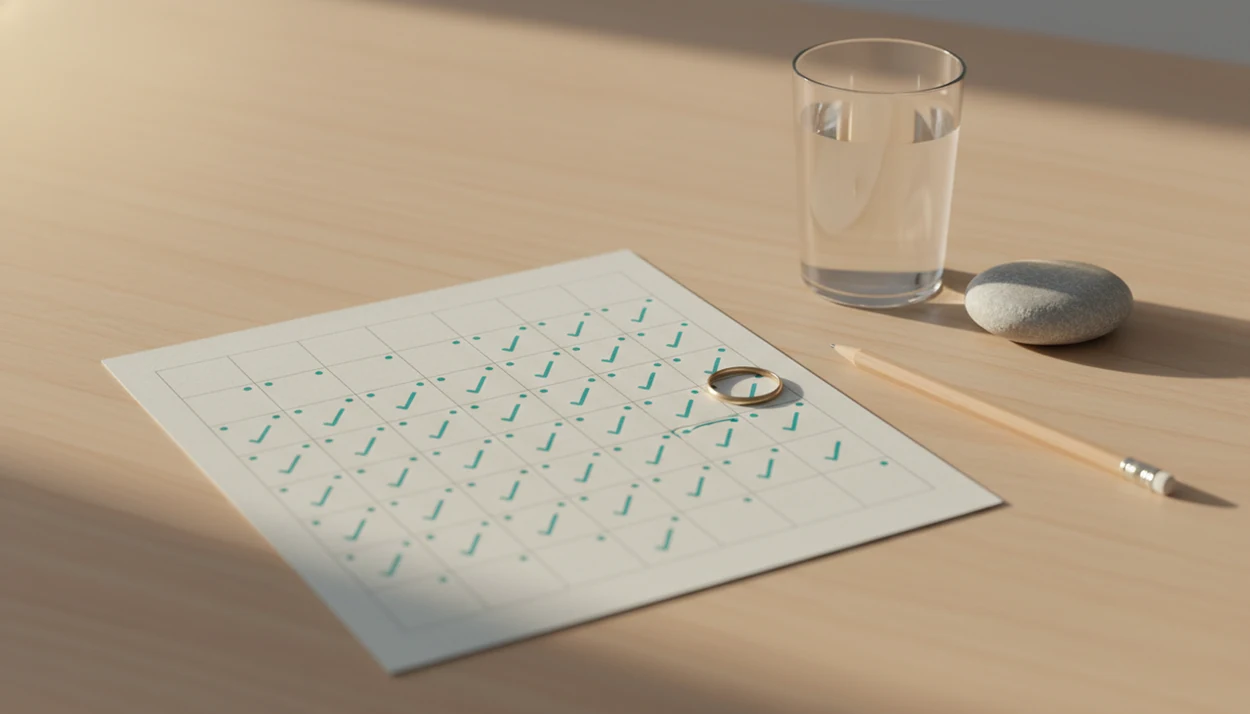
Tracking alcohol-free days can build momentum because it turns a private choice into visible progress you can protect. The core sober streak motivation science is that clear feedback, milestones, and small daily wins can make behavior change feel more rewarding and easier to repeat.
> Definition: A sober streak is a running count of alcohol-free days used as a motivational self-tracking tool, not a complete measure of recovery or health.
TL;DR
- Visual progress can make quitting or reducing drinking feel more concrete, especially when cravings make progress hard to notice.
- The goal gradient effect helps explain why milestones like 7, 30, or 100 alcohol-free days can feel motivating.
- A broken streak should be treated as information, not proof that previous sober days were wasted.
Sober streak motivation science in one plain-language definition
Quick answer: Sober streaks can support motivation by making progress visible, immediate, and easier to protect. For many people, seeing alcohol-free days accumulate may increase confidence and reduce the need to renegotiate the same choice every day.
Key takeaways
- A streak works best when it is treated as feedback, not proof of worth.
- Short milestones can make early change feel more achievable than a distant lifetime goal.
- Tracking cravings, triggers, and mood adds more useful information than counting days alone.
- A slip does not erase learning; reviewing what happened often helps prevent repeats.
- Heavy drinkers or people with withdrawal symptoms should ask a clinician before stopping suddenly.
- Privacy matters because honest tracking is easier when the record feels safe.
Sober streak motivation science is the study of why counting alcohol-free days can make behavior change feel visible, measurable, and easier to protect. A streak gives the brain a simple signal: “I did the thing again today.” That signal can matter on a Tuesday evening when the day felt ordinary, cravings were annoying, and progress would otherwise stay invisible.
Tracking alcohol free days works because it turns “drink less” into one clear daily outcome. Visual progress quitting drinking can be a calendar mark, an app ring, or a milestone card. None of those prove recovery. They do not diagnose alcohol use disorder, measure liver health, or replace support. They are motivational tools.
The counter is not the whole story.
Five facts about tracking alcohol free days and motivation
- Tracking turns intention into action. “Drink less” is vague; “log today as alcohol-free” is a specific behavior that can be repeated.
- Visual streaks make progress harder to dismiss. On craving-heavy days, a visible count can remind someone that the last six evenings still happened.
- The goal gradient effect sobriety link is plausible. Motivation can rise when a person feels close to a target, such as 7 or 30 alcohol-free days.
- Immediate feedback can support behavior change. Reviews of contingency management in substance use treatment find that timely rewards are associated with better abstinence outcomes, though streak counters are not the same intervention.
- A lapse does not erase previous sober time. Seven alcohol-free days still reduced alcohol exposure for seven days, even if day eight did not go as planned.
For readers comparing streak tracking with broader habit planning, tracking sober days motivation covers the day-to-day psychology in more detail.
How sober streak tracking works in behavior change
Sober streak tracking works as a feedback loop: choose an alcohol-free day, log it, see progress, and repeat. In behavior-science terms, it combines self-monitoring, implementation intentions, and reinforcement. In plain language, you make a plan, notice whether you followed it, and give your brain a clear record.
Dopamine from tracking progress should be described carefully. Progress feedback may engage reward and anticipation systems, but it is not a guaranteed “happiness chemical” release. A phone badge at 9 p.m. is not the same as treatment, medication, or counseling.
Still, feedback matters. Streak counters, badges, calendars, and milestone cards give immediate confirmation after a choice that might otherwise feel quiet. A meta-analysis found that implementation intentions were associated with improved goal attainment, and broader goal-monitoring research links progress tracking with better goal achievement; see Sheeran’s implementation-intentions review (doi)38002-1) and Harkin et al. on progress monitoring (doi). The most common behavior-change use of streak tracking is pairing a visible counter with a specific plan for high-risk moments.
Goal gradient effect sobriety milestones make progress feel closer
Does the goal gradient effect explain sober streak motivation? It may help explain part of it: people often work harder when a visible goal feels closer, but loyalty-card evidence does not directly prove sober-day outcomes.
The classic example is earned progress. In a 2007 coffee shop loyalty-card study, customers who appeared to have a head start were more likely to complete the purchase sequence. For the original goal-gradient loyalty-card study, see Kivetz, Urminsky, and Zheng in the Journal of Marketing Research: https://doi.org/10.1509/jmkr.43.1.39. That finding is often used to explain why visible progress can increase completion behavior.
Sobriety milestones can feel similar in daily life. Day 6 before a 7-day goal feels different from day 1. Day 29 before a 30-day milestone can make a weeknight pour after laptop shutdown feel less automatic. The target is close enough to protect.
The careful takeaway: goal gradient effect sobriety language is useful, but it should not be stretched into a clinical claim.
Visual progress quitting drinking reduces daily decision fatigue
Visual progress quitting drinking can reduce decision fatigue by changing the evening question. Instead of “Should I drink tonight?” the question becomes, “Do I want to protect today’s progress?” That shift is small, but repeated decisions are where many habit changes get tired.
Calendars, rings, badges, and milestone cards act as cues. They put yesterday’s choice in front of today’s craving. A sparkling water in a rocks glass may not solve the whole urge, but the visual counter can support the precommitted plan: weekdays alcohol-free, no drinks at home, or 30 days before reassessing.
Implementation intentions help here because they connect a trigger to a response. “If I want a drink after dinner, I’ll log the urge and take a ten-minute walk” is clearer than “I’ll try harder.” Some people find numbers motivating. Others feel watched by them.
That matters.
Before you start tracking sober days
Before you count sober days, make sure the plan is safe, specific, and supported. Tracking works better when you know what you are trying to change and what you will do if the first hard craving shows up.
- Check your safety first. If cutting down has caused shaking, sweating, confusion, seizures, severe anxiety, or you drink heavily every day, do not treat a streak counter as the first step. Get medical guidance before changing suddenly, because alcohol withdrawal can be risky.
- Choose one realistic target. Decide whether you are aiming for full abstinence, alcohol-free weekdays, no drinking at home, or mindful reduction. A clear target makes the daily log less emotional.
- Plan your support. Decide who or what you will use if cravings escalate: a trusted person, clinician, support group, crisis line, therapy appointment, or a written urge plan.
- Pick one quiet tracking method. Choose a calendar mark, note, app counter, or evening checklist before the first risk window arrives. Keep it low-pressure enough that it supports the choice rather than becoming another source of shame.
How to use sober streak motivation without shame
Use sober streak motivation as a steady tracking routine, not a perfection test. The aim is to notice patterns, protect progress, and restart quickly if a lapse happens.
1. Set one alcohol-free target
- Choose a target such as 7 alcohol-free days, weekdays alcohol-free, or 30 days without drinking.
- Name your risk window before it arrives, such as Friday dinner, the pub exit through the smoking area, or the first hour after work.
- Write one response plan for that window, using plain words you will follow when motivation is low.
2. Log the day once
- Log each alcohol-free day once, preferably at the same time each evening.
- Avoid checking repeatedly if the counter starts creating pressure or anxiety.
3. Review the milestone
- Review weekly and connect the streak to sleep, money, mood, cravings, or fewer regretful mornings. Readers focused on sleep may also find benefits of sleeping without alcohol useful.
4. Reset without erasing progress
- Set a reset rule before a lapse, such as “log what happened, keep the alcohol-free total, and restart tomorrow.”
Tools like Me Quit can support private app-based streak, craving, and milestone tracking, especially when someone wants a quiet record rather than a public group identity.
Common mistakes with sober streak counters
Four common mistakes can make sober streak counters less helpful:
- Making the streak the whole plan. A number cannot replace coping skills, support, safer routines, or relapse-prevention planning.
- Checking until it becomes stressful. If the counter gets opened ten times before dinner, it may be feeding anxiety rather than motivation.
- Treating one drink as total failure. A lapse is a data point: time, trigger, intensity, response, and what to change next.
- Chasing badges while ignoring triggers. The patio table with ashtray and pint matters more than the badge if it keeps setting up the same loop.
Streaks work best with planning, support, and honest review. For social triggers, how to socialize without alcohol gives practical alternatives that do not depend only on willpower.
When to get professional help with alcohol
Get professional help with alcohol if cutting down feels unsafe, withdrawal symptoms appear, or you keep drinking more than intended despite real consequences. A streak counter can support awareness, but it is not medical treatment, detox care, or a substitute for assessment.
- Seek urgent help if you have shaking, sweating, confusion, hallucinations, seizures, severe anxiety, chest pain, repeated vomiting, or symptoms that feel intense or rapidly worsening after reducing alcohol.
- Ask for an assessment if you repeatedly lose control once you start, cannot stick to limits, hide drinking, or return to drinking after harms you meant to avoid.
- Discuss treatment options with a clinician, including therapy, medication for alcohol cravings or relapse prevention, supervised detox support, and mental-health care for anxiety, depression, trauma, or sleep problems.
- Add mutual aid if it fits you, such as peer groups, recovery meetings, online communities, or other structured support that makes the plan less private and less lonely.
- Keep tracking in perspective by using the streak as a record of patterns and progress, while letting qualified support handle safety, withdrawal risk, and treatment decisions.
MeQuit sober streak tracking for private habit support
Me Quit is a private habit-tracking app for adults who want to stop smoking, stop vaping, drink less, or track alcohol-free days, cravings, streaks, and milestones. In this context, it is best understood as a private behavior-change tracker, not a diagnosis tool or a treatment guarantee.
Someone might use it to record alcohol-free days, note a craving under a table during a dinner out, or connect drinking urges with smoking or vaping triggers. That overlap matters because habits often travel together. Good Me Quit mequit addiction recovery hub for quit smoking, stop vaping, quit drinking, and mindful alcohol reduction tools deliver private tracking and reset support, not medical detox, crisis care, or proof that recovery is complete.
Limitations
Sober streaks are useful, but the limits are important.
- The strongest evidence is for general self-monitoring, rewards, planning, and goal pursuit, not sober-day counters specifically. - Tracking alone may not be enough for alcohol use disorder, withdrawal risk, or repeated loss of control around drinking. - Streaks can backfire when a lapse creates shame, secrecy, or all-or-nothing thinking. - Some people respond better to coaching, therapy, mutual support, medication discussions, or values-based goals than counters. - Dopamine explanations online are often oversimplified; progress feedback is not a guaranteed brain “reset.” - A sober streak does not replace medical advice, crisis support, or evidence-based treatment when needed. - A mild hangover after two extra drinks is different from alcohol withdrawal symptoms. Shaking, confusion, seizures, or severe symptoms need urgent medical support. For alcohol withdrawal warning signs and treatment guidance, see NIAAA’s alcohol treatment resources (NIAAA alcohol data) and MedlinePlus on alcohol withdrawal (medlineplus).
Clinicians typically recommend professional assessment when cutting down alcohol causes withdrawal symptoms, safety concerns, or repeated failed attempts despite harm.
FAQ
Do sober streaks really help?
Sober streaks can help motivation by making alcohol-free progress visible and easier to protect. They are one tool, not a complete recovery plan.
Why do streaks feel motivating?
Streaks feel motivating because they combine visible progress, reward feedback, commitment, and the goal gradient effect. A close milestone can make one more alcohol-free day feel more achievable.
What is the goal gradient effect?
The goal gradient effect is the tendency for motivation to increase when a goal feels closer. In sobriety tracking, day 29 of a 30-day goal may feel more urgent than day 2.
Does tracking progress release dopamine?
Progress feedback can engage reward and motivation systems, but it should not be described as a guaranteed dopamine high. The safer claim is that feedback can reinforce continued effort.
Should I count sober days?
Counting sober days may help if visible progress motivates you and does not create anxiety. If numbers increase shame, other accountability methods may fit better.
What if I break my streak?
A broken streak should be treated as information, not proof that previous days were wasted. Log the trigger, restart quickly, and keep the total alcohol-free time in view.
Are streak apps enough?
Streak apps can support habits, reminders, and private reflection. Me Quit and similar tools do not replace medical care, therapy, detox support, or emergency help when those are needed.
How often should I check my sober streak?
Check your sober streak at a steady, low-stress rhythm, such as once daily or during a weekly review. Repeated checking is not necessary and may increase pressure.