Why Hunger and Thirst Can Trigger Alcohol Cravings
Quick answer: Hunger thirst alcohol cravings often happen because low blood sugar, dehydration, and learned drinking cues can produce the same body signals: shakiness, irritability, headache, restlessness, and “I need something now.” Before assuming the urge is alcohol-specific, steady your body first with water, food, and a short wait.
> Definition: Alcohol cravings are intense, time-limited urges to drink that can be triggered by brain chemistry, body states, emotions, habits, or environmental cues.
TL;DR
- Low blood sugar and dehydration can feel like alcohol cravings because they create similar sensations: shakiness, brain fog, headache, tension, and urgency.
- Hunger may directly intensify alcohol urges through ghrelin, a hunger hormone shown in research to increase alcohol craving scores in people with alcohol use disorder.
- Use a 20-minute reset: drink water, eat a protein-and-fiber snack, pause, and then reassess whether the craving is still alcohol-specific.
Alcohol cravings are not always one clean signal. A craving may be partly about alcohol, partly about hunger, partly about stress, and partly about the hour of day when drinking used to happen. That mixed signal matters because the first response can change the next 20 minutes.
A skipped lunch can become a 5 p.m. wine urge. A dry mouth can become “I need a drink.” A tense commute can turn into a stop at the store before dinner.
The practical move is not to debate the craving. It is to test the body state first. Water, food, time, and a change of setting can remove common amplifiers before the person decides what the urge means.
Not all cravings are solved this way. Alcohol withdrawal, alcohol use disorder, trauma, anxiety, and long-established habit loops may need more support than a snack and a glass of water. This guide explains the body signals, then sets clear safety limits.
At-a-glance signs hunger or thirst is driving alcohol cravings
Quick answer: Hunger and dehydration can feel like alcohol cravings because they may cause overlapping signals such as tension, shakiness, headache, low mood, or urgency. For many people, drinking water, eating something balanced, and waiting briefly can clarify whether the urge is physical discomfort, a learned cue, or a stronger alcohol craving that needs additional support.
Key takeaways
- Treat sudden alcohol urges as body signals first: check food, fluids, sleep, stress, and mood.
- A balanced snack with protein, fiber, or fat may steady cravings better than sugar alone.
- Caffeine, salty foods, sweating, and poor sleep can make thirst-related urges feel stronger.
- Cravings that follow the same time, place, or emotion may be cue-based, not only physical.
- If cutting back causes shaking, sweating, confusion, seizures, or severe anxiety, seek medical help promptly.
- Tracking what happened before an urge can reveal patterns that memory often misses.
A craving may be partly driven by hunger or thirst when it arrives with shakiness, headache, irritability, fatigue, brain fog, restlessness, stomach emptiness, or sudden urgency. If the urge softens after water or food, the craving was probably being amplified by body need, blood sugar, or dehydration rather than pure desire for alcohol.
The simple rule is: hydrate, eat, wait 20 minutes, then reassess. That pause gives the body time to answer before the old drinking habit takes over.
The urge can still be real. A weeknight pour after laptop shutdown may be both a learned cue and a low-fuel signal after a scattered day of meetings. The useful question is not “Was this a real craving?” It is “What made it louder?”
Cravings have layers.
How hunger, thirst, and alcohol cravings work in the body
Low blood sugar can trigger stress signals that feel urgent: shakiness, irritability, sweating, and a narrowed “fix this now” feeling. Dehydration can add headache, fatigue, dry mouth, dizziness, and poor concentration, which makes the brain more likely to grab the fastest familiar relief.
Hunger also has a hormone pathway. Ghrelin rises when the body needs food, and a 2016 JAMA Psychiatry randomized clinical trial found that intravenous ghrelin increased alcohol craving scores in people with alcohol use disorder compared with placebo (PubMed: https://pubmed.ncbi.nlm.nih.gov/26864249/). That does not mean ghrelin explains every craving. It does support a direct hunger-craving link in the available evidence.
Habit loops add another layer. If drinking usually happened before dinner, after work, or during stress, the body may interpret hunger or thirst through that old reward pathway. For many adults, alcohol blood sugar cravings are not just “wanting a drink.” They are fuel need plus cue memory plus a fast reward expectation.
Why do I crave alcohol when hungry?
“Why do I crave alcohol when hungry?” Hunger can make alcohol cravings stronger through low blood sugar, stress hormones, decision fatigue, and ghrelin. The body wants fuel, while the brain remembers alcohol as quick relief.
A common pattern is skipping lunch, pushing through the afternoon, then wanting wine at 5 p.m. Another is craving beer while cooking dinner, especially if that was the usual first drink of the evening. The measuring shot glass near the sink can become part of the cue, even before the bottle is open.
This is a signal to decode, not a failure. The craving may be physical and learned at the same time. For people trying to cut back, pairing regular food with cue planning can reduce the mental load of drinking decisions; the broader pattern is covered in our guide to the mental load of drinking.
Alcohol blood sugar cravings: five facts that matter
- Alcohol can feel appealing when blood sugar is low because the brain is seeking fast relief, reward, or a quick shift in body state.
- Skipped meals can weaken emotional regulation and make decision-making harder, especially during the late afternoon or evening.
- Protein, fiber, and slow-release carbohydrates usually steady energy better than sugary snacks alone because they digest more gradually.
- Evening wine cravings can follow a predictable pattern after under-eating earlier in the day, especially when wine has been paired with cooking, television, or decompression.
- Severe or persistent symptoms need medical attention if they include faintness, confusion, heavy shaking, chest pain, or symptoms that do not improve with safe food and fluids.
For many people, the most practical first step for low blood sugar wine cravings is a balanced snack before the usual drinking window because it tests a common craving amplifier without relying on willpower alone.
Dehydration mistaken for alcohol craving: symptom comparison table
Dehydration can create headache, tension, fatigue, dry mouth, dizziness, and irritability. Those symptoms may be misread as an alcohol craving, especially when the person is used to drinking at the same time of day.
Water does not cure alcohol cravings. It can remove one common amplifier.
| Signal | Common body clues | What to try first | What it may mean if it persists |
|---|---|---|---|
| Thirst/dehydration | Dry mouth, headache, dizziness, fatigue | Water or an appropriate electrolyte drink | Stress, medication effects, illness, or withdrawal may also be involved |
| Hunger/low blood sugar | Shakiness, stomach emptiness, urgency | Protein, fiber, and slow-release carbohydrate | Medical review may be needed if symptoms are severe |
| Stress or anger | Tight jaw, racing thoughts, heat in chest | Step away, breathe, text support | A coping plan may be needed |
| Fatigue | Heavy eyes, low patience, poor focus | Rest, food, earlier bedtime | Sleep debt can raise relapse risk |
| Alcohol cue craving | Specific drink image, route, glass, store | Delay, change location, use a coping tool | A stronger trigger plan may be needed |
For broader alcohol-related body effects, the hidden effects of alcohol can help explain why the same drink can feel different across days.
How to use the 20-minute hunger and thirst alcohol craving reset
Use the 20-minute reset when the urge feels urgent but you are not in medical danger. It is a short test of hunger, thirst, and cue intensity, not a treatment for withdrawal.
- Pause and name the urge without arguing with it: “This is a craving, and I’m checking my body first.”
- Drink water or an electrolyte drink if appropriate for your health situation and medications.
- Eat a balanced snack with protein, fiber, and slow-release carbohydrate.
- Set a 20-minute timer and change location or activity before reassessing.
- Recheck the craving intensity and decide on the next coping step.
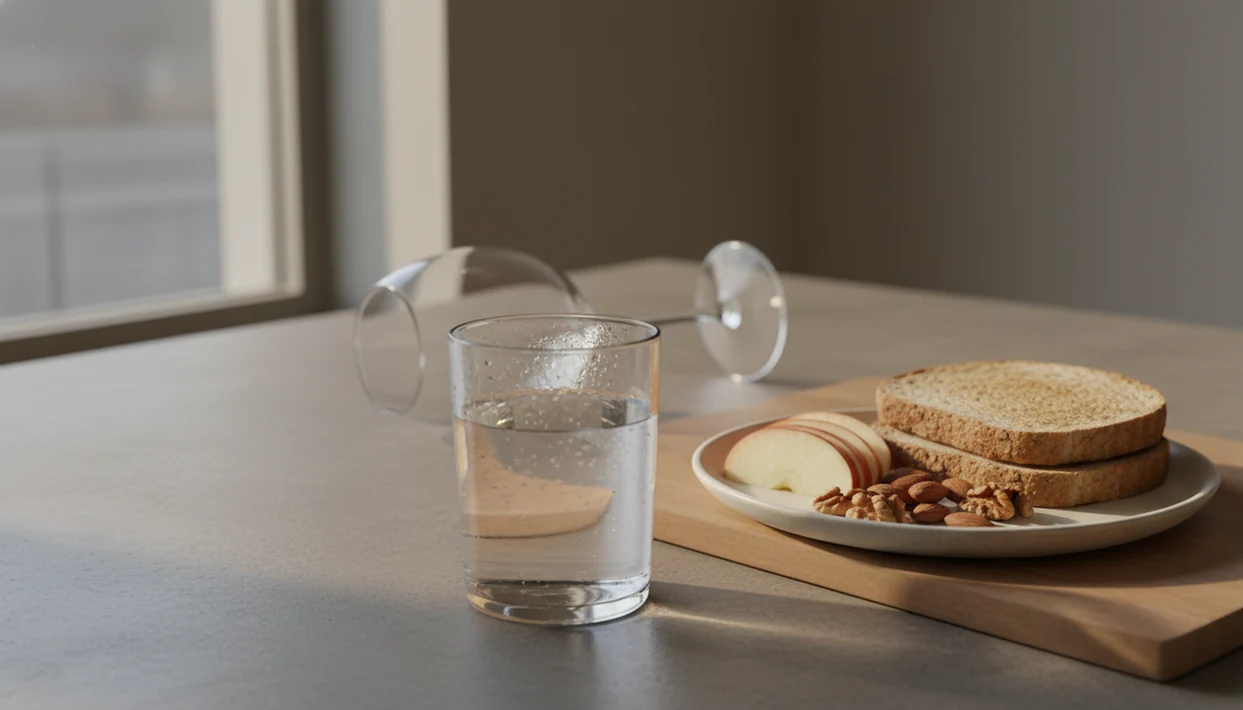
Useful snacks include Greek yogurt and berries, peanut butter toast, eggs and fruit, hummus with whole-grain crackers, or nuts and an apple. Tools like Me Quit or another tracker can help log time, trigger, intensity, and response after the urge passes.
Me Quit can help adults privately track craving time, trigger, intensity, and response, but it does not provide detox care, diagnosis, emergency support, or medical treatment.
HALT triggers for low blood sugar wine cravings
HALT means Hungry, Angry, Lonely, Tired. In relapse-prevention language, these are high-risk states because they lower patience, increase discomfort, and make old rewards feel more available. A 2020 review of addiction recovery relapse factors identified HALT states as common relapse-risk situations.
A practical expansion is the Hungry, Angry, Lonely, Tired, Thirsty checklist. Ask each question before treating the urge as alcohol-specific. The pan warming on the stove, an empty stomach, and a chilled bottle visible in the fridge can all make a 6 p.m. wine cue feel physical.
A private app-based tracker can help adults spot repeated timing patterns without judgment. MeQuit is a quit smoking app that helps adults stop smoking, stop vaping, drink less, and track cravings, streaks, and milestones. If cravings cluster around evenings, a structured alcohol reduction guides library can give the pattern more context.
Meal, hydration, and tracking habits that reduce alcohol cravings
Regular meals are often more reliable than relying on willpower at the most depleted part of the day. A craving-resistant plate includes protein, fiber-rich plants, slow-release carbohydrates, and healthy fats. Think eggs with fruit, lentil soup, chicken with vegetables and rice, or tofu with beans and greens.
Hydration works better when it is planned before the craving window. Morning water, water before the usual drinking hour, and a nonalcoholic drink already cold at home can reduce friction. Small setup choices matter.
Danger windows are personal. Common ones include after work, while cooking, late evening, after workouts, or after an argument. Tracking is pattern recognition, not moral scoring. A clear log entry might read: “6:15 p.m., cooking, hunger 7/10, wine urge 8/10, ate toast and eggs, urge 4/10 after 20 minutes.”
When alcohol cravings need more than food or water
Not every craving is caused by hunger, thirst, or low blood sugar. Warning signs include withdrawal symptoms, morning drinking, inability to cut down, blackouts, drinking despite harm, or feeling unsafe without alcohol.
NIAAA reports that 29.5 million people ages 12 and older in the United States had alcohol use disorder in 2022 (NIAAA alcohol data). CDC data also show that binge drinking remains common among U.S. adults (CDC alcohol data). A 2019 federal NSDUH report estimated that only a small share of adults with past-year AUD received treatment (SAMHSA).
Those numbers are population-level, not a diagnosis for one person. Still, they show why cravings deserve careful attention. Clinicians typically recommend medical or professional support when withdrawal risk is possible, especially with shaking, sweating, rapid heart rate, seizures, hallucinations, confusion, or a history of severe withdrawal.
A mild hangover after two extra drinks is different from alcohol withdrawal. If symptoms feel unsafe, do not manage them with food, water, or an app.
Limitations
Food and hydration can reduce common craving amplifiers, but they are not a cure for alcohol dependence or withdrawal. The safest plan depends on health history, drinking pattern, medications, and withdrawal risk.
- Food and water can reduce craving amplifiers, but they do not treat alcohol withdrawal.
- Severe shaking, confusion, seizures, hallucinations, chest pain, or withdrawal symptoms require urgent medical care.
- People with diabetes, eating disorders, kidney disease, heart conditions, pregnancy, or medication restrictions may need individualized nutrition or hydration guidance.
If the main question is choosing a private phone-based support tool, a best drink less app guide can help compare app features without replacing clinical care.
FAQ
Can hunger cause alcohol cravings?
Yes. Hunger can intensify alcohol cravings through low blood sugar, stress signals, decision fatigue, and ghrelin-related craving pathways.
Can thirst feel like alcohol cravings?
Yes. Dehydration can cause headache, dry mouth, fatigue, dizziness, and irritability that may be mistaken for alcohol craving.
Why do I crave wine when I’m hungry?
Wine cravings after skipped meals often combine low blood sugar with a learned evening reward cue around food preparation or decompression.
Does low blood sugar cause alcohol cravings?
Low blood sugar can increase urgency, shakiness, irritability, and reward seeking, which may make alcohol feel more appealing.
What should I eat when alcohol cravings hit?
Try protein, fiber, and slow-release carbohydrates, such as Greek yogurt with berries, eggs and fruit, hummus, nuts, or whole-grain toast.
How long do alcohol cravings last?
Many cravings peak and fade within minutes, especially when hunger, thirst, fatigue, or stress is addressed early.
What is the HALT method for cravings?
HALT means Hungry, Angry, Lonely, Tired; it is a checklist for spotting high-risk body and emotion states before acting.
How can I tell if cravings are alcohol withdrawal symptoms?
Withdrawal warning signs include shaking, sweating, rapid heart rate, confusion, hallucinations, seizures, or feeling unsafe without alcohol; seek medical support.